

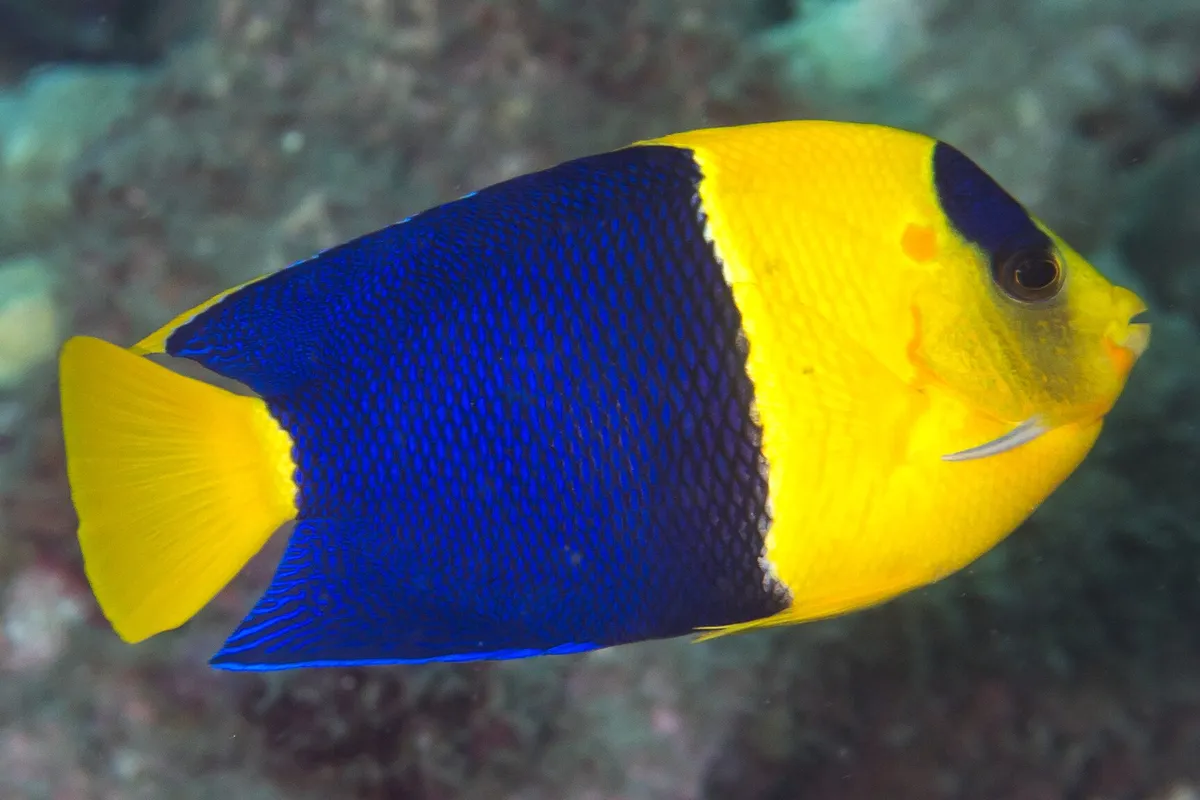
The bicolor angelfish is one of the most eye-catching fish on the reef: a bright yellow head and tail, a deep royal-blue body, and a blue patch over the eye. Centropyge bicolor stays small, at about 15 cm, and is often sold to keepers looking for a colourful dwarf angel.
It is also one of the more delicate dwarf angels. Many specimens struggle to adapt after shipping, and it does best in a large, mature tank. This guide covers how to give one the best chance.
Where bicolor angelfish come from
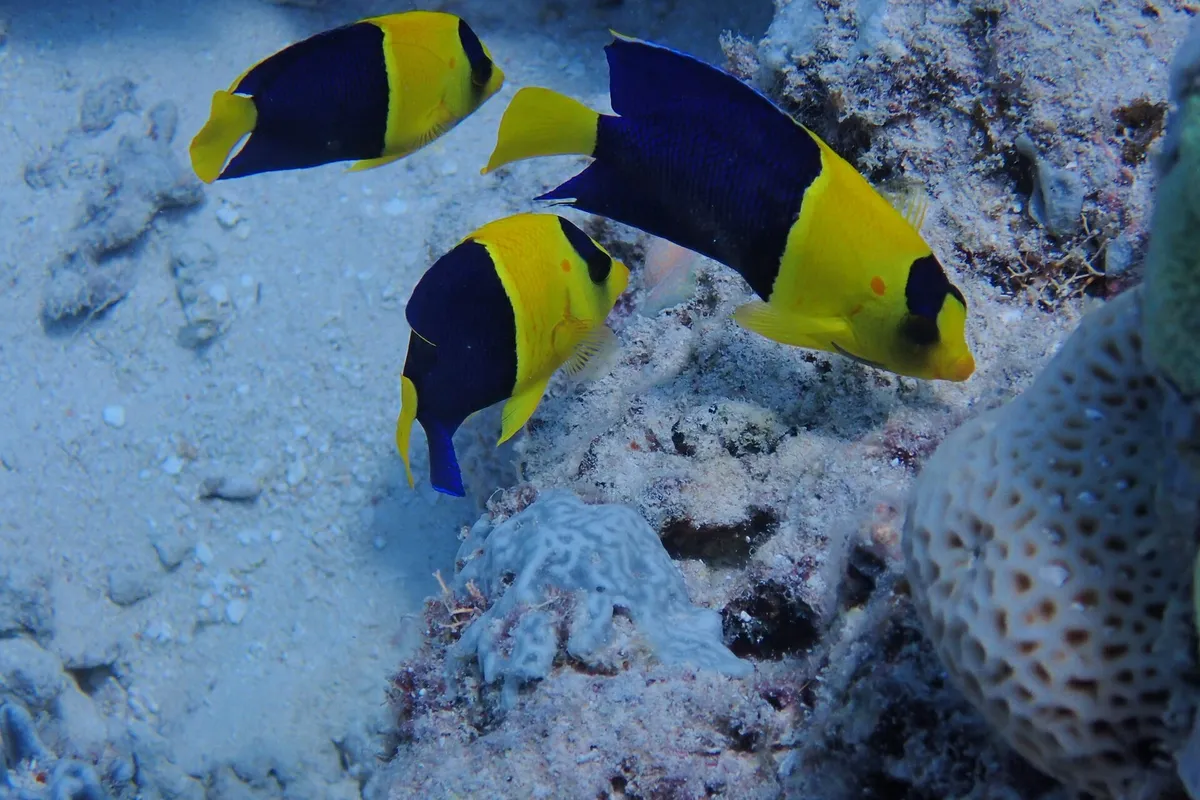
The species is found across the Indo-West Pacific, from East Africa to Samoa and from southern Japan to the Great Barrier Reef. It lives on reef slopes and lagoons, usually in small groups of one male and several females, grazing algae and small invertebrates among coral rubble.
Appearance and behaviour
The front third of the body and the tail are yellow, the rest is deep blue, and there is a blue bar over the eye. Juveniles and adults look much the same. Like other dwarf angels, it starts life as a female and the dominant fish becomes a male.
Bicolor angels are shy at first and spend a lot of time darting between rocks. Once settled, they patrol the tank and pick constantly at rock surfaces. They can be territorial with other dwarf angels.
Tank setup
A single bicolor angel needs at least 280 litres. The tank should be mature, at least six months old, with plenty of live rock covered in algae and small invertebrates for it to graze. Build rockwork with lots of caves and swim-throughs, so it always has a place to hide.
Water parameters
Keep the temperature at 24–27°C, specific gravity at 1.023–1.025 and pH at 8.1–8.4. Stable, clean water is essential, and nitrate should stay low. See our guide to the parameters to test in a marine aquarium.

Feeding
Bicolor angels eat algae, sponges and small invertebrates. Feed a varied diet two or three times a day: frozen angelfish formulas with sponge, mysis, brine shrimp, spirulina, and nori. Newly arrived fish are often reluctant to eat, so offer a wide choice and keep the rock well grazed. A fish that is not eating within a week needs urgent attention.
Reef safety
Like most dwarf angels, the bicolor is "reef safe with caution". Many leave corals alone, but some nip at large-polyp stony corals, zoanthids and clam mantles. A well-fed fish is less likely to nip. Watch new arrivals closely in a reef tank.
Tank mates
Good companions are peaceful to semi-aggressive fish: tangs, clownfish, wrasses, gobies and larger chromis. Keep only one dwarf angel per tank unless it is very large. Avoid aggressive dottybacks and large angelfish, and avoid timid fish like the mandarin dragonet, which may lose out at feeding time. For a hardier dwarf angel, see our coral beauty guide.
Breeding
Bicolor angels spawn in the evening in the wild, releasing floating eggs. Captive breeding is rare, and almost all specimens are wild caught.
Common problems and lifespan
Failure to eat after shipping is the biggest problem, followed by marine ich and velvet. Buy fish that are already eating in the store, avoid very small or very thin individuals, and use our quarantine protocol.
With good care, bicolor angelfish live 5–10 years.
Explore other topics
Dive into more aquarium guides across the site.