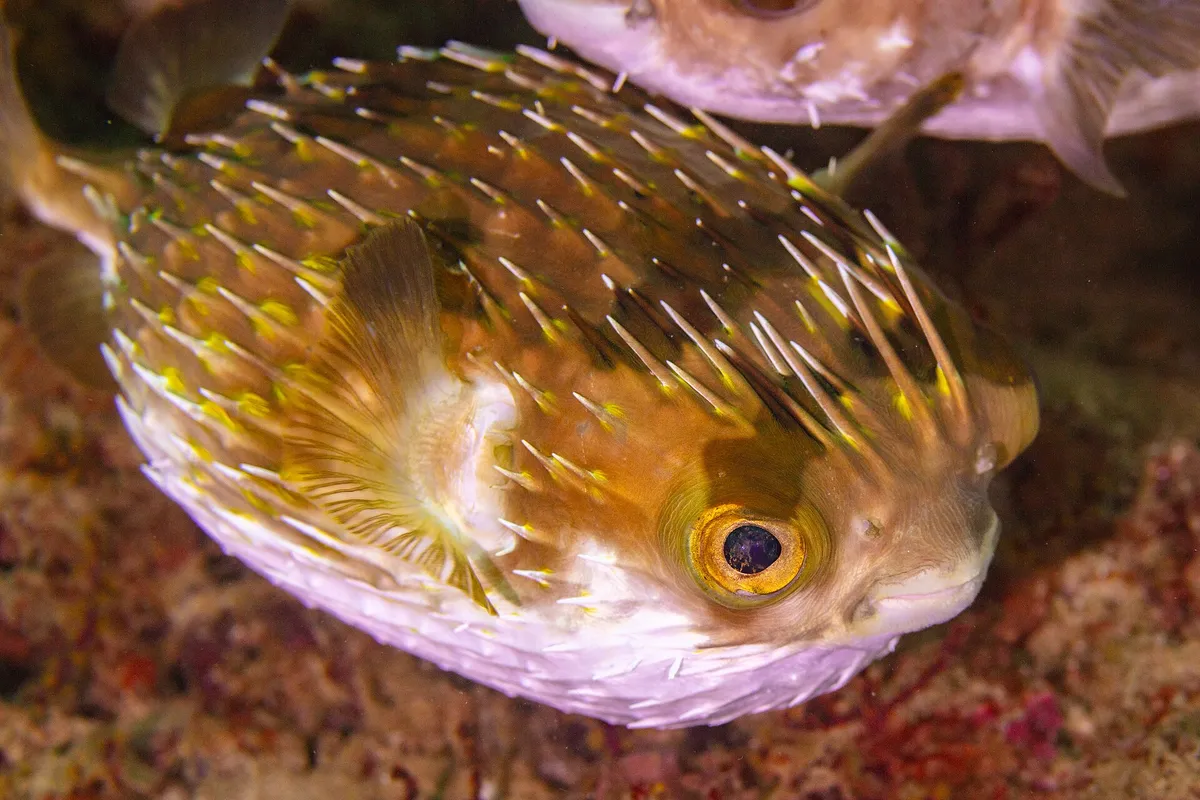
The porcupine puffer, or long-spine porcupinefish, may be the most personable fish in the marine hobby. Diodon holocanthus has huge eyes, a permanent smile, and a habit of following its owner around the room. Many keepers describe theirs as more like a dog than a fish.
It also grows to 30 cm or more in aquariums, crushes shellfish for food, and produces a lot of waste. This guide covers what it needs to thrive.
Where porcupine puffers come from
This is one of the most widespread reef fish, found in tropical seas worldwide: the Indo-Pacific, the Atlantic and the eastern Pacific. It lives on reefs, rocky areas and sand flats, sheltering in caves by day and foraging at night.
Appearance and behaviour
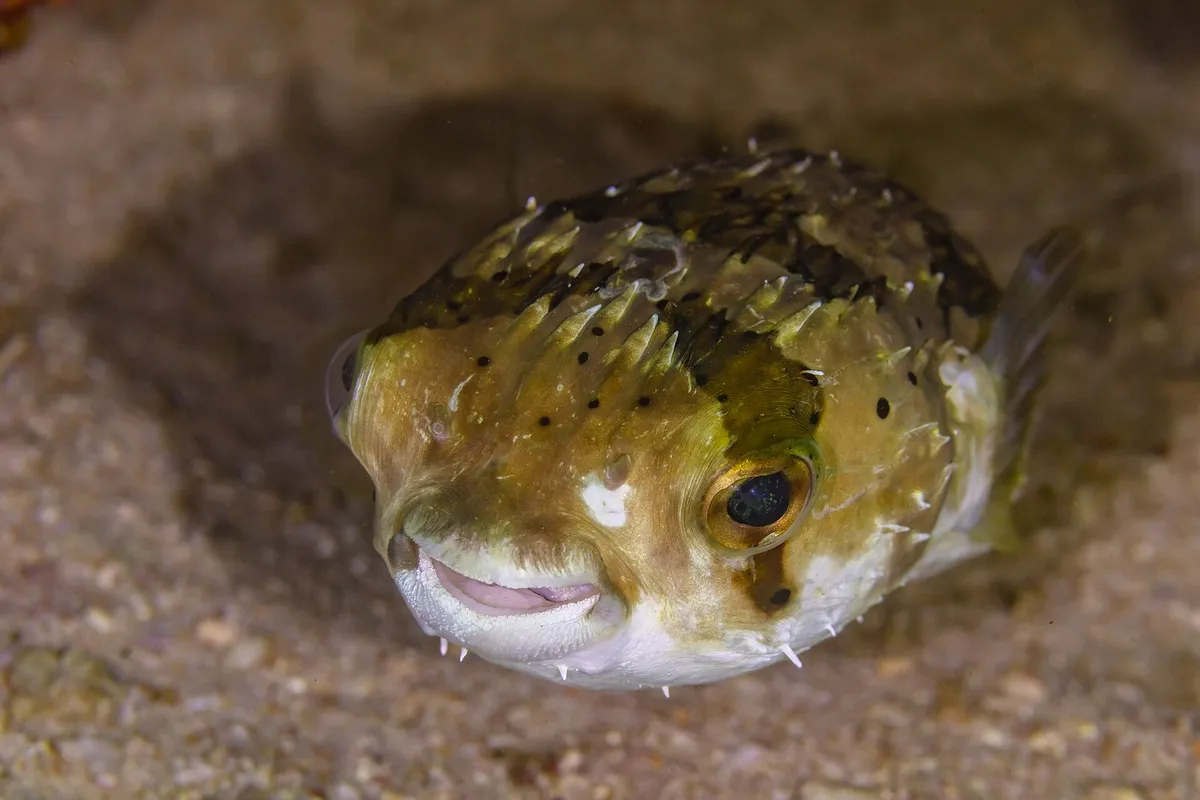
The body is tan to olive with dark brown spots and patches, and is covered in long spines that normally lie flat. When threatened, the fish gulps water and inflates into a spiky ball. It should never be made to do this for fun, and especially not out of water, where it may swallow air and fail to deflate.
Porcupine puffers have fused teeth that form a powerful beak. They are curious, active and quickly learn to recognise their keeper.
Tank setup
A single adult needs at least 500 litres. Provide open swimming space and some caves to rest in. Use an oversized filter and a strong protein skimmer, as puffers are very messy eaters. Cover powerhead intakes, which can injure them.
Water parameters

Keep the temperature at 24–27°C, specific gravity at 1.020–1.025 and pH at 8.1–8.4. Change 20–30% of the water every week or two, and keep nitrate under control. See our guide to lowering nitrates without shocking fish.
Feeding and teeth
Porcupine puffers eat crabs, snails, clams and sea urchins in the wild. Feed shell-on foods such as clams, mussels, cockles, crab legs, snails and shrimp, plus squid and krill. Hard shells are essential, because they wear down the beak, which grows continuously. Without them, the beak overgrows and must be trimmed under sedation. Feed juveniles daily and adults every other day.
Tank mates
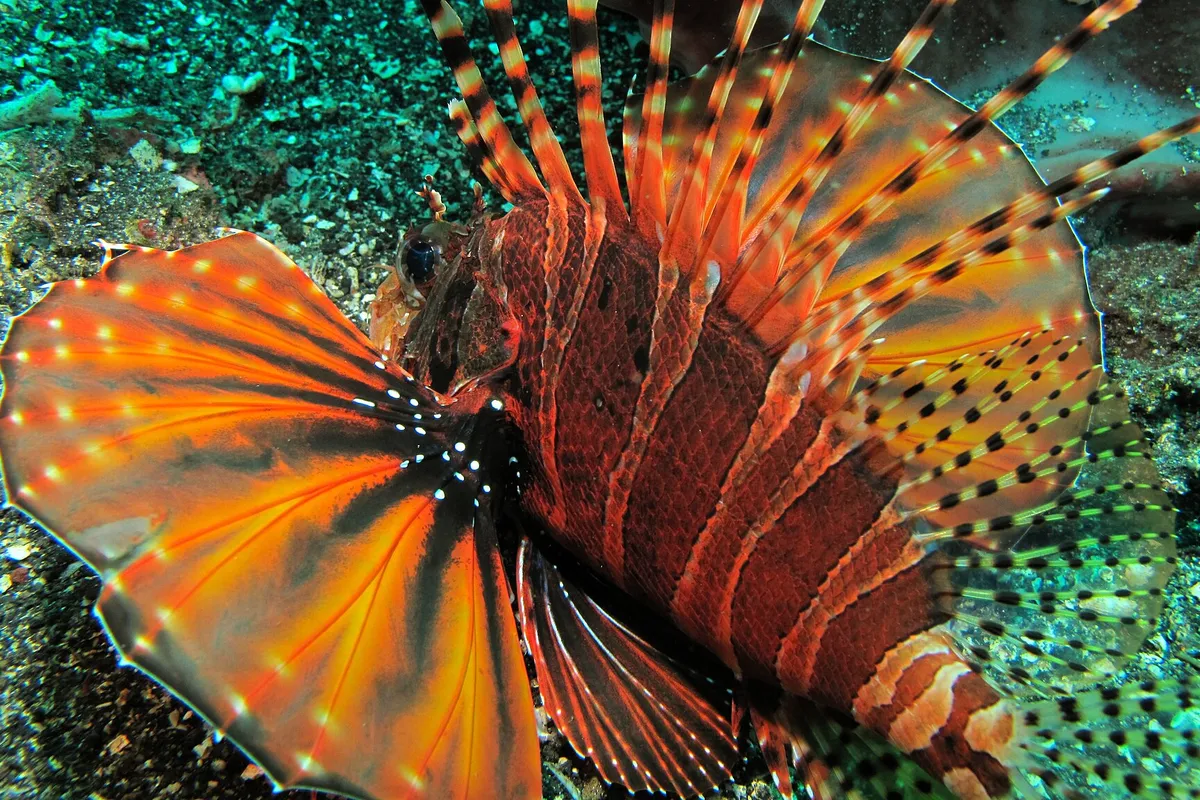
Porcupine puffers are generally peaceful towards fish they cannot eat, but will eat any invertebrate. Good companions are large, calm fish: tangs, large angelfish, groupers, snappers and lionfish. Avoid small fish, fin-nippers such as some triggerfish, and all shrimp, crabs, snails and starfish. They are not reef safe.
Breeding
Porcupine puffers have not been bred in home aquariums. They spawn in open water, and the eggs and larvae drift in the plankton.
Common problems and lifespan
Overgrown teeth, marine ich and poor water quality cause most problems. Puffers are scaleless and sensitive to copper, so treat with care and quarantine new arrivals. For smaller puffers, see our Valentini puffer guide.
With good care, porcupine puffers live 10 years or more.
Explore other topics
Dive into more aquarium guides across the site.