

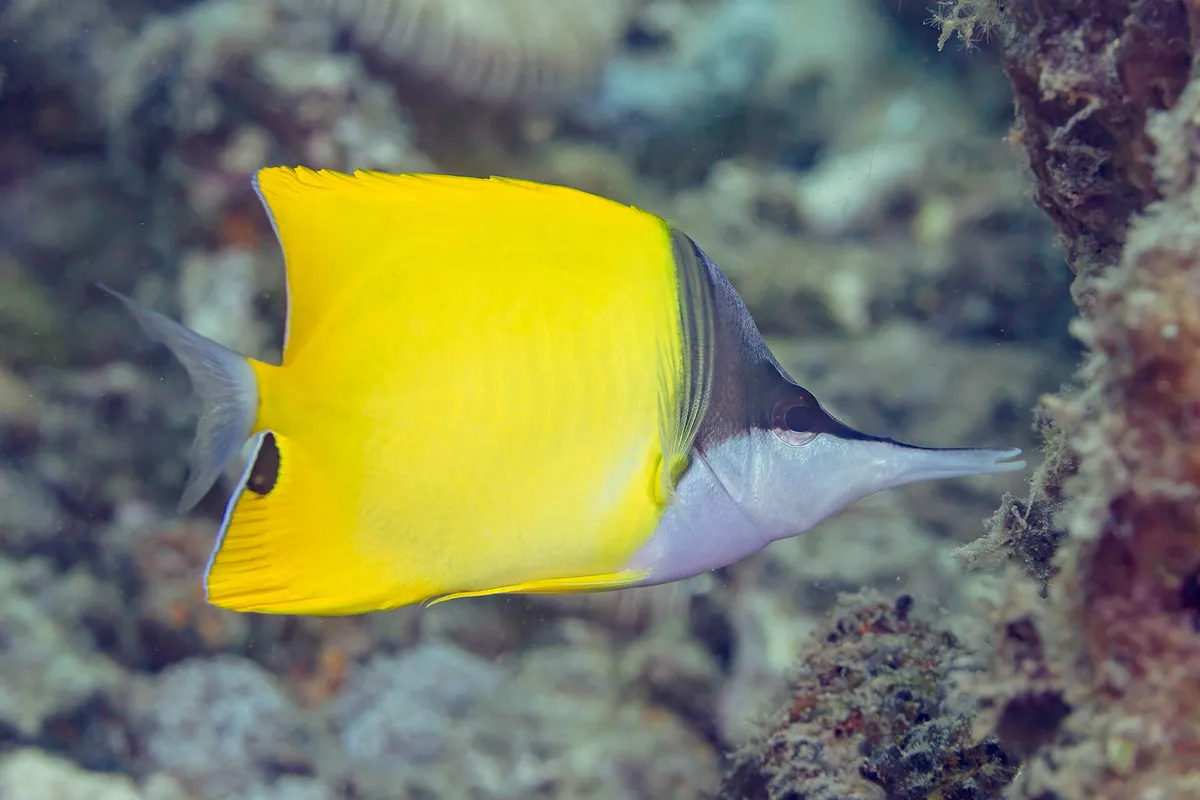
The longnose butterflyfish has one of the most distinctive shapes on the reef: a bright yellow, disc-shaped body with a long, thin snout like a pair of tweezers. Forcipiger flavissimus uses that snout to pull small animals from cracks in the rock and coral. It is also one of the hardiest butterflyfish for aquariums, and accepts prepared foods more readily than most.
Where longnose butterflyfish come from
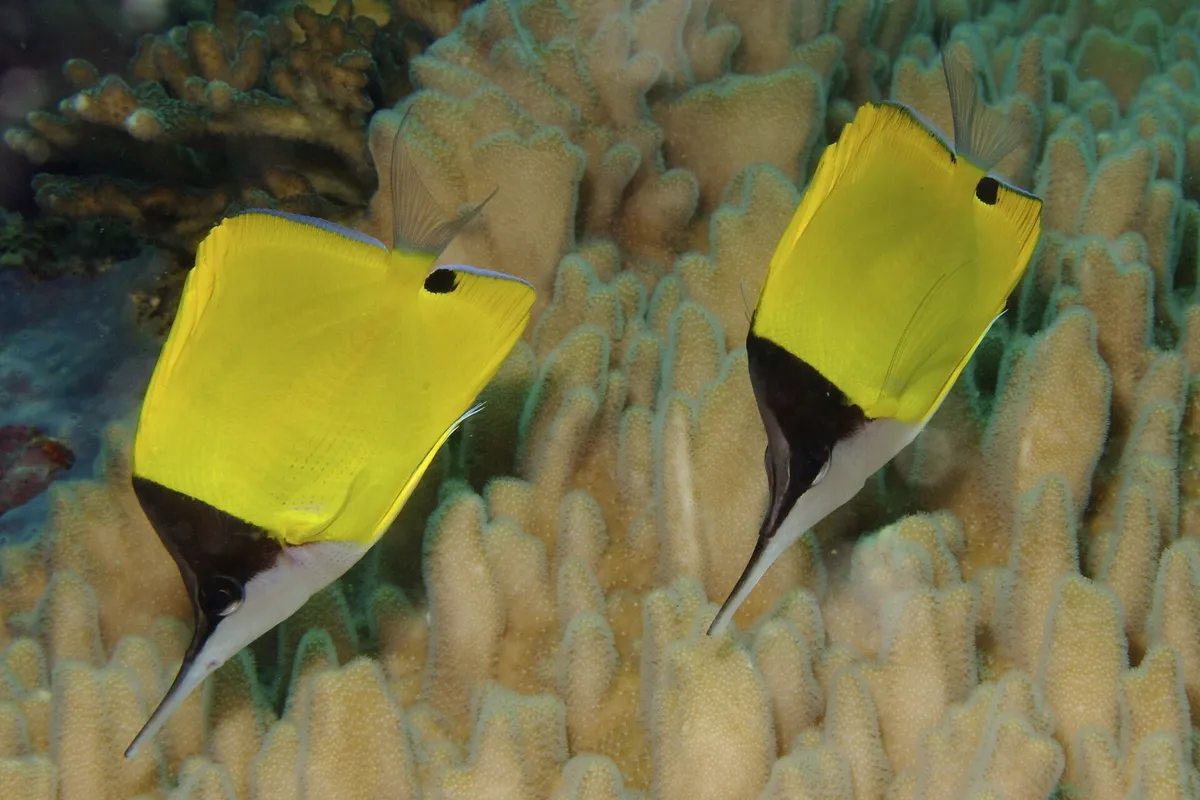
This is one of the most widespread butterflyfish, found across the Indo-Pacific from the Red Sea and East Africa to Hawaii and the Pacific coast of Mexico. It lives on outer reef slopes and drop-offs, alone, in pairs or in small groups.
Appearance and behaviour
Adults reach about 20 cm. The body and fins are bright yellow, the top of the head and snout are black, and the lower snout and chest are white. A black eyespot sits under the tail, which may confuse predators about which end is the head.
Longnose butterflies are peaceful and active. They spend the day exploring the rockwork, poking their snout into every hole. They usually ignore other fish but may squabble with other butterflyfish.
Tank setup
A single fish needs at least 300 litres. Use a mature tank with plenty of live rock, caves and overhangs, and keep open swimming space in front. Good water movement and oxygen levels suit them.
Water parameters
Keep the temperature at 24–27°C, specific gravity at 1.023–1.025 and pH at 8.1–8.4. Butterflyfish are sensitive to rising nitrate and poor water quality, so keep up with water changes and good protein skimming.

Feeding
In the wild they eat small crustaceans, worms, fish eggs and the tube feet of sea urchins and starfish. In aquariums, feed frozen mysis, brine shrimp, chopped clam and squid, and quality marine pellets, two or three times a day. Offering food in a piece of rock or a clam shell lets them use their snout and encourages new fish to eat.
Reef safety
Longnose butterflies are among the safer butterflyfish for reef tanks, but they are not fully reef safe. Most leave corals alone, but they may eat tubeworms, feather dusters, small shrimp and the feet of starfish and urchins. Keep them away from tanks with ornamental invertebrates you want to keep. They are welcome in tanks with Aiptasia, which they may eat.
Tank mates
Good companions are peaceful and semi-aggressive fish: tangs, angelfish, wrasses, clownfish, hawkfish and anthias. Avoid aggressive triggerfish and large predators, and keep only one butterflyfish of each species unless the tank is very large. Another butterfly with a long snout is our copperband butterflyfish.
Breeding
Longnose butterflyfish have not been bred in home aquariums. They spawn in pairs at dusk, releasing floating eggs.
Common problems and lifespan
Marine ich and poor feeding after shipping are the main risks. Buy fish that are already eating in the store, and quarantine all new arrivals.
With good care, longnose butterflyfish can live 10 years or more.
Explore other topics
Dive into more aquarium guides across the site.