

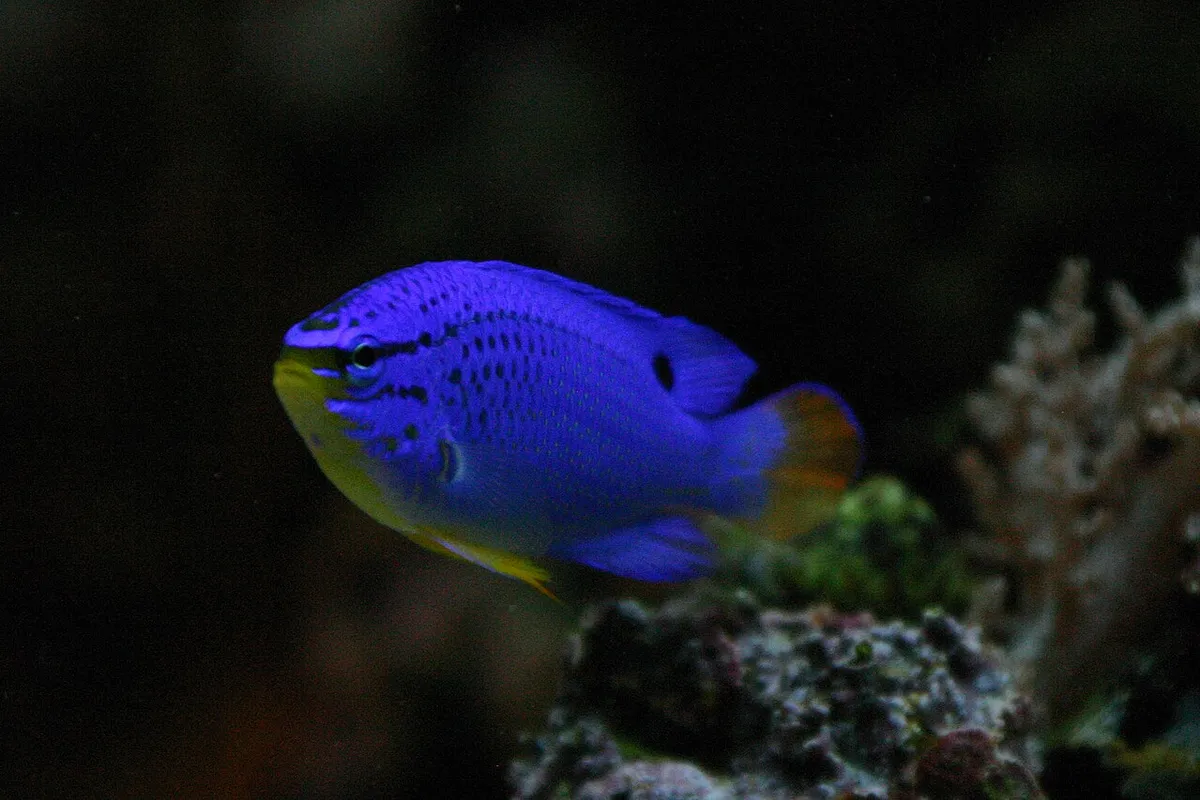
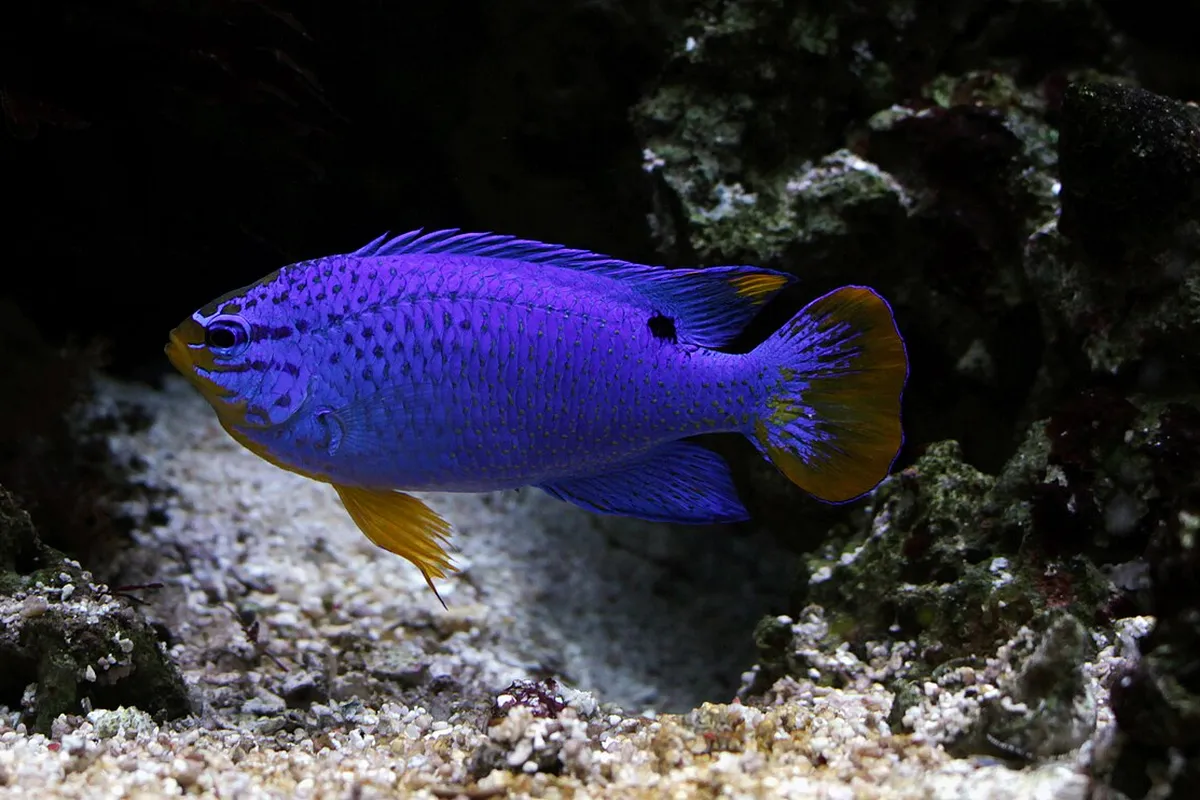
The blue devil damselfish is one of the brightest fish you can buy for a marine tank, and one of the cheapest and toughest. Its body is a vivid electric blue, and males of some populations have an orange or yellow tail. Adults reach about 8 cm.
The word "devil" is earned. Chrysiptera cyanea becomes territorial as it matures and will chase fish that move into its patch of rock. Plan the tank around that and it is an excellent, long-lived fish.
Where blue devils come from
The species lives across the western Pacific and eastern Indian Ocean, from Indonesia and the Philippines to northern Australia. It is common in shallow lagoons and sheltered reefs, often around rubble and branching coral.
Appearance and behaviour
Females and juveniles have a clear tail and a small dark spot near the base of the dorsal fin. Colour can fade to darker blue at night or when stressed.
Keep one blue devil, or one male with several females in a larger tank. Two males fight.
Tank setup
A single fish is fine in 75 litres, but a mixed community needs 150 litres or more so others can avoid its territory. Provide plenty of rockwork with caves and overhangs. Add the blue devil last, so established fish have already claimed their spaces.
Water parameters

- Temperature: 24–28°C
- pH: 8.1–8.4
- Specific gravity: 1.020–1.025
Blue devils tolerate the swings of a new tank better than most fish, but stable conditions keep them healthier and less aggressive.
Feeding
They are omnivores that eat almost anything. Feed quality marine flakes and pellets, frozen mysis and brine shrimp, and some algae-based food, two or three times a day. See our reef fish feeding schedule.
Tank mates
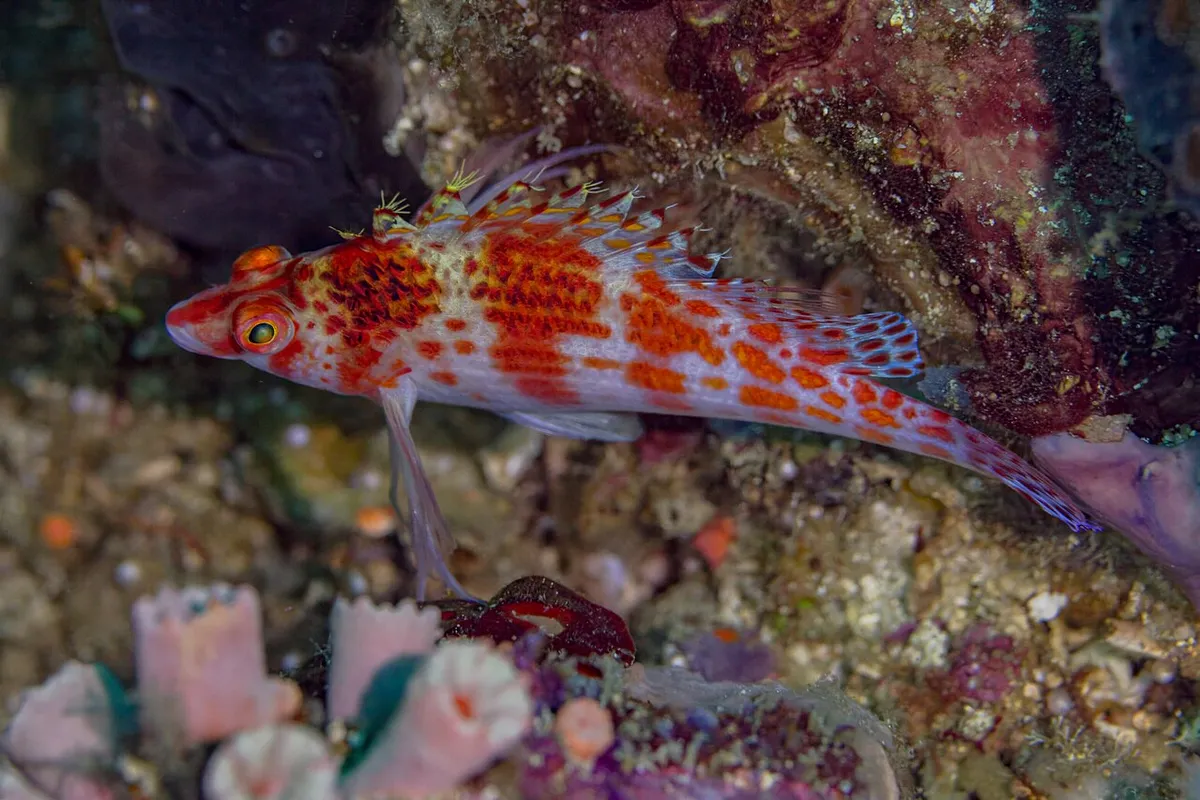
Choose fish that are similar in size or larger and confident, such as clownfish, dwarf angelfish, hawkfish and tangs in large tanks. Avoid timid fish like firefish and small gobies in small tanks. Blue devils are reef safe and ignore corals and most invertebrates.
Breeding
Pairs lay eggs on a cleaned rock surface, and the male guards them for a few days. The larvae are tiny and need rotifers and phytoplankton, which makes rearing difficult at home.
Common problems and lifespan
Aggression is the main problem. Damsels are also hard to catch once established, so think before adding one. They can live ten years or more.
Explore other topics
Dive into more aquarium guides across the site.