
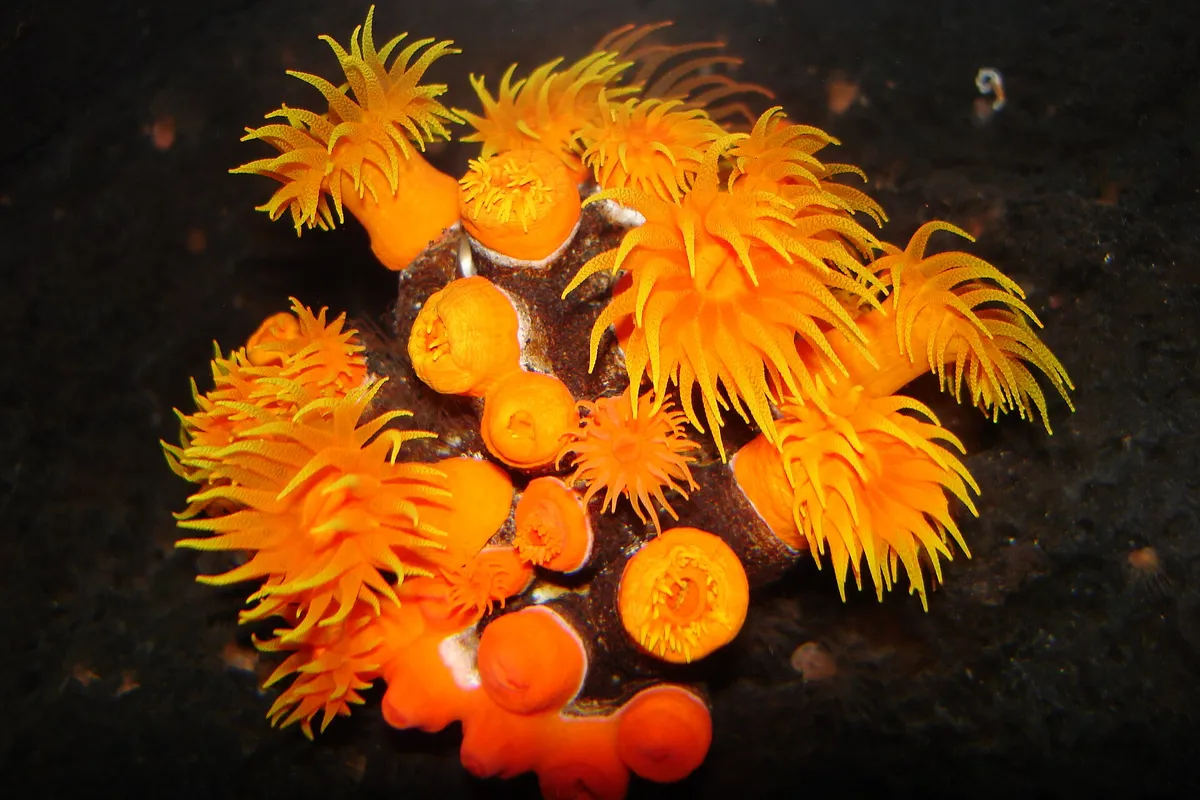
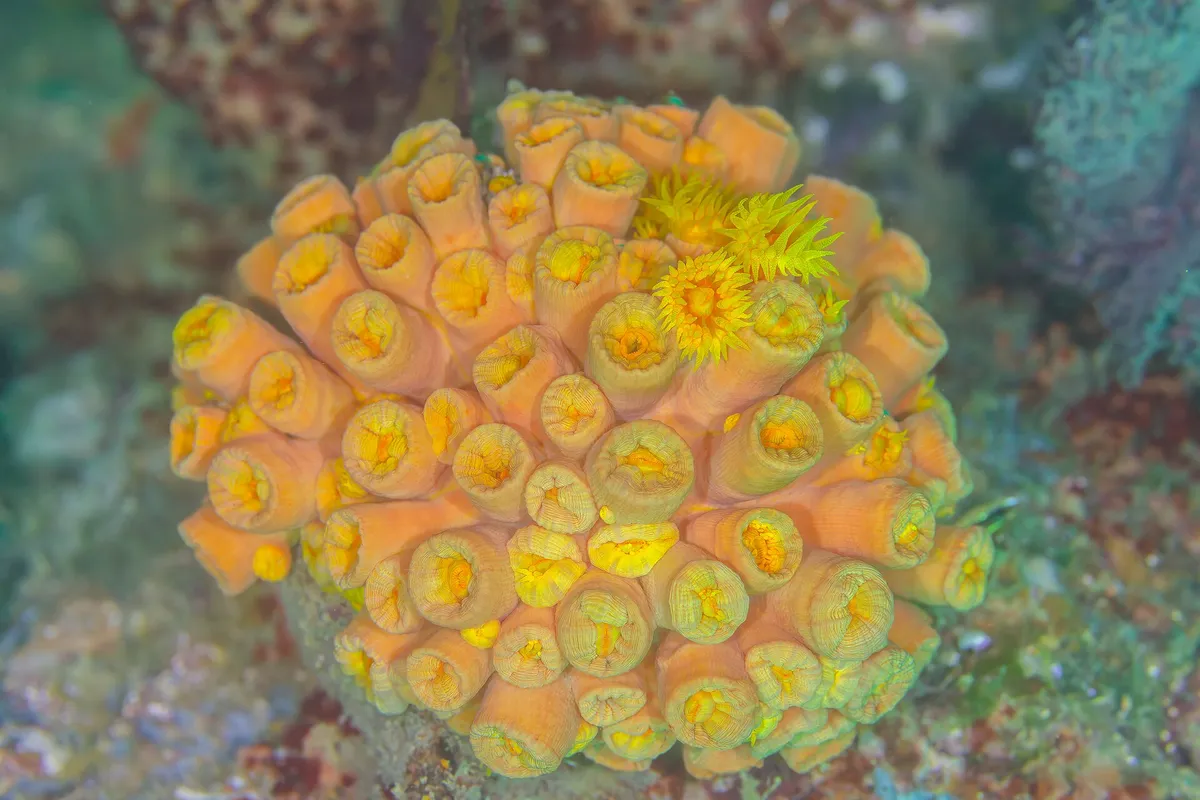
Sun coral is one of the most colourful corals you can keep, and one of the most demanding. Clusters of bright orange tubes open into polyps with yellow tentacles, like a bunch of little suns. Tubastraea species are also one of the few corals that do not need light at all.
That is because sun coral has no symbiotic algae. Every bit of energy must come from food you provide. Keepers who can commit to frequent feeding find it a rewarding coral; anyone who cannot should choose another.
Where sun coral comes from
Sun corals live in tropical waters worldwide, mostly under ledges, in caves and on shaded walls. The species most often sold are Tubastraea coccinea and T. faulkneri. T. coccinea has become invasive in parts of the Atlantic, including Brazil and the Gulf of Mexico, so never release any coral or its rock into the sea.
Appearance and behaviour
Each polyp sits in a tube 1–2 cm wide, and colonies form clusters of 10 to 50 or more tubes. The skeleton and tissue are bright orange to red, and the tentacles yellow. The polyps open mostly at night or when they sense food, and retract by day once fed.
Sun coral is not aggressive towards other corals.
Placement and flow
Because it needs no light, place sun coral in shaded areas: under overhangs, in caves or even upside down, as it grows in nature. This keeps algae from growing over it. Moderate flow brings food to the polyps. Make sure you can reach it easily for feeding. A protein skimmer helps deal with the extra food going into the tank.
Water parameters
Keep the temperature at 24–27°C, salinity at 1.025–1.026, alkalinity at 8–11 dKH, calcium at 400–450 mg/l and magnesium at 1250–1400 mg/l. The heavy feeding raises nitrate and phosphate, so plan for larger water changes. Read our guide to controlling nitrates.
Feeding
This is the whole job. Target feed each polyp every day or every other day with mysis, chopped krill, brine shrimp or coral pellets. Turn off pumps, use a pipette or turkey baster, and wait for the polyps to grab and close around the food. If the polyps will not open, puffing a little food juice nearby often wakes them up. Many keepers feed at night, when the polyps open naturally.
Tank mates
Sun coral is peaceful. Shrimp, crabs and fish may steal food from the polyps, so feed them first or cover the coral with a cup while feeding.
Common problems
Starvation is the main cause of loss, often slow: polyps shrink, then the tissue recedes from the tubes. Algae and detritus growing on it are the second. If the colony starts to decline, feed more often and move it to shade. Quarantine new corals. Well fed, sun corals grow and bud new polyps for years.
Explore other topics
Dive into more aquarium guides across the site.