

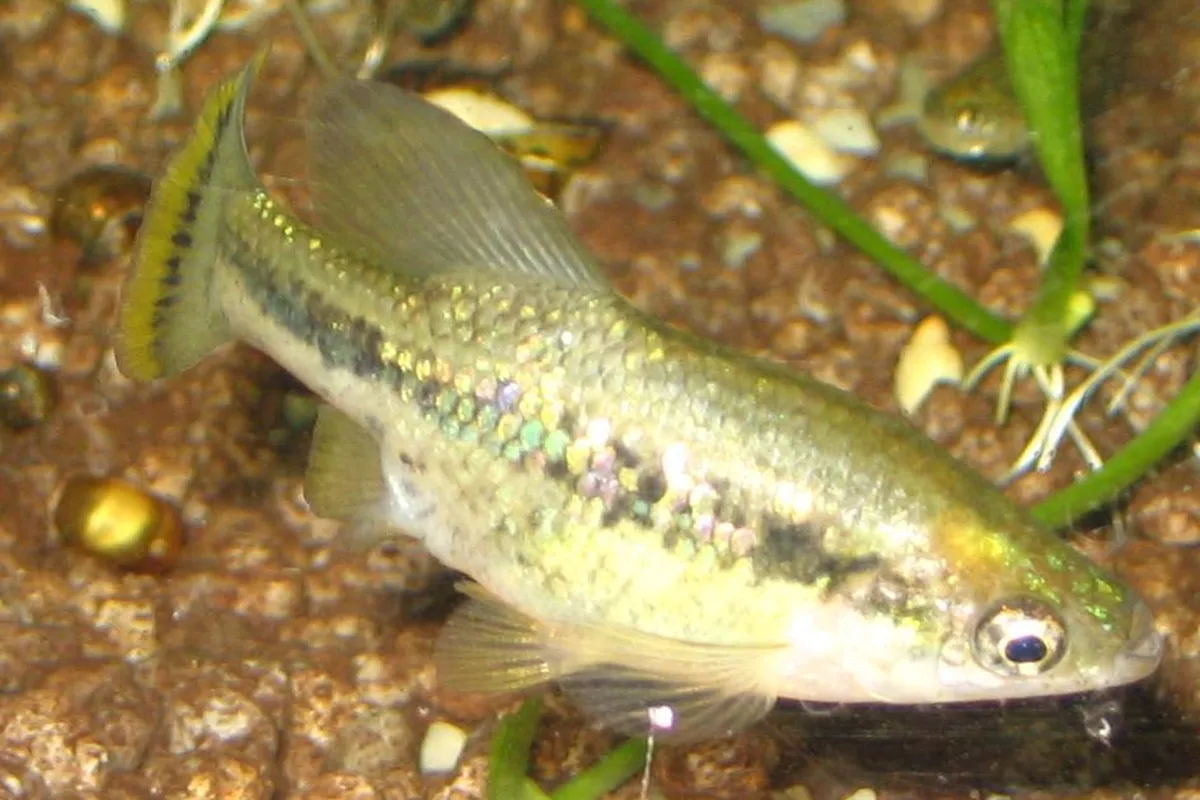
The butterfly goodeid, also called the butterfly splitfin, is a small livebearer with a big conservation story. Ameca splendens was declared extinct in the wild, and for years it survived mainly in aquariums. Hobbyists and researchers have since helped return it to a river in Mexico.
It is an active, hardy fish that suits a hard-water community tank, and keeping a pure, well-labelled line is a real contribution to the species.
Where butterfly goodeids come from
The species is native to the Ameca River basin near Teuchitlán, in the state of Jalisco in western Mexico. Pollution, water extraction and introduced species destroyed most of its habitat. A captive-bred population has been reintroduced to the Teuchitlán River, and aquarium populations remain an important backup.
Appearance and behaviour
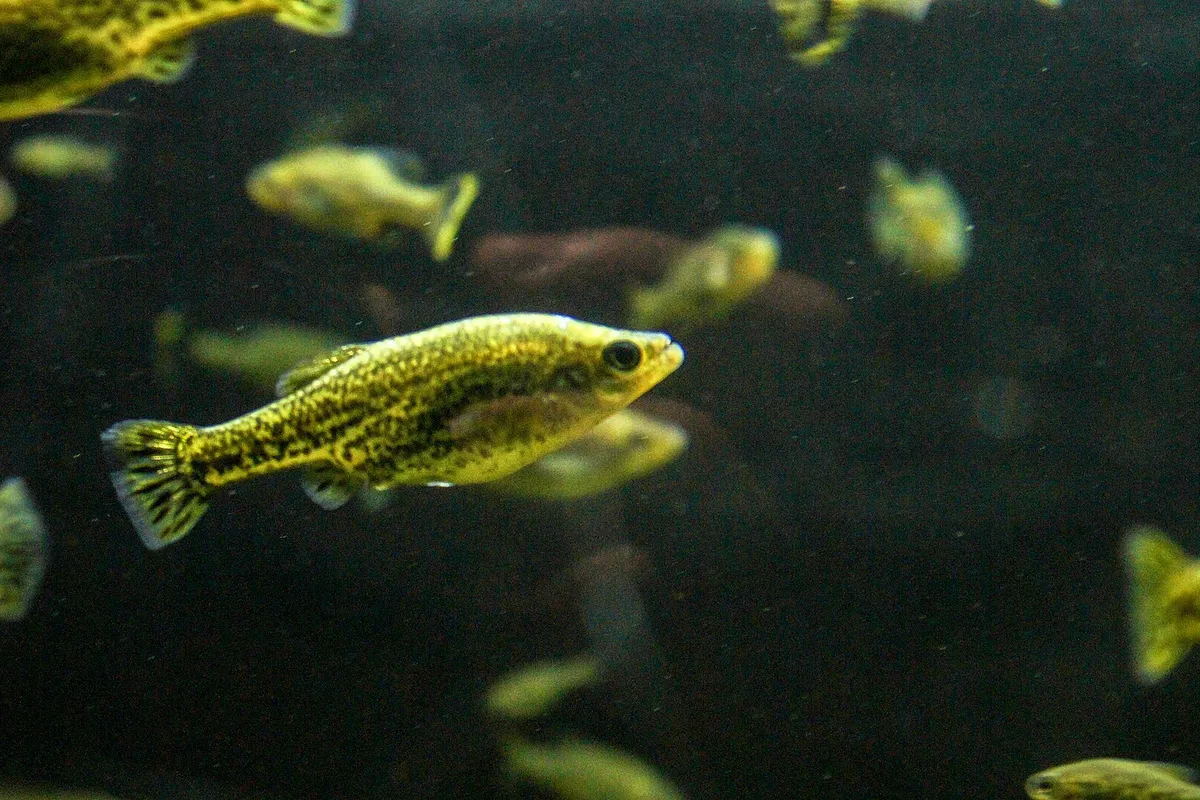
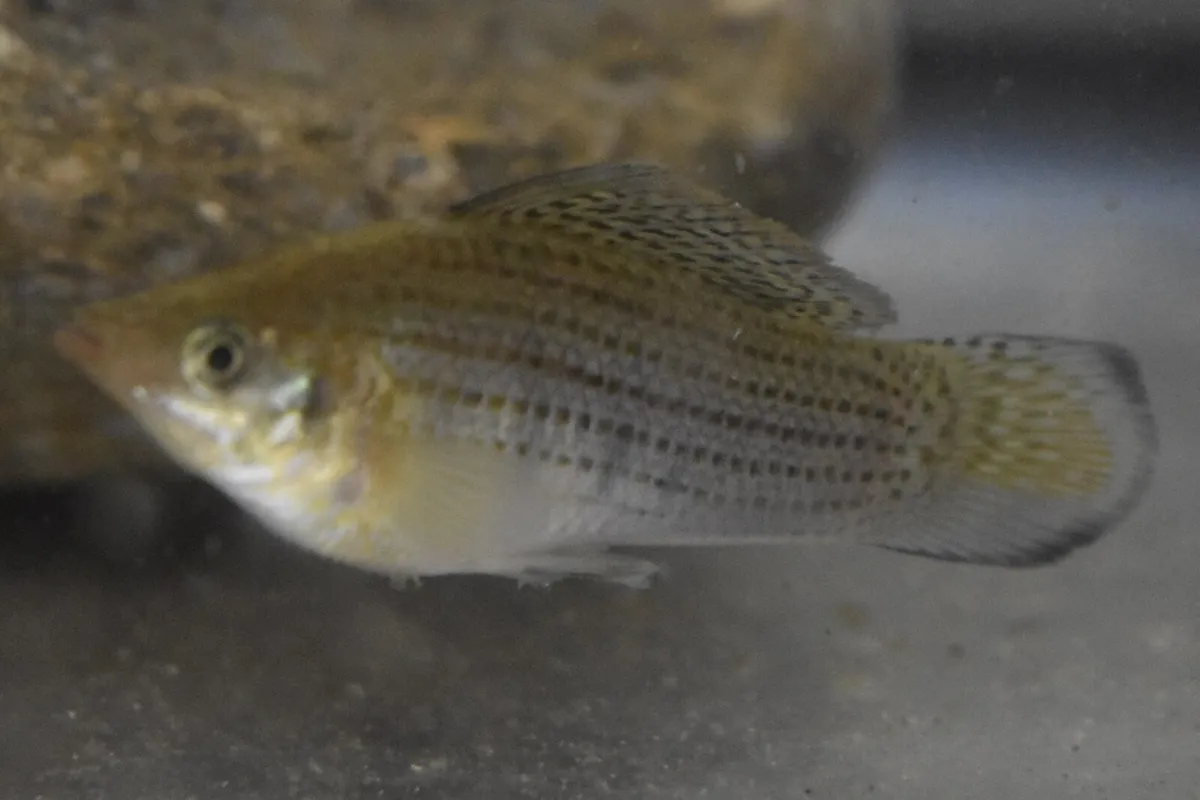
Butterfly goodeids grow to about 8 cm. Males are silver-green with dark spots and a black tail with a bright yellow band at the edge, and they have a notched anal fin used for mating. Females are larger, rounder and plainer, with dark spots and no yellow band.
They are active, busy fish. Males display constantly and can nip fins, especially of slow, long-finned tank mates. Keep more females than males to spread out the attention.
Tank setup
A group of six to eight needs at least 100 litres. Use a planted tank with open swimming space, rocks and driftwood. They like moderate flow and clean, well-oxygenated water. They tolerate cooler water than most tropical fish, so a heater is only needed in cold rooms.
Water parameters

Keep the temperature at 18–28°C, with 22–25°C ideal for year-round care. They need hard, alkaline water: pH 7.0–8.0 and moderate to high GH. A short cooler period in winter, around 18–20°C, is natural for them and may help long-term health.
Feeding
Butterfly goodeids are omnivores with a strong appetite for plants and algae. Feed a spirulina or vegetable flake as the base, plus frozen or live daphnia, brine shrimp and bloodworms. They will graze algae and may nibble soft plants.
Tank mates
The best tank is a species tank or a tank with other Mexican goodeids, kept as separate pure species. In a community, choose robust, fast fish that enjoy hard water, such as larger danios, rainbowfish and platies. Avoid bettas, fancy guppies and other long-finned fish, which will be nipped.
Breeding
Goodeids are livebearers with a twist: the young are fed inside the mother through ribbon-like structures called trophotaeniae, a bit like an umbilical cord. Females give birth to 10–30 large fry after about 55–60 days. The fry are big enough to eat crushed flake and baby brine shrimp from birth, and adults usually leave them alone if the tank has plants. See our livebearers guide.
Common problems and lifespan
Fin-nipping of tank mates is the main issue. Soft, acidic water causes stress and disease. Because this species is rare in the wild, never mix populations or hybridise it, and pass on fry to keepers who will maintain it properly.
Butterfly goodeids live about three to four years.
Explore other topics
Dive into more aquarium guides across the site.