

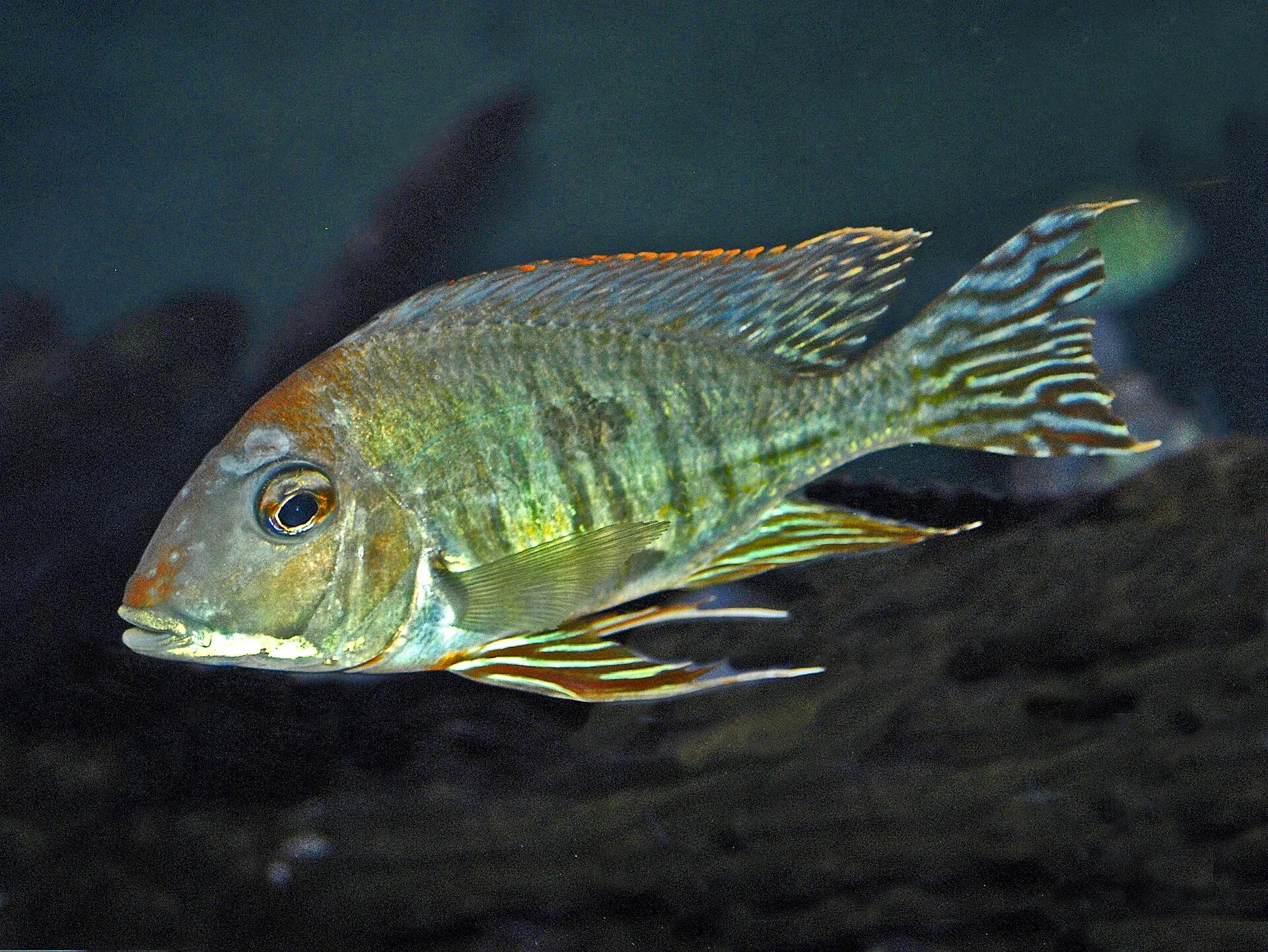
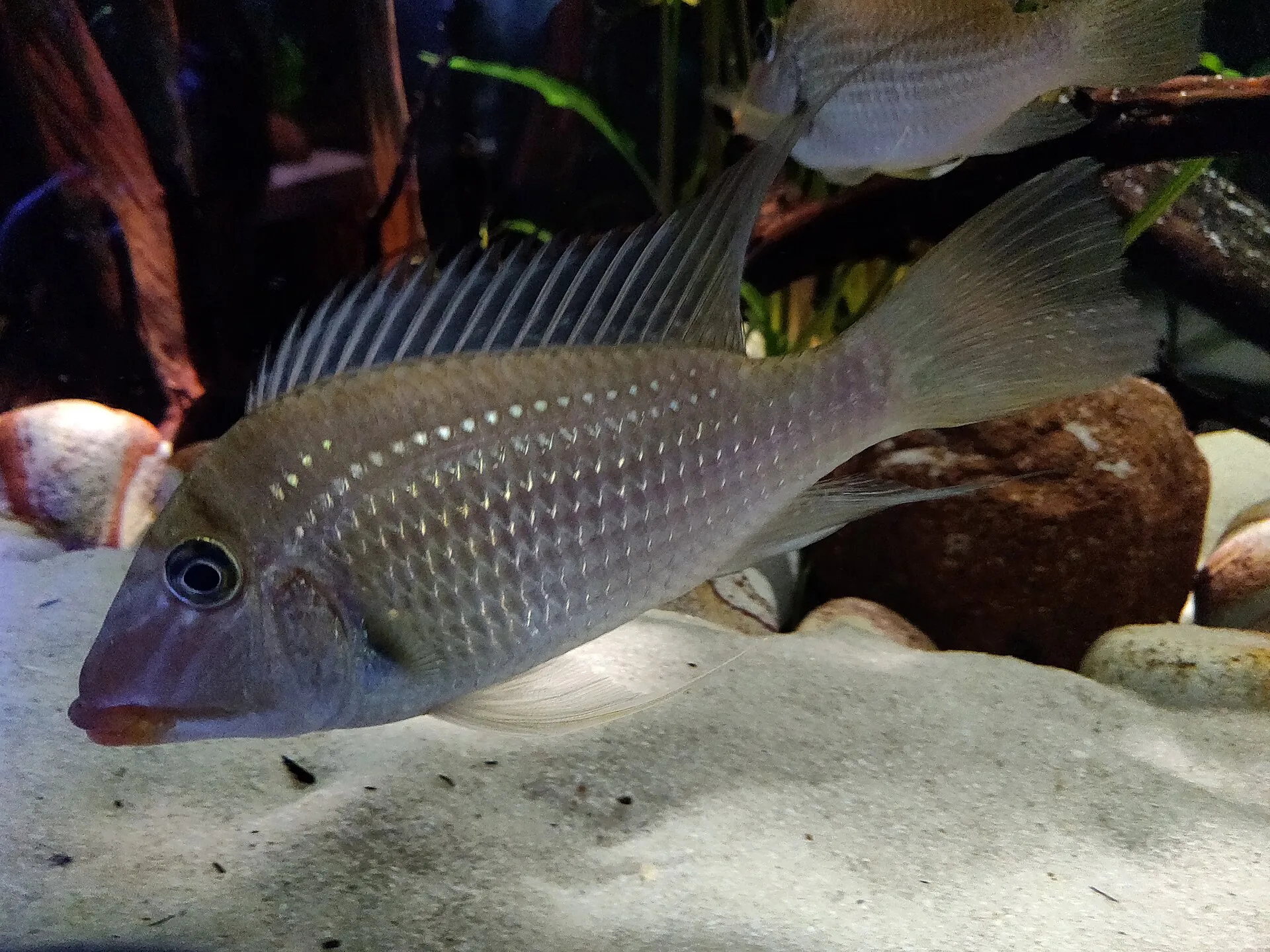
Altifrons is the eartheater whose forehead gives the name away. Geophagus altifrons is a high-nape Amazon sand-sifter, 20–25 cm, kept in warm, typically soft water on a deep sand bed. It is the fish people mean when they say “Geophagus” in a planted-room voice, then watch every plant float away. It is generally less of a thug than a pearl cichlid and more of a true Amazonian than G. brasiliensis. It is still a giant. It is still a sifter. It is not a Uaru (different diet, different shape). It is not a demon eartheater (different genus, more mouthbrooding, longer face). It is not a Tanganyika cichlid.
Shop fish are often sold as “Geophagus sp.” with a river name. Altifrons proper has that steep forehead. Buy the adult shape in your head, not the 6 cm juvenile in the bag.
Warm sandy Amazon, not coastal lagoons, not rift beaches
Amazon basin, sandy stretches, warm water that can sit 26–30°C — closer to Uaru warmth than to a cool pearl pond. pH 5.5–7.5, soft to moderate. They work the sand continuously. Wood provides shade and landmarks. The lake they do not come from is Tanganyika; do not give them shells as a habitat, and do not give them pH 9.
If you kept jurupari, the overlap is sand and South America. Altifrons is the higher-bodied, often warmer, more ‘classic Geophagus’ look. If you kept pearls, altifrons is usually the more peaceful, more heat-loving, more Amazon-chemistry fish.
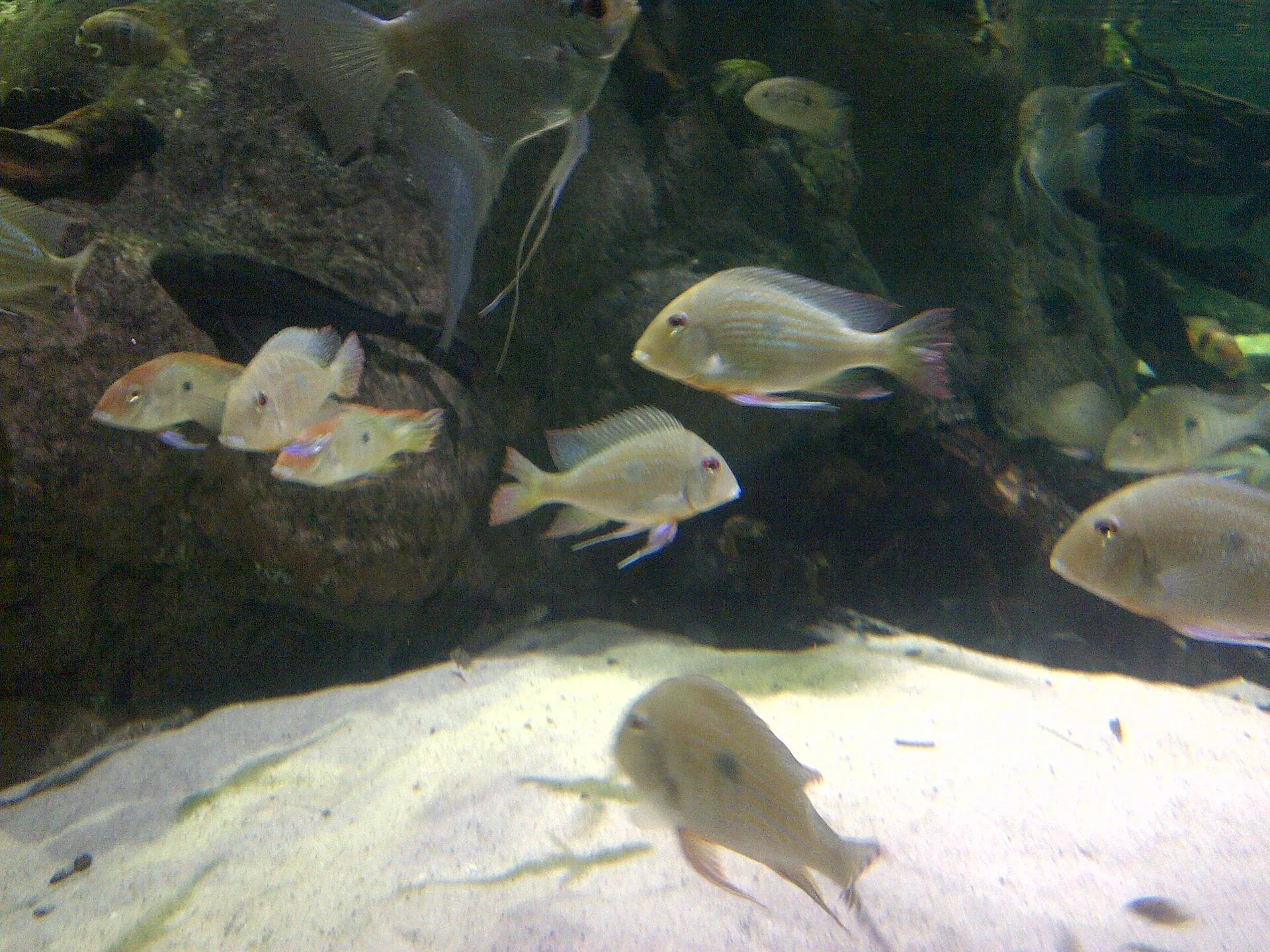
The forehead, the long fins, the sift cloud
A mature altifrons shows a steep profile, long trailing fins on a good male, and a pattern of bars or spots that varies with population. Colour is a warm gold-olive with iridescence, not the heavy pearl-dust of brasiliensis, not the Uaru ocellus triangle. They hover, dip, and blow sand. A fish that never makes a cloud is a fish on the wrong substrate.
Sexing: males typically larger with longer fin filaments. Groups of juveniles let you grow a compatible set. Two random adults in 350 litres can still argue at a nest.
Three hundred fifty litres, sand as the main ornament
Altifrons needs 350 litres. Deep fine sand. Open centre. Wood at the sides. Filter guarded against sand. Warmth. This tank should look like a river floor, not like a slate Julie palace, not like a coconut apisto studio, not like a discus plant box (Uaru will eat the plants; altifrons will uproot them). If you must have plants, use potted lilies they cannot easily topple, or floating plants they cannot sift.
A group of five in a huge tank is the pretty version. A single fish in a box is the shy version.
Warm and reasonably soft
Temperature 26–30°C. pH 5.5–7.5. They appreciate the warmth Uaru like, without requiring Uaru’s vegetable identity. Cycle a large, warm tank seriously; oxygen drops as temperature rises. Water changes must be warm. Cold tap on a 28°C eartheater is a shock. Chemistry, cycling.
Hard coastal water that a pearl might accept is not the target. Extreme blackwater that a Dicrossus needs is also not required — altifrons is an Amazon sand river, not a checkerboard tea creek.
Sinking food, constant sorting

Quality sinking cichlid foods, frozen invertebrates mixed into sand, occasional live foods. Some plant content in prepared diets is fine; they are omnivore sifters, not salad specialists. Surface-only feeding starves them in a tank with tetras you should probably not have added. They will eat small fish on the bottom. They will not hunt midwater like a compressiceps.
Feed a group in several sand patches so the lowest-rank fish can sift in peace.
Gentler than a pearl, still a giant
Possible tankmates: other large, calm Amazonians, Uaru in a truly huge warm tank (watch warmth and food), large peaceful catfish. Poor: pearls if you cannot handle two digging, territorial systems. Wrong: dwarfs, shrimp, Corydoras, rift fish, nano rasboras.
Dither tetras of substantial size in matching water are a maybe. Cardinal tetras are a bad maybe: they like blackwater and they are snack-sized. Do not stock them as a care model for altifrons even if both say Amazon on the map.
A nest on sand, parents on duty
Many Geophagus are delayed mouthbrooders or sand nest guarders depending on the form. Altifrons typically uses a sand nest and parental care that can include taking fry into the mouth in typical geophagine fashion. Practical rule: do not gravel-vac the crater. Do not add shrimp. Give the pair a quiet tank. This is not a shell spawn. This is not a leaf spawn like Anomalochromis. This is a sand family.
Hiding in the heater corner
Shyness is normal in a too-small group or a too-busy room. Emaciation is not. If they cannot sift, they will not thrive. Quarantine with sand and warmth. Ich after a chill from a water change is common in warm-water giants. Treat the temperature mistake first.
Read jurupari for the longer-faced mouthbrooder, pearl cichlid for the coastal thug, Uaru for the plant-eating triangle. Altifrons is the high forehead in warm Amazon sand.
Warmth, oxygen, and the forehead that needs both
At 28–30°C the sand bed and the fish both use oxygen. Surface movement is not a contradiction with a gentle Amazon look; it is survival. A still, warm, covered tank that is perfect for a chocolate gourami is a bad altifrons tank. Keep the lid for heat if your room is cold, but leave a gap or a ripple. Watch gill rate after lights-out. If they sit piping, you have a warm soup, not a river.
When you change water, match temperature to the degree, not “tropical is tropical.” A 4°C drop on a high-foreheaded Amazon fish is how you get ich on a giant that was fine yesterday.
Choosing sand the forehead can live with
Play sand that is sharp, silica dust that clouds forever, and coarse gravel that they cannot sift are the three substrate mistakes. Rinse sand until it runs clear, then expect a week of puff-cloud anyway. Cap nothing with nutrient dirt unless you enjoy ammonia from a ploughed bed. Altifrons is an eartheater; the earth you offer has to be edible to sort and inert enough not to poison the 28°C tank. That single hardware choice is more important than which wood sculpture you liked in the shop.
Explore other topics
Dive into more aquarium guides across the site.