

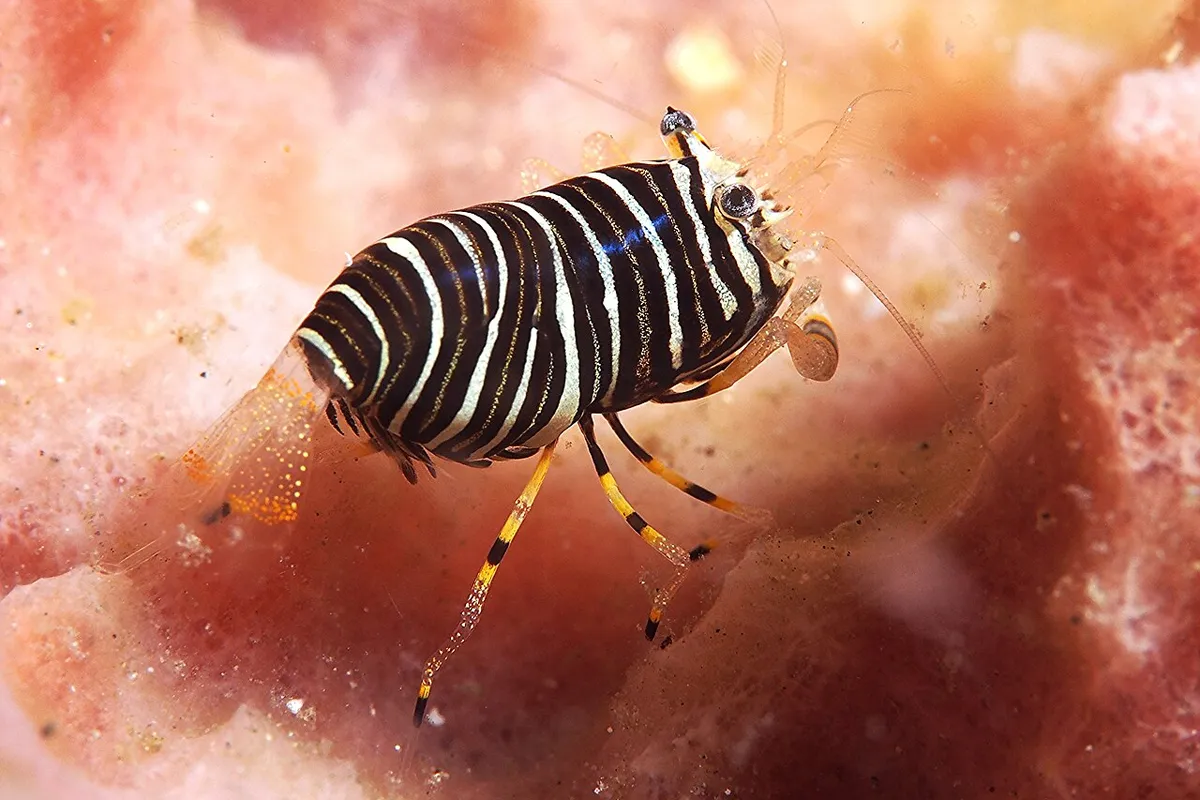
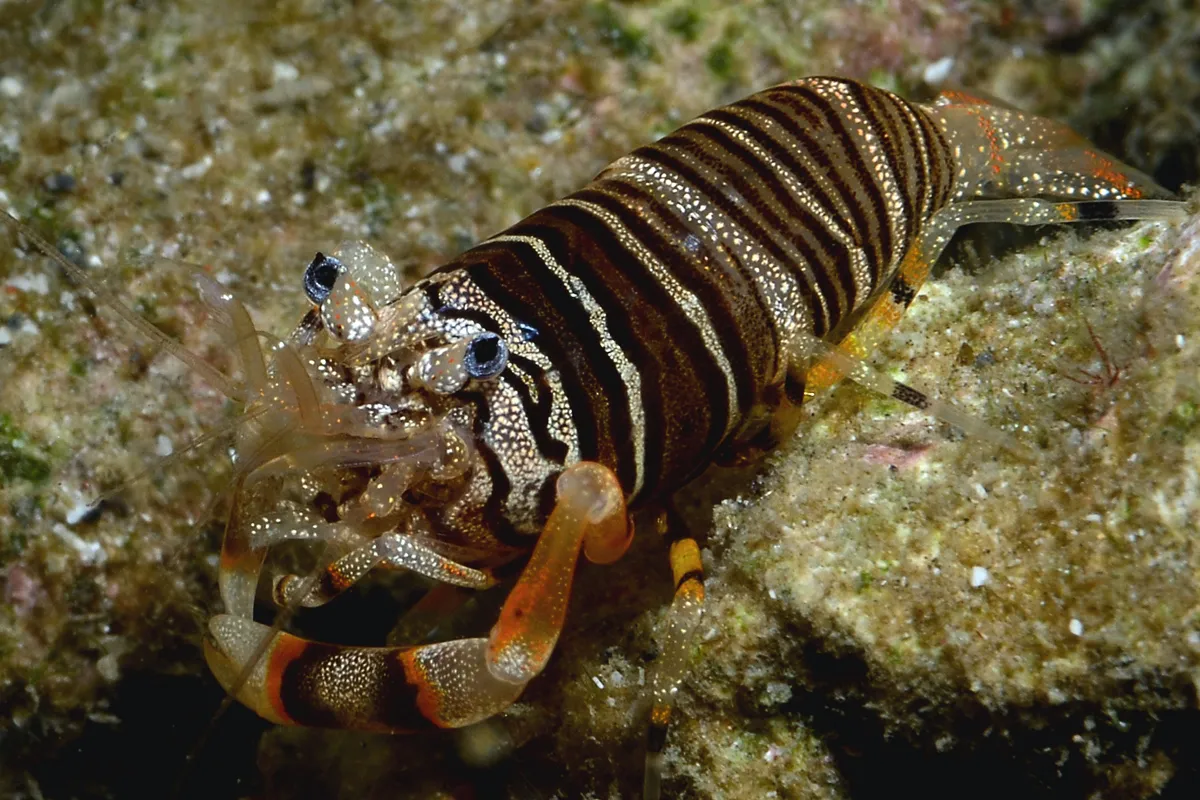
The marine bumblebee shrimp is a tiny, chunky shrimp, about 2 cm long, with dark brown and cream bands and small yellow or white spots. It is not the same as the freshwater "bumblebee" shrimp sold for planted tanks.
Gnathophyllum americanum is a specialist that feeds mainly on the tube feet of starfish and sea urchins. That makes it a fascinating nano-reef inhabitant, but only if you can meet its diet.
Where bumblebee shrimp come from
Despite the name, the species is found in tropical waters worldwide, including the Caribbean, the Atlantic and the Indo-Pacific. It hides under rocks and in crevices, usually near the echinoderms it feeds on.
Appearance and behaviour
Bumblebee shrimp are shy and mostly active at night. They move slowly and spend the day tucked into the rockwork. Pairs often stay close together.
Tank setup
A small reef of 40 litres or more with plenty of live rock suits a pair. Keep it as a species tank or with very peaceful nano fish so the shrimp feel secure enough to come out.
Water parameters

- Temperature: 24–27°C
- pH: 8.1–8.4
- Specific gravity: 1.023–1.025
Like all shrimp, they are sensitive to copper and sudden changes. Drip acclimate them slowly.
Feeding
In the wild they eat starfish and urchin tube feet. In aquariums, many keepers offer pieces of small starfish such as Asterina, or let them graze on urchins. Some accept frozen mysis, brine shrimp and small meaty foods, but not all do. Check before buying.
Tank mates
They will harm starfish and urchins kept in the same tank. Avoid predators such as hawkfish, wrasses and dottybacks that eat small shrimp. Corals are safe.
Breeding
Females carry eggs under the tail, and pairs breed readily in aquariums. The larvae are planktonic and very difficult to raise at home.
Common problems and lifespan
Starvation is the main risk. Like the harlequin shrimp, this is an echinoderm specialist. With the right diet they live two to three years.
Explore other topics
Dive into more aquarium guides across the site.