

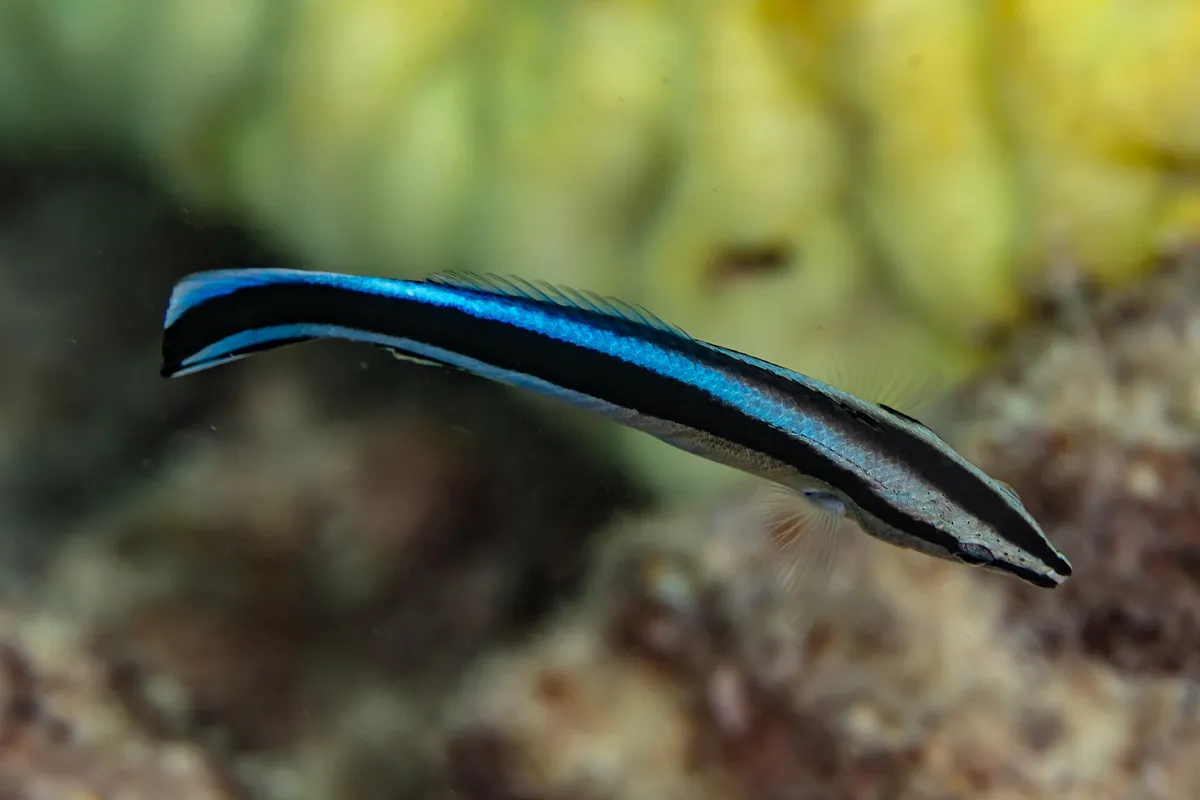
On a coral reef, the bluestreak cleaner wrasse runs a cleaning station. Larger fish line up, open their mouths and gills, and let this small wrasse pick off parasites, dead skin and mucus. Labroides dimidiatus is one of the most important fish on the reef, and one of the hardest to keep alive in an aquarium.
This guide explains why, what an experienced keeper would need to provide, and better choices for most home tanks.
Where cleaner wrasses come from
The species is found across the Indo-Pacific and Red Sea, from East Africa to the central Pacific. Each cleaning station is run by a male and a small group of females, and it may serve thousands of client fish every day. Studies show that removing cleaners from a reef lowers the number and health of the fish living there, which is why some countries limit their collection.
Appearance and behaviour
Cleaner wrasses grow to about 10–12 cm. They have a slender body, a black stripe running from the snout to the tail, and a bright blue back and tail. Juveniles are black with a blue line. They swim with a bobbing, dancing motion that signals to other fish that they are cleaners.
Why they struggle in aquariums
Cleaner wrasses feed almost entirely on parasites and mucus from other fish. In a home tank there are far too few clients and parasites to feed them, and many refuse prepared foods. Most slowly starve within weeks or months. They can also over-clean tank mates, stressing them.
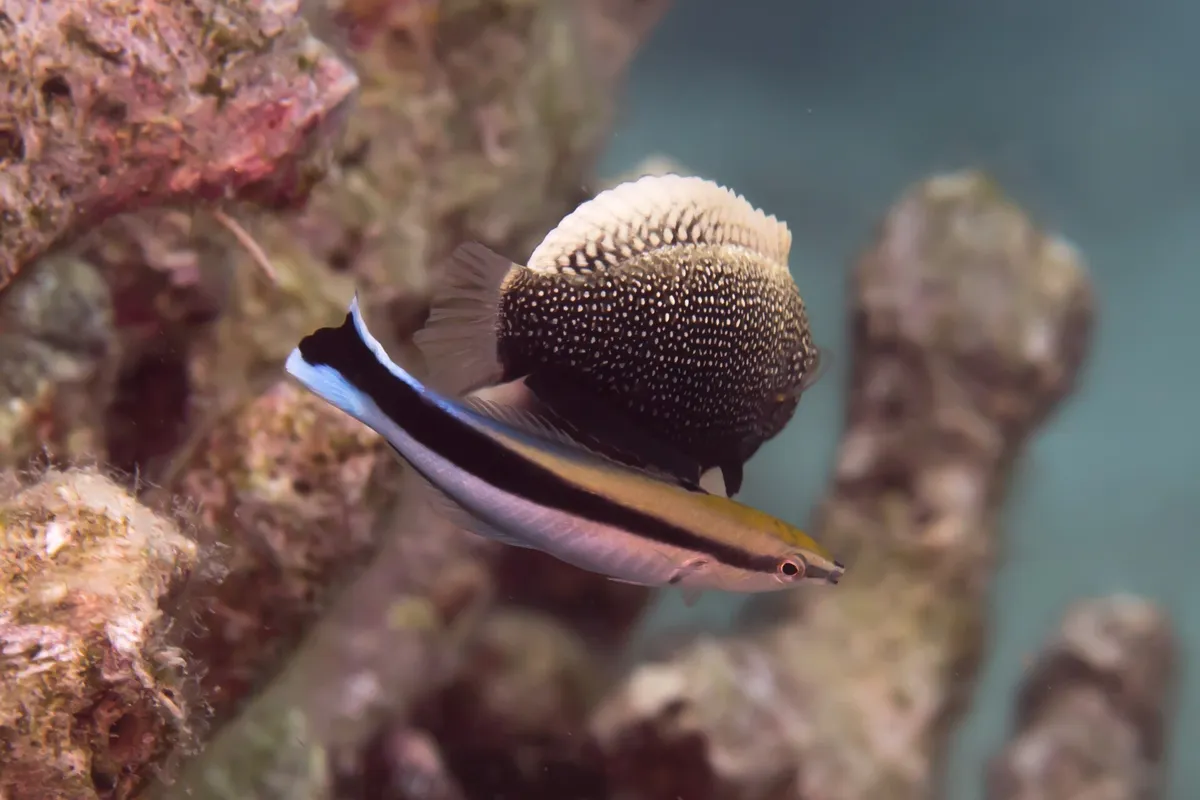
If you keep one: tank setup and water
Only experienced reef keepers should try. Use a mature tank of 400 litres or more, with lots of live rock and many larger fish to clean. Keep standard reef parameters: 24–27°C, specific gravity 1.023–1.026 and pH 8.1–8.4. Cover the tank, as they jump.

Feeding
The keepers who succeed feed small amounts many times a day, ideally with an automatic feeder. Offer finely chopped mysis, enriched brine shrimp, fish roe and live copepods, and watch closely to confirm the fish is eating. A cleaner that is not eating within a few days of arrival rarely recovers.
Tank mates
Keep it with large, peaceful fish that accept cleaning, such as tangs, angelfish and larger wrasses. Avoid predators that might eat a small fish, and small, nervous fish that are stressed by constant cleaning.
Better choices for most tanks
If you want a cleaner in your tank, there are much better options. Skunk cleaner shrimp and the fire shrimp clean fish and eat prepared foods happily. The neon goby is a fish that cleans and is often captive bred. None of these replaces good quarantine, which is the real way to keep parasites out.
Breeding
Cleaner wrasses change sex: when a station's male dies, the largest female becomes male. They have not been bred in significant numbers, so almost all are wild caught.
Common problems and lifespan
Starvation is the main cause of death. In the wild, cleaner wrasses live about four years. In aquariums, most live a fraction of that. We recommend leaving them on the reef unless you can meet their needs.
Explore other topics
Dive into more aquarium guides across the site.