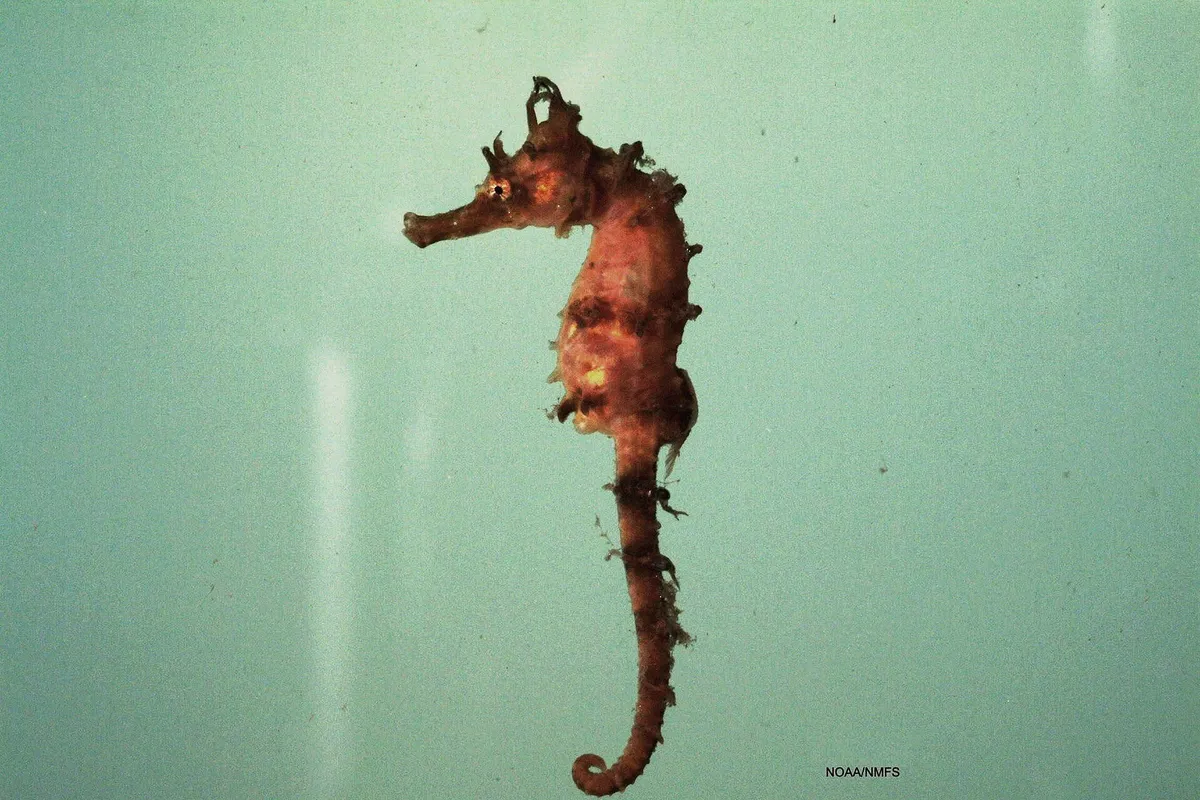
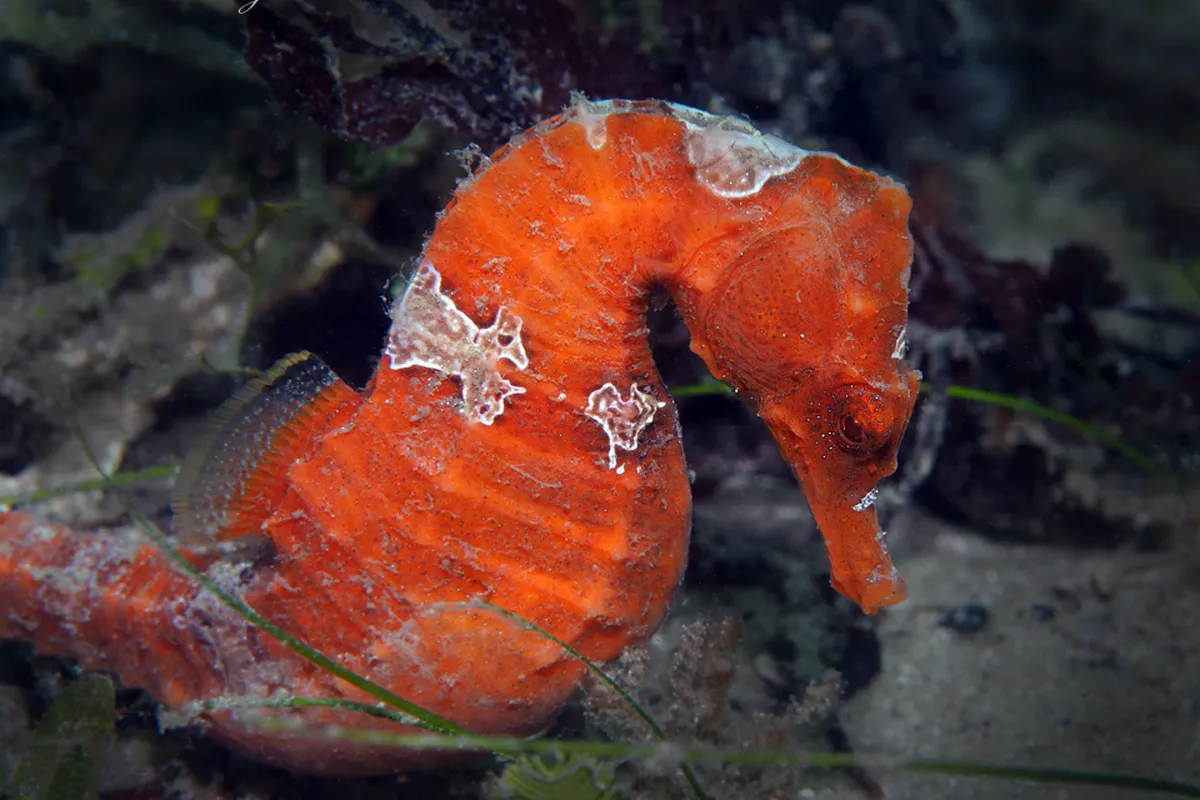
The lined seahorse is the best seahorse for most people starting out. Hippocampus erectus is large, tough, widely bred in captivity and happy to eat frozen food. It comes in a wide range of colours, from black and grey to yellow, orange and red, and pairs often greet each other each morning with a colour-changing dance.
Seahorses still need their own kind of tank. They are slow, gentle feeders that cannot compete with normal reef fish, and they need cooler water and calm flow. Set up for them from the start.
Where lined seahorses come from
Lined seahorses live along the western Atlantic, from Nova Scotia down the US coast to the Gulf of Mexico, the Caribbean and Venezuela. They are found in seagrass beds, mangroves, sponge gardens and around docks, holding on with their tails. Wild seahorses are protected in many places, so always buy captive-bred animals.
Appearance and behaviour
Adults reach about 15 cm tall, sometimes more. The name comes from thin white lines that often run along the neck and body. Males have a smooth brood pouch on the belly; females have a pointed belly behind the anal fin.
Seahorses are slow swimmers that spend most of their time wrapped around a hitching post. They are peaceful and social, and do well in pairs or small groups.
Tank setup
A pair needs a tank of at least 110 litres and preferably 45 cm or more tall, since seahorses are tall fish that court vertically. Provide plenty of hitching posts: macroalgae, artificial plants, branching gorgonians and rope. Keep flow gentle and diffused, and cover pump intakes so tails do not get sucked in. A protein skimmer helps with waste from their heavy feeding.

Water parameters
Keep the temperature at 22–25°C; higher temperatures encourage bacterial infections. Salinity should be 1.023–1.025, pH 8.1–8.4, with ammonia and nitrite at zero and nitrate low. Many keepers use a chiller in warm climates. Our guide to controlling nitrates is useful with these messy eaters.
Feeding
Seahorses have no stomach and need to eat often. Feed good frozen mysis, thawed and rinsed, twice a day, and enrich it from time to time with vitamins. Captive-bred lined seahorses usually take frozen mysis from a feeding dish. Remove uneaten food after an hour.
Tank mates
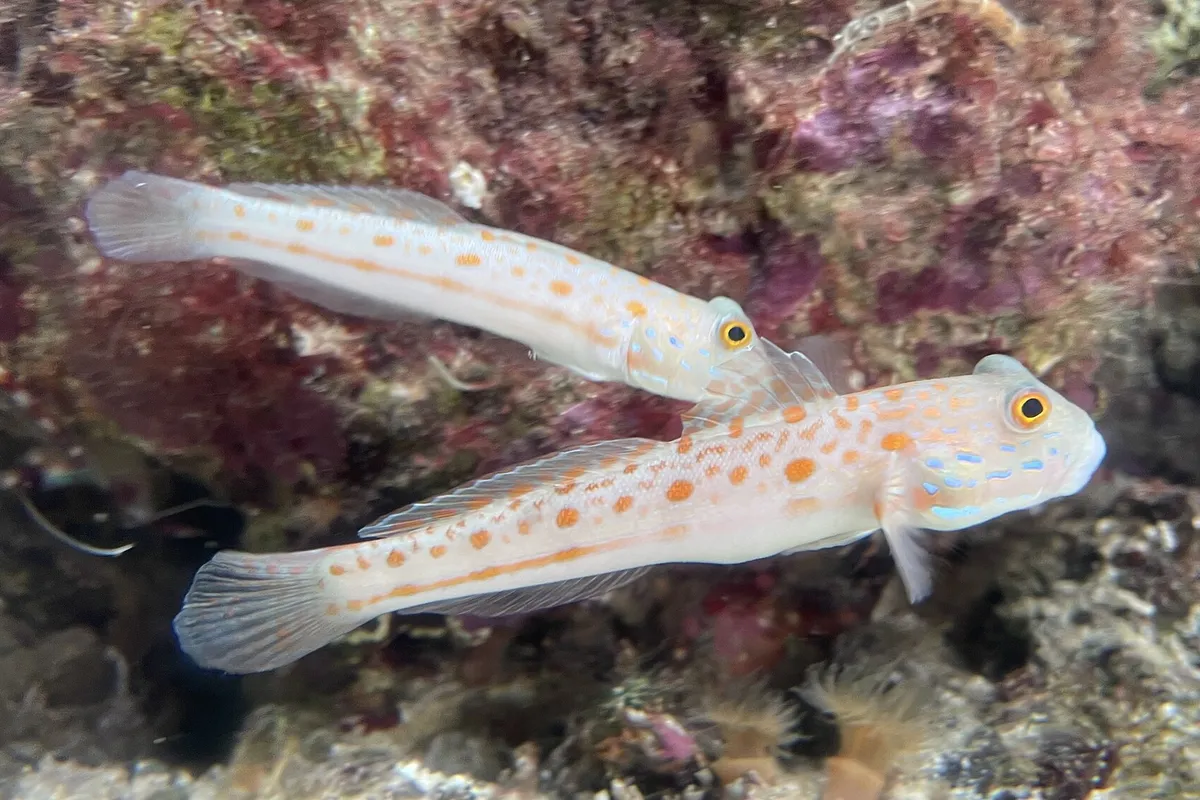
The safest choice is a seahorse-only tank. If you add others, choose small, slow, peaceful species: pipefish, small gobies, firefish, and clean-up snails. Avoid fast feeders, crabs, anemones and stinging corals, which can harm seahorses.
Breeding
Lined seahorses breed readily. The female transfers eggs to the male's pouch, and he gives birth to hundreds of fry after about two to three weeks. Raising them needs a separate nursery tank and newly hatched brine shrimp or copepods many times a day.
Common problems and lifespan
Bacterial infections, gas bubble disease and poor feeding are the main problems, often linked to warm water and poor water quality. Keep the tank cool and clean and use a quarantine tank. With good care lined seahorses live 4–6 years.
Explore other topics
Dive into more aquarium guides across the site.