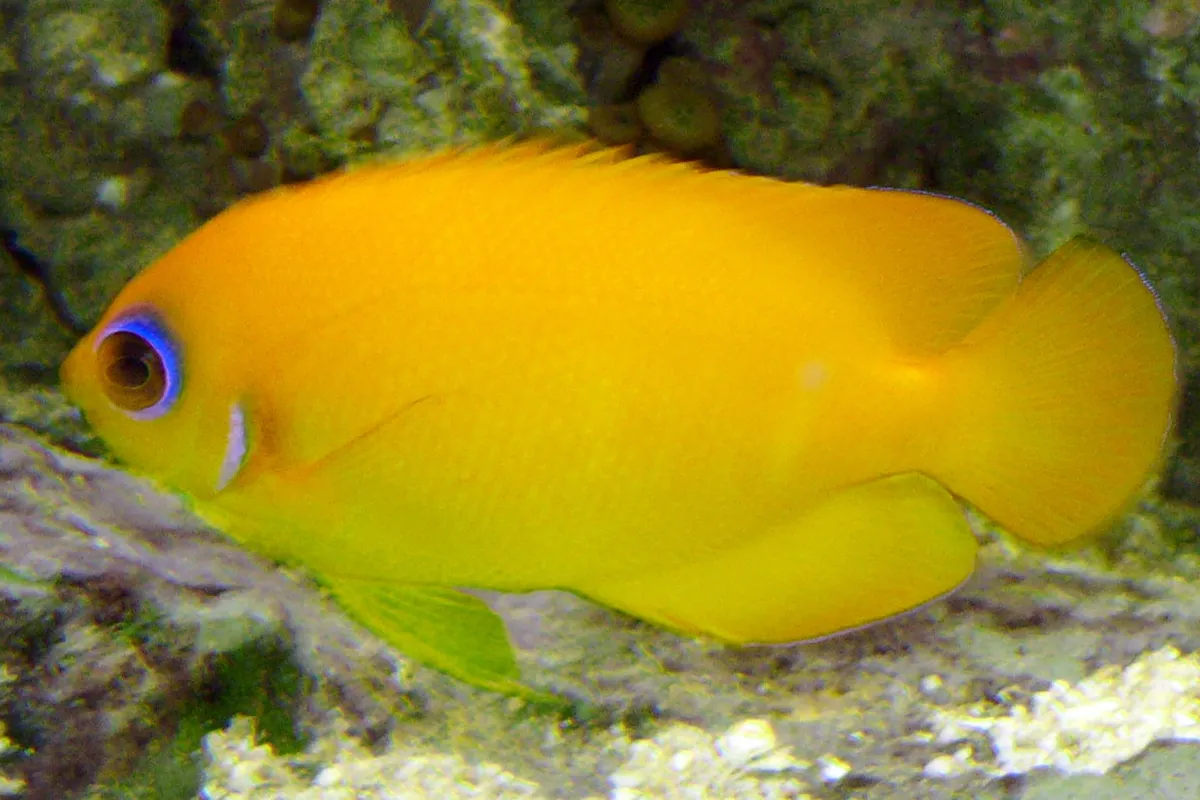
The lemonpeel angelfish is about as yellow as a fish can be. Its whole body is bright lemon, with an electric blue ring around each eye and blue edges on the gill cover and fins. Centropyge flavissima is a small, active angelfish that brings a lot of colour to a reef or fish-only tank.
Like most dwarf angels, it is a grazer that needs mature rockwork and a varied diet. It may also nip some corals and clams, so it is a fish to choose carefully for a reef.
Where lemonpeel angelfish come from
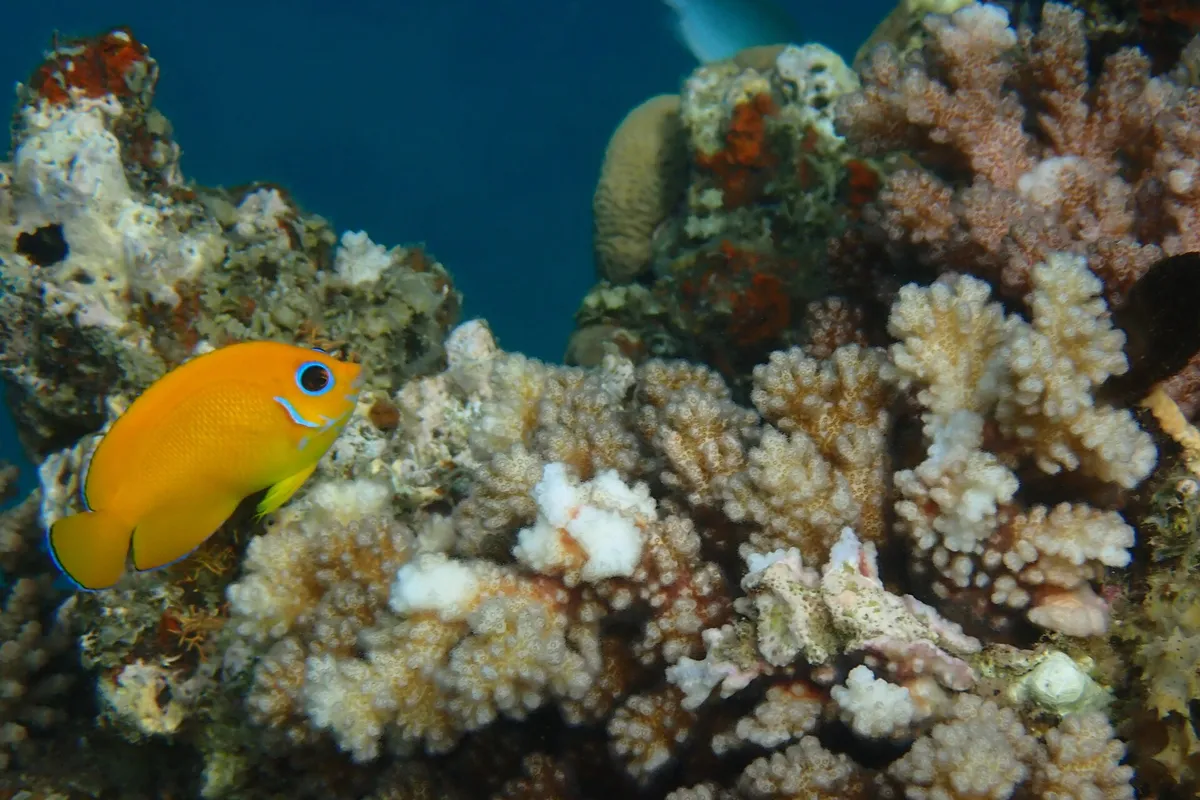
Lemonpeels range from Christmas and Cocos-Keeling Islands in the eastern Indian Ocean across the Pacific to the Line, Marquesas and Ducie islands, north to southern Japan and south to the Great Barrier Reef and New Caledonia. They are found mostly around oceanic islands, on shallow reef flats, lagoons and outer reefs, usually in small harem groups among coral rubble.
Where its range overlaps with the eibli angelfish, it sometimes hybridises, giving fish with odd markings.
Appearance and behaviour
Adults reach 10–14 cm. The body is solid yellow, with a blue eye ring and blue edging on the gill cover, dorsal and anal fins. Juveniles have a blue-ringed black spot on each side that fades with age. Like all Centropyge, they have a strong spine at the base of the gill cover.
Lemonpeels are semi-aggressive. They chase other dwarf angels and similar-shaped fish, so keep only one per tank unless the tank is very large and you add them together.
Tank setup
One lemonpeel needs at least 200 litres, with plenty of mature live rock full of caves and grazing surfaces. Add it only after the tank has run for six months or more, so there is a film of algae and tiny animals to pick at. Moderate flow and good lighting suit it.

Water parameters
Keep the temperature at 24–27°C, salinity at 1.023–1.025, pH 8.1–8.4 and nitrate and phosphate low. Read our guide to phosphates if algae is getting out of hand. Stable conditions matter more than perfect numbers.
Feeding
Lemonpeels are omnivores that graze algae and small invertebrates all day. Feed a varied diet two or three times a day: spirulina and algae-based frozen foods, nori, marine pellets, mysis and brine shrimp. A diet without enough plant matter leads to faded colour.
Tank mates
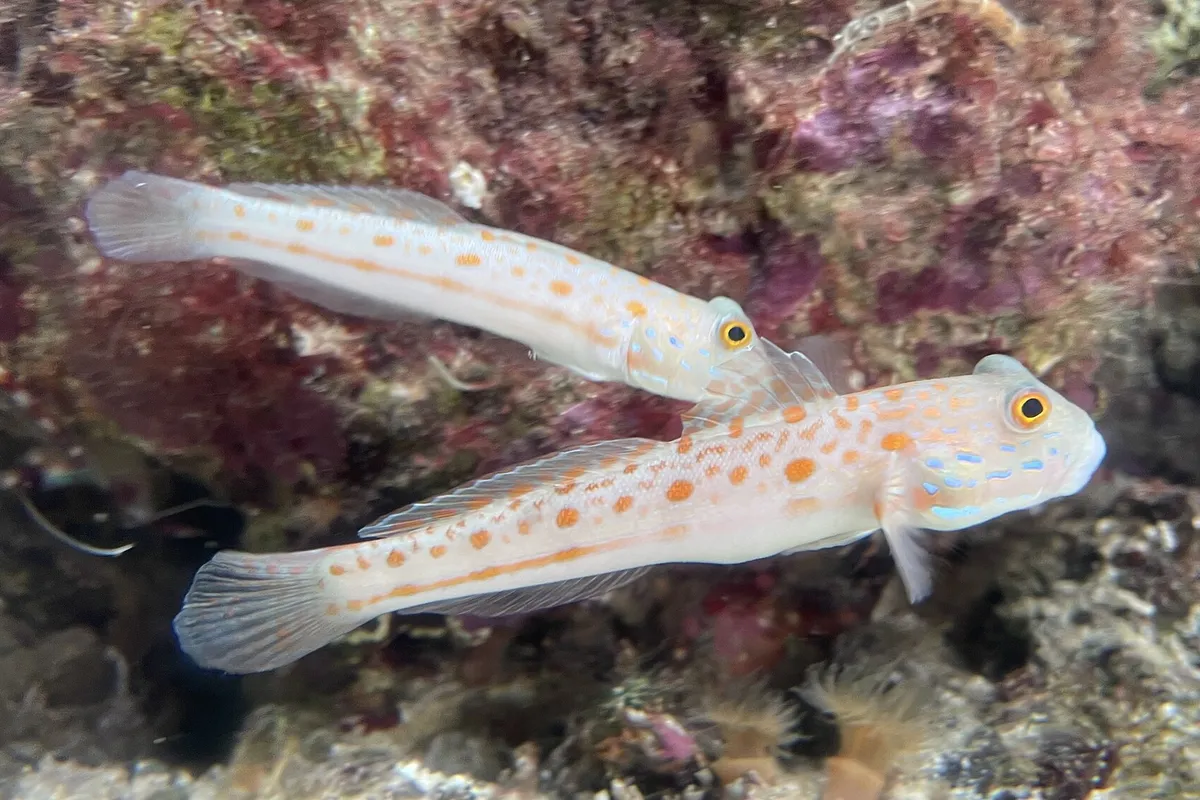
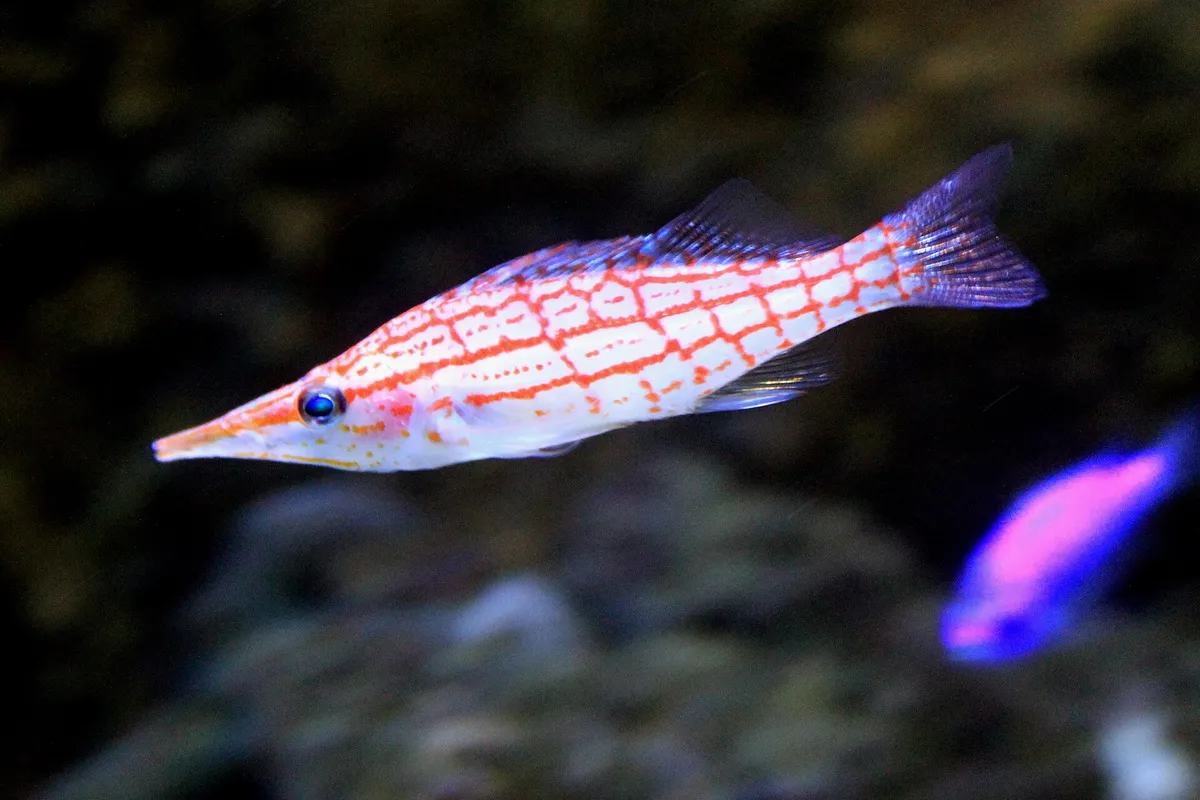
Good companions include tangs, clownfish, wrasses, gobies, hawkfish and cardinalfish. Avoid other dwarf angels unless the tank is large, and avoid very aggressive fish such as large dottybacks. In a reef, watch large-polyp stony corals, zoanthids and clam mantles, which some individuals nip. Soft corals are usually safer.
Breeding
Lemonpeels start life as females, and the dominant fish in a group turns male. They spawn at dusk in aquariums, but the larvae are tiny and almost never raised at home. Nearly all lemonpeels sold are wild caught.
Common problems and lifespan
Lemonpeels can be shy and slow to feed after shipping, and are prone to marine white spot and velvet. Quarantine them in a quarantine tank, offer a range of foods, and add them before other territorial fish. With good care they live 5–10 years.
Explore other topics
Dive into more aquarium guides across the site.