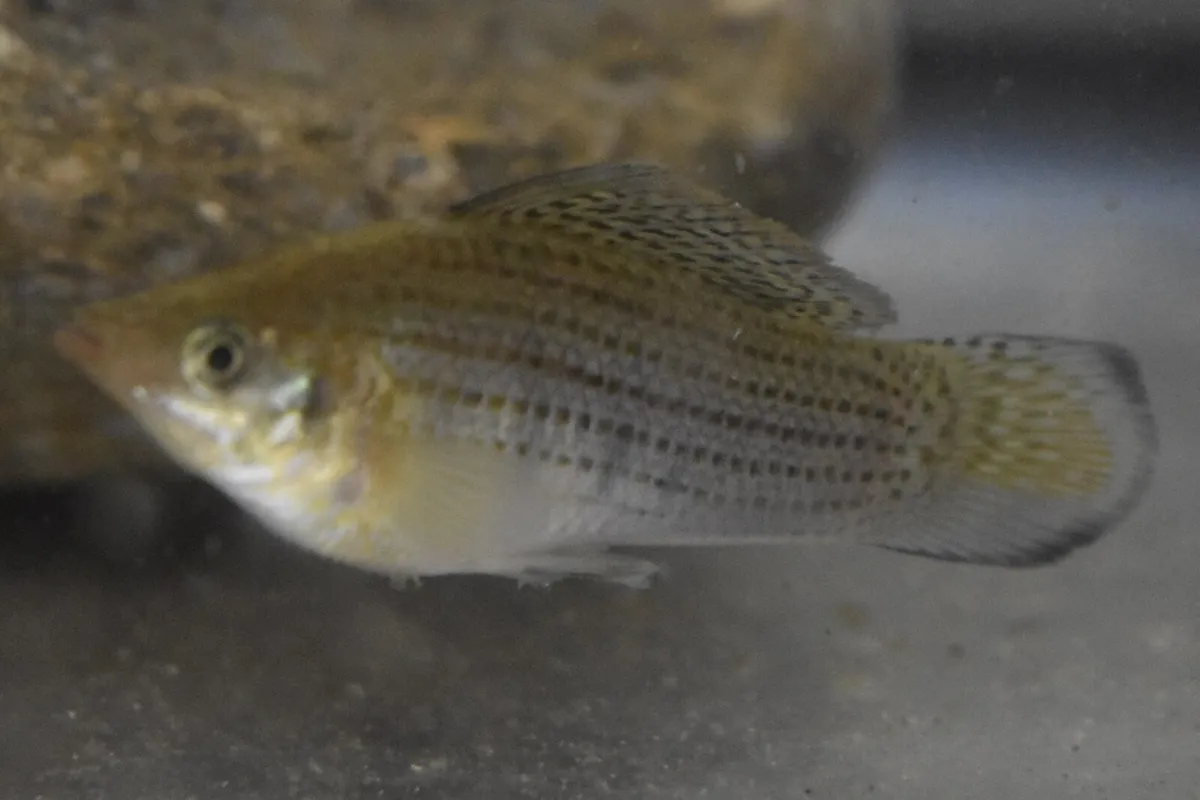
The sailfin molly is the fish behind many of the fancy mollies in pet stores. Males raise a tall, sail-like dorsal fin to show off to females and rivals, and a well-kept group in a large tank is a real display. Poecilia latipinna is also one of the toughest freshwater fish you can buy, happy in hard water, brackish water and even full seawater.
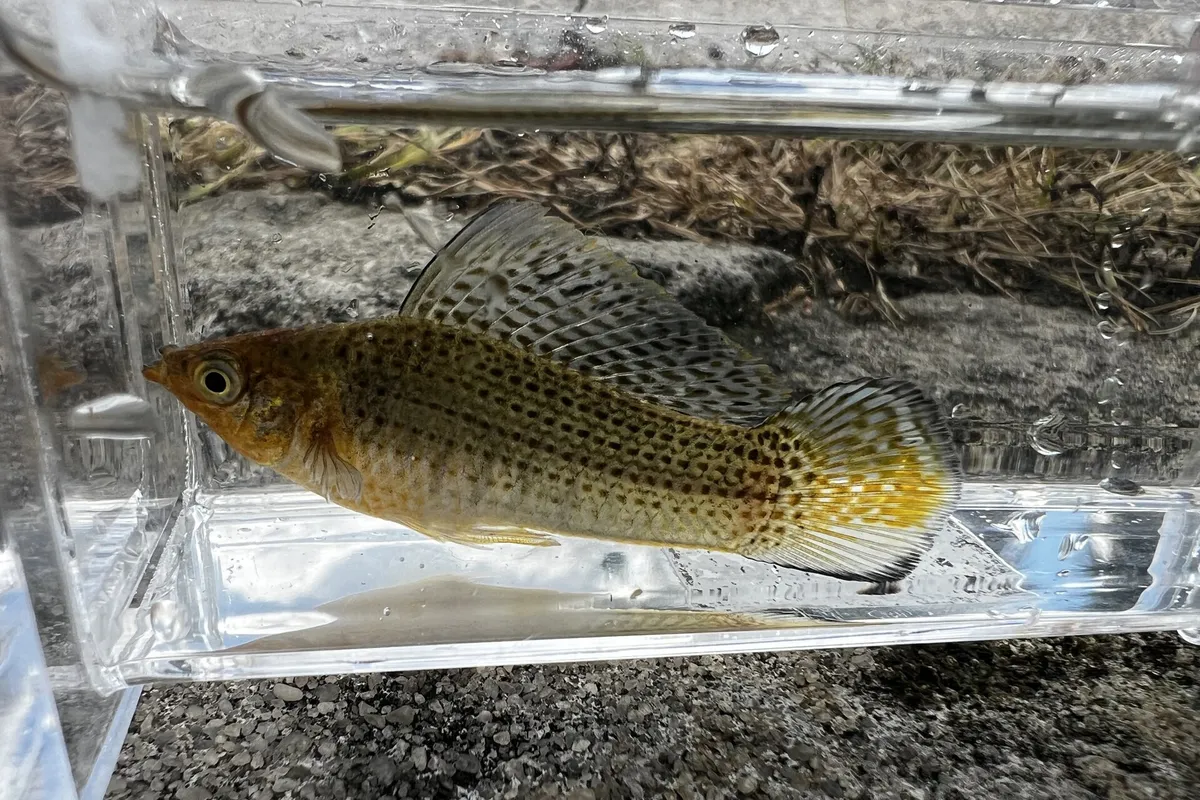
Wild-type fish are olive-grey with rows of dark spots, while store varieties come in black, gold, white, dalmatian and lyretail forms. Many of these are hybrids with other molly species, but they all need the same basic care.
Where sailfin mollies come from
Sailfin mollies are native to the coastal lowlands of the southeastern United States and northeastern Mexico, from North Carolina to Florida and along the Gulf of Mexico. They live in marshes, ditches, ponds, estuaries and salt marshes, often in shallow, warm, salty water. Released fish have established populations in many other parts of the world.
Appearance and behaviour
Females reach 8–10 cm, and males are usually a little smaller. Mature males have the huge dorsal fin with 14 or more rays and a gonopodium, a modified anal fin used for mating. Females have a normal anal fin and a rounder belly.
Sailfin mollies are peaceful but active, and they graze constantly. Males chase females and display at each other, so keep two or three females for every male.
Tank setup
Because males need room to grow their sail, give a group at least 120 litres, and more is better. Use a long tank with open swimming space, plants and some rocks or driftwood. Sailfins kept in cramped or cool tanks often never develop full fins. Good filtration and some surface movement keep the water clean and well oxygenated.
Water parameters

Sailfin mollies need hard, alkaline water: pH 7.5–8.5 and a GH of 15 or higher. Keep the temperature at 24–28°C. Soft or acidic water is the main cause of illness in mollies. Many keepers add a little marine salt (about 1–3 g per litre), and the fish can be moved slowly to brackish or marine water if you want to keep them with other brackish species. Read our guide to GH for freshwater fishkeepers.
Feeding
Mollies are grazers and need plenty of plant matter. Feed a spirulina or vegetable flake as the main food, with blanched spinach, zucchini and peas, and let them graze algae in the tank. Add frozen or live brine shrimp, daphnia and bloodworms a few times a week.
Tank mates
Good companions are other hard-water fish: platies, swordtails, larger rainbowfish, and peaceful Central American cichlids such as firemouths. In brackish water, they pair well with bumblebee gobies and other brackish species. Avoid fin-nippers, which will target the males' sails.
Breeding
Sailfin mollies are livebearers and breed readily. Females can store sperm and give birth to 20–80 fry every four to six weeks. Adults may eat the fry, so provide dense plants or a separate nursery tank. The fry are large enough to eat crushed flake and baby brine shrimp from birth. Our livebearers guide covers the basics.
Common problems and lifespan
Soft water, cool water and poor water quality cause most problems, especially "shimmying", where the fish rocks in place, and fungal infections. Fixing the water usually fixes the fish. Overpopulation is the other common issue, so plan where the fry will go. For a smaller relative, see our black molly guide.
Sailfin mollies live about three to five years.
Explore other topics
Dive into more aquarium guides across the site.