

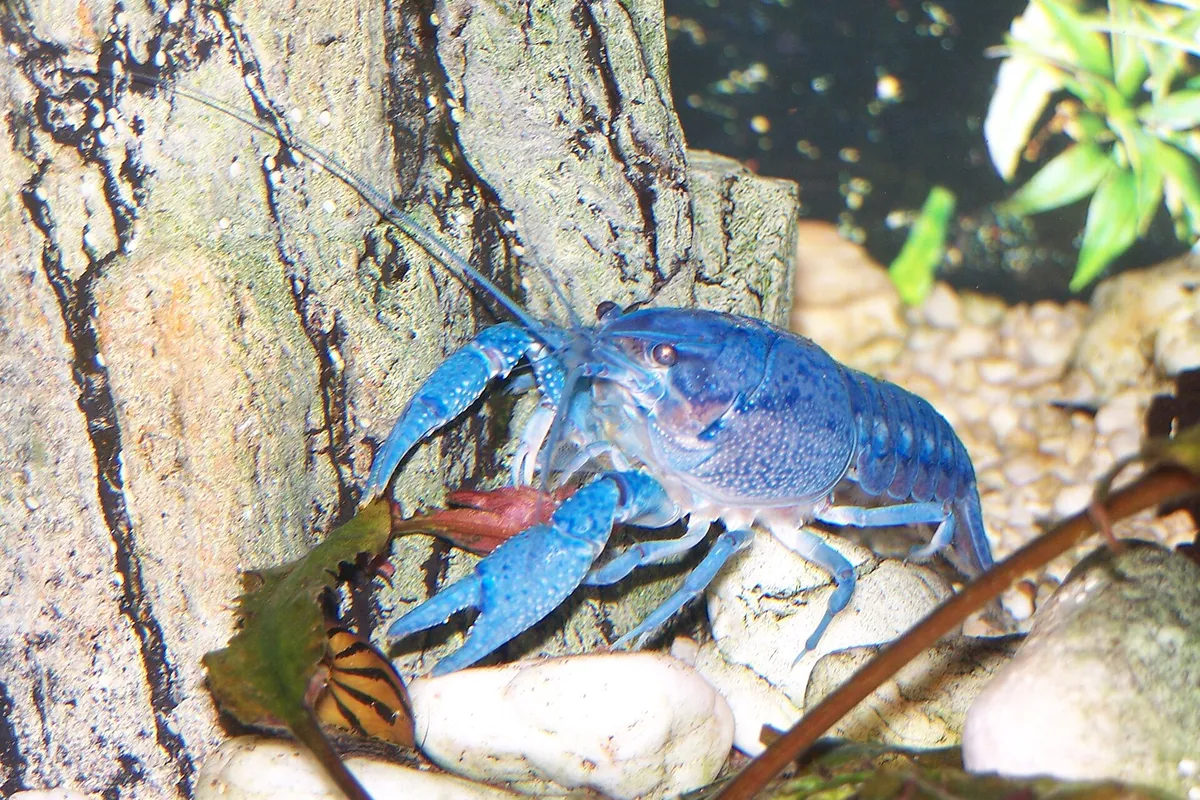
The blue crayfish, also called the electric blue or Florida crayfish, is hard to miss. Bred aquarium lines of Procambarus alleni are a bright cobalt to sky blue from claw to tail. They are tough, easy to feed and full of personality, rearranging the tank and waving claws at anything that passes.
They are also escape artists, plant shredders and fish catchers. Kept alone in a secure tank they are a great pet; added to a community tank they usually cause trouble.
Check the rules first
Several crayfish species are invasive outside their native range. In the European Union, Canada and some US states, keeping or selling certain crayfish is restricted or banned. Check your local rules before buying, and never release a crayfish or its water into the wild.
Where blue crayfish come from
Procambarus alleni is native to Florida, where it lives in marshes, ditches and the Everglades. Wild animals are usually brown or blue-brown; the bright blue colour comes from selective breeding of a natural colour form.
Appearance and behaviour
Adults reach 10–12 cm. Males have larger claws and hook-like structures on the walking legs used for mating. Blue crayfish are active and often out in the open, digging, climbing and moving décor. They are territorial with each other, so keep one per tank unless the tank is large with many hides.
Tank setup
One blue crayfish needs at least 75 litres. Provide several caves made from rocks, pipes or driftwood, a sand or fine gravel substrate, and a tight-fitting lid with no gaps around tubes and cables. Crayfish climb filter pipes and air lines to escape. A sponge or canister filter with the intake covered works well.
Water parameters

Keep the temperature at 20–26°C, pH 7.0–8.0 and medium to hard water. Hard water provides calcium for the shell. See our guide to hard water chemistry if your tap water is soft. Never use copper medicines.
Feeding
Blue crayfish are omnivores that eat almost anything. Feed sinking pellets, algae wafers, blanched vegetables such as peas and spinach, and occasional frozen bloodworms or shrimp. Indian almond leaves and oak leaves give them something to graze. Feed once a day and remove leftovers.
Moulting
Young crayfish moult every few weeks, adults every few months. After moulting they hide while the new shell hardens. Leave the old shell in the tank so the crayfish can eat it and recover minerals. Moulting is when crayfish are most at risk from tank mates.
Tank mates
A species tank is the safest choice. Blue crayfish catch slow and bottom-dwelling fish, especially at night, and eat shrimp, snails and plants. If you want fish, choose fast, mid-to-top swimmers too large to catch, such as larger danios or barbs, and expect losses.
Breeding
Blue crayfish breed easily. After mating, the female carries eggs under her tail for three to four weeks, then the young stay with her for a while. Move the female to her own tank before the young leave her, because adults eat the young.
Common problems and lifespan
Escape, failed moults and copper poisoning are the main causes of death. With good care blue crayfish live 2–4 years.
Explore other topics
Dive into more aquarium guides across the site.