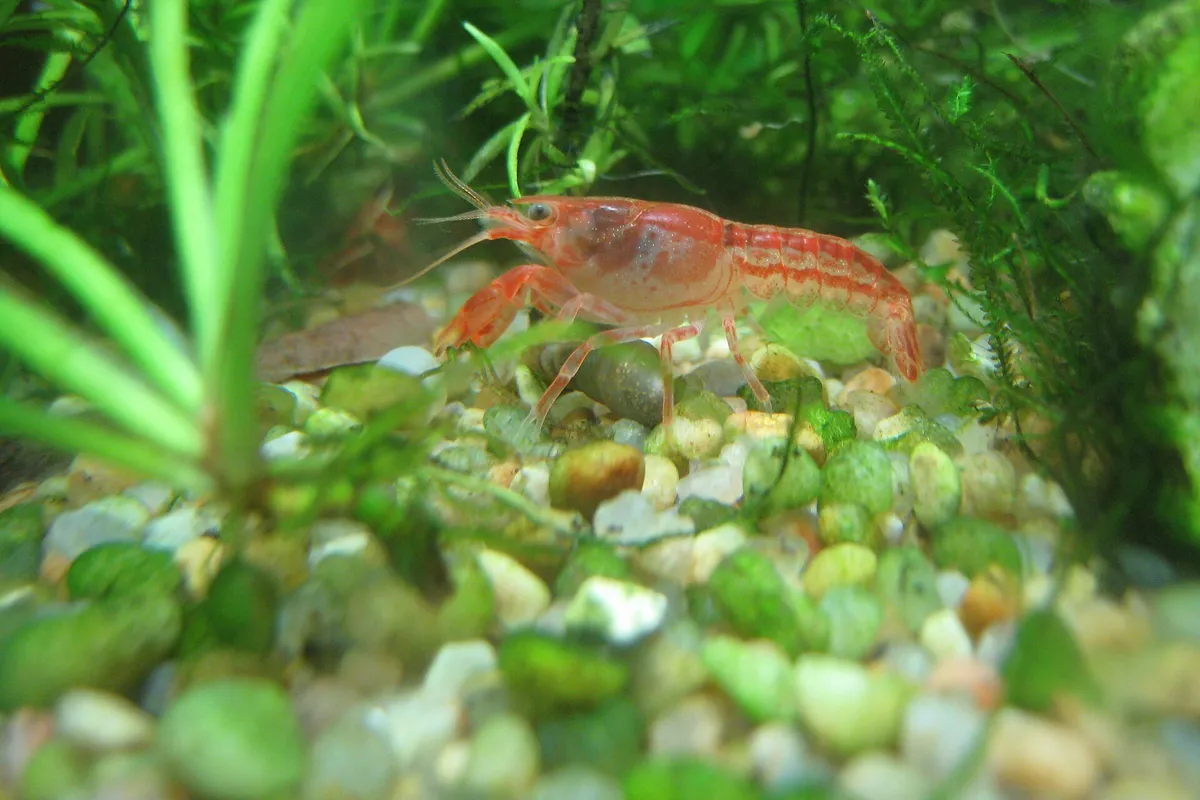
Most crayfish are wrecking balls with claws. The dwarf orange crayfish is the exception. Cambarellus patzcuarensis 'Orange', almost always sold as the CPO, grows to just 3–4 cm, ignores most plants, and lives alongside small fish without turning the tank into a crime scene. It is bright, active in the daytime, and endlessly busy, picking over every leaf and stone.
It is not completely harmless, and it does not live long. Know those two facts before you buy, and the CPO is one of the most rewarding invertebrates for a small tank.
One lake in Mexico
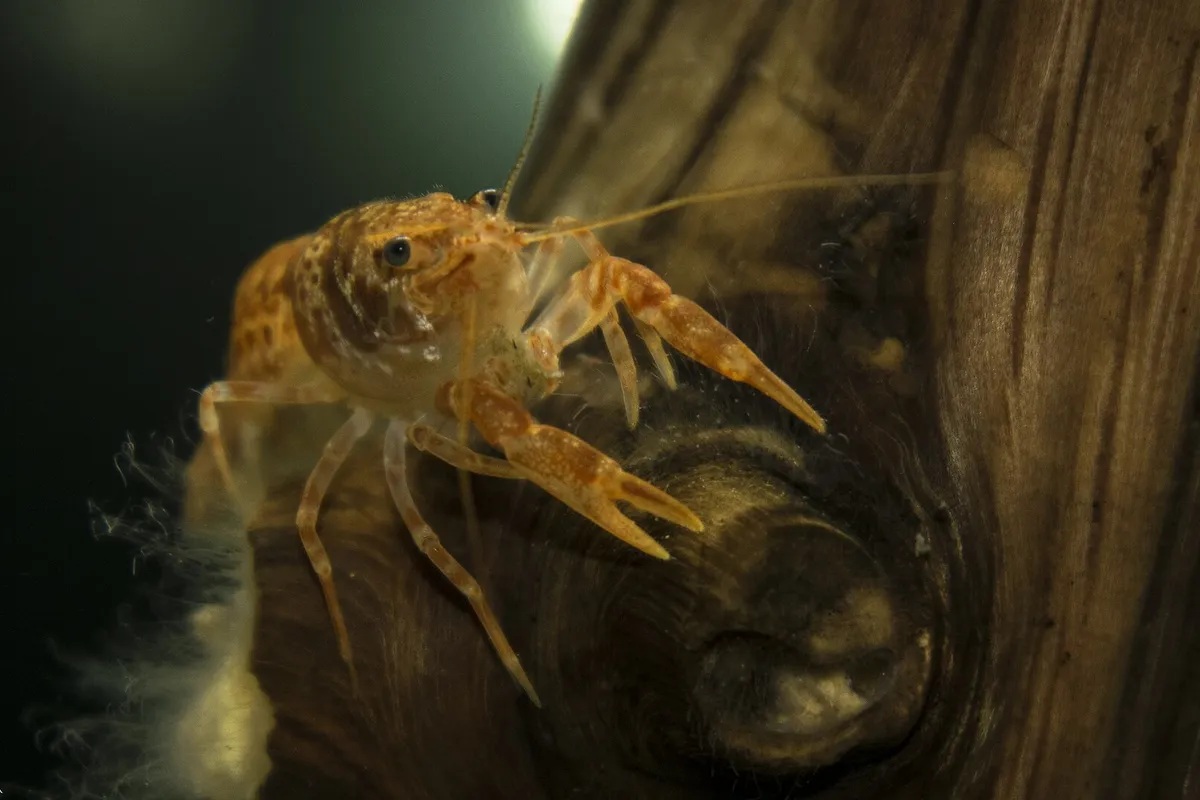
Wild C. patzcuarensis come from Lake Pátzcuaro and nearby waters in the highlands of Michoacán, Mexico. The lake is cool, hard and alkaline, with muddy bottoms and dense plants. The wild form is a mottled grey-brown. The vivid orange animal in shops is a captive-bred colour form, developed by hobbyists and now kept around the world.
In some countries, provinces and states, keeping or moving live crayfish is restricted because escaped crayfish can damage native waters. Check the rules where you live, and never release any crayfish or its offspring outdoors.
Small, orange and busy
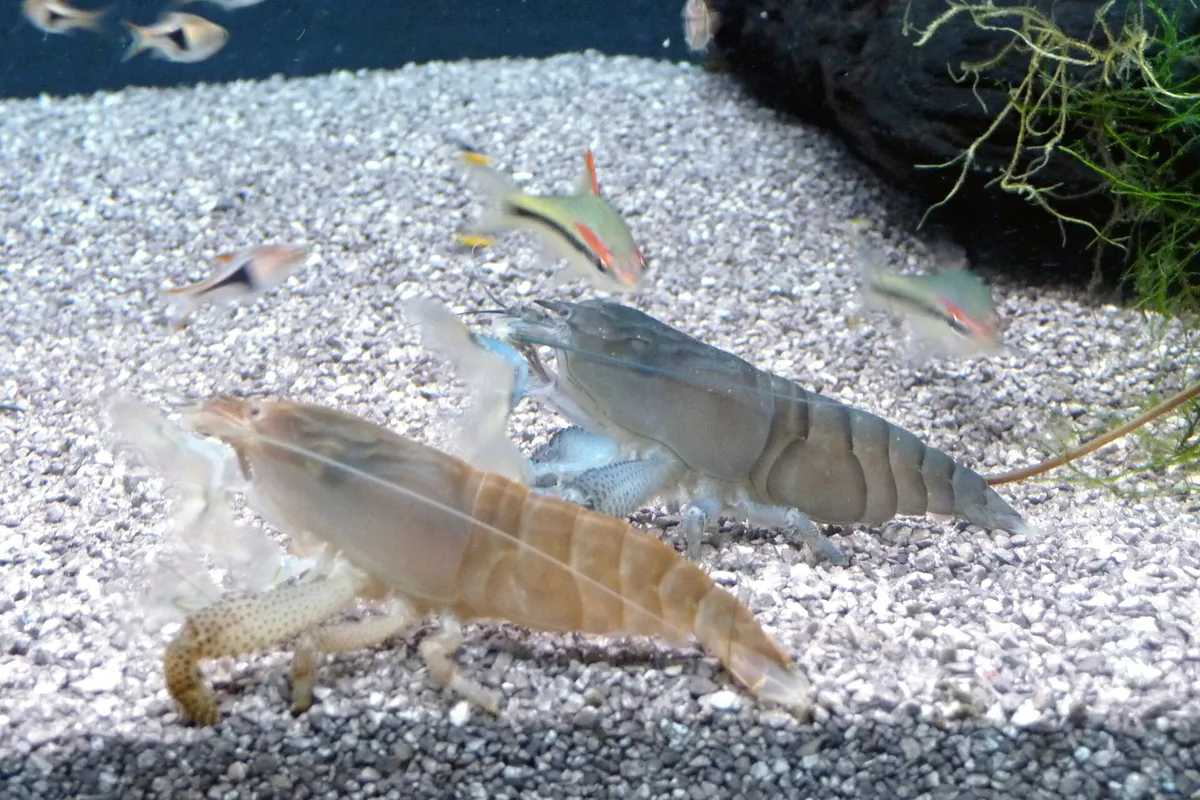
Adults reach about 3–4 cm including claws. Colour runs from pale apricot to deep orange, often with darker stripes or speckles along the back. Unlike most crayfish, CPOs are out in the open for much of the day, climbing plants, sifting the substrate and waving their claws at each other.
Males are easy to sex once you lift one and look underneath: they have hard, forward-pointing swimmerets (gonopods) near the base of the legs, and slightly bigger claws. Females have soft swimmerets and a broader tail for carrying eggs.
Tank setup
A trio or small group fits comfortably in 40–60 litres. Floor space matters more than height. Plenty of cover is essential: caves, tubes, rock piles, wood and dense plants give each animal somewhere to hide, especially while moulting. One male to two or three females keeps squabbling down.
Fine gravel or sand, gentle filtration and a well-fitting lid all help. Crayfish of every size are escape artists and will climb tubing and cables. Cover filter intakes with a sponge, because tiny babies get sucked up easily. A sponge filter is ideal.
Water parameters

CPOs prefer cooler, harder water than many tropical setups. Aim for 18–24°C, pH 7.0–8.0 and moderate to hard water, around GH 8–18 and KH 4–12. They tolerate a wider range, but warm water speeds up their already short lives and soft water causes moulting trouble.
Calcium is key. Crayfish rebuild their shell after every moult, so they need minerals in the water and in their food. Keep ammonia and nitrite at zero in a fully cycled tank, and avoid any medication or fertiliser containing copper.
Feeding
CPOs are scavengers and will eat almost anything. Offer sinking shrimp or crayfish pellets, blanched vegetables such as courgette, spinach and peas, occasional frozen bloodworms or brine shrimp, and dried leaves like Indian almond or oak to graze between meals. Feed small amounts every day or two and remove leftovers within a few hours.
A varied, mineral-rich diet helps them moult cleanly. Feeding enough also matters for peace in the tank: a hungry crayfish is much more likely to grab a sleeping fish or a baby shrimp.
Tank mates
The best companions are small, peaceful fish that stay off the bottom: rasboras, small rainbowfish, endlers, platies and similar hard-water community fish. Snails are usually fine.
Bottom-dwelling fish with long fins, slow fish that sleep on the substrate and very small fry can get pinched. Adult Neocaridina shrimp often coexist, but expect some shrimplets to disappear. Avoid cichlids, loaches, puffers, larger crayfish and anything big enough to eat a moulting CPO.
Moulting and breeding
Young CPOs moult every week or two, adults less often. A freshly moulted crayfish is soft and vulnerable and will hide for a day or two. Leave the old shell in the tank, as the crayfish often eats it to reclaim calcium.
Breeding is easy. After mating, the female carries her eggs under her tail for roughly three to four weeks, fanning them constantly. There is no larval stage: the eggs hatch into miniature crayfish that cling to the mother for a few days before wandering off. Dense moss, plants and leaf litter give them a much better chance of survival.
Lifespan and common problems
Expect about one and a half to two years. That is normal for dwarf crayfish, not a sign of poor care. Death during a moult: usually low minerals, unstable water or a poor diet. Missing claws: fighting between males or a bad moult; claws regrow over several moults. Escapes: any gap in the lid will be found. With cool, hard, stable water and a varied diet, a CPO colony will keep itself going for years as generations replace each other.
Explore other topics
Dive into more aquarium guides across the site.