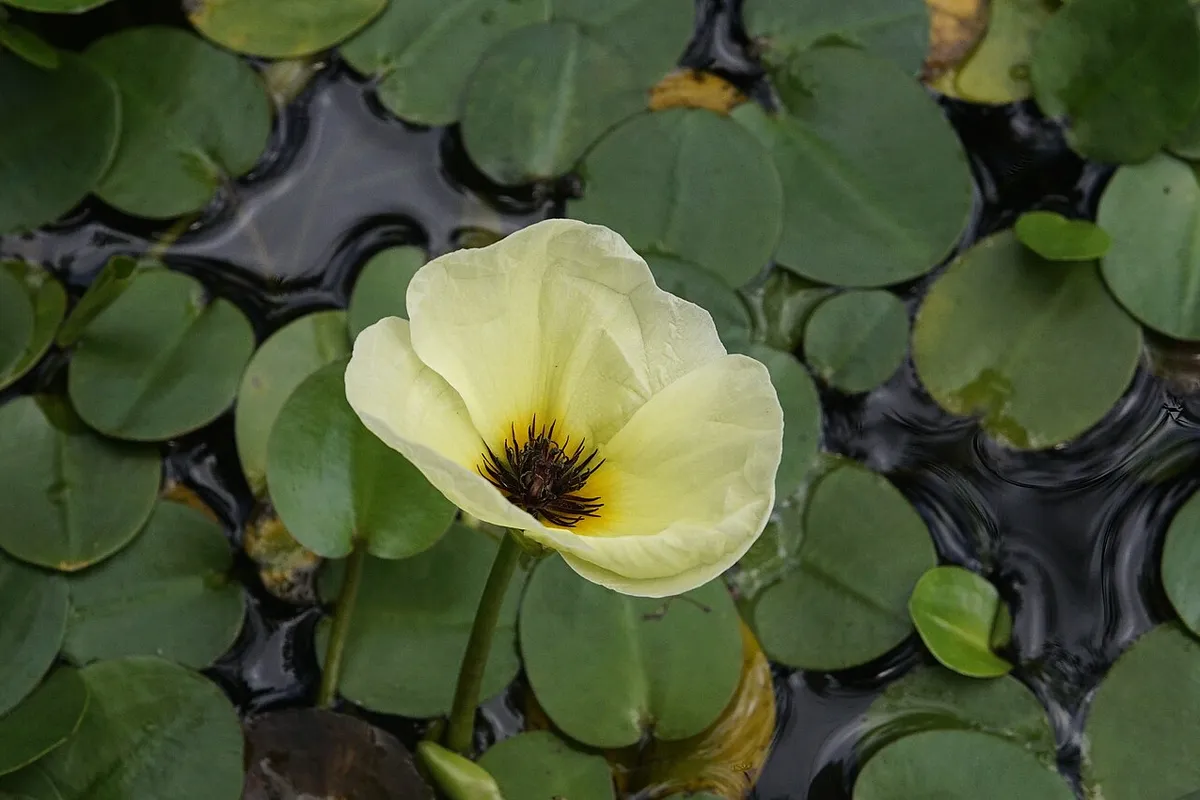
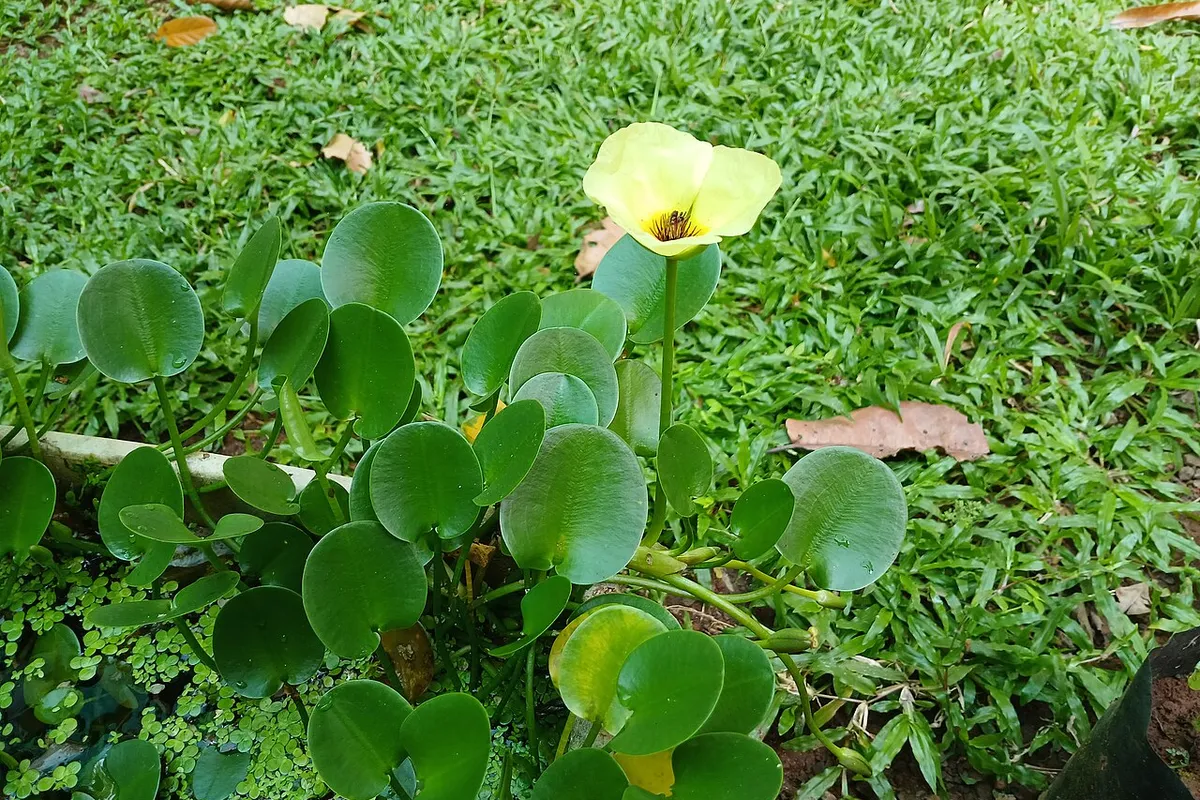
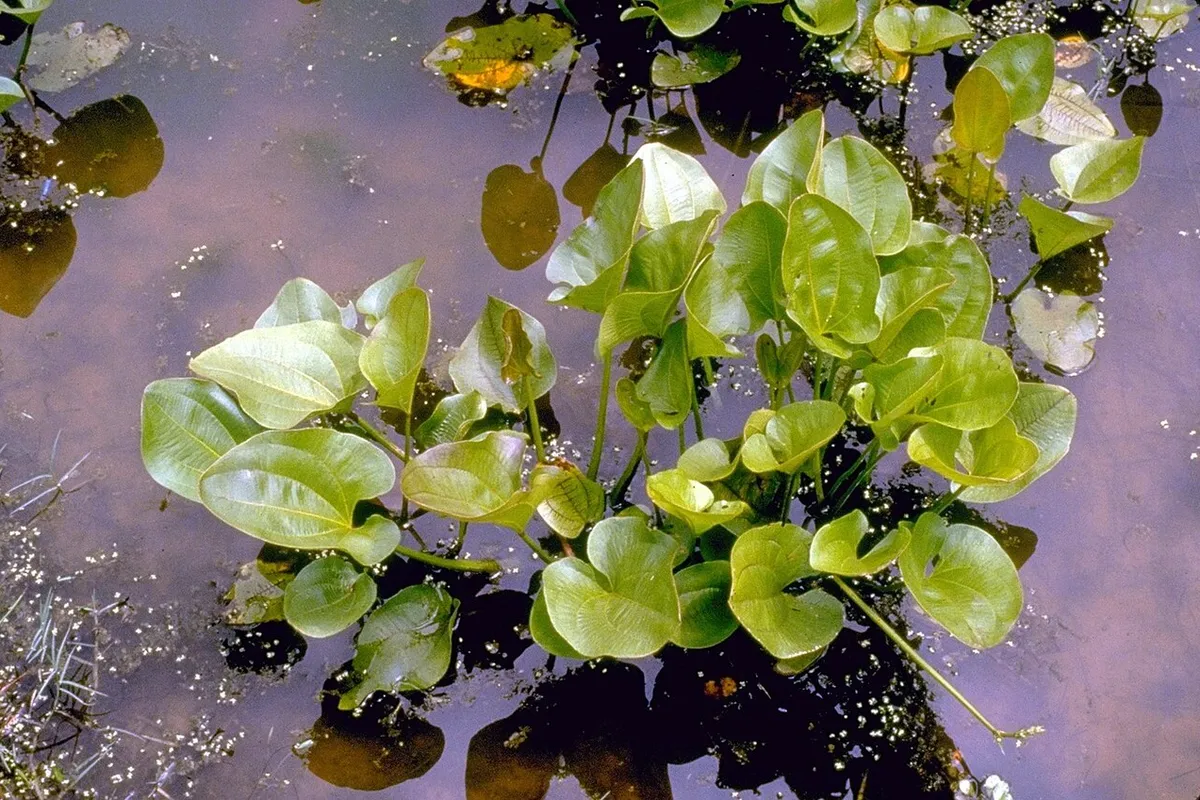
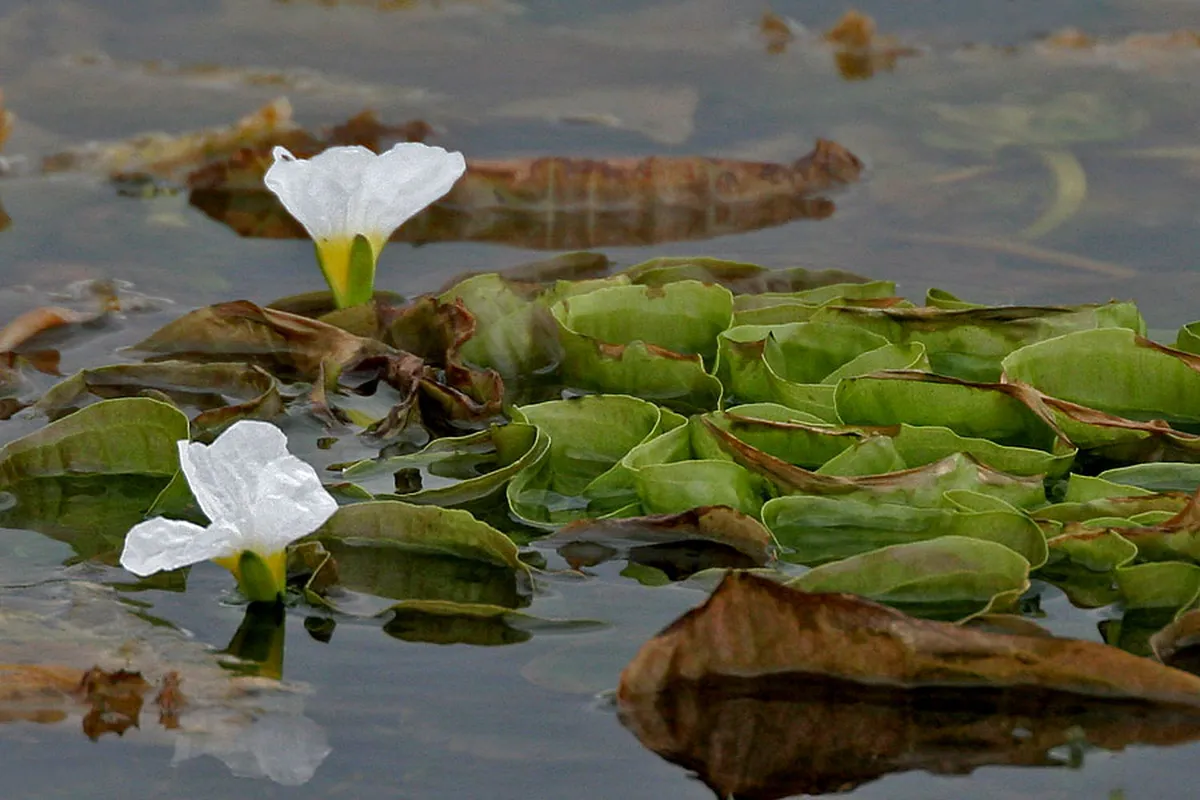
The water poppy has thick, glossy, heart-shaped leaves that float on the surface, and pale yellow flowers with a dark centre that rise just above the water. Each flower lasts a single day, but a healthy plant produces them all summer.
Hydrocleys nymphoides is a surface plant, best suited to ponds, patio tubs and open-top aquariums or paludariums with strong light.
Origin
The species comes from Central and South America, where it grows in still, shallow water of ponds and marshes.
Appearance and growth
The plant spreads by runners that float across the surface, rooting where they touch the bottom. Leaves are 5–8 cm across. Flowers have three rounded petals, like a small poppy.
Placement
Plant it in a pot of rich soil, 10–30 cm below the surface. In an aquarium, it needs an open top and space at the surface. Keep it out of tanks where it would shade everything below.
Light, CO2 and nutrients

Full sun outdoors or strong lights indoors. No CO2 is needed. Feed with pond fertiliser tablets pressed into the pot.
Water conditions
- Temperature: 18–30°C
- pH: 6.0–8.0
- Hardness: any
It is not frost-hardy. In Canada, grow it outdoors only from late spring to early autumn and overwinter a few plants indoors in a bright aquarium or tub.
Propagation and maintenance
Cut runners with new plantlets and pot them up. Thin the plant regularly to stop it covering the whole surface.
Compatibility
Suits ponds and tubs with small fish and snails. Leaves give shade and cover for fish below.
Common problems
Plants stop flowering in low light. It is considered invasive in some warm regions, such as parts of Australia and the southern United States, so never release it into the wild.
Explore other topics
Dive into more aquarium guides across the site.