

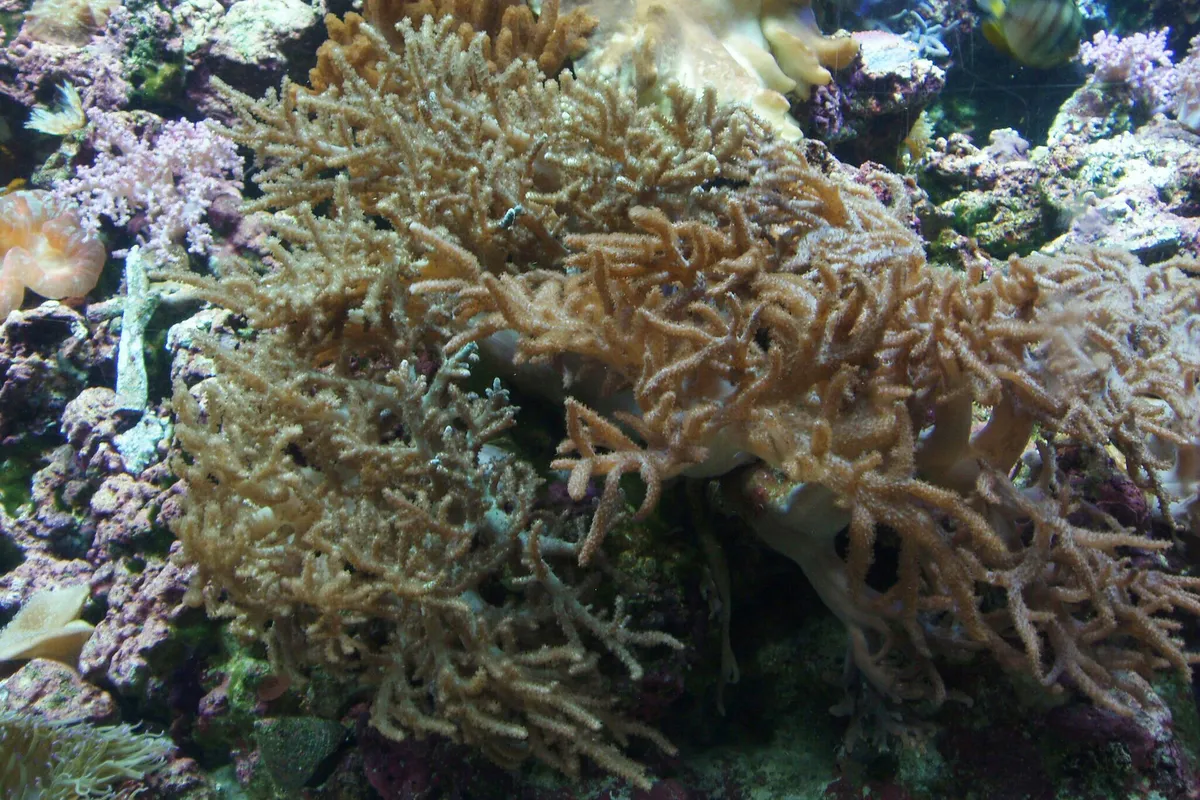
Finger leather corals are among the toughest corals you can buy. Sinularia species grow as a soft, leathery base topped with branches or lobes that sway in the current, in shades of tan, cream, green and brown. They grow quickly, recover from mistakes and make an excellent first coral.
Their one downside is chemical. Like other leather corals, they release compounds into the water to fend off competitors, which can slow down stony corals in the same tank.
Where finger leather corals come from
There are more than 150 Sinularia species across the Indo-Pacific and Red Sea. Common aquarium types include S. flexibilis (flexible or finger leather) and S. dura (cabbage leather). They grow on reef flats and slopes, often covering large areas of rock.
Appearance and behaviour
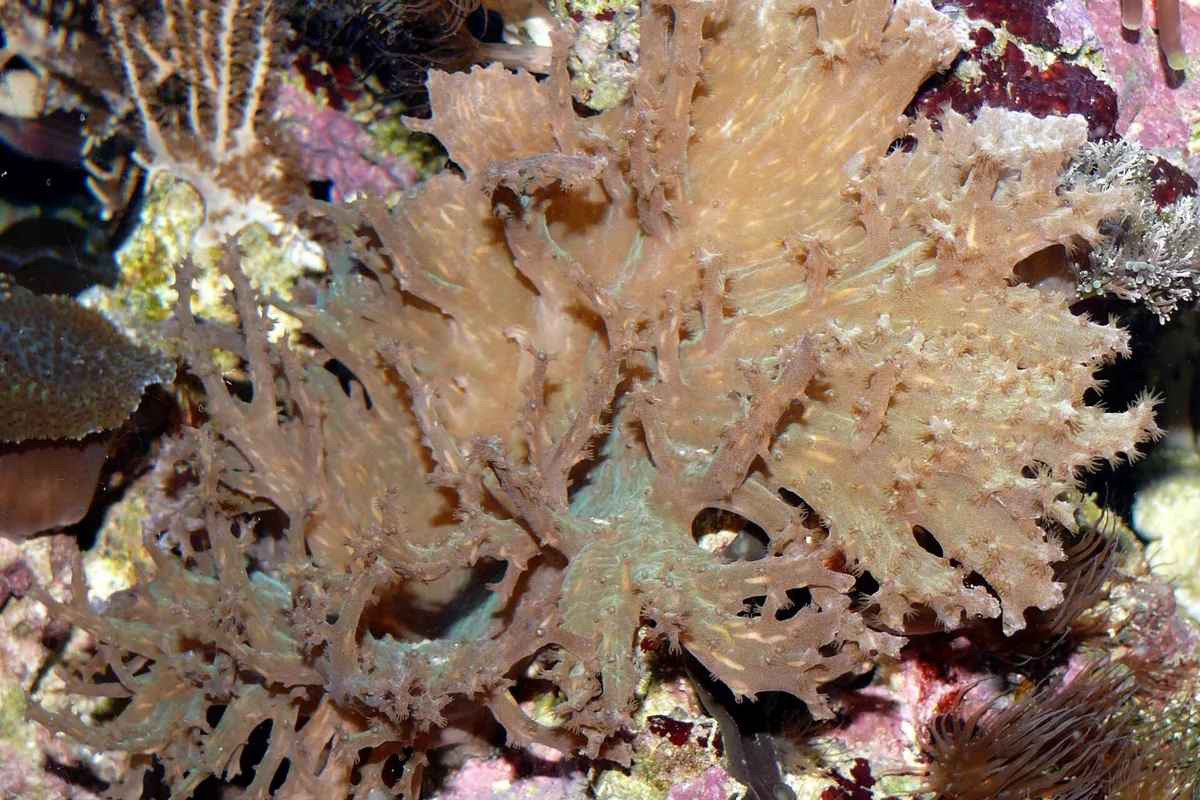
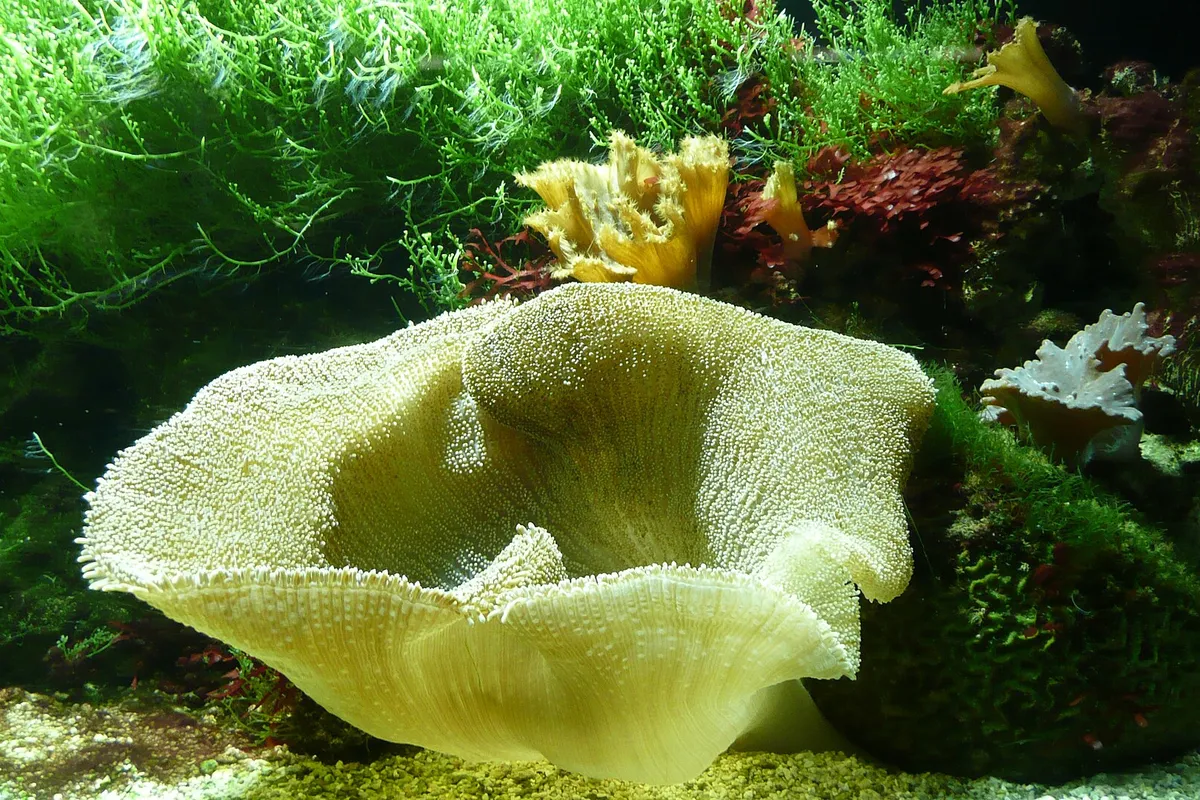
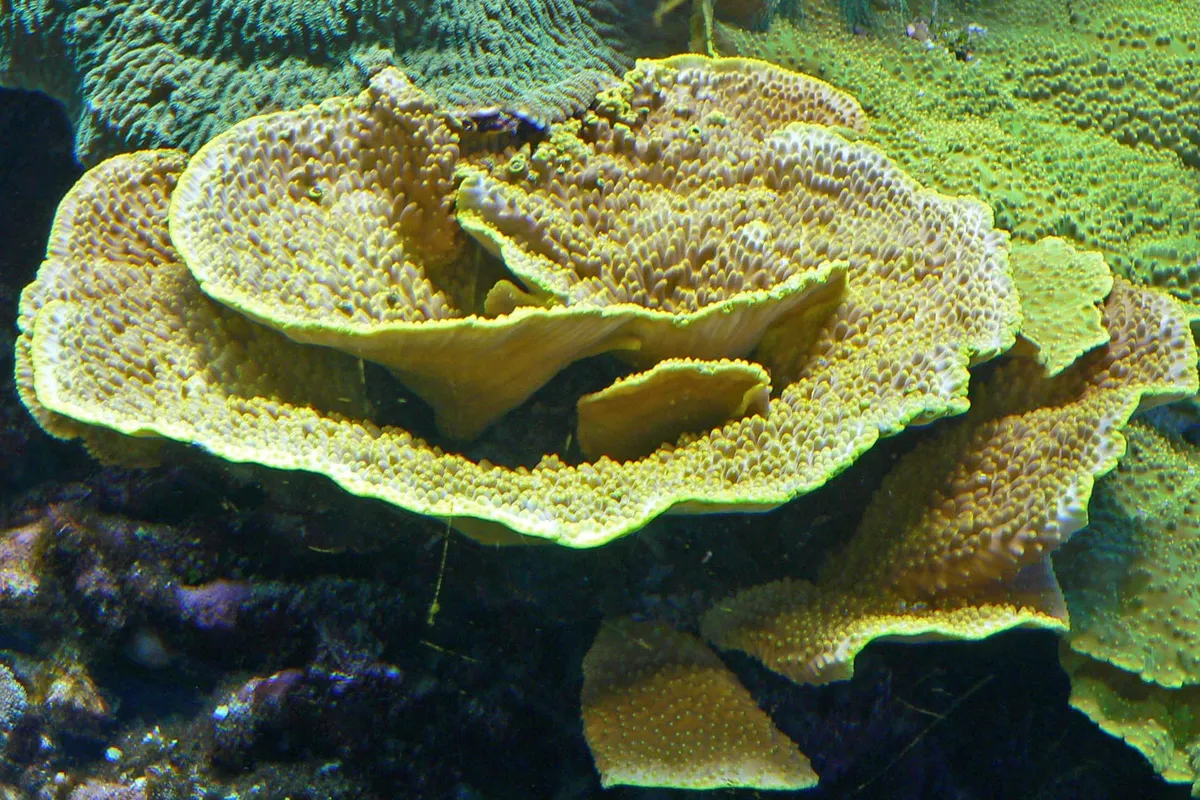
Finger leathers vary a lot between species. S. flexibilis has long, thin, branching fingers covered in tiny white polyps. S. dura forms flat, folded plates like a cabbage. All have a firm, rubbery feel and small sclerites (skeletal spikes) inside the tissue.
Leather corals periodically shed a waxy coating to clean themselves. During this time they close up for a few days and look shrunken. This is normal, not a sign of illness.
Placement, lighting and flow
Finger leathers do well under low to moderate light, around 75–200 PAR, and adapt to most positions. Moderate to strong, random flow helps them shed and keeps them moving. Give them space to grow and keep them a few centimetres from other corals. Our guides to lighting and flow explain the basics. Our toadstool leather guide covers a close relative.

Water parameters
Keep the temperature at 24–27°C, salinity at 1.024–1.026, pH 8.1–8.4 and alkalinity at 8–11 dKH. Finger leathers tolerate higher nitrate and phosphate than stony corals. Run activated carbon to remove the chemicals they release, especially in mixed reefs with stony corals.
Feeding
Finger leathers rely mostly on light, and also take in dissolved nutrients and fine particles. Occasional broadcast feeding with phytoplankton or fine coral foods is enough. They do not need target feeding.
Fragging
They are very easy to frag. Cut a branch with sharp scissors or a scalpel, then hold it against a rock or plug with a rubber band or toothpick until it attaches, usually within one or two weeks. Super glue does not hold well on leathers. See our fragging guide.
Tank mates
Finger leathers suit most reef fish. Some angelfish, butterflyfish and rabbitfish may nip them. Be aware of chemical warfare with stony corals: give them space and run carbon.
Common problems
Staying closed for more than a week after shedding can mean poor flow, a sudden light change or a nearby coral stinging it. Moving them often stresses them, so pick a spot and leave them there. Quarantine new corals. Finger leathers can live for decades.
Explore other topics
Dive into more aquarium guides across the site.