

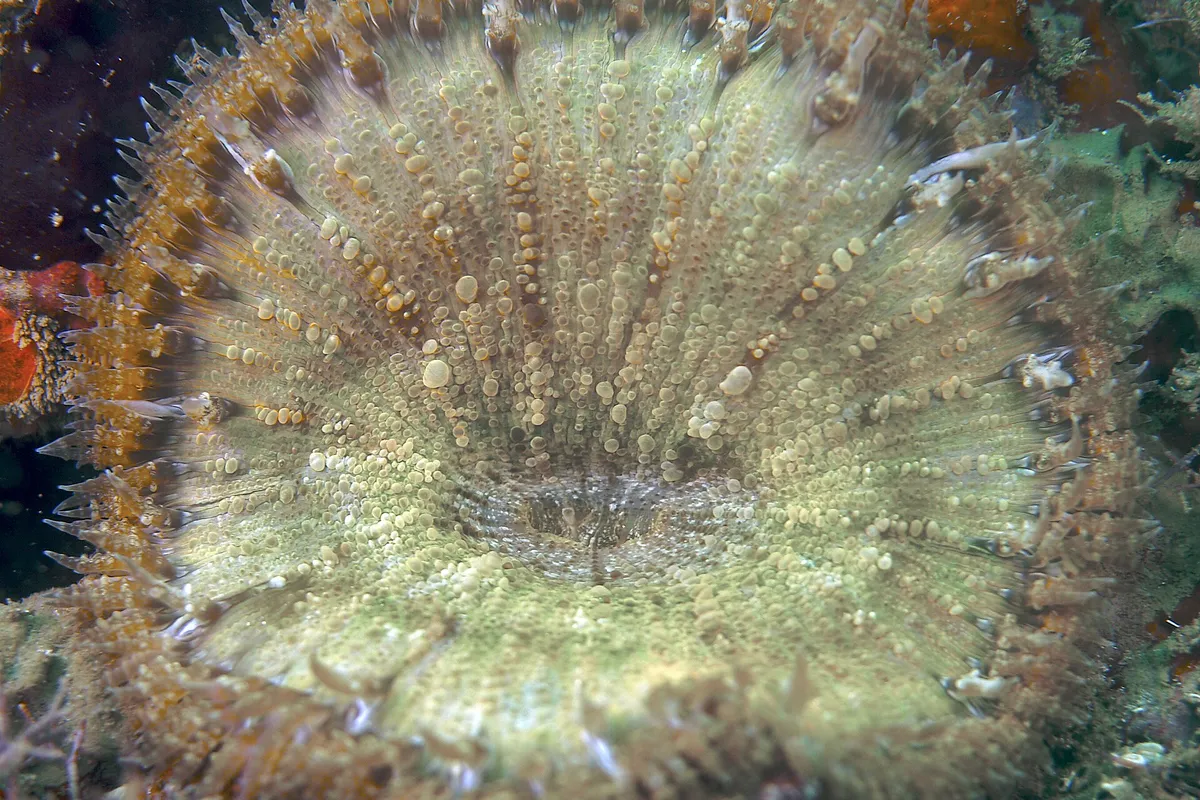
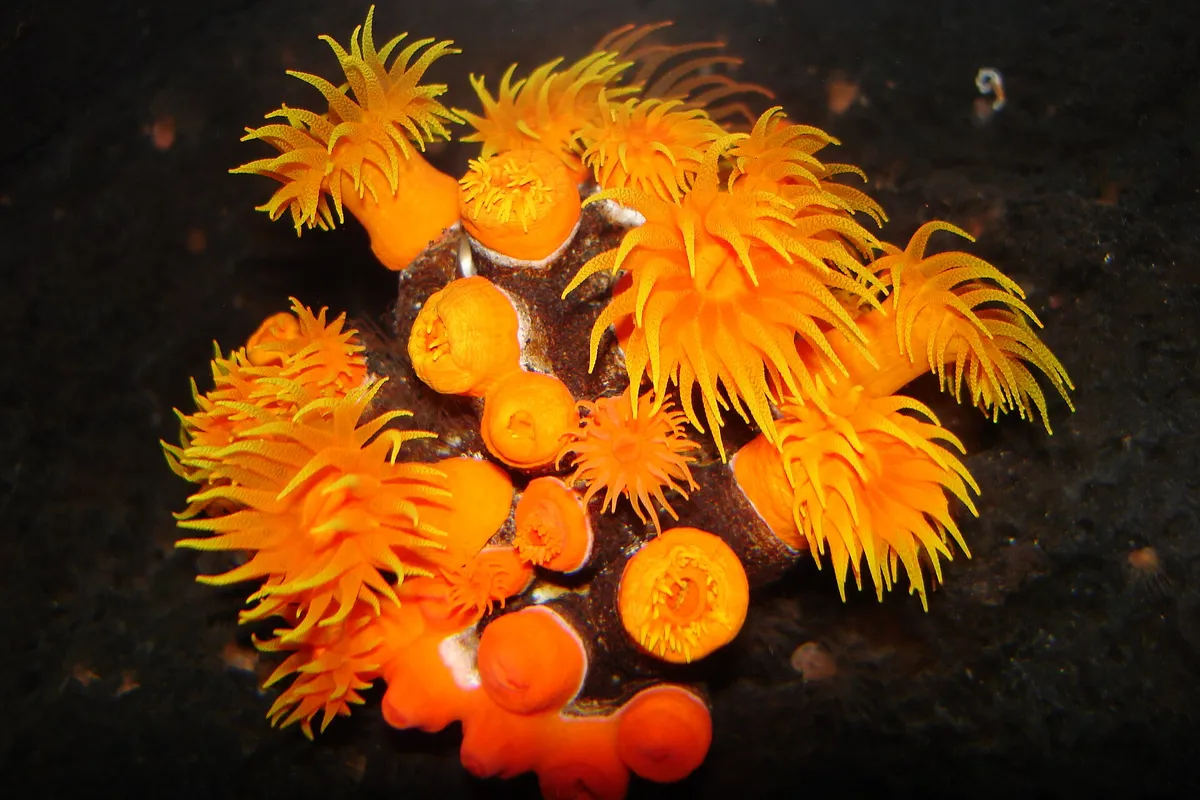
The rock flower anemone, also called the Florida flower or beaded anemone, has become a favourite in nano reefs. Epicystis crucifer comes in an amazing range of colours, from orange and red to blue, purple and rainbow patterns, and it stays in one spot instead of wandering like many anemones.
It is hardy, does not need intense light, and does not host clownfish. It does eat small fish and invertebrates that wander too close, so plan tank mates carefully.
Where rock flower anemones come from
Rock flower anemones live in the Caribbean and western Atlantic, from Florida and the Bahamas to Brazil. They are found in shallow water, buried in sand or wedged into cracks in rock, with only the disc showing. Captive-bred and aquacultured anemones are now widely available.
Appearance and behaviour
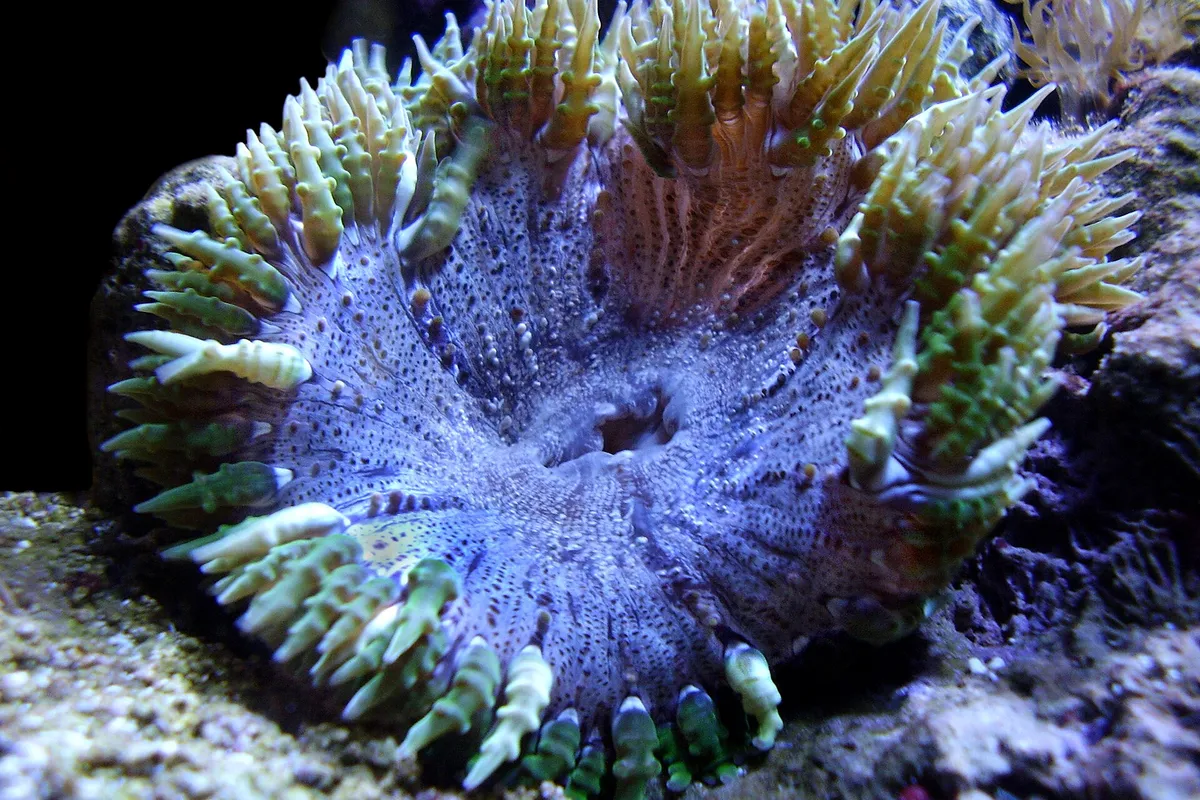
The disc usually reaches 5–15 cm across. Short tentacles ring the edge, and the oral disc has patterns of radiating lines, spots or bands. Colours vary from brown and green to vivid reds, oranges, blues and purples.
Rock flowers attach their foot deep in a hole in rock or sand and retract fully when disturbed. They rarely move once settled, which makes them much safer in a reef than wandering anemones. They are mildly aggressive, with stings that can affect corals they touch.
Placement, lighting and flow
A single rock flower anemone can live in a tank of 40 litres or more. Give it a hole in the rock near the bottom or a spot with deep sand, so it can bury its foot. Moderate light, around 100–200 PAR, and moderate flow suit it. Cover pump intakes in case it does move. See our lighting guide for setup.

Water parameters
Keep the temperature at 22–27°C, salinity at 1.024–1.026, pH 8.1–8.4 and nitrate low. Rock flowers tolerate a range of conditions and slightly cooler water than many reef animals. Our guide to marine parameters to test covers the basics.
Feeding
Rock flowers are photosynthetic, but they also catch food. Target feed once or twice a week with mysis, chopped shrimp or silversides, placed on the disc. The anemone closes around the food and opens again a few hours later.
Tank mates
Rock flowers do not host clownfish. They may eat small bottom-dwelling fish such as gobies and blennies, and shrimp, crabs and snails that wander onto them. They are safest with mid-water fish and corals placed at least a few centimetres away. Compare with the bubble tip anemone if you want a clownfish host.
Breeding
Rock flowers reproduce by spawning in aquariums, and some keepers find small babies appearing. They also occasionally split. Aquacultured rock flowers are easy to find.
Common problems
Shrinking, staying closed and a gaping mouth are signs of stress, often from poor water or too much flow. Quarantine new anemones. With good care rock flower anemones can live for many years.
Explore other topics
Dive into more aquarium guides across the site.