

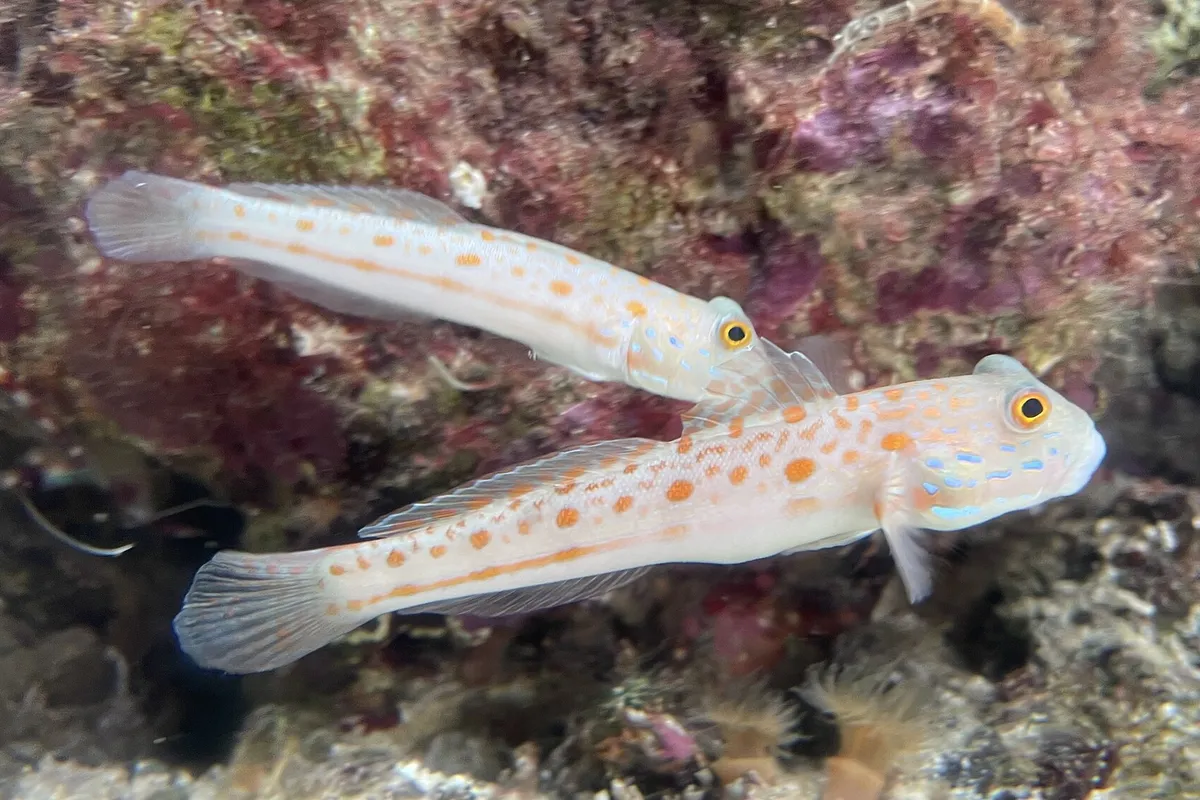
The diamond goby, also sold as the orange-spotted sleeper goby or maiden goby, is the classic sand sifter. All day long Valenciennea puellaris scoops up mouthfuls of sand, filters out the food and spits the rest out through its gills. The result is a sand bed that stays clean and stirred.
That habit is also its biggest challenge. A diamond goby needs a large, mature sand bed full of life, and in a small or new tank it can starve. This guide explains how to keep one healthy.
Where diamond gobies come from
Diamond gobies live across the Indo-Pacific, from the Red Sea and East Africa to Samoa and southern Japan. They are found on sandy and rubble areas of lagoons and reef slopes, usually in pairs that share a burrow under a rock.
Appearance and behaviour
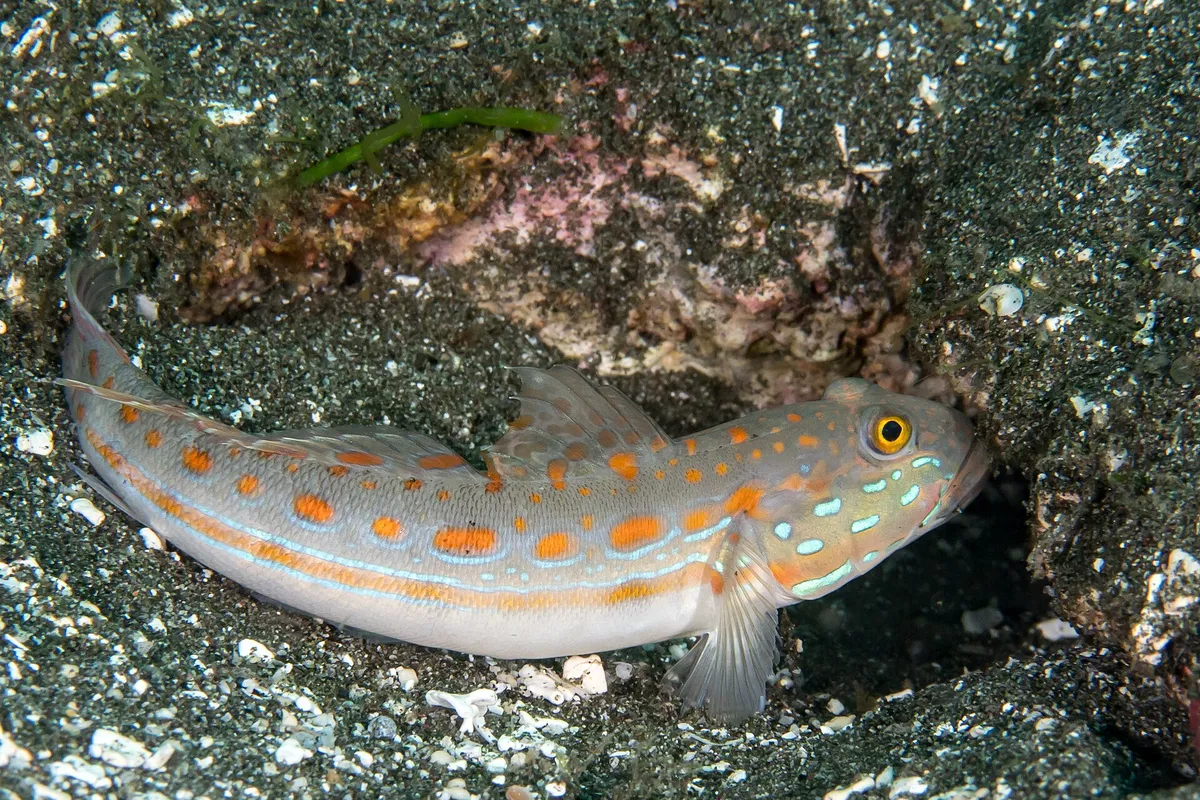
Adults reach 12–15 cm. The body is long and pale, with rows of orange spots edged in blue, and an orange stripe along the lower side. They have a large mouth for sand sifting.
Diamond gobies are peaceful with other fish but territorial with their own kind, except mated pairs. They dig burrows under rocks and move a lot of sand. Corals placed on the sand may be buried, and rockwork resting on sand can be undermined, so build rocks directly on the tank floor.
Tank setup
One diamond goby needs at least 200 litres with a sand bed of 5–8 cm of fine sand over a large area. The tank should be at least six months old so the sand is full of worms, copepods and other tiny animals. A refugium helps keep that population going. Use a lid, because gobies jump.

Water parameters
Keep the temperature at 24–27°C, salinity at 1.023–1.025, pH 8.1–8.4 and nitrate low. Our guide to marine parameters to test covers the essentials.
Feeding
This is where most diamond gobies are lost. They cannot live on what they find in the sand alone. Target feed them two or three times a day with frozen mysis, enriched brine shrimp, small krill and sinking pellets, dropping food near the sand so it reaches them. Adding copepods to the tank keeps the sand bed stocked between meals. A thin, pinched belly is a warning sign to act on fast.
Tank mates
Diamond gobies get on with most peaceful reef fish: clownfish, cardinalfish, tangs, wrasses and dwarf angelfish. Avoid other sand sifters, which compete for food, and large predators. They are reef safe, but may knock over corals on the sand.
Breeding
Mated pairs share a burrow and may spawn inside it, with the male guarding the eggs. The larvae are hard to raise, so captive-bred fish are not common. Buying a known pair from the shop is the best way to keep two together.
Common problems and lifespan
Starvation in small or new tanks, jumping and fighting between unpaired fish are the main problems. Quarantine new arrivals in a quarantine tank and check they are eating before moving them in. With good care diamond gobies live 3–5 years or more.
Explore other topics
Dive into more aquarium guides across the site.