

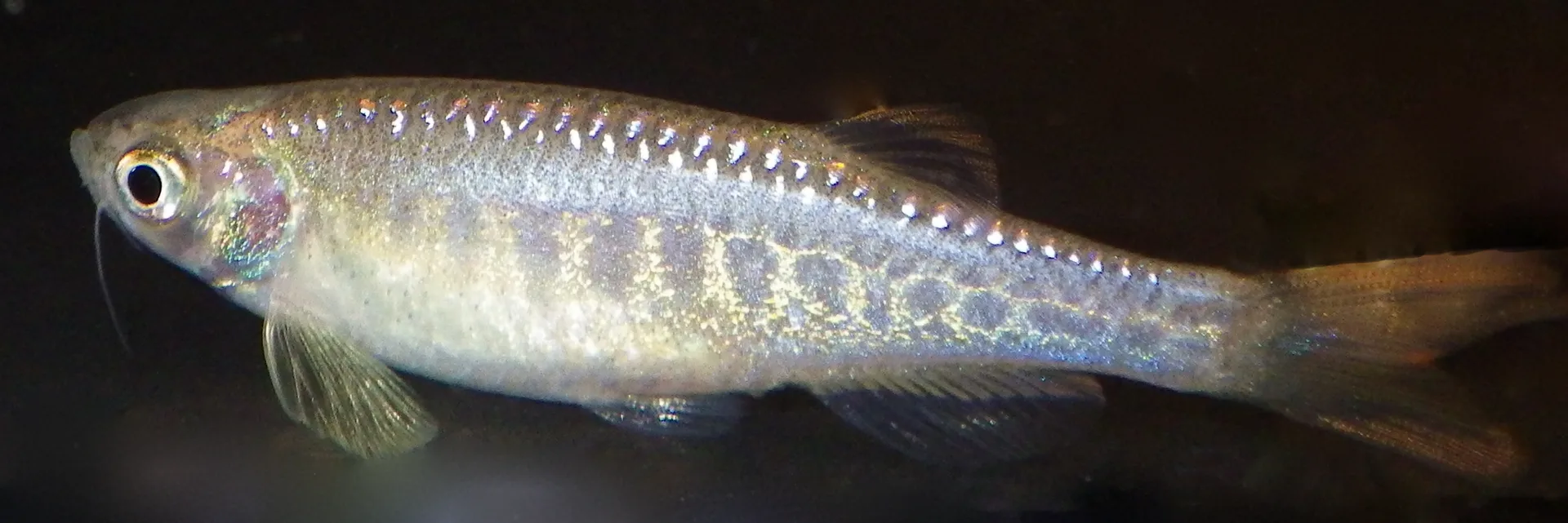
Danio aesculapii was named in 2009 by Kullander and Fang from streams in Myanmar’s Rakhine region. The Aesculapian danio is still uncommon in shops. It is a small, slender stream danio — about 3.5–4.5 cm — with a pattern that people mix up with other striped and spotted Myanmar species. Husbandry is a hill-stream story: length, flow, lid, school, cooler rather than steamy water. It is not a peat rasbora and not a tetra.
A Rakhine stream, a 2009 name
Rakhine coastal drainages are not the Irrawaddy main stem and not Inle Lake. Fish from that region see clear, moving water and seasonal rain. In the aquarium, 20–25°C, pH 6.5–7.5, moderate hardness, high oxygen. They are closer to tinwini and roseus in climate than to Malabar in size, and closer to all of those than to a rummynose tetra.
The name Aesculapian nods to the staff of Asclepius — a pattern reference in the original description, not a medical claim. Do not expect a unique “healing” behaviour. Expect a small cyprinid that looks wrong in a still, dark Amazon tank and right in a long, bright, moving one.
Pattern, size, and shop confusion
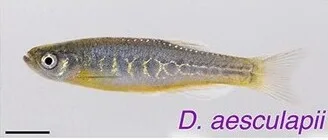
They show dark markings on a gold-olive body; depending on light and population they can read as broken stripes or a network. That is why they get bagged with kyathit or tinwini. Kyathit usually has more obvious orange fins and a slightly larger adult size. Tinwini is smaller and more clearly spotted/gold-ringed. Aesculapii sits in the middle as a slim Rakhine fish. If you cannot get a confident ID, keep the group together and do not add random Danio “to fill out the school” if you might later want to breed true.
Males are slimmer and more intensely marked; they will chase. Females are rounder. A school of eight to twelve in a 80–90 cm tank lets the chase stay pretty.
Flow preference of a fish that is still rare
Because they are uncommon, keepers sometimes tuck three of them into an existing tetra community “as a treat.” The tetras want still stained water; the danios want a lane of current. One tank cannot be both unless it is huge and deliberately zoned, which a 80 litre box is not. Give aesculapii their own stream layout: spray bar, stones, tough plants, sealed lid.
They jump. Rarity does not make them stay in an open-top scape. Losing an uncommon fish through a heater hole is a miserable way to learn about danios.
Fine foods for a small hunter
Crushed flake, baby brine, cyclops, powdered foods. They feed in the current. They lose to zebras and to kyathit if mixed carelessly. They will not thrive on sinking wafers. They are not surface-only like hatchets, but they will take floating crushed flake in the upper water.
A skinny uncommon danio is often a feeding and competition problem, not a mystery disease — until it is also parasites from a long export chain. Quarantine and watch the belly.

First spawns in the aquarium
Assume a standard danio scatter: grate, water change, remove adults, raise fry on fine foods. Literature on home breeding is thinner than for rerio. That is a reason to document your water and temperatures if you succeed, not a reason to invent Copella or cave-tetra methods. Eggs stay in the water. Hybridising with the more common Myanmar danios will erase a species you cannot easily replace from Rakhine streams.
Keep breeding groups as aesculapii only if you care about the name on the bag meaning something in two generations.
Uncommon does not mean delicate like a hatchet
They are still stream cyprinids: oxygen, clean water, current. They are more delicate than farmed zebras, less delicate than wild Carnegiella. Ich hides in pattern. Flashing and sitting behind a stone out of the current are clues. Do not medicate a guess in a tiny untested hospital; do test ammonia and temperature first, then treat what you see.
If you wanted orange paddles, buy kyathit. If you wanted gold rings and sparring on a smaller body, buy tinwini. If you wanted the Rakhine 2009 species with the Aesculapian name, keep Danio aesculapii as a long, covered, moving school and do not dilute it in a tetra vat or a mixed Danio breeding project.
Compare Hikari danio and orange-finned danio before you assume every small Myanmar danio is the same fish in a different photo.
Rarity, Rakhine, and not inventing a ritual
Uncommon fish attract invented care: extra salt, extra heat, extra darkness. Aesculapii wants the boring stream basics done well. If you only have three, you do not have a school; you have a holding group. Wait for more of the same species rather than adding zebras that will hybridise and out-eat them.
Because the description is recent, older books will not mention them. Ignore tetra encyclopedias that file all “danios” under 26°C community heat. Look at Myanmar coastal stream logic: rain, current, moderate mineral content, a lid. When in doubt, copy tinwini hardware more than you copy cardinal tetra hardware.
If you succeed in spawning them, share the water values with other keepers. A rare danio with no published home-spawn notes needs data, not a copied splash-tetra paragraph about humid air gaps. Eggs in the water, parents out, fry on fine foods, current gentle enough that larvae are not blown into the sponge — that is the whole rite.
Rakhine streams are not a tourist circuit most keepers will ever see. That distance is why a sealed lid and a true school matter more than a rare-fish shrine of extra gadgets. Give aesculapii moving water, cool nights, and food that fits a 4 cm mouth, and the pattern you paid for will show without a ritual borrowed from tetras, hatchets, or peat rasboras.
When new stock arrives, float and drip as you would any wild-adjacent Myanmar cyprinid, then watch them take the current line before you celebrate. A fish that hides behind a heater for three days in a short tank is not “settling.” It is telling you the runway is missing. Rearrange for length of swim, not for a cave or a peat corner, and the Aesculapian pattern will come back with the appetite.
Explore other topics
Dive into more aquarium guides across the site.