

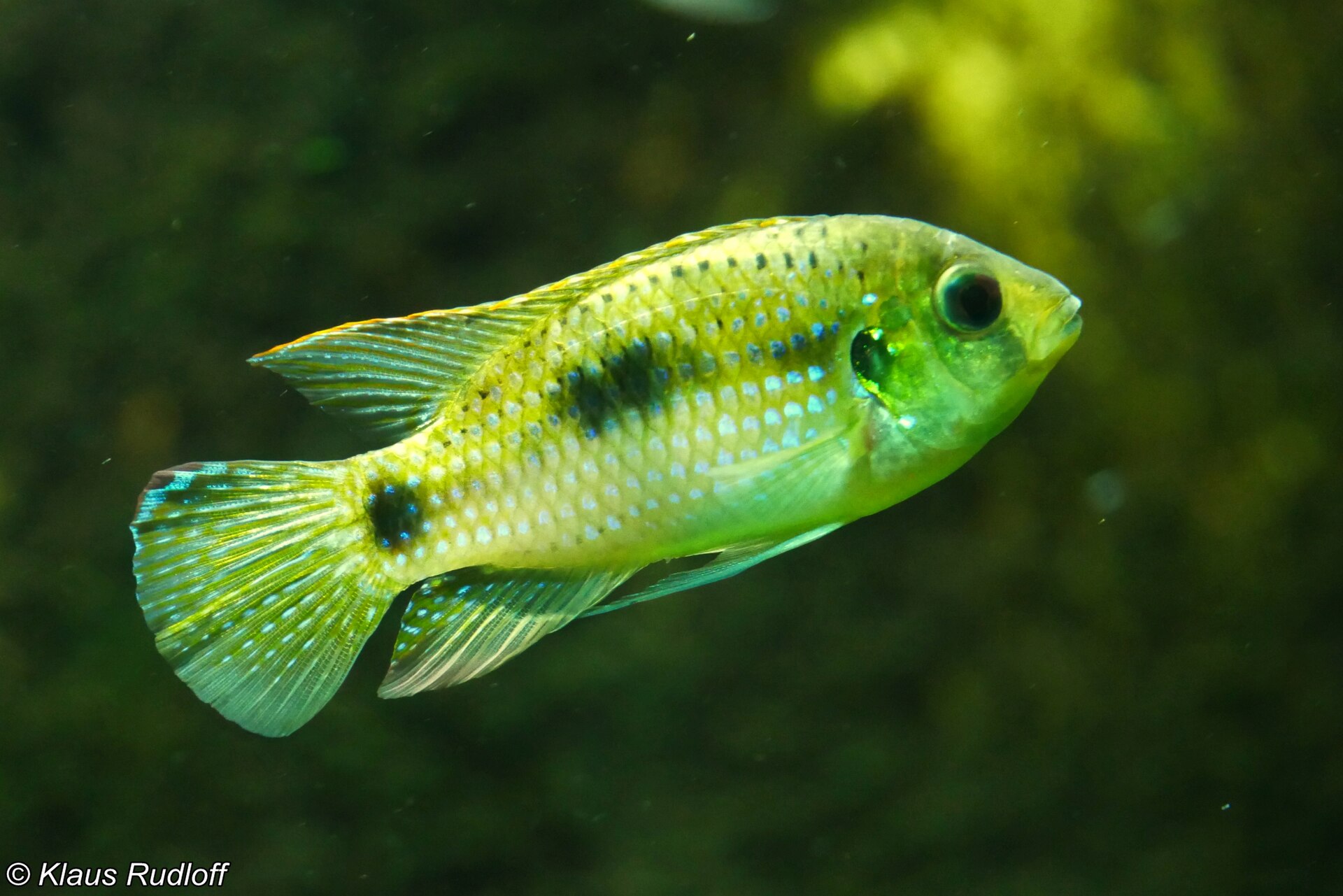
The African butterfly cichlid is a name that causes two mistakes. People hear “butterfly” and think hatchetfish. People hear “African cichlid” and think mbuna or Tanganyika. Anomalochromis thomasi is neither. It is a small West African forest-stream cichlid, 6–8 cm, that lives in vegetated, typically soft to moderately soft water, forms a pair, and tends a nest on a leaf, wood, or similar surface. It is closer in tank mood to a peaceful South American dwarf than to a Julie, and it is still its own fish: different continent, different genus, different spawning site.
If you wanted an apisto, buy an apisto. If you wanted a rift fish, buy a rift fish. If you wanted a planted West African dwarf that will spawn on a Cryptocoryne leaf, you are in the right article.
Forest streams of West Africa, stained and planted
Native to West African forest streams — vegetated, often tannin-stained, not a Rift lake. Flow is modest. Structure is plants, roots, and fallen wood. Water is commonly soft and acidic to near-neutral, not pH 9. They use the lower half of the water column, hovering over leaves more like a ram than like a shell-dweller on sand. There are no Neothauma shells in this story. There is no mbuna algae garden in alkaline rock.
The planted tank is not a compromise; it is the habitat. That already separates them from most Tanganyika species in this batch.
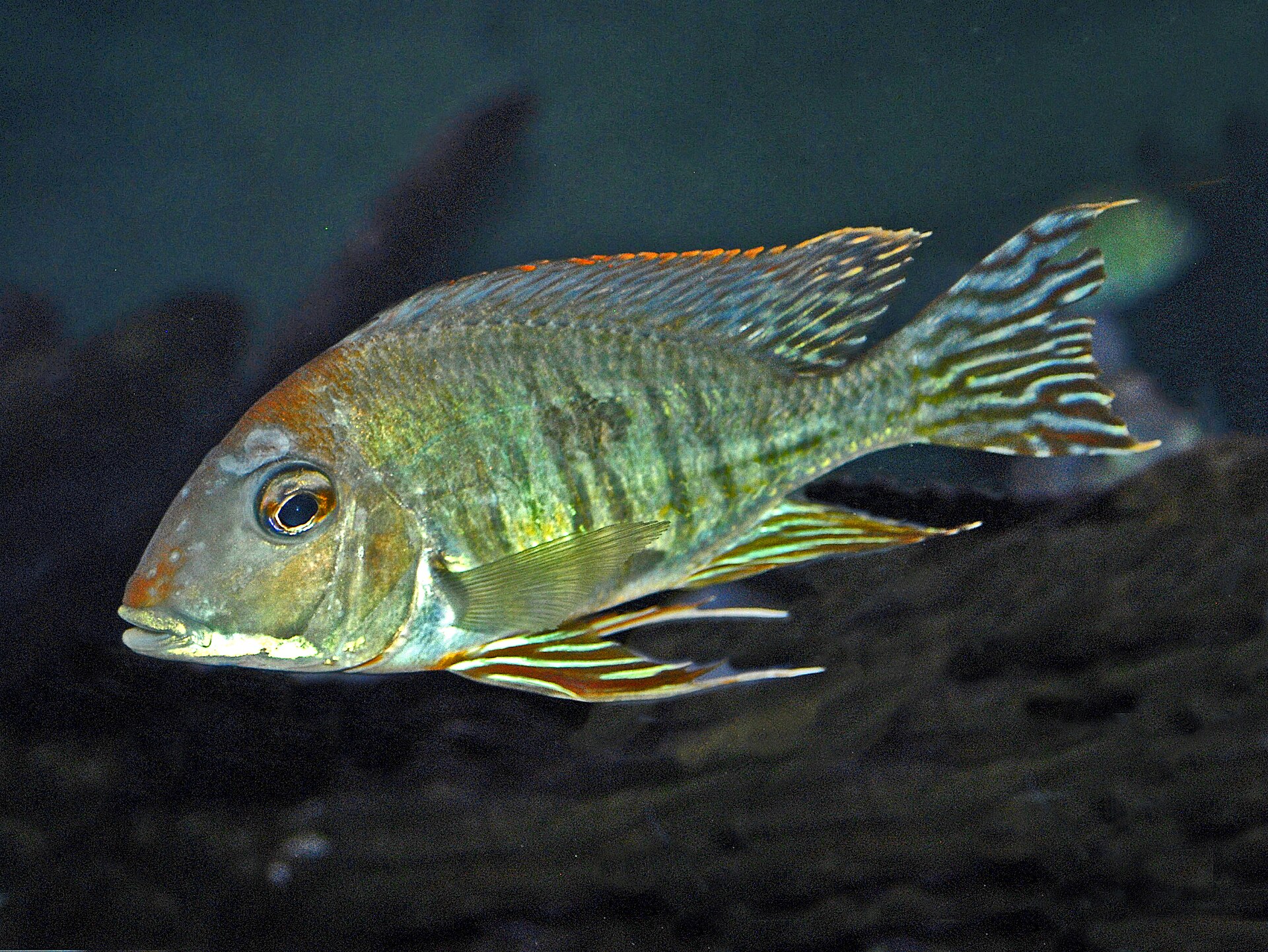
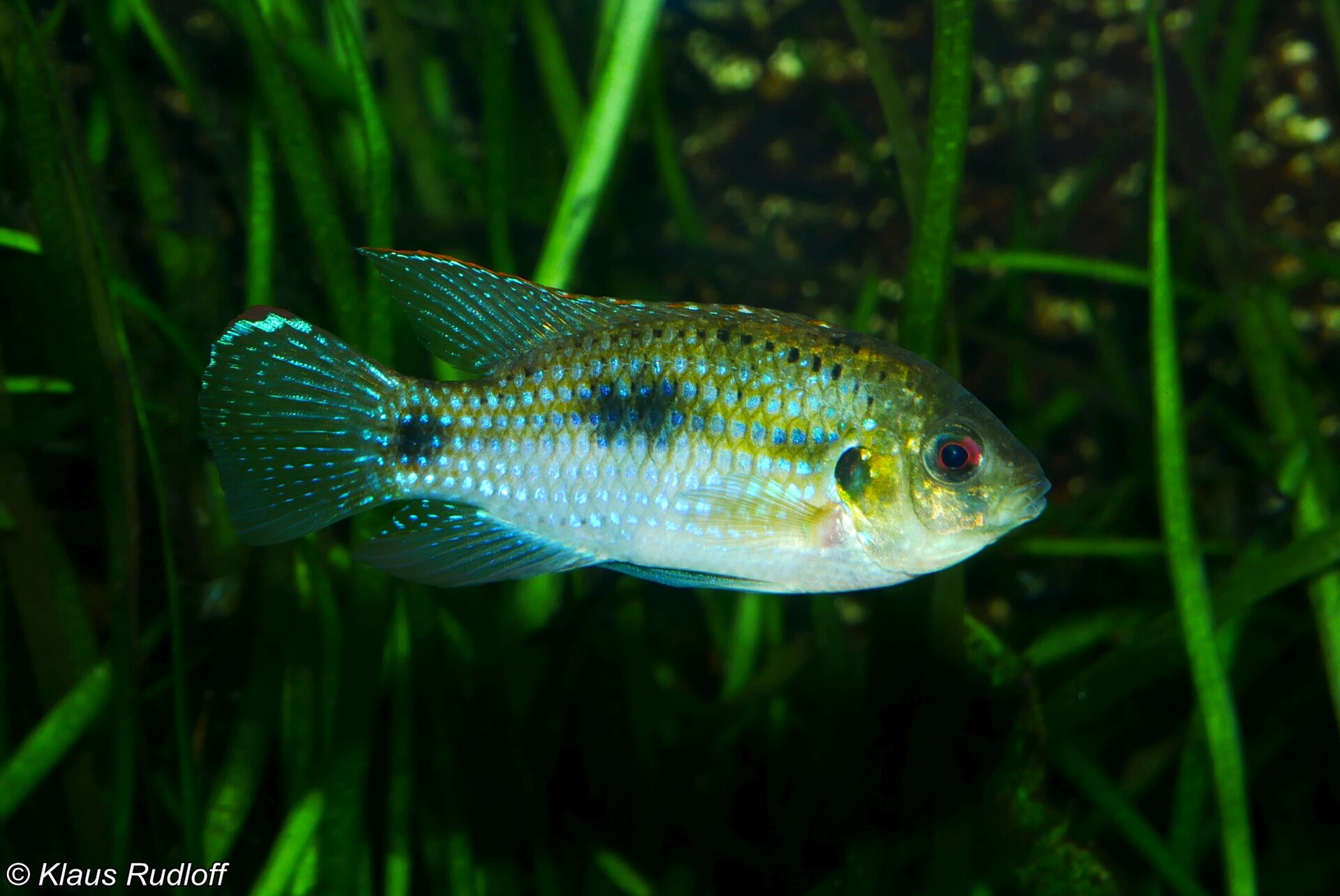 Anomalochromis thomasi. Photo: Klaus Rudloff / Wikimedia Commons (CC BY-SA 4.0)
A rounder dwarf, a pair, a ‘butterfly’ pattern
The body is deeper and more compact than a Julie’s needle. Pattern is a series of spots or blotches that can look vaguely butterfly-wing to a generous eye; colour shifts with mood, from muted to warm golds and reds in a displaying pair. They are not hatchetfish and cannot fly. They are not discus. Males and females look similar compared with apistos; pairs form and both fish participate in brood care more evenly than a typical apisto harem.
That pair bond is the behavioural headline. You do not stock one male and four females as a default. You stock a pair, or you let a pair emerge from a group of juveniles and rehome the rest.
Eighty litres of plants, not a cave monopoly
Eighty litres is a realistic floor. Fine sand or smooth substrate, heavy planting, wood, a few broad leaves (live plants or botanicals) as potential nest sites. Gentle filter. Dim to moderate light. This looks more like a Flag Acara tank or a ram tank than like an ocellatus tank. Caves are optional; they may use them, but the classic spawn is on a surface, often a leaf. Do not fill the tank with rift rock. Do not add a shell kit from a Tanganyika article.
They are less dedicated sand-sifters than a Geophagus and less cave-obsessed than A. nijsseni. Plants are the architecture.
Soft forest water, not rift mix

Temperature 23–28°C. pH 5.5–7.5. Soft to moderately soft. They are often sold as beginner African cichlids, which is only true if “African” does not mean Malawi salts. Hard alkaline water is the wrong Africa. Cycle. Keep nitrate modest in a planted box. Chemistry, cycling. For the scape, a low-tech planted tank is more relevant than a rockwork guide.
Peat and botanicals are compatible. Crushed coral is not a default.
Small frozen foods, not a lettuce staple
Omnivore leaning to invertebrates: baby brine, daphnia, quality flakes or micro pellets, some vegetable content in prepared foods. They are not Uaru. They are not moorii grazing a sunlit wall. They will pick at the substrate. Feed a pair enough to breed, not enough to foul the plants.
Community only with similar water and similar mouths
Possible: small tetras and rasboras that like soft water and are not tiny enough to eat — glowlights in a large planted tank, larger characins, Corydoras. Risky: shrimp, tiny Boraras. Wrong: mbuna, Tanganyika shell-dwellers, large eartheaters, male apistos in a small shared tank (two dwarf systems, two rulebooks). They can be surprisingly territorial when spawning, which is why the “community dwarf” label needs a caveat: community until the leaf has eggs.
Eggs on a leaf, two parents
Open substrate / leaf spawners. Both parents tend. Fry are guarded in the plants. This is closer to a ram or a flag acara than to an apisto cave or a Julie slit or an ocellatus shell. If you strip the plants, you strip the nursery. Do not expect mouthbrooding. Do not expect a colony in snail shells.
Sexing is subtle; buy a group of young and let a pair form, or buy a proven pair.
When the pair disappears into the stems
That can be spawning, not disease. Clamped fish in the open, gasping, or covering with spots is disease or water. Quarantine in planted, soft water, not in a bare rift hospital. They are small; ich is fast.
If you wanted a South American pair on plants, try the flag acara. If you wanted a cave apisto, cacatuoides. If you wanted Africa in the rift sense, you wanted a different lake and a different salt. Anomalochromis thomasi is forest West Africa, planted, paired, and wrongly named for a hatchet.
West Africa in a shop that only knows Malawi
Staff will try to sell you cichlid salt and rock. Smile, buy the plants, skip the salt. Ask for a pair or a group of juveniles, not one “male” someone guessed. If the only African cichlids in the store are mbuna, this species may have been in the wrong water for weeks. Look for round bellies, intact fins, and fish that are already hovering over a leaf rather than gasping in a bare Malawi holding tank. Then take them home to forest water, not to the lake mix on the shelf beside them.
When they spawn in the community, you will be asked whether to pull the pair. If the tank is planted and the tetras are fast, you can leave them and enjoy the herding. If you have shrimp you care about, pull the shrimp, not necessarily the cichlids. The butterfly is doing what the leaf is for.
Explore other topics
Dive into more aquarium guides across the site.