

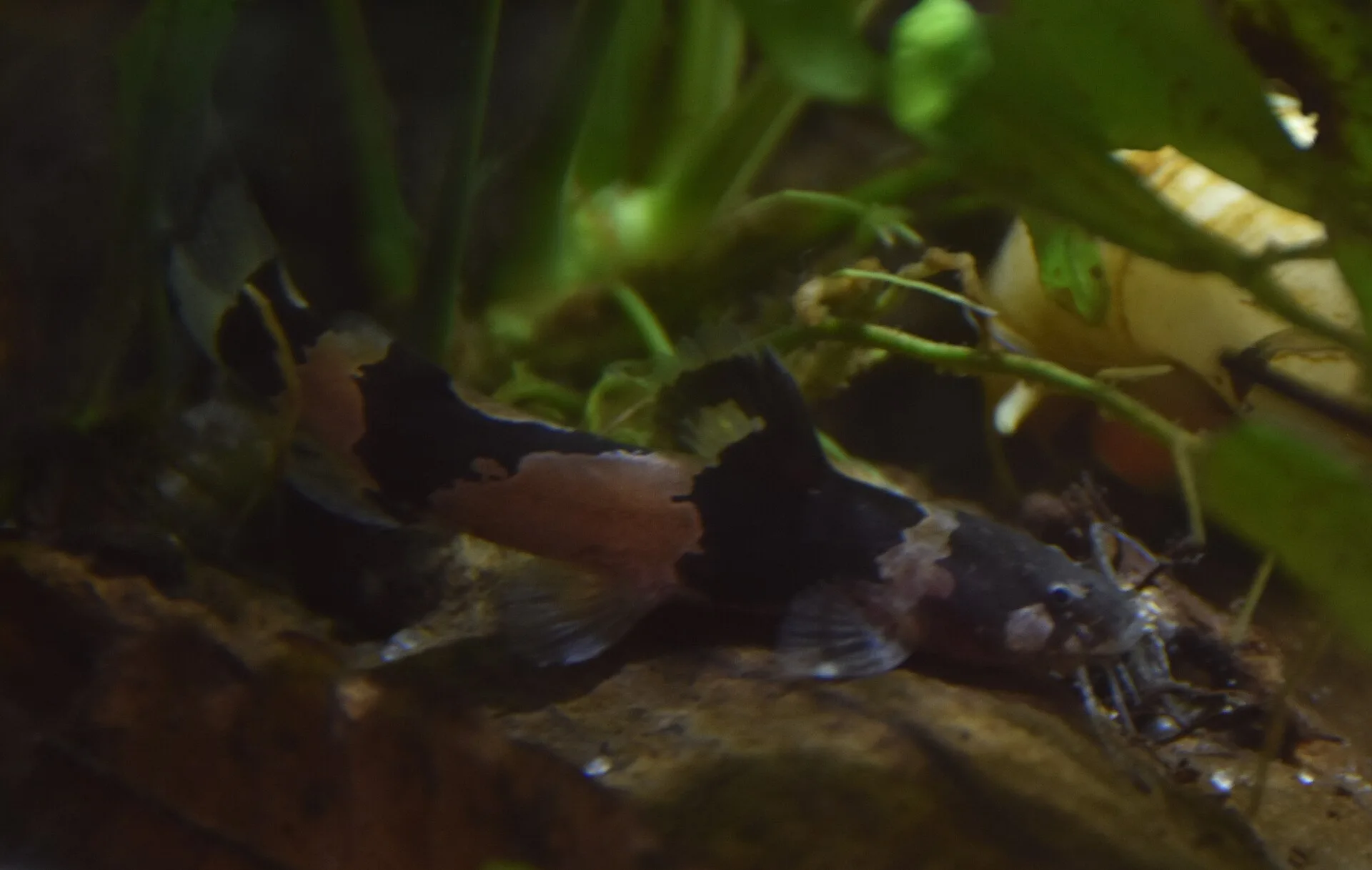
Ihering’s bumblebee catfish is a handful of stripes in a cave. Microglanis iheringi comes from Venezuelan drainages (the Valencia / nearby Caribbean-slope systems are the classic association) and stays in the 6–8 cm class. It is a miniature auchenoglanidin-looking pseudopimelodid: chubby, bee-banded, nocturnal, and predatory on a small scale. It will eat shrimp and fry. It will not eat a royal panaque’s wood, rasp a rubberlip’s cobble, or grow into a tiger shovelnose. The shop mistake is treating every catfish as either a cleaner or a monster. This one is a tiny night hunter that wants a sand floor, a cave, and neighbours too big to swallow and too peaceful to extract it from a hole.
Venezuelan creeks, not the open Amazon channel
M. iheringi is a northern South American dwarf, not a pan-Amazon giant. Streams and rivers with leaf litter, roots, and cavities are the likely wild picture: warm, structured, with a night shift of insect larvae. The bumblebee pattern is camouflage in dappled leaf light, not a warning that the fish is as harmless as a bee in a community nano full of shrimp.
Water is tropical freshwater. There is no brackish requirement. There is no cool Andean requirement. There is no pond-scale requirement. There is a requirement that the tank have darkness, cover, and food that is actually meaty and small.
Other Microglanis species get sold as “bumblebee catfish.” If you want Ihering’s, you want this name, not a generic striped dwarf from a mixed lot.
Bee bands on a chubby miniature
The look is high-contrast dark and gold-yellow bands, a short body, a blunt head, tiny eyes, and a mouth that is wide for the fish’s size. That mouth is the care clue. This is a predator of worms, insects, and anything small enough to fit. It is not a suckermouth. There are no scutes like a Raphael. There is no armour like a hoplo. Skin is naked-catfish smooth by comparison with loricariids.
Healthy fish are plump, with crisp bands, and they vanish into a cave when you approach. Skinny, pale, or fungus-edged imports have had a hard trip. They can recover with cover and food, or they can fade. Buy plump.
Males and females are hard to tell until a female is full of eggs. You keep a small group or a pair in a cave-rich tank more for social comfort of a dwarf nocturnal fish than because you have sexed them in the shop.
A dark apartment of holes
A tank of about 60–80 litres with a long footprint, sand, leaf litter, and many caves (tubes, small wood holes, coconut) suits a group. Dim light or floating cover. Gentle flow. They do not need a torrent. They do not need a hall. They need a floor plan with addresses to hide in.
A bright, barren community tank produces a fish you never see until it is too thin. A shrimp nano produces a fish you see at the shrimp’s expense.
Heater in the mid-20s. Lid on; they can bolt. Filter intake sponged so a 6 cm catfish is not an ornament on the grate.
Warm, clean, ordinary tropical
Temperature 24–28 °C, pH 6.5–7.5 as a comfortable band, softness optional. They are not chemical divas if water is clean. Ammonia still kills. They sit in caves, so waste can accumulate at the hole; siphon gently without destroying the maze.
Water changes should be regular and matched. These are small fish; a huge cold change slams them.

Meat at night, in amounts that fit a bee
Feed after dark: frozen bloodworm, grindal or chopped earthworm, mysis, quality micro-predator pellets that sink. They will scavenge, but they are hunters, not raspers. Daytime feeding loses the food to tetras. Stay with a torch after lights-out until you see the bands come out of the hole.
Do not offer algae wafers as a staple. Do not offer a whole prawn to a 7 cm fish. Match prey size. Overfeeding fouls sand; they have small stomachs and a big reputation for eating shrimp.
Fast a day if the belly is round. A bloated bumblebee in a stale cave is a water problem waiting to happen.
Too small to be a giant, too hungry for a shrimp tank
Keep them with fish that cannot fit in the mouth and will not go cave-raiding. Medium tetras, peaceful barbs of similar water, other robust dwarfs can work. Shrimp, fry, and tiny characins are food. Giant catfish are the wrong scale and the wrong temperament article. Hoplos are plated foragers, not the same niche. Plecos will occupy caves these fish wanted.
A group of Microglanis can share a maze if there are extra holes. They may eat each other’s fry. They are not schooling midwater fish like Auchenipterus.
Quarantine in a planted or leaf-litter box with a cave and meaty food. A bare hospital with no cover is terror, not medicine.
Spawning that stays in the specialist notes
Cave or crevice spawning is the likely mode for small pseudopimelodids; reliable home accounts for this exact species are scarce. Do not buy them as a breeding special. Buy them as a nocturnal dwarf predator. If eggs appear, you have a bonus and a fry-predation problem in the same tank.
Watching a nocturnal dwarf without wrecking its nerve
A dim red torch or a low moonlight LED after the main lights die will show you whether Ihering’s catfish is hunting. If you flip a bright ceiling light to “check on them,” they slam into glass and then refuse food for a day. Make night observation part of the tank’s design, not a jump scare.
New fish often fast. A plump import that eats worms on night two is a success. A skinny import that ignores food for a week in a bare box is a failure of setup. Put the cave in first, then the sand, then the fish. The order matters for a species that thinks with its hole.
A bee that stings the shrimp, not the keeper
Microglanis iheringi is a small Venezuelan night catfish with a bumblebee coat and a hunter’s mouth. Give it caves, darkness, and meat. Do not give it a role as cleaner or as baby shovelnose. See chemistry, cycling.
Explore other topics
Dive into more aquarium guides across the site.