

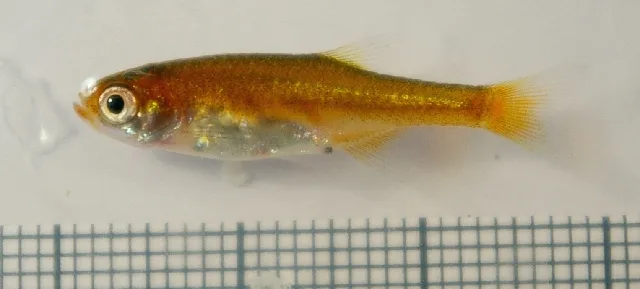
Microrasbora rubescens is not a peat-swamp rasbora. The red microrasbora or ruby rasbora is an Inle Lake fish from Myanmar’s Shan Plateau — a high, unique lake with water chemistry that is closer to a hard, alkaline, vegetated lake than to Kalimantan tea water. Keepers who copy a Boraras recipe (pH 5, tannins, heat) bleach the ruby and shorten the fish’s life. Keepers who copy a Malawi cichlid recipe overshoot the other way. Inle is its own problem.
A plateau lake, not a blackwater ditch
Inle Lake sits at elevation, with plants, open water, and a climate that runs cooler than a lowland swamp. Wild M. rubescens see temperatures that can sit in the low twenties. In the aquarium, 20–24°C is a better target than 28°C. pH is often 7.0–8.0 with noticeable hardness — the opposite of Phoenix rasbora water. They still want cleanliness and a school. They do not want peat moss as a chemistry driver.
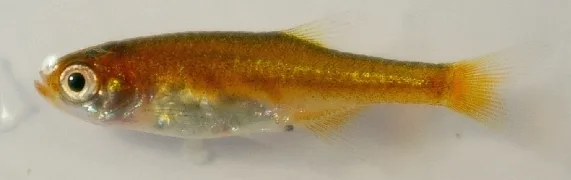
Adults are about 3 cm. Males in breeding condition flush red to ruby; females are plainer, more yellowish. Out of colour they look like small beige cyprinids, which is why shops sometimes undersell them and why keepers overheat them trying to “bring the red out” as if they were chili rasboras.
Conservation sits in the same sentence as care
Inle Lake is famous, fished, farmed, and under pressure. Captive-bred ruby rasboras are the stock to buy. A home tank does not save the lake, but it should not drain it. If you spawn them, you are keeping a lake endemic in the hobby while the wild water changes for the worse.
The display should suggest a planted, open, slightly hard lake: fine-leaved plants, some open swimming, gentle flow, cooler water, a school of a dozen or more. It should not suggest a Boraras peat cubby and it should not suggest a rift-lake rockpile with mbuna.
A school in open, planted lake habitat
They occupy midwater in a loose school. They are active but not Malabar-active. A 60 litre planted tank can work if chemistry is right. Length still helps; a long 60 litres beats a tall one. They will jump; nano lids fail in the usual ways. They are not surface specialists. They are not cave fish.
Gentle filtration. Heavy current is for Devario. Still, stagnant heat is for nobody. They want oxygen that cool water naturally holds, which is another reason not to tropicalise them.
Diet in alkaline nano setups
Small omnivores. Powdered foods, baby brine, cyclops, crushed flake. They have tiny mouths. They will take food in midwater. They lose to danios. They can share with kubotai only if you invent a chemistry compromise that is fair to neither specialist — better to pick one micro school. They can share with shrimp in a planted tank. They cannot share with most tetras over 4 cm.

Red in males is a breeding and condition colour. It is not a lighting trick, though a dark substrate helps the eye. Heat will not replace hardness and coolness.
Spawning rubescens without peat
They scatter eggs in plants. Slightly harder, alkaline water is appropriate. Peat extract is the wrong button. A mop, removal of adults, infusoria then baby brine shrimp. Do not copy chili rasbora blackwater breeding letters. Do not copy zebra danio marble-grate letters without adjusting temperature downward. Cool, clean, planted, hard-ish water is the Inle cue.
Males colour up when they are ready. If they stay beige, check temperature, hardness, and whether the group is large enough to feel like a school.
Lake fish in a swamp-labelled bag
Shops file them next to rasboras and microrasboras without a chemistry note. Quarantine in water that matches Inle more than Rio Negro. Ich still happens. They are more temperature-sensitive on the hot side than Phoenix rasboras are on the hard side. Skinny beige fish may be wild-caught, stressed, or simply kept in peat by the last owner.
If you wanted peat-swamp red, buy Phoenix rasbora or chili rasbora. If you wanted neon green Ataran water, buy kubotai. If you wanted a ruby male from a threatened plateau lake, Microrasbora rubescens is the one, and the word rasbora in the popular name does not grant permission to pour tannins on a Shan Lake fish.
Hardness, coolness, and the beige male problem
Keepers who cannot get red in males almost always have one of three issues: the tank is too warm, the water is too soft and tannin-stained, or the school is too small. Fix those before buying “colour enhancing” flakes. Inle Lake is a vegetated, mineral-influenced highland lake. Botanicals that drop pH are pulling you toward Borneo, which is the wrong island story.
Cool water means you must still cycle the tank and still avoid ammonia. Cool is not an excuse for a half-finished filter. It does mean you should not stack this species with discus, ram cichlids, or Costello tetras that want the mid-twenties and above as a lifestyle.
Plant the lake: Cabomba, Hornwort, or other fine leaves they can spawn in, plus open water to school. Do not fill the tank with so much wood that it becomes a blackwater cave. They are not cave tetras. They are not hatchets. They are a 3 cm lake school whose males only go ruby when the chemistry admits they are from Shan, not from a peat catalogue.
Ruby males are an Inle Lake report: cooler, harder, cleaner water and a real school. Tannin peat and 28°C heat are how you keep a beige microrasbora that never earned the red in its name. Treat Shan plateau chemistry as the point, not as a footnote under “rasbora.”
A simple GH/KH test tells you whether you are keeping an Inle fish or accidentally keeping a peat fish. If KH is undetectable and the water smells like oak leaves, you have left the Shan Plateau. Remineralise, cool the heater, and wait for males to argue in red instead of beige.
Explore other topics
Dive into more aquarium guides across the site.