

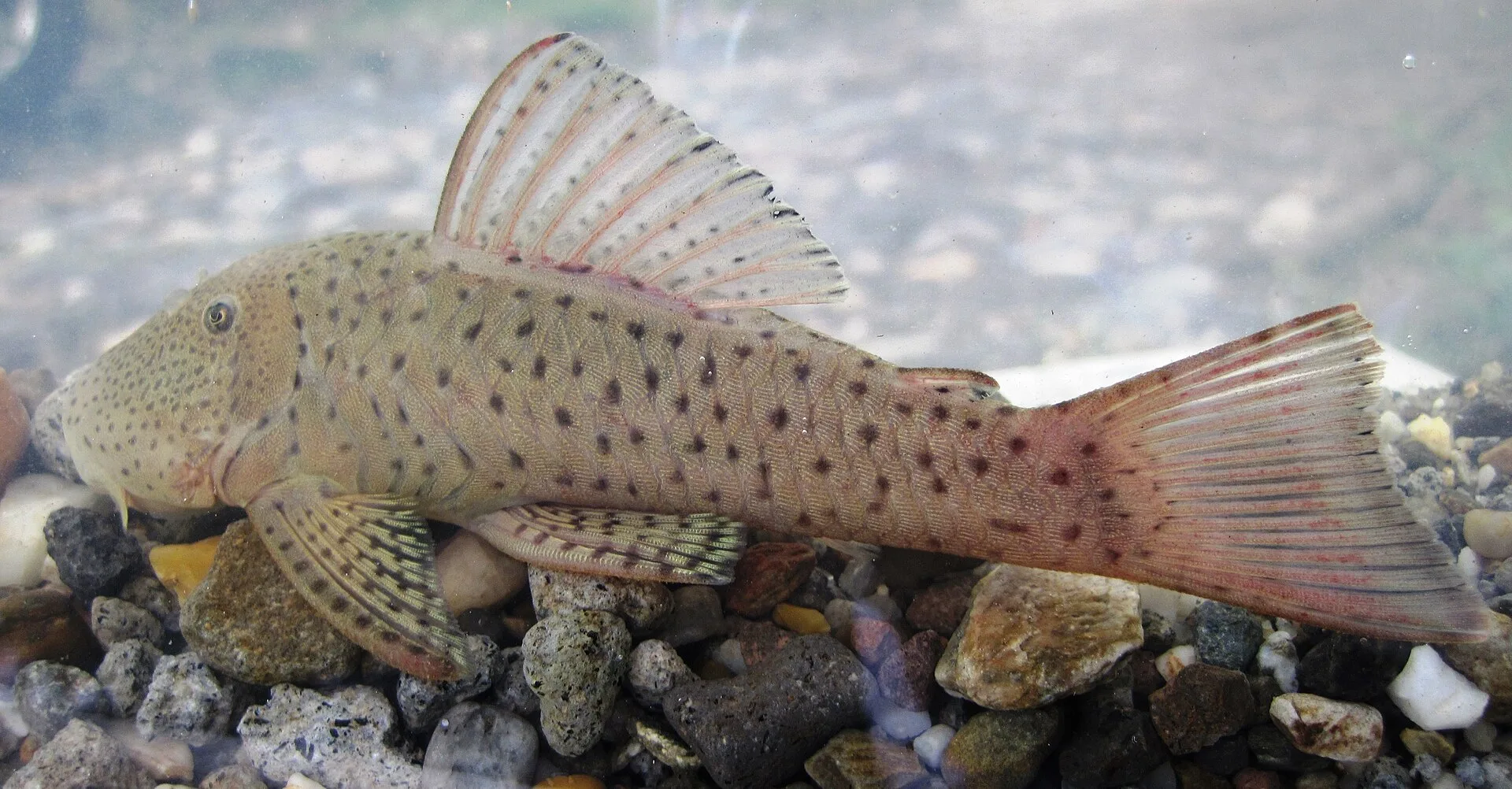
A rubberlip pleco is a hillstream animal wearing armour. Chaetostoma milesi comes from Colombian Andean foothill rivers, where water stays cooler than a typical tropical community tank and never sits still. The fleshy, almost rubbery oral disc that gives the fish its common name is a climbing tool: it locks onto cobble while the fish rasps a film of algae, diatoms, and microbes in the current. That is a different job from chewing bogwood, holding a bristlenose cave, or patrolling a planted still-water tank.
Colombian foothill rivers, not a jungle ditch
The Magdalena and nearby Andean drainages that hold C. milesi are stony, fast, and well oxygenated. Shade from gallery forest may keep the water from cooking in the sun, but the defining features are gradient and flow. Rubberlips work the wet faces of rocks in riffles and runs. They do not live in leaf-choked blackwater pools, and they are a poor match for a heater locked at 28 °C with a lazy sponge filter.
Collectors and exporters sometimes mix Chaetostoma species. C. milesi is one named rubberlip from Colombia; other rubberlips from Ecuador or Peru are not the same fish even if the mouth looks similar. If a seller cannot say more than “rubberlip,” treat the animal as a cool-current specialist anyway, because that is how the genus lives.
Seasonal rains raise depth and turbidity. They do not turn a torrent into a warm swamp. In the aquarium, chasing “rainy season chemistry” matters far less than keeping temperature down and dissolved oxygen up every hour of the day.
How the fish is built to cling
Adults of this species usually land in the 10–14 cm range — a modest loricariid, but a stocky one. The body is depressed, the fins are strong, and the odontodes along the sides are for defence and for holding station, not for display in a show tank. Colour is typically olive, grey, or brown with mottling that disappears against wet stone. There is no royal-pleco striping and no bristlenose beard on the snout.
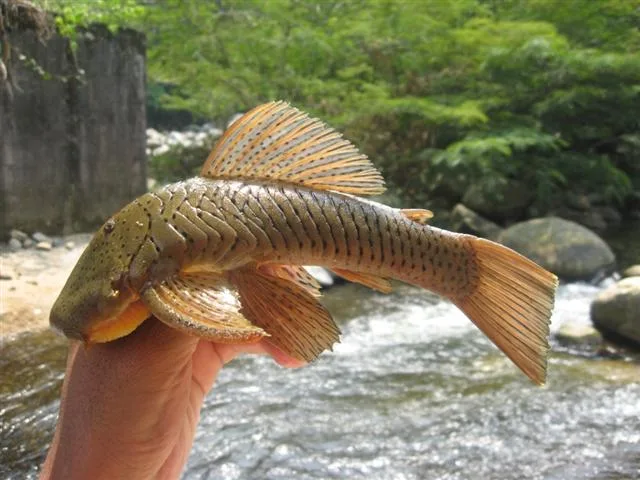
The mouth is the identification clue in the shop. A thick, pale, fleshy lip surrounds a rasping disc. That disc is for rock, not for excavating sand. Eyes sit high. Gills work hard in thin, fast water; when oxygen drops, rubberlips flare, gasp at the outflow, and then crash. A fish sitting motionless on the heater glass in a warm tank is already in trouble.
Males of many Chaetostoma grow heavier odontodes on the pectoral spines and a broader head. Females look rounder when full of eggs. Shop juveniles are hard to sex. Do not buy a “pair” on guesswork.
A tank that behaves like a riffle
Think in terms of length, flow, and gas exchange, not in terms of a pretty planted cube. A footprint around 120 litres can work for a single adult if the water actually moves and stays cool. Two territorial adults need more rock real estate, not just more litres in a tall column they will never use.
Cover the floor with mixed cobble and a little coarse sand in the lee of stones. Leave open lanes of current. Powerheads or a river manifold should create a visible riffle across the rock field. Add extra aeration; flow that only circulates warm, oxygen-poor water is useless. A tight lid helps with splash and with jumpers, but it must not trap humid, stale air above the surface — leave a gap or use a well-vented hood.
Wood is optional scenery, not food. Rubberlips are not xylophagous panaques. Plants that need still, warm water will fail here. Tough rheophiles, moss on rock, and algae on cobble are the living décor that matches the fish. Bright light that grows a green film on stone is more useful than a jungle of stems.
Overheating is the usual killer in Canadian and American living rooms. If summer room temperature pushes the tank past the mid-20s, you need a fan, a chiller, or a different species. C. milesi is not a fish you “get used to tropical heat.”
Cool, hardish, and never stale
Aim for 20–24 °C. Many keepers do best near 21–22 °C. pH can sit from about 6.5 to 8.0 if it is stable; Andean foothill water is often not extremely soft. Hardness in the moderate range is fine. Ammonia and nitrite must be zero. Nitrate should stay modest because this fish lives in water that is constantly replaced by the mountain.

Test oxygen the way you test temperature: by watching behaviour. Heavy panting, hanging on the spray bar, or refusing to graze after lights-on means the riffle is failing. Increase surface agitation before you reach for medicine. Large, frequent water changes with temperature-matched water keep a high-flow tank honest. Do not dump ice-cold tap on a rubberlip, and do not pour pure RO into a tank that has been running at moderate hardness without remineralising first.
Aufwuchs, not a wood diet
Chaetostoma milesi grazes constantly. In the wild that means the mixed film on rock — algae, bacteria, and the tiny animals trapped in it. In the tank, a mature cobble field is the main pantry. Support it with quality algae wafers, blanched greens, and the occasional protein snack (a small piece of frozen food) so the fish does not become a wafer-only captive.
A brand-new, sterile tank with no film will starve a rubberlip even if you drop wafers every night. Cycle the aquarium, let stone grow a haze of green, then add the fish. Watch the belly and the grazing path. A hollow abdomen and a fish that never leaves one cave are diet and current problems, not a mysterious tropical disease.
Do not treat this species as a “cleaner crew” that will erase a dirty tank. It processes a modest amount of aufwuchs and produces waste of its own. Overstocking “because plecos eat algae” is how rubberlips die in warm soup.
Who can share the current
Adult rubberlips often want a stretch of rock to themselves. Two males on a small cobble pad will flare and chase. A single adult with similarly cool, current-loving companions — certain hillstream loaches, some darters, or robust barbs that like oxygen — is a more honest community than a mixed tropical box of tetras and a heater.
Skip still-water blackwater fish, slow labyrinth fish that gulp at a film-covered surface, and anything that needs 26–28 °C. Skip shrimp if you care about shrimp; a hungry rubberlip will graze where the shrimp graze. Skip large digging cichlids that wreck the rock field.
Incoming fish should sit in a separate, cool, well-aerated box until they eat and breathe normally. Rubberlips travel badly in warm bags. Do not dump a gasping new arrival into a display and hope the current “revives” it.
Stone spawners, not cave bristlenoses
Where breeding is recorded in the genus, eggs go on the undersides of stones or in rock crevices in current, and the male guards them. Home spawning of C. milesi is uncommon because most tanks are too warm and too still. If you want a chance, give a mature pair a maze of cobble, excellent oxygen, a slight temperature drop with a large water change, and no tank mates that eat eggs. Do not expect a bristlenose-style PVC cave to be the answer; this is a torrent fish.
Choosing a rubberlip that will live
Look for a fish glued to the glass or stone, not one lying on its side. The disc should look intact, the belly should not be concave, and the fins should not be shredded from bag thrashing. Ask how long the shop has had it eating. A rubberlip that has not grazed since import is a rescue project, not a beginner’s first pleco.
Acclimate slowly to your cooler, moving water. Dim lights. Confirm that the fish is rasping stone within a day or two. If it only sits under a heater, the tank is wrong.
When the living-room tank is the wrong river
Chaetostoma milesi fails when people buy it as a substitute for a common algae eater. Warmth, stagnation, and a diet of leftover flakes are the opposite of a Colombian riffle. Give it cobble, cool current, and a film to graze, or leave it in the Andes. Related reading on this site: bristlenose pleco (a different, warmer cave fish), water chemistry basics, and cycling so the rock film exists before the rubberlip arrives.
Explore other topics
Dive into more aquarium guides across the site.