

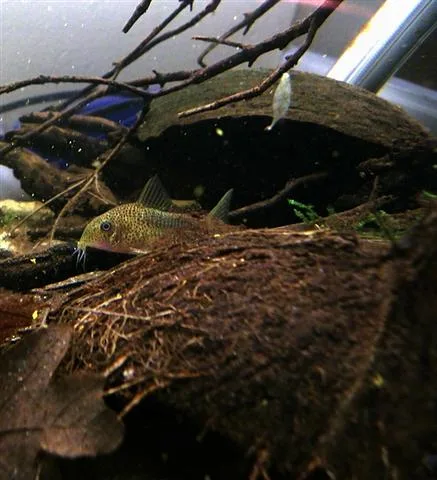
Similis Corydoras (Corydoras similis) is a pale, short-snouted catfish with a dark smudge on the caudal peduncle, not an orange-blaze Negro fish and not a leopard-print Amazon species. The Latin name is a confession: it looks like something else. That something else is usually Corydoras caudimaculatus. This page is for the Madeira-basin animal sold as similis, including how to stop treating it like a Sterbai that forgot its spots.
The smudge that names the fish
Adults reach about 4–5.5 cm, a touch smaller than the big leopard corys and a lot less colourful than anything with an orange nape. The body is silvery-beige to pinkish grey. Markings are sparse: some stippling, a dusky patch on the tail wrist, and a generally clean look that photographs as “plain” until the fish turns in the light. Fins are mostly clear. There is no rust wash, no network mesh, and no midwater tetra stripe.
The caudal blotch is the field mark. On similis it is a smudge rather than a sharply inked ocellus. C. caudimaculatus (the true tail-spot from other drainages) is the usual confusion. If your fish came as “similis” from a specialist importer, trust the invoice more than a phone photo. If it came as “assorted cory,” you may have a mixed box. Do not breed mixed boxes and invent a new trade name.
Madeira water, not Negro tea
C. similis is tied to the Rio Madeira system in Brazil — a huge white-to-clear tributary world south of the main Amazon stem, with sandy streams, flooded forest, and chemistry that is often less extremely acidic than the upper Negro. That still means tropical, typically soft to moderately soft water, not rift-lake mix. The fish sifts sand and leaf debris in shallows. It is a bottom worker, not a twig mimic and not a Congo squeaker.
Seasonal rainfall pulses matter more than a static “pH 6.0 forever” slogan. In the aquarium, stability beats chasing a single number copied from a forum post about Cardinals.
A tank that suits a pale fish
Because similis is quietly coloured, it looks best over fine sand with a darker wood backdrop, not over neon gravel that turns it into a ghost. A 60–80 litre tank can hold a small group if the footprint is long; go larger if you want plants, tetras, and room to siphon. Leave open lanes. This species does not need caves the way a whiptail does. It needs a sifting floor, gentle flow, and shade from floating plants or wood so it will come out in daylight.
Cover heaters and intakes. Similis is peaceful and plated, but it will still wedge into a filter slot or jump. A lid is cheaper than a dried-out catfish on the rug.
Numbers: why five pale fish still look like none
A pair of similis disappears. They are not shy in the sense of nocturnal oddballs; they are simply small and unpatterned, and they relax when there are enough flanks of the same colour moving together. Start with six and prefer eight or ten. Mixed “one similis, one bronze, one panda” does not count as a similis group. Other corys may share the sand in a big tank, but similis still needs similis.

Chemistry without the blackwater religion
Temperature 22–26°C. pH 6.0–7.4 is a practical range for most captive groups. Soft to moderate hardness. The Madeira is not a copy of the Negro; if your tap is already near neutral and not liquid chalk, similis often settles without RO. If you do use RO, remineralise. Ammonia and nitrite at zero, always. Gentle vacuuming of the sand keeps the barbels usable. This species will not tell you it is unhappy with a colour change as loudly as a blaze cory; it tells you with pinched bellies and sitting still.
Food for a small mouth on a pale body
Omnivore. Sinking micro-pellets, crushed quality flake that reaches the bed, frozen cyclops, daphnia, and finely chopped bloodworm. Because the fish is small, oversized wafers sit there while tetras shred the edges and similis gets paste. Feed tiny portions in several places. Evening feeding helps. They are not algae eaters. They are not a reason to skip the siphon.
Neighbours that do not erase them
Small tetras from similar water, rasboras if you accept a non-biotope mix, pencilfish, and dwarf cichlids that stay off the sand are workable. Avoid boisterous barbs, large angels, and anything that night-hunts. Similis will lose a food race to silver dollars and to hungry Corydoras sterbai in a cramped tank. If you want a South American community, choose midwater fish that stay midwater.
Breeding a lookalike
Sexing is the usual cory story: females broader, especially from above; males slimmer. Spawning is an egg-scatter on glass and plants after conditioning and a cooler water change. Adults eat eggs. Raise fry on infusoria then baby brine. Do not cross similis with caudimaculatus on purpose and then argue about names on social media. If you cannot tell the parents apart, you cannot name the babies.
Health tells on a “plain” cory
Plain fish hide illness. Learn the normal foraging speed of your group. A fish that hangs at the back with closed fins is sick or bullied. Red barbels mean the substrate is wrong or filthy. Fungus on eggs is a cleanliness issue. Ich shows as white specks; treat in a way that does not crash a plated catfish with reckless heat and salt copied from a goldfish chart. New similis should eat in a settling tank before they meet your display tetras.
Who this species is for
Keep Corydoras similis if you like Madeira fauna, subtle pattern, and a sand-working troop that does not scream for attention. Skip it if you wanted Adolfoi’s blaze, leopardus’s print, or a single catfish to “clean.” The smudge on the tail is the ID. The group on the sand is the husbandry. Everything else is details you can measure with a test kit.
Explore other topics
Dive into more aquarium guides across the site.