
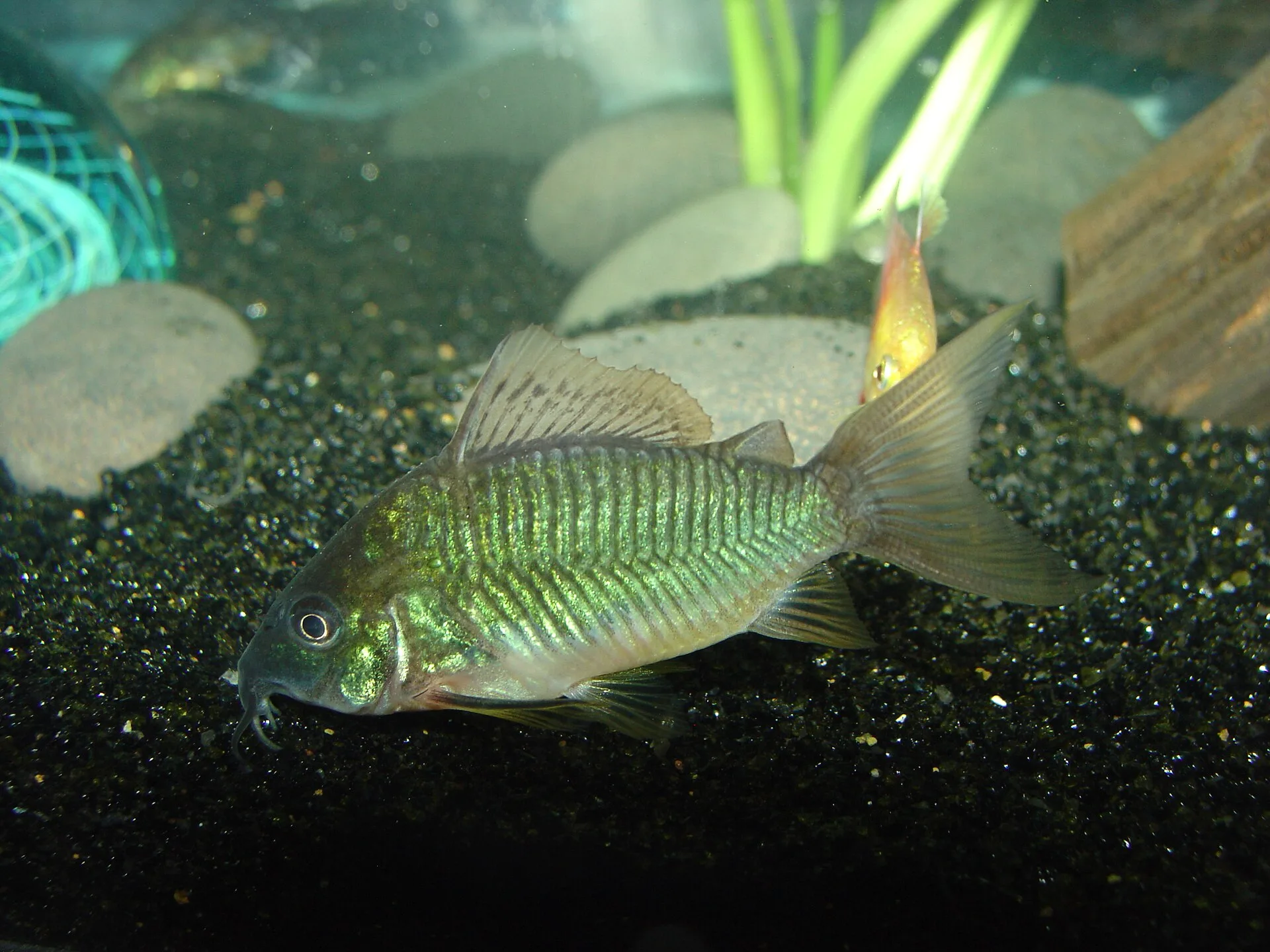
Emerald Brochis (Brochis splendens)
Emerald Brochis is a high-backed, metallic-green Amazon callichthyid that outgrows pandas and eats like a herd. Extra dorsal rays, real bulk, and a…
Read more →
Guías
Este centro de Agua Dulce en Amigos Peces reúne orientación práctica sobre peces de agua dulce para cuidadores que desean respuestas claras antes de cambiar el agua, el ganado o el equipo.
Utiliza estos artículos para emparejar especies con el tamaño del tanque, planificar la filtración y la alimentación, y solucionar problemas de química del agua sin adivinar. Cada guía está escrita para acuarios domésticos y enlaza a lecturas relacionadas cuando necesites más profundidad sobre peces de agua dulce.
Comienza con lo básico: parámetros estables, hábitos de cuarentena y un horario de alimentación que coincida con el ganado; luego explora los perfiles y cómo hacerlo a continuación. Cuando estés listo para diversificar, salta a temas vecinos para que tu plan de peces de agua dulce se mantenga consistente en todo el tanque.
Ya sea que estés llenando un primer tanque comunitario o refinando un paisaje establecido, guarda esta página en tus marcadores y regresa a medida que surjan preguntas. Los acuarios saludables se construyen a partir de pequeñas rutinas repetibles más que de mejoras únicas, y el éxito con los peces de agua dulce sigue el mismo patrón.
Explora a continuación: todas las guías, plantas de acuario, química del agua, guías de alimentación.
Amigos Peces publica hojas de cuidado de especies, notas sobre plantas e invertebrados, ideas de paisajismo acuático y explicaciones sobre el cuidado del agua para que los consejos sobre peces de agua dulce sean fáciles de encontrar. Lee una guía a fondo, aplícala lentamente y utiliza los centros enlazados arriba cuando desees un segundo ángulo sobre el mismo problema.
Antes de comprar ganado o repensar la filtración, revisa dos o tres artículos sobre peces de agua dulce aquí y anota los números objetivo para temperatura, dureza y alimentación. Esa breve lista de verificación previene los reinicios más comunes y mantiene tu acuario más cerca de la exhibición tranquila y saludable que estás buscando.
Regresa después de los cambios de agua o nuevas adiciones: compara lo que ves en el tanque con las listas de verificación de peces de agua dulce a continuación, luego sigue un paso recomendado en lugar de cambiar todo de una vez. Las mejoras constantes se acumulan, y Amigos Peces está diseñado para apoyar ese ritmo.
Emerald Brochis is a high-backed, metallic-green Amazon callichthyid that outgrows pandas and eats like a herd. Extra dorsal rays, real bulk, and a…
Read more →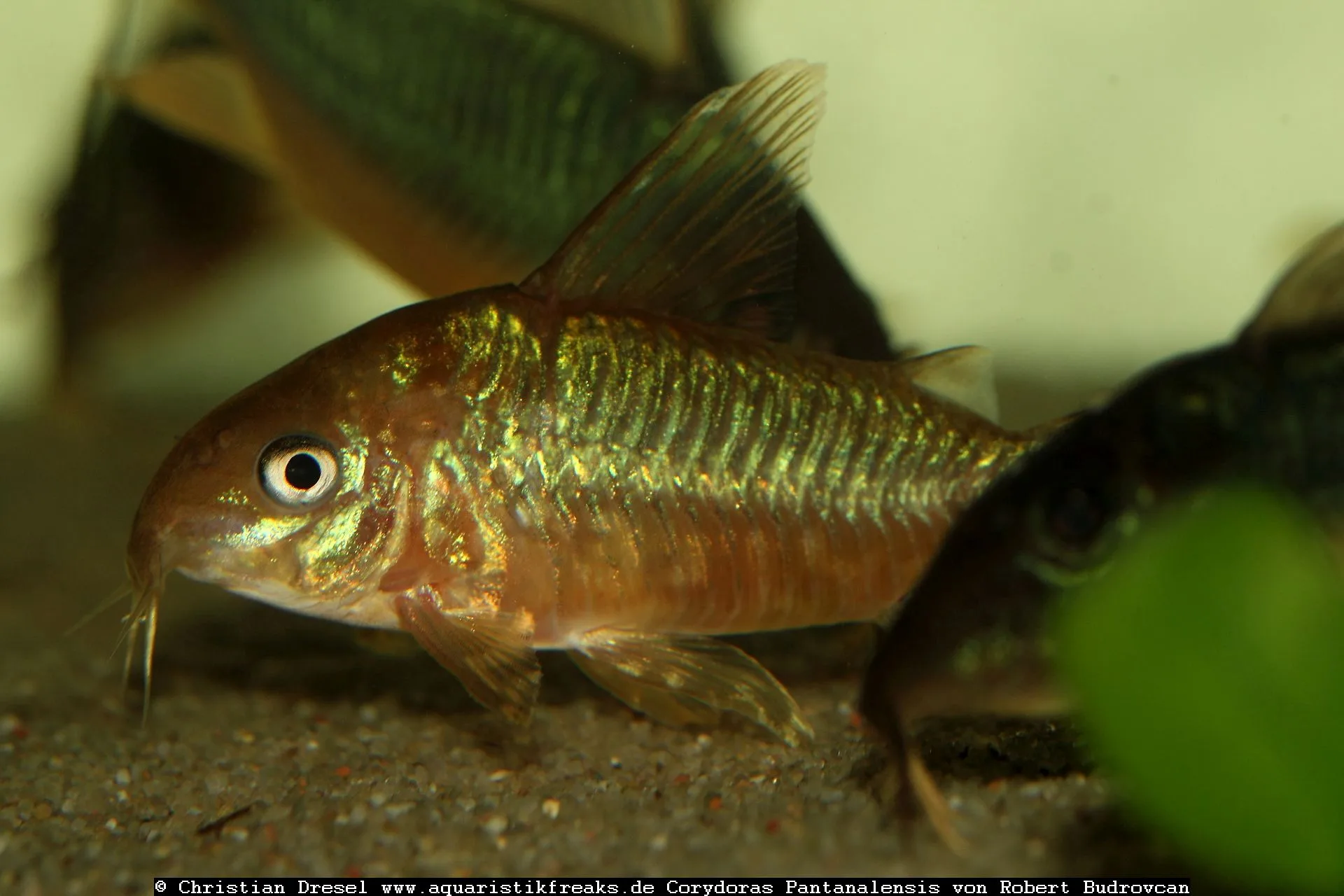
Pantanal Corydoras wears a gold net in clear, planted wetland water — not Amazon tea. Seasonal floods, sand, and a vegetated tank show the specie…
Read more →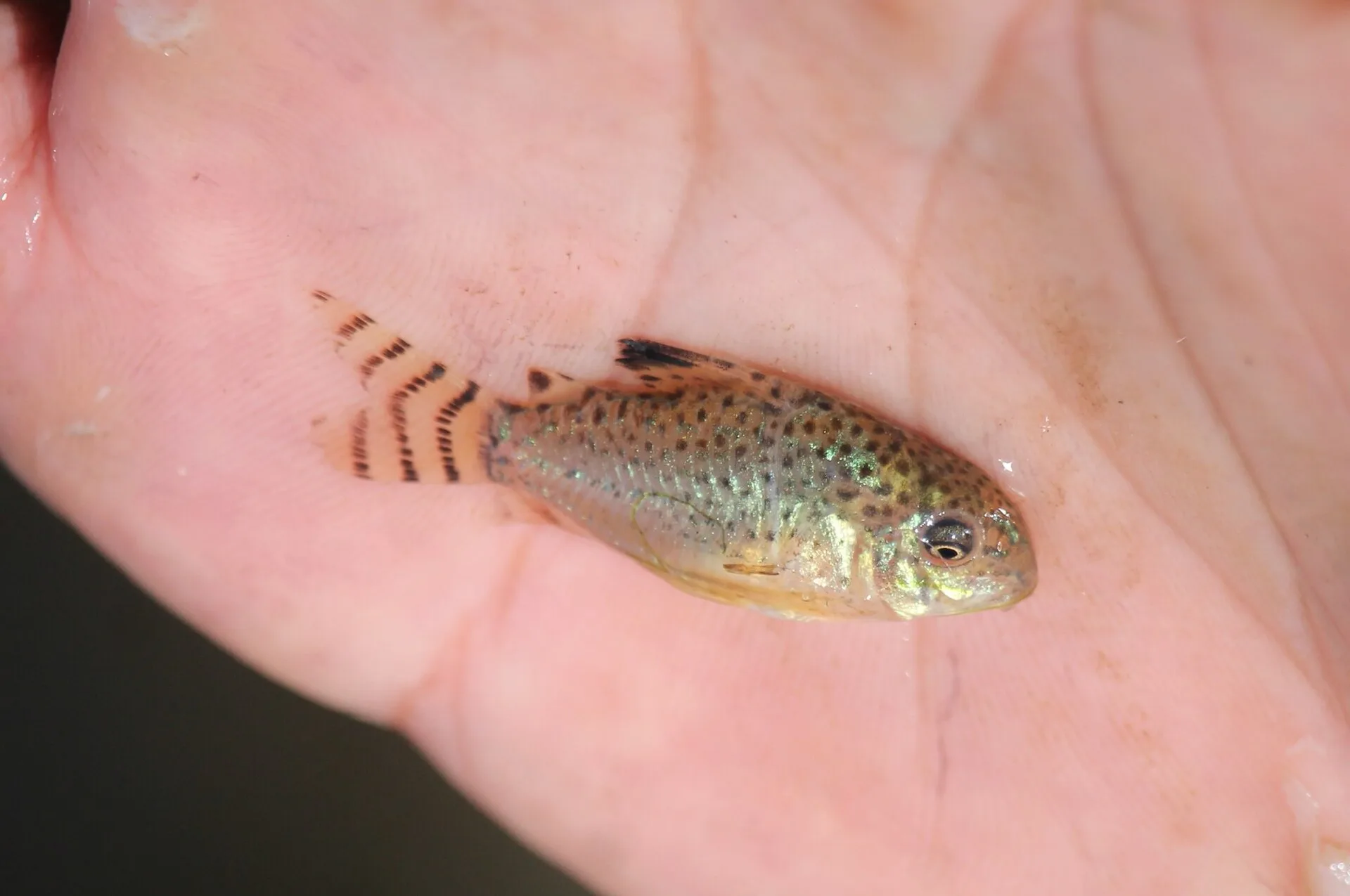
Cruz's Corydoras is C012 from Bolivia's Santa Cruz department: a small golden mosaic from Madeira-basin streams. Short-snouted, uncommon, and not a…
Read more →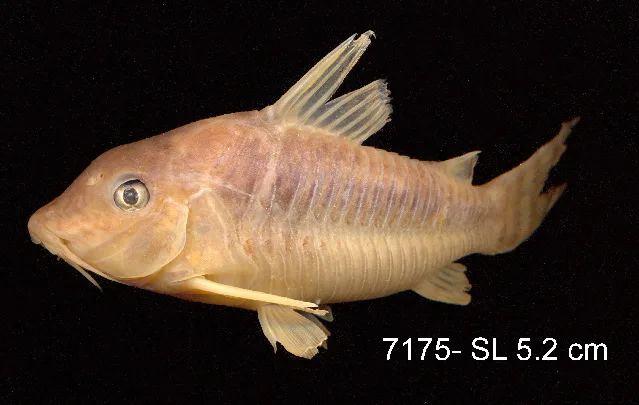
Seuss's Corydoras (C027) is the long-snouted, orange-spined Mamoré fish — not Sterbai with a stretched face. It likes warmth, a group, and sand,…
Read more →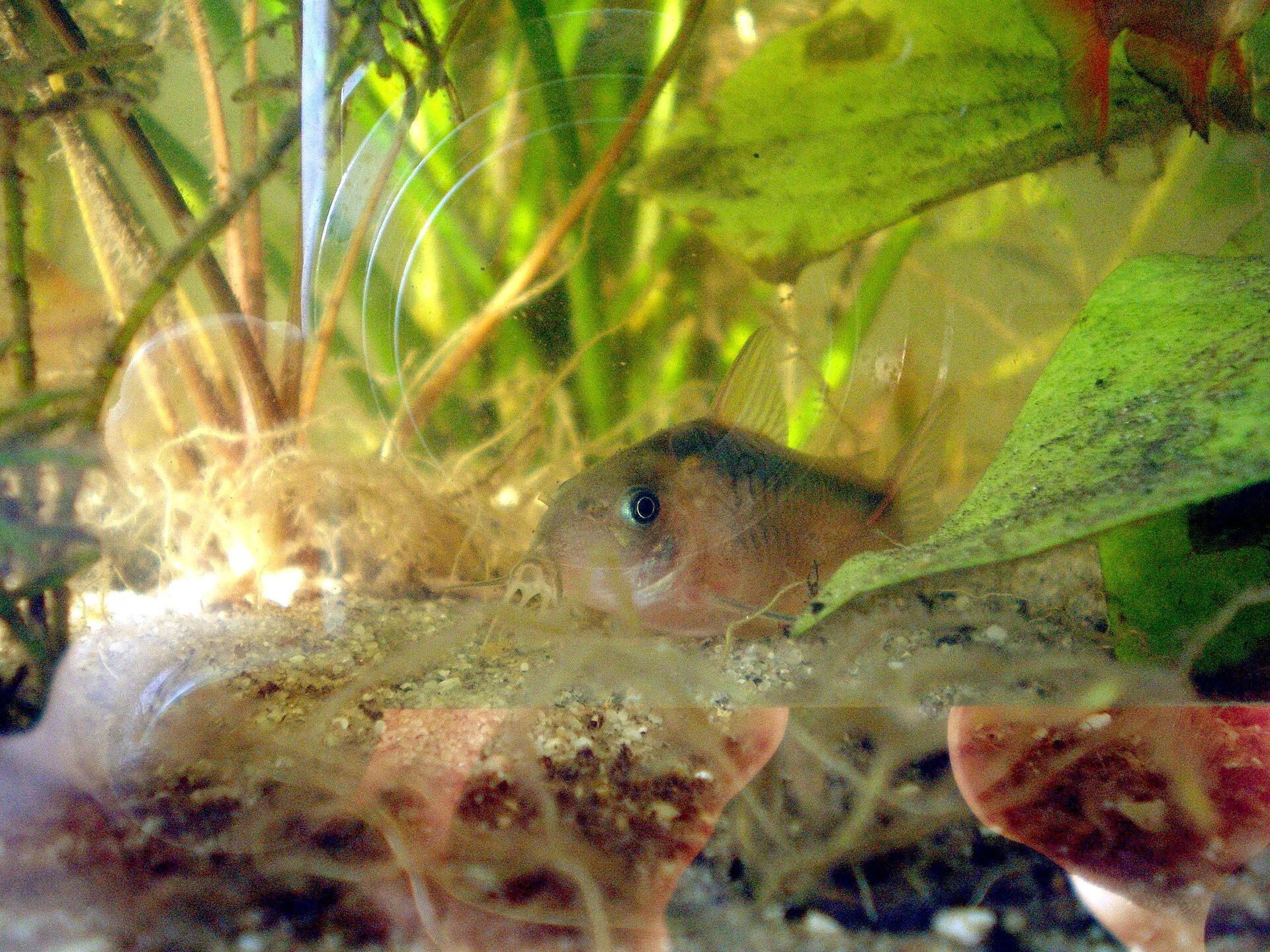
Zygatus is the rusty Peruvian cory with a dark yoke along the back. Side by side with rabauti the cape is the ID. Keep a saddle-matched troop on sa…
Read more →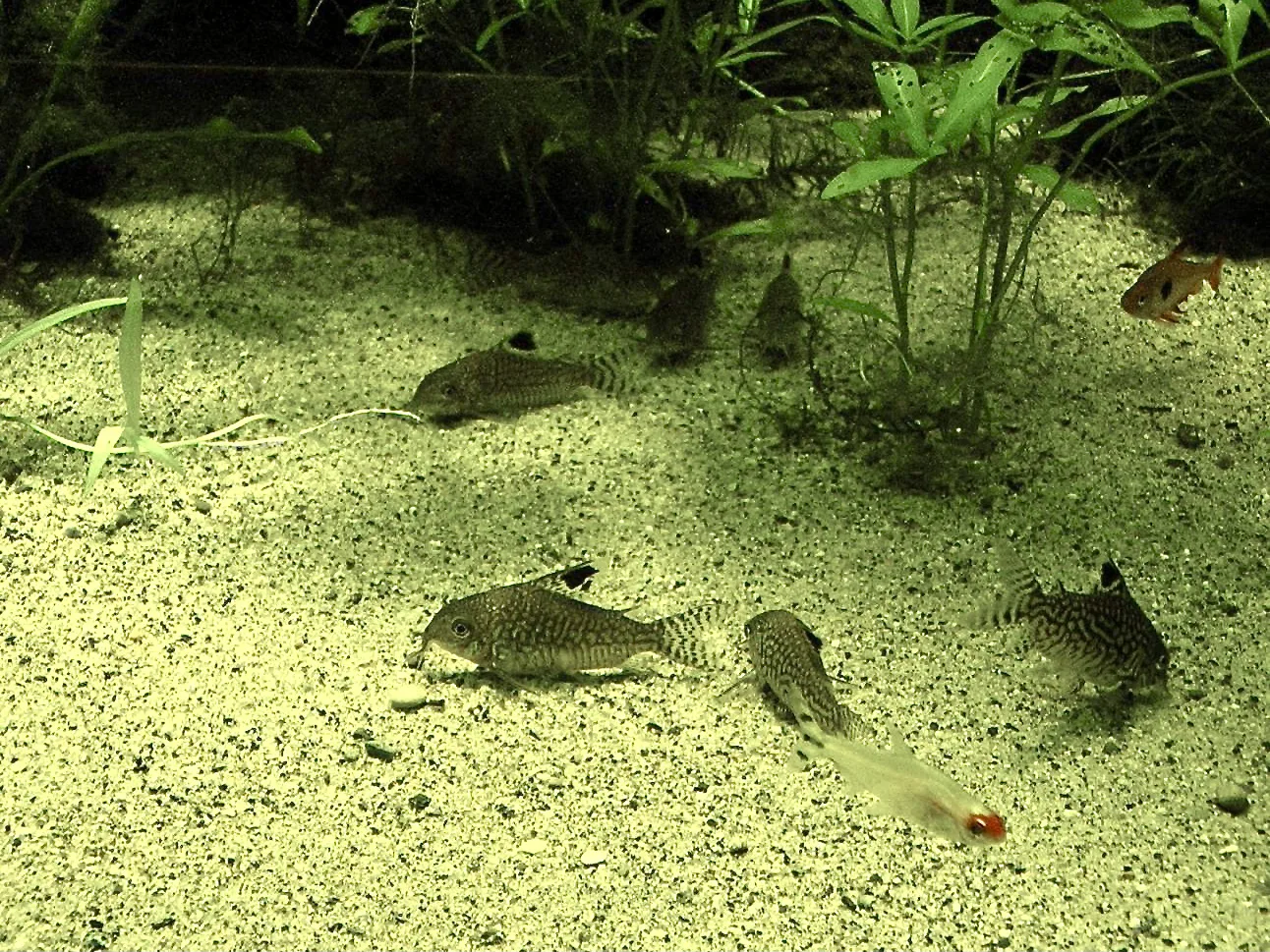
Reticulated Corydoras is the Ucayali network catfish with a dorsal blotch — Peruvian mesh, not a Brazilian stamp and not leopardus. The lace fade…
Read more →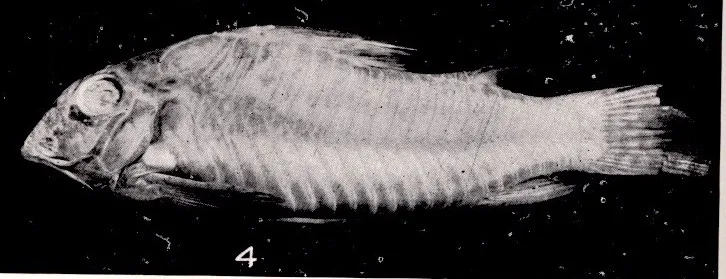
Aurofrenatus is the gold-bridled, long-snouted cory of the Paraguay basin (ellisae is the same fish). The pointed snout probes sand; gravel files i…
Read more →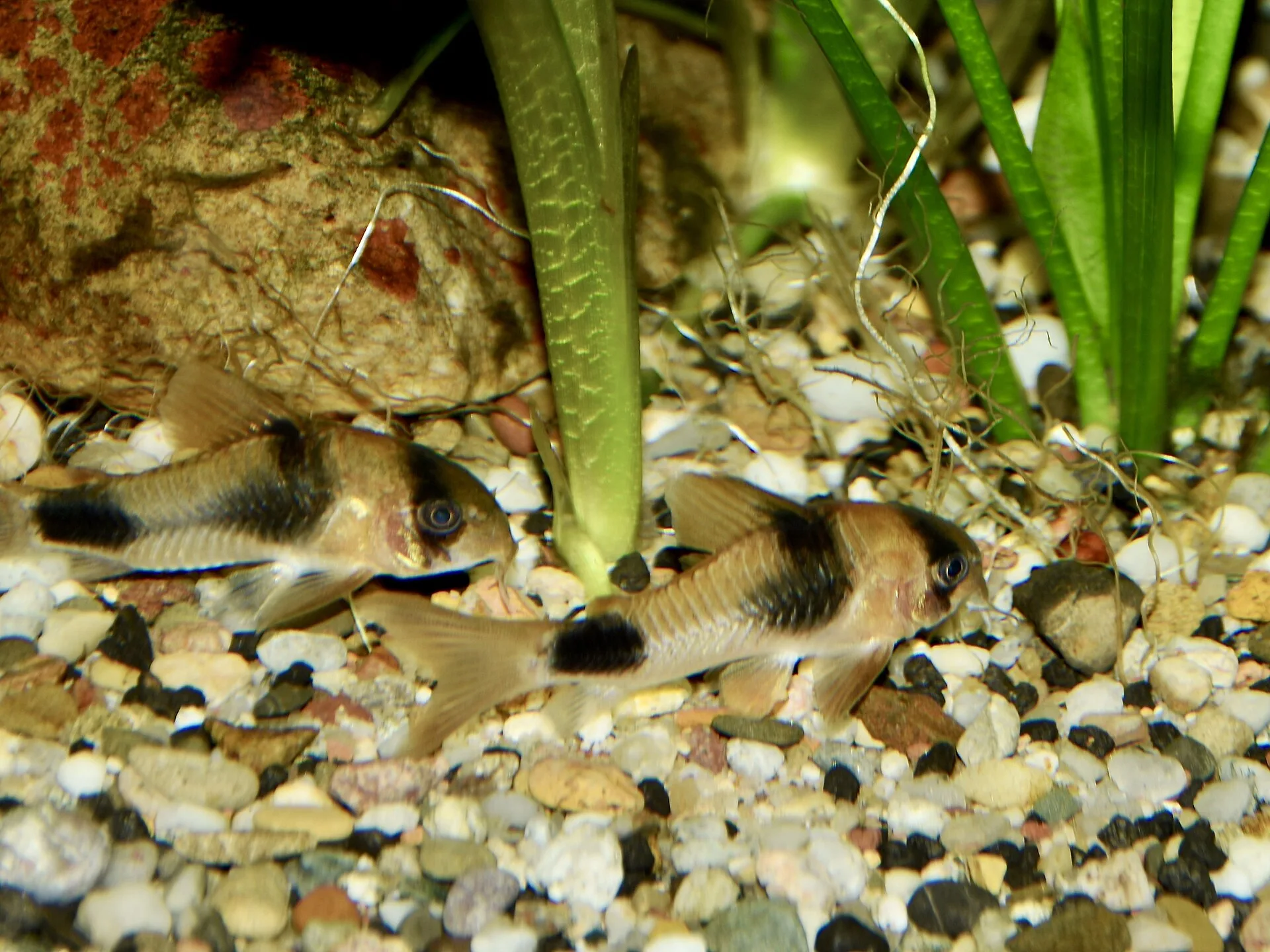
Weitzmani is the Peruvian fox cory: ivory body, dark mask, orange in the fins. It is not Adolfoi's blaze. Buy a group, keep the water soft, and fee…
Read more →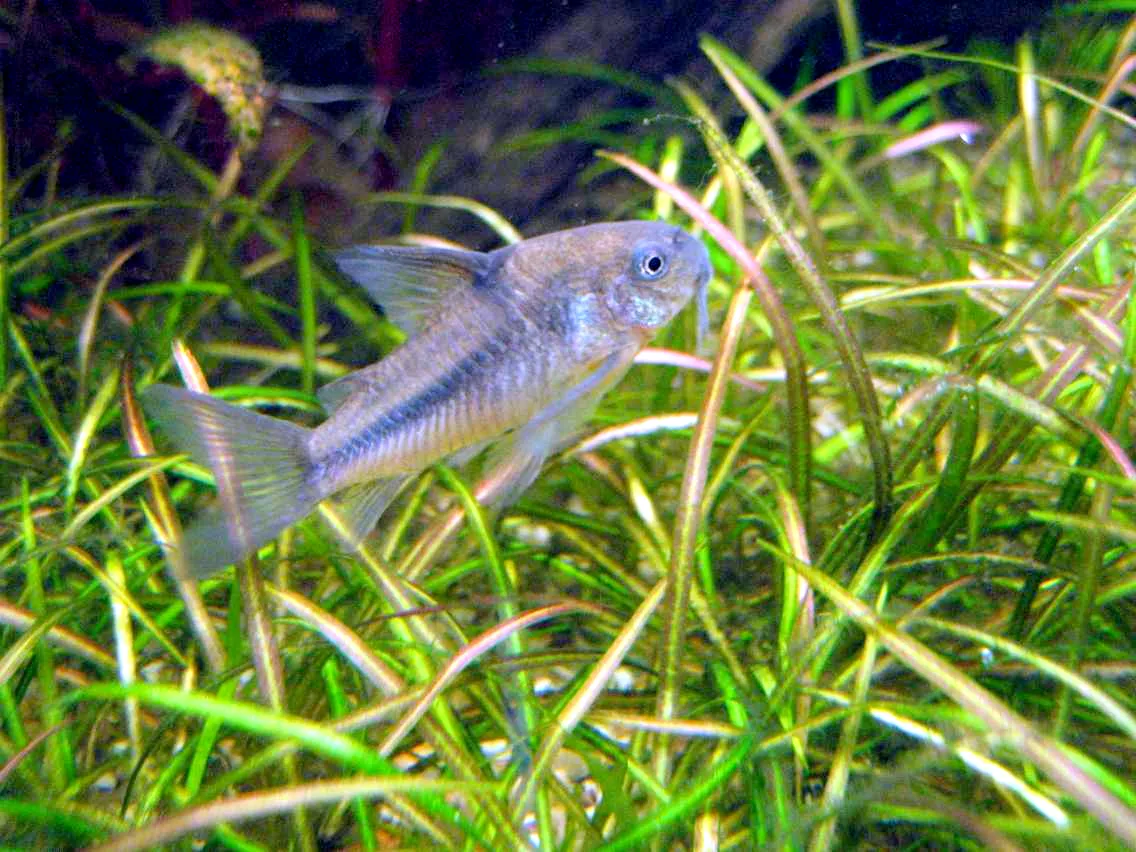
Natterer's Corydoras is a steel-blue coastal Brazilian fish, cooler than Amazon blackwater corys. Keep the sheen with clean, well-oxygenated water…
Read more →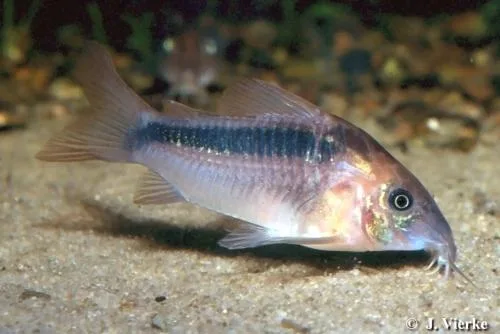
Rabauti Corydoras is the uniform rusty Amazon catfish, not a faded bronze and not zygatus with a dark cape. A copper troop on pale sand is the whol…
Read more →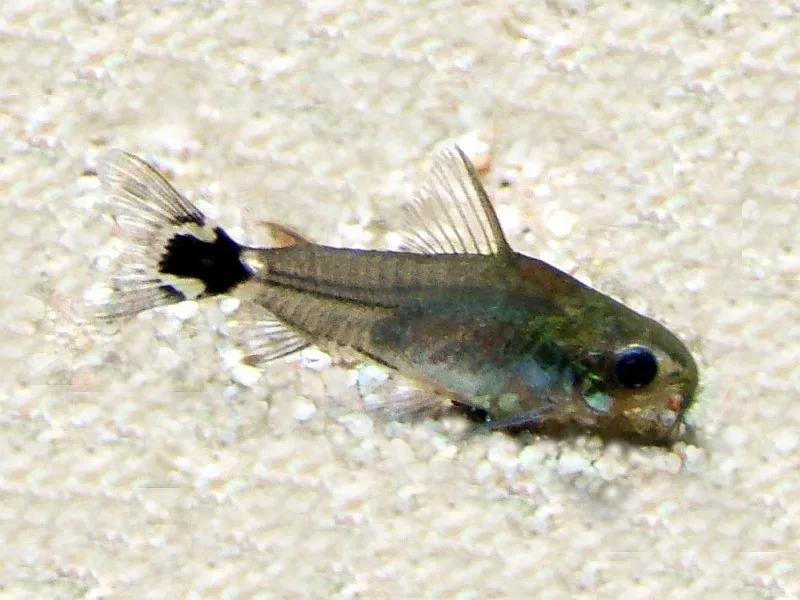
Hastatus is the Paraguay pygmy cory that schools in midwater like a tiny tetra, with a spear-spot on the tail. Huge numbers, micro-food, and plants…
Read more →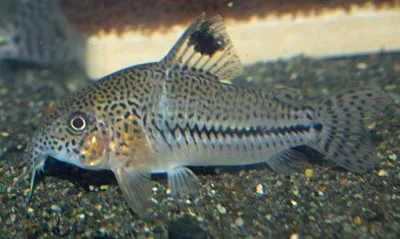
Leopard Corydoras is the larger, long-snouted Amazon cat with coarse blotches — not julii, not trilineatus. Give it a wide sand paddock and a gro…
Read more →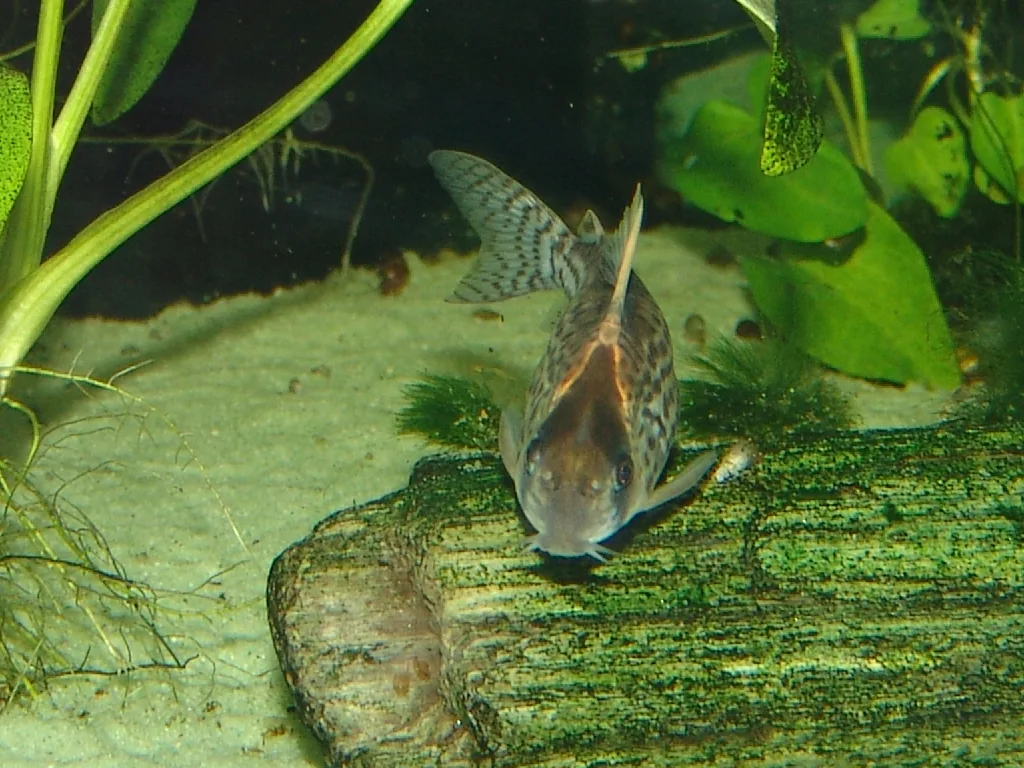
Schwartzi Corydoras is the Purus spotted cat whose dots line up into stripes. It is the busy, available patterned cory — still a sand-working gro…
Read more →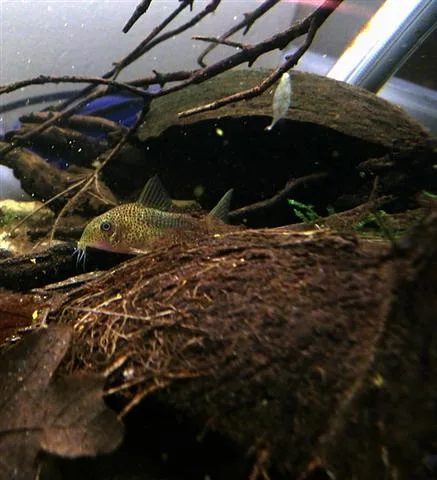
Similis Corydoras is a pale Madeira-basin catfish with a caudal smudge, often mixed up with caudimaculatus. It wants a sand troop and quiet water,…
Read more →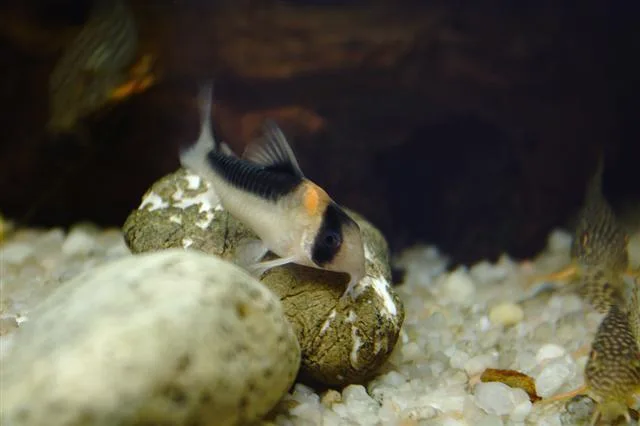
Corydoras duplicareus is the Negro lookalike named for doubling Adolfoi: same gold blaze, a more continuous dark stripe along the back. Buy the sad…
Read more →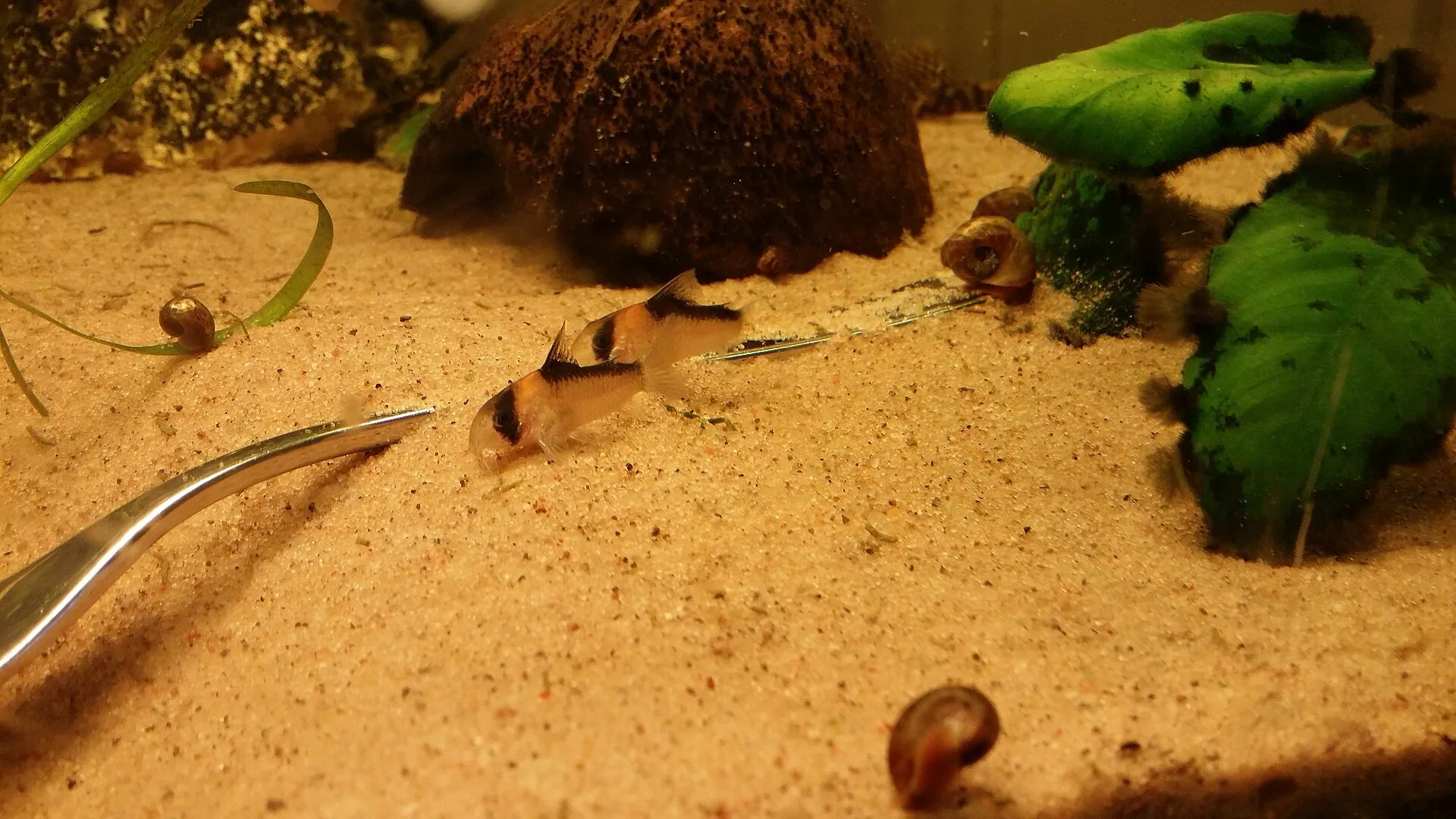
Adolfo's Corydoras is the Rio Negro sand-sifter with an orange nape, a black mask, and a dorsal saddle that does not copy duplicareus. Soft, staine…
Read more →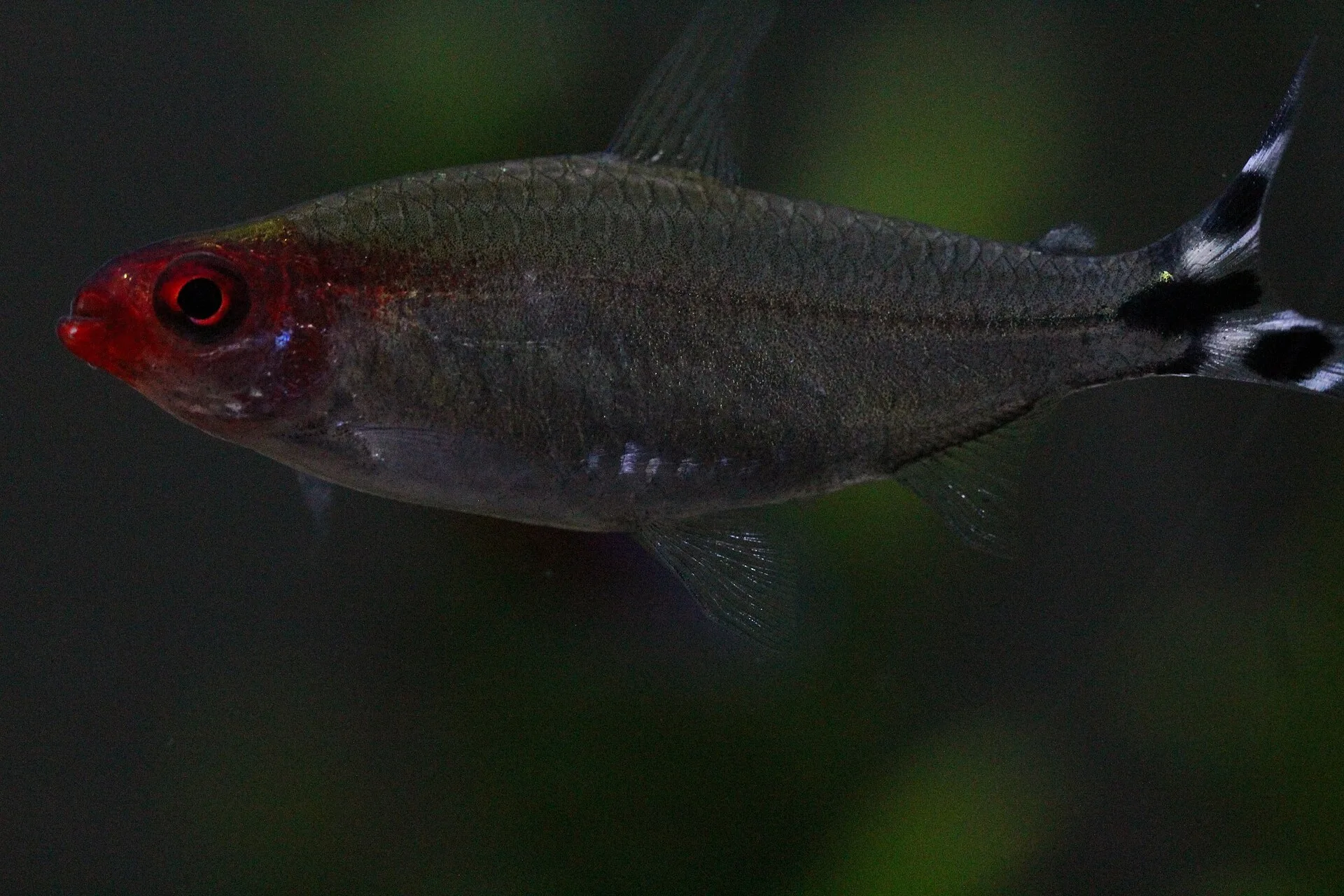
Petitella bleheri’s crimson face is a water-quality instrument — the true rummynose of Negro blackwater, a school of ten-plus, and a nose that…
Read more →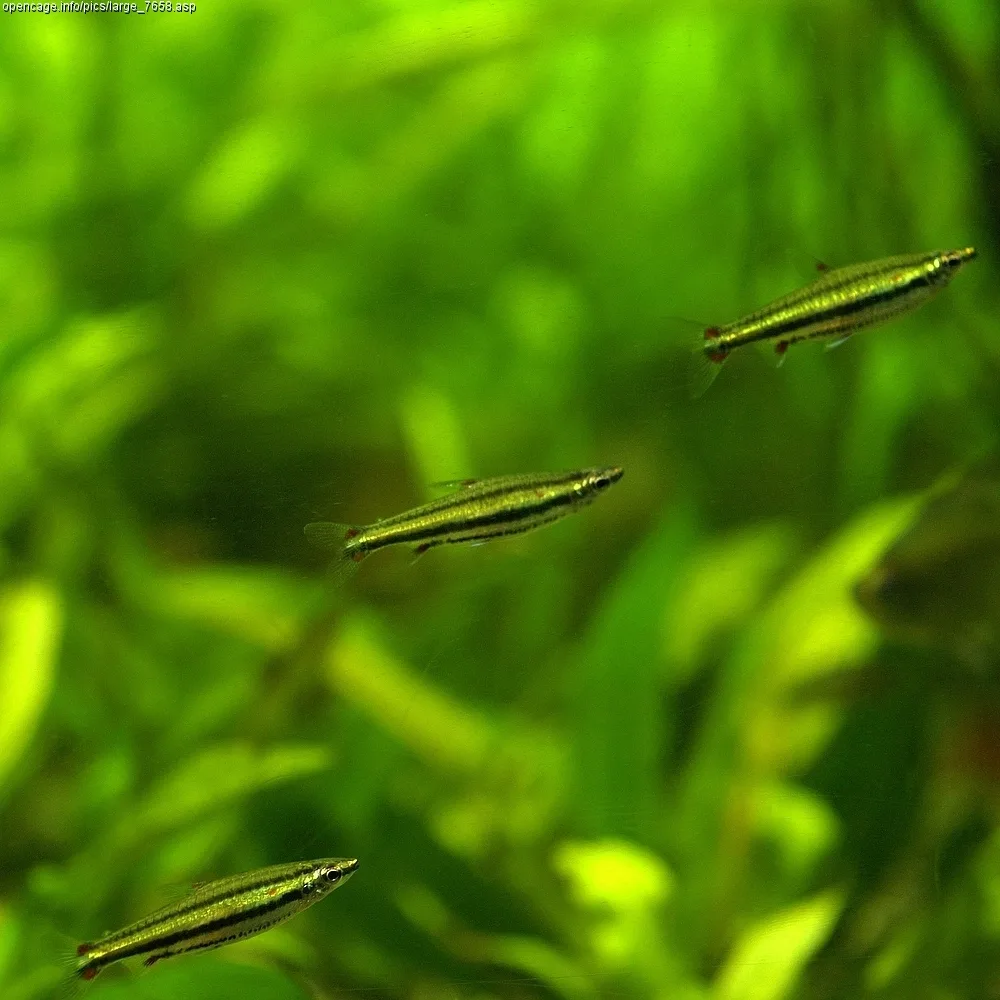
Nannostomus trifasciatus is the photographed pencil: three lines, red in the males, and nipping that stays inside the school if you keep twelve in…
Read more →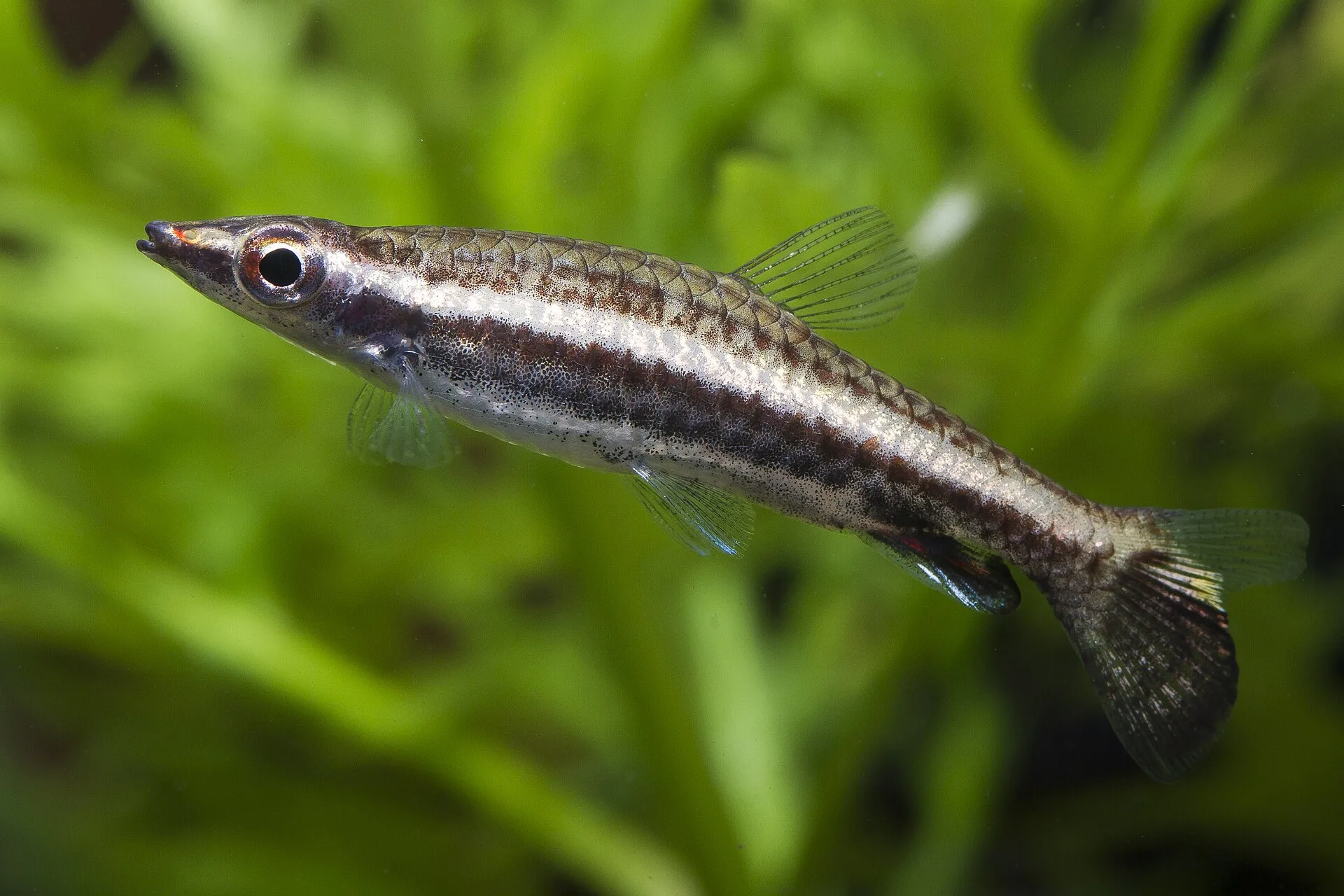
Nannostomus eques hangs at 45 degrees in stained Amazon water — the hockey-stick pencilfish of the top third, shy, particular, and not a tetra th…
Read more →
Nannostomus beckfordi is the pencilfish that forgives: a level-swimming Guiana characin whose midwater fencing looks like a school at eight fish an…
Read more →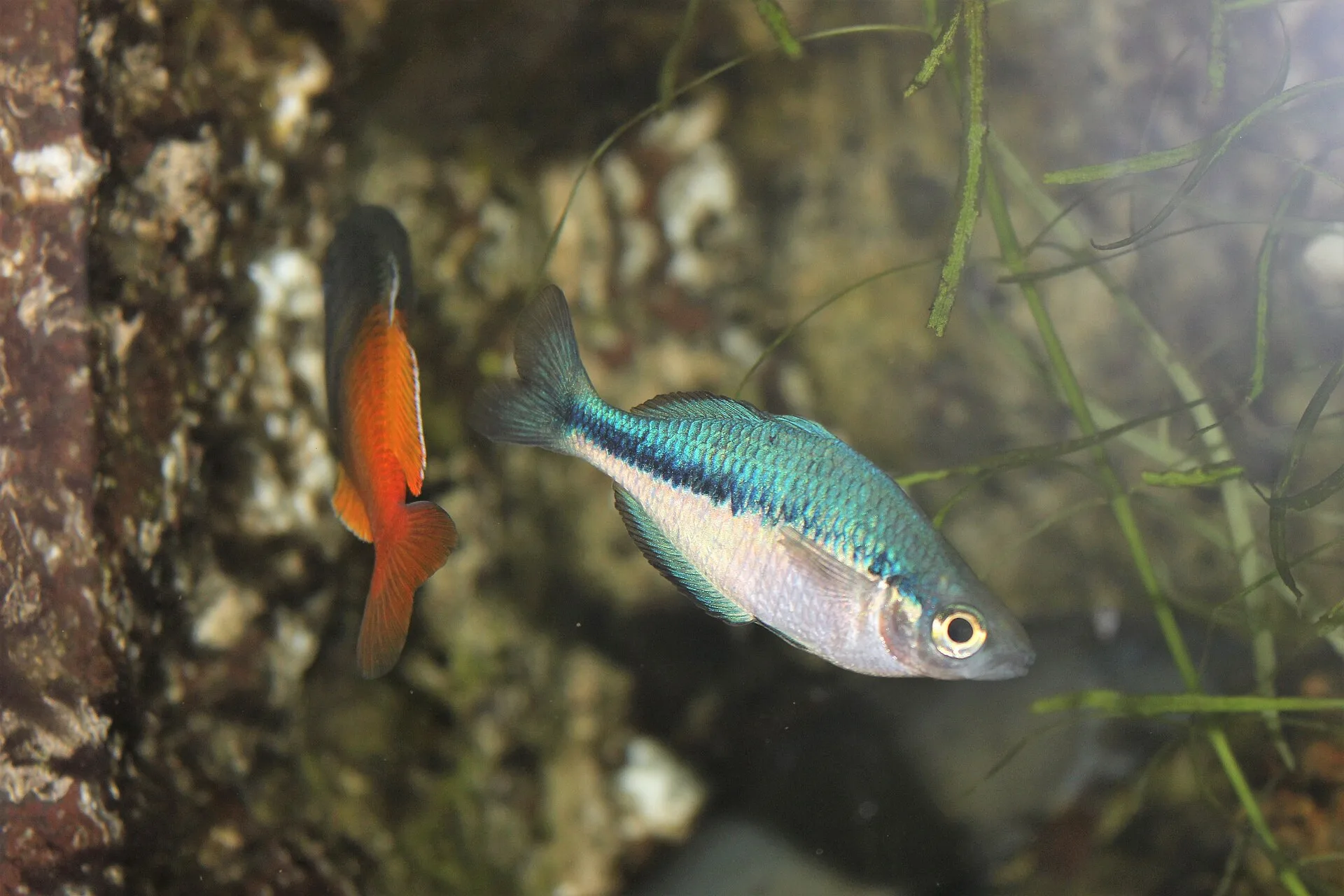
Melanotaenia splendida is the Australian rainbow with a shoulder: a deep-bodied river schooler that needs a metre of swimming room, a real filter,…
Read more →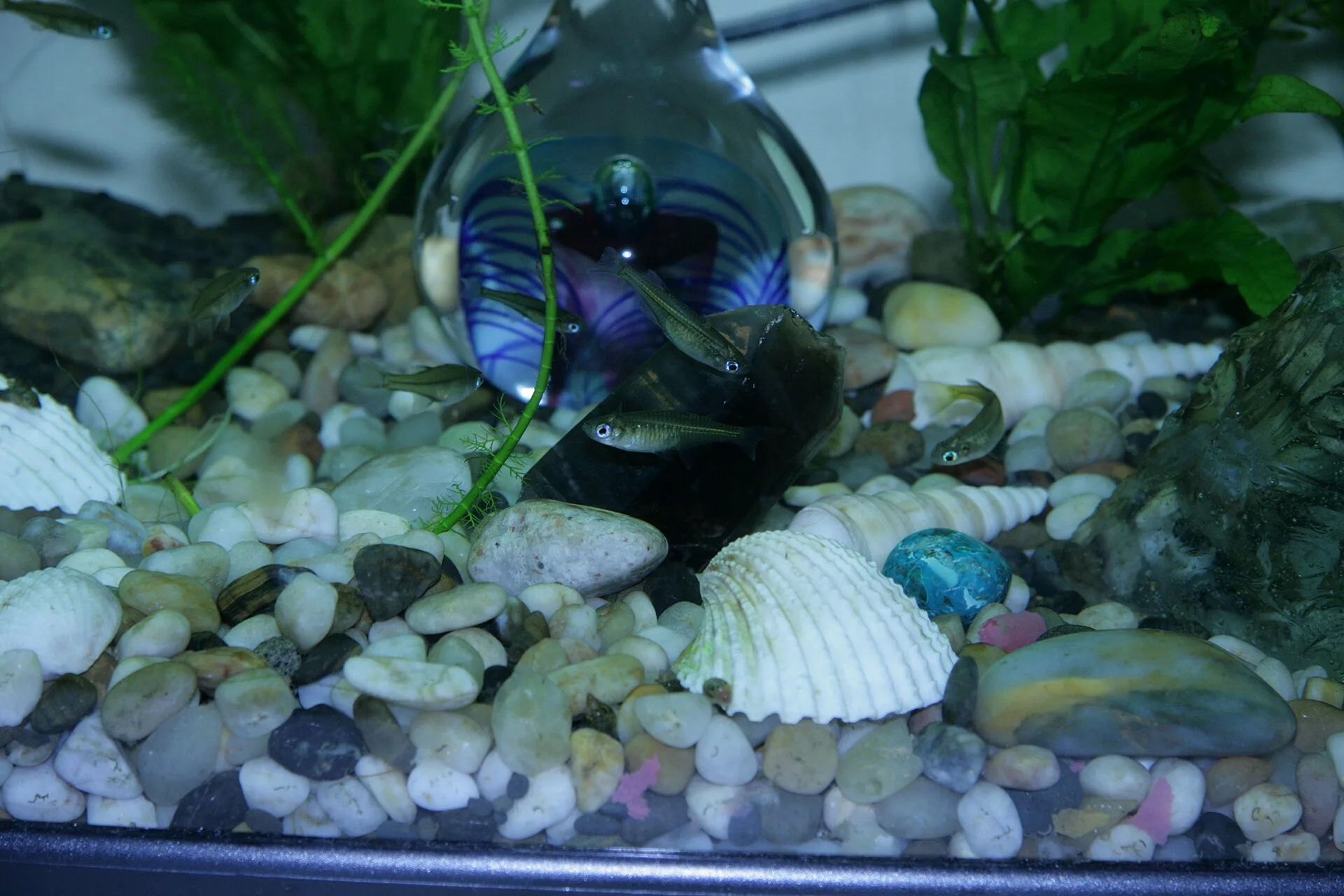
Pseudomugil signifer males grow filamentous fins for a surface dance — a thumbnail Australian blue-eye that only works as a covered school with f…
Read more →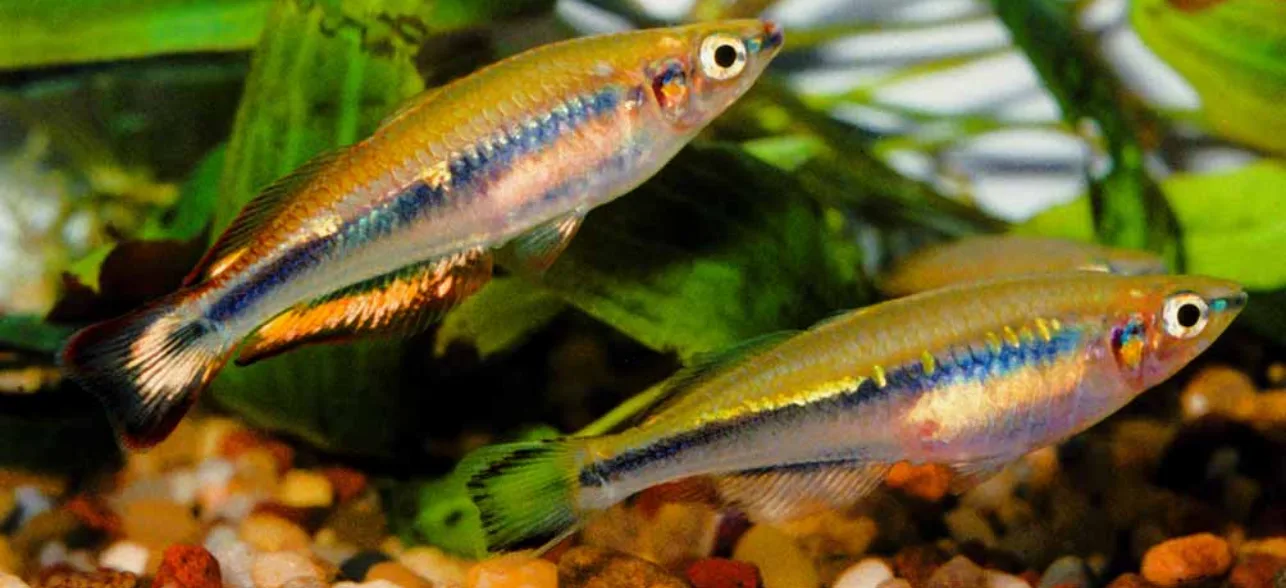
Bedotia madagascariensis is Madagascar’s zona, not a New Guinea Melanotaenia: a surface school with a red-tailed male, a lid with no gaps, and an…
Read more →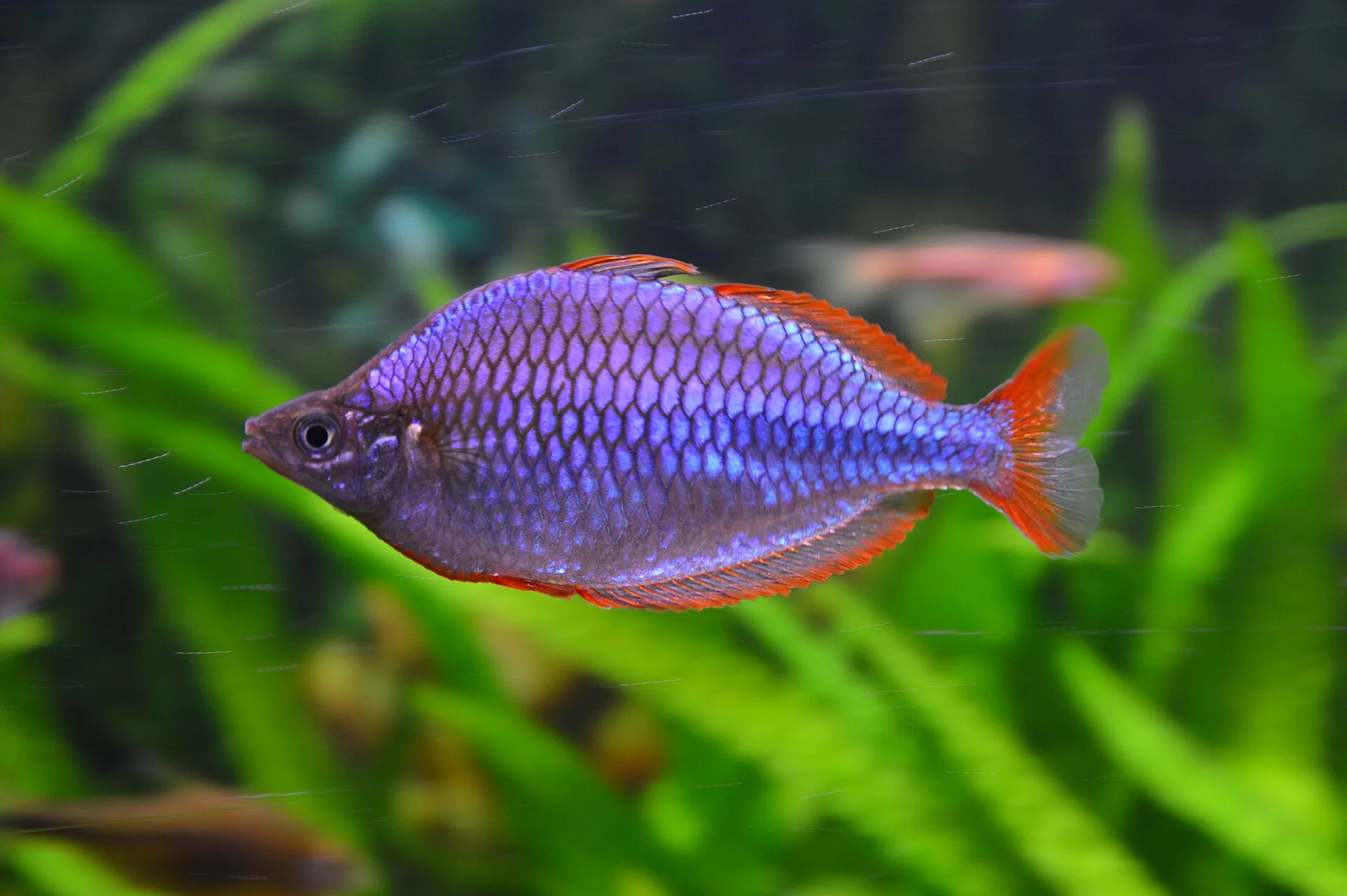
Melanotaenia praecox is the rainbow that actually fits a modest tank — 5–6 cm of blue and red that appear when the school is eight or more and…
Read more →