

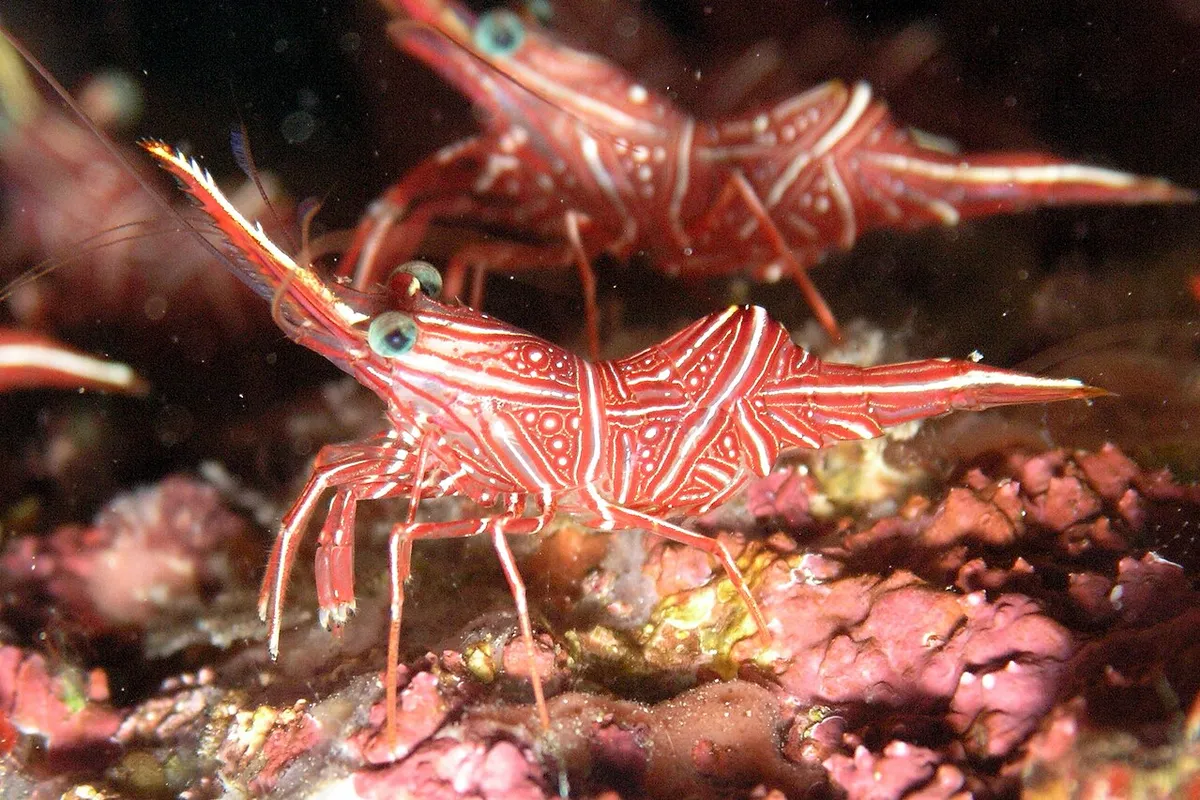
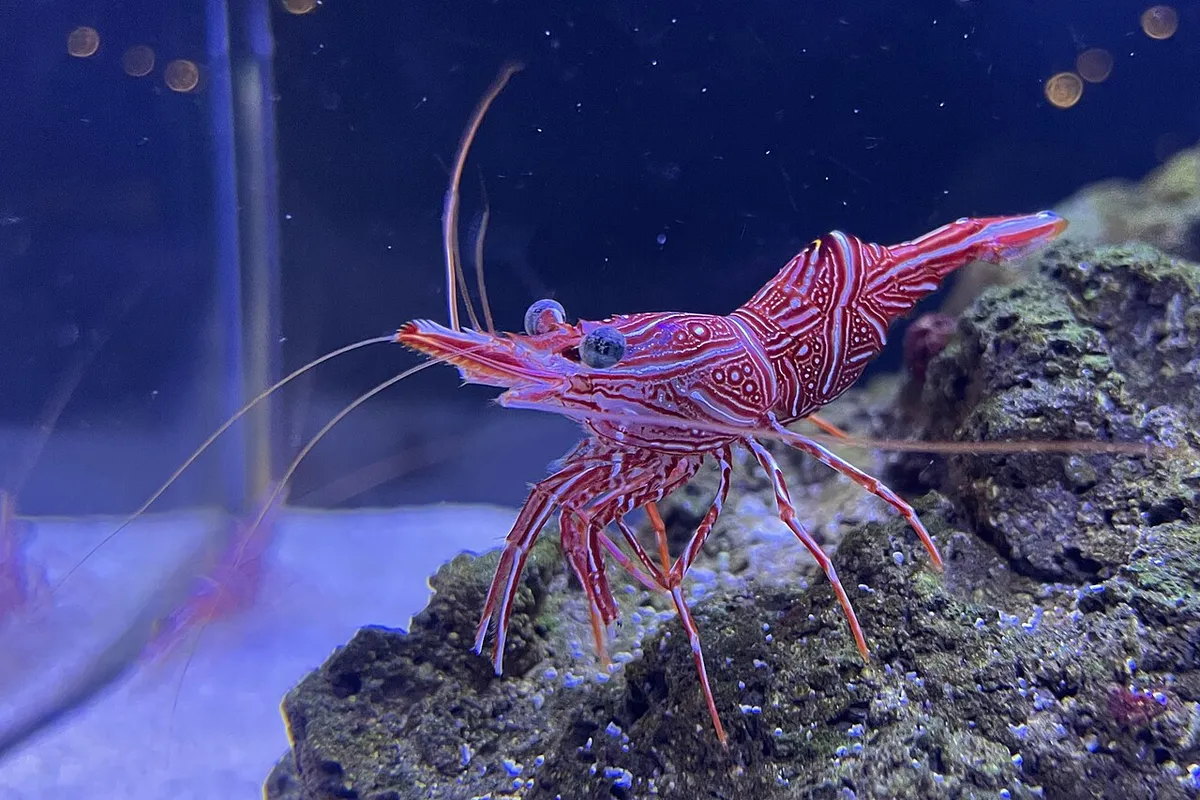
The camel shrimp, also called the hinge-beak or dancing shrimp, is a red shrimp with white diagonal stripes and large eyes. It reaches about 4 cm. The name comes from the hump in its back, and the hinge-beak name from its movable rostrum.
Rhynchocinetes durbanensis is hardy and inexpensive, and a group is lively to watch. It is not completely reef safe, though, because it picks at some corals.
Where camel shrimp come from
The species lives across the Indo-Pacific, from East Africa and the Red Sea to Indonesia and Japan. Groups hide in caves and crevices by day and come out at night to feed.
Appearance and behaviour
Camel shrimp are social and best kept in groups of five or more. They become bolder in groups and soon come out during the day, especially at feeding time.
Tank setup
A group needs at least 75 litres with plenty of live rock, caves and ledges. They are very hardy and adapt to most stable marine systems.
Water parameters

- Temperature: 23–27°C
- pH: 8.1–8.4
- Specific gravity: 1.023–1.025
Feeding
Camel shrimp are scavengers and will eat almost anything: frozen mysis, brine shrimp, flakes and pellets. Feeding them well reduces how much they pick at corals.
Tank mates
They get along with most peaceful fish and other shrimp. Avoid hawkfish, large wrasses and triggerfish, which eat them. Camel shrimp often nip at zoanthids, mushroom corals, soft corals and large-polyp stony corals, so they are best in a fish-only tank or a reef with tough corals.
Breeding
Females carry eggs under the tail and release larvae regularly, but the larvae are rarely raised in home tanks. They are often eaten by fish and corals.
Common problems and lifespan
Coral damage and losses to predators are the main issues. They live two to three years. If you want a fully reef-safe shrimp, the cleaner shrimp is a better choice.
Explore other topics
Dive into more aquarium guides across the site.