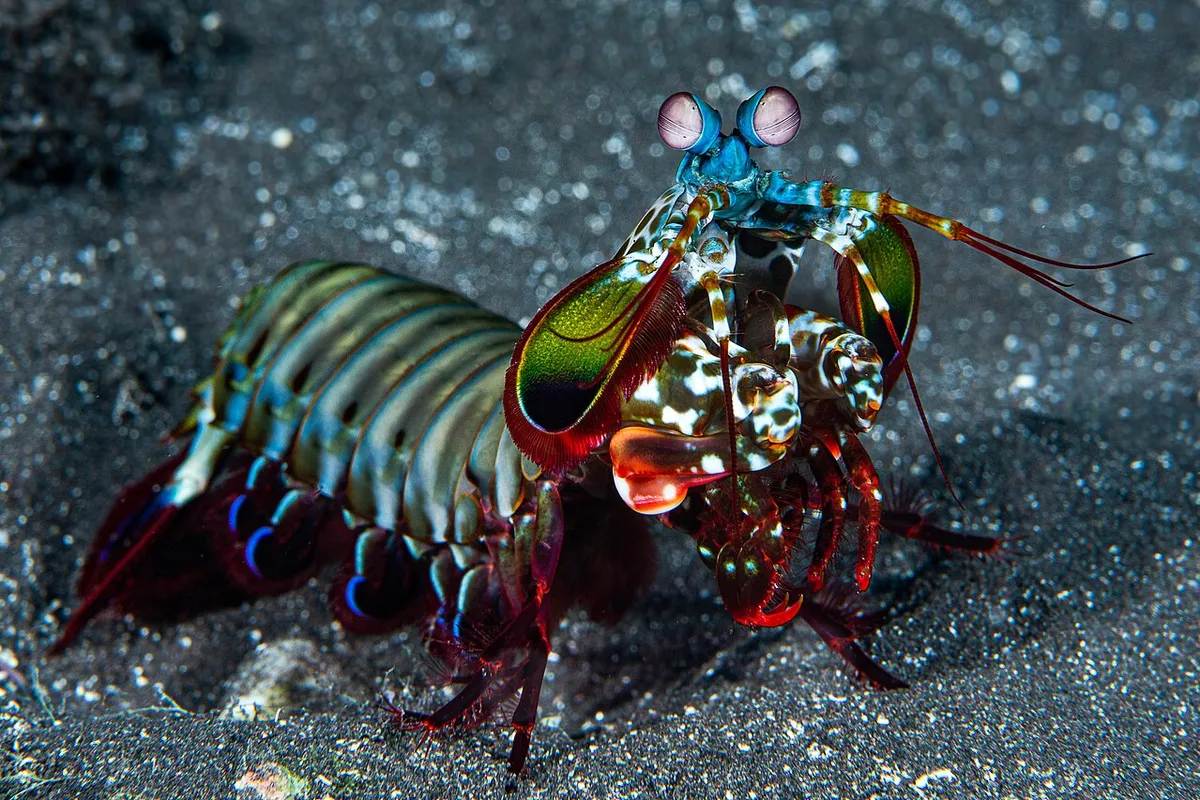
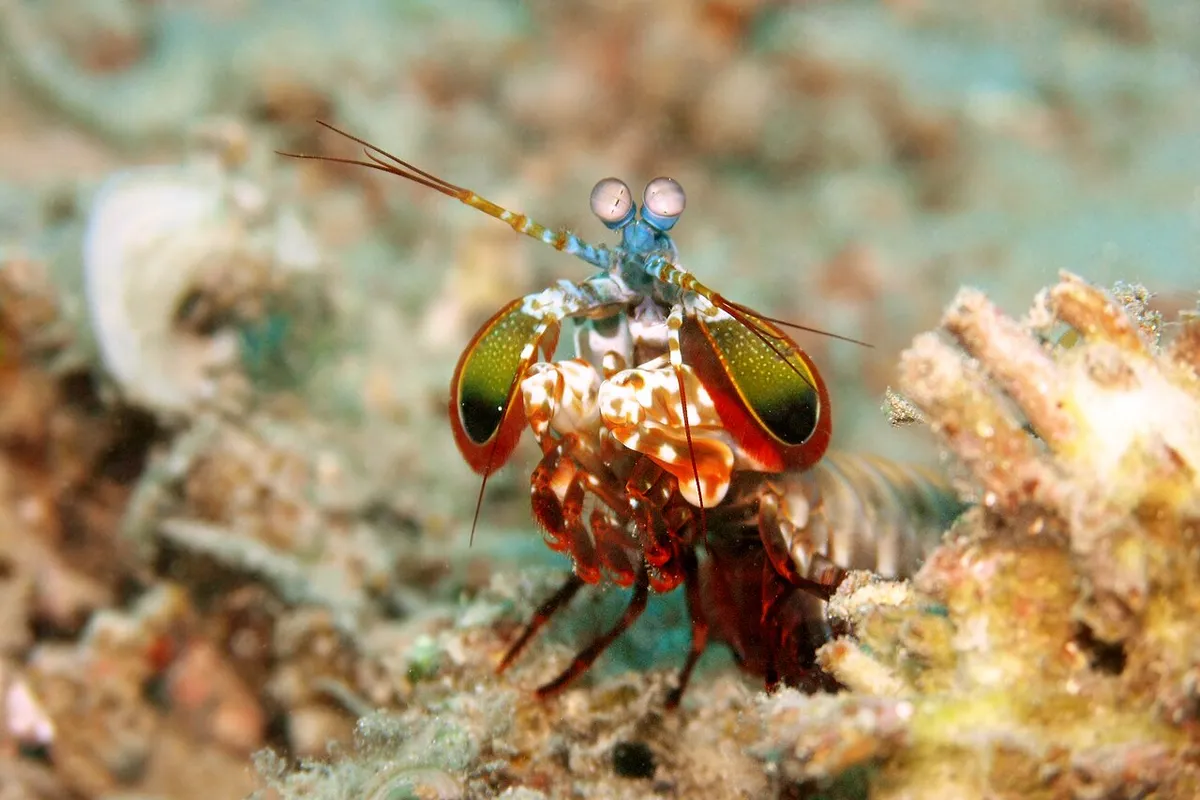
The peacock mantis shrimp is a showpiece of colour: a green body, red and orange legs, a leopard-spotted shell and stalked eyes that can see more colours than ours. It grows to about 15–18 cm.
Odontodactylus scyllarus is a "smasher". Its club-like raptorial appendages strike with enough force to break snail shells, crab claws and, occasionally, thin aquarium glass. It is a remarkable pet for a dedicated species tank.
Where peacock mantis shrimp come from
The species lives across the Indo-Pacific, from East Africa to Guam. It digs U-shaped burrows in sand and rubble near reefs.
Appearance and behaviour
Mantis shrimp are intelligent and curious. They rearrange their burrows, recognise their owners and watch everything outside the tank. They are also solitary and will attack any other animal they can catch.
Tank setup
A single adult needs at least 150 litres. Use thick glass or acrylic, a deep sand and rubble bed of 10 cm or more, and pieces of rock or PVC pipe to build a burrow. Use a lid, and keep fingers out of reach: a strike can cut skin.
Water parameters

- Temperature: 24–27°C
- pH: 8.1–8.4
- Specific gravity: 1.023–1.025
They need iodine and calcium for moulting. Regular water changes with good salt mix usually provide enough.
Feeding
Feed every day or two with meaty foods: frozen krill, clams, mussels, prawns, and live snails and hermit crabs if you want to see their hunting behaviour. Remove leftovers.
Tank mates
Keep them alone. They will kill fish, crabs, shrimp and snails. Most corals are left alone, so a species reef with a single mantis shrimp works well.
Breeding
Pairs of some species live together, but peacock mantis shrimp are rarely bred in home aquariums.
Common problems and lifespan
Problems usually come from moulting, when they are vulnerable and hide for several days. Do not disturb them during this time. They can live six to ten years or more.
Explore other topics
Dive into more aquarium guides across the site.