

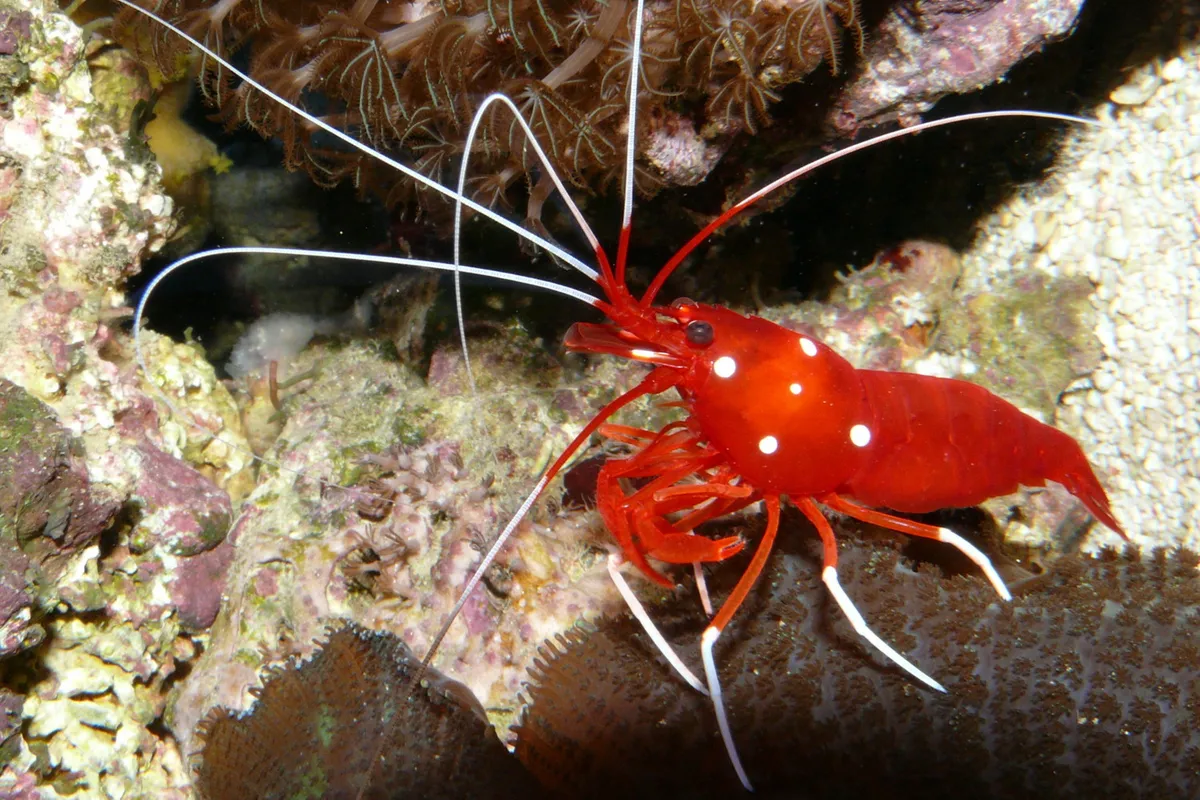
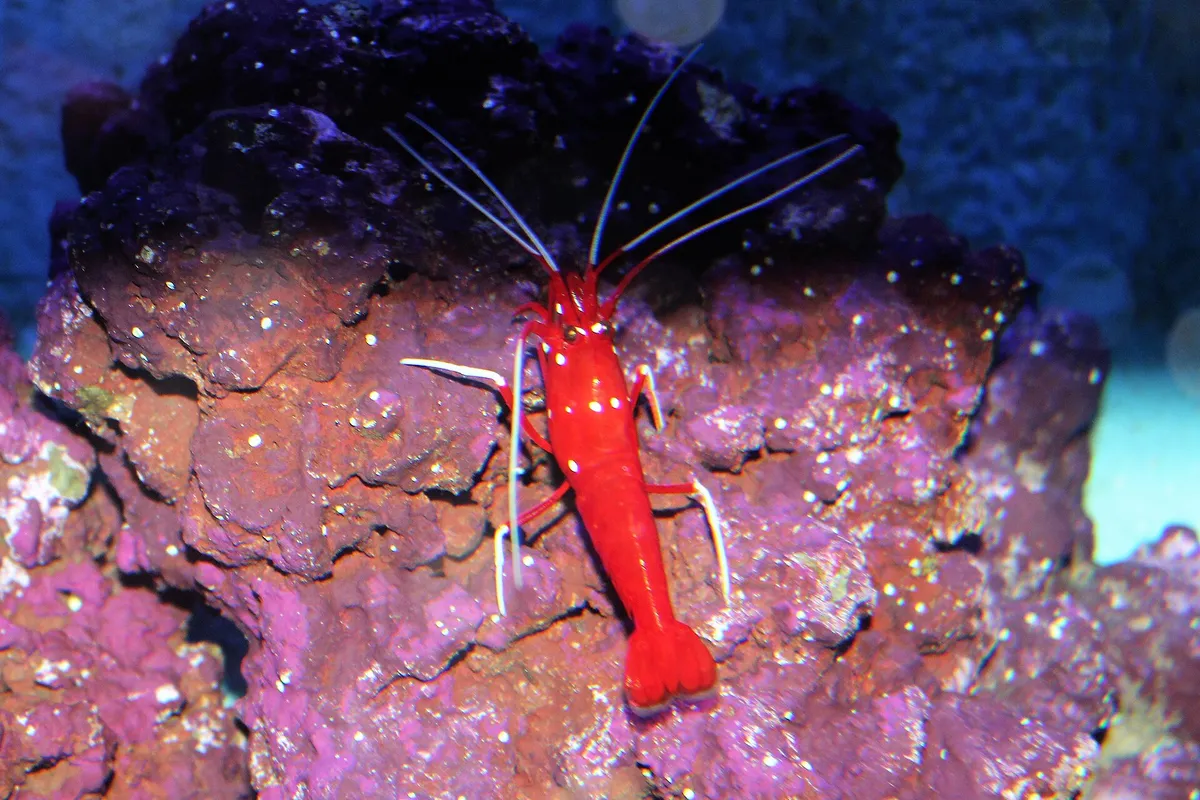
The fire shrimp, also called the blood red shrimp or fire cleaner shrimp, is one of the most striking invertebrates in the reef hobby. Its body is deep scarlet with small white spots, and its legs and long antennae are bright white. Lysmata debelius is a true cleaner shrimp that will pick parasites and dead skin from fish once it settles in.
It is shyer than the common skunk cleaner shrimp and spends more time in caves. Give it rockwork to hide in and stable water, and it is a long-lived, reef-safe addition.
Where fire shrimp come from
Fire shrimp live in the Indo-Pacific, from the Red Sea and Indian Ocean to Indonesia and the western Pacific. They are found on deeper reef slopes, usually below 20 m, in caves and crevices. That deeper, darker home explains their shy habits under bright aquarium lights.
Appearance and behaviour
Adults reach about 5 cm in body length, not counting the antennae. The colour is a deep, even red with white spots on the body and white legs and antennae. All fire shrimp are hermaphrodites, able to act as male or female, so any two can form a pair.
They stay in caves during the day and come out more in the evening. Once settled, many will climb onto a fish or even your hand to clean. They are peaceful with fish and other shrimp, though pairs may chase other Lysmata.
Tank setup
One or a pair of fire shrimp need at least 75 litres with plenty of live rock, caves and overhangs. The tank should be mature and stable. Moderate lighting and flow suit them. Our guide to acclimating shrimp explains why slow drip acclimation matters for all shrimp.
Water parameters

Keep the temperature at 24–27°C, salinity at 1.024–1.026, pH 8.1–8.4, and stable alkalinity, calcium and magnesium. Shrimp are very sensitive to copper and sudden salinity changes, so never treat their tank with copper medicines.
Feeding
Fire shrimp are scavengers and cleaners. In a community tank they pick up leftover food, but target feed them two or three times a week with frozen mysis, brine shrimp or small pellets, dropped near their cave with a pipette. This keeps them healthy and stops them stealing from corals.
Moulting
Like all shrimp, fire shrimp shed their shell every few weeks to grow. The old shell looks like a whole dead shrimp; leave it in the tank, as the shrimp may eat it to recover minerals. After moulting the shrimp hides for a day or two while the new shell hardens. Stable iodine and calcium levels help it moult cleanly.
Tank mates
Fire shrimp suit most peaceful reef fish: clownfish, gobies, tangs, cardinalfish and dwarf angels. Avoid hawkfish, large wrasses, triggers, puffers and dottybacks, which see shrimp as food. They are completely reef safe.
Breeding
Pairs often spawn in aquariums. Green eggs are carried under the tail, and larvae are released every few weeks, usually at night. Raising the larvae is very difficult and takes months of plankton feeding, but captive-bred fire shrimp are now available.
Common problems and lifespan
Most losses come from fast acclimation, copper, predatory fish and failed moults linked to unstable water. With good care fire shrimp live 2–4 years.
Explore other topics
Dive into more aquarium guides across the site.