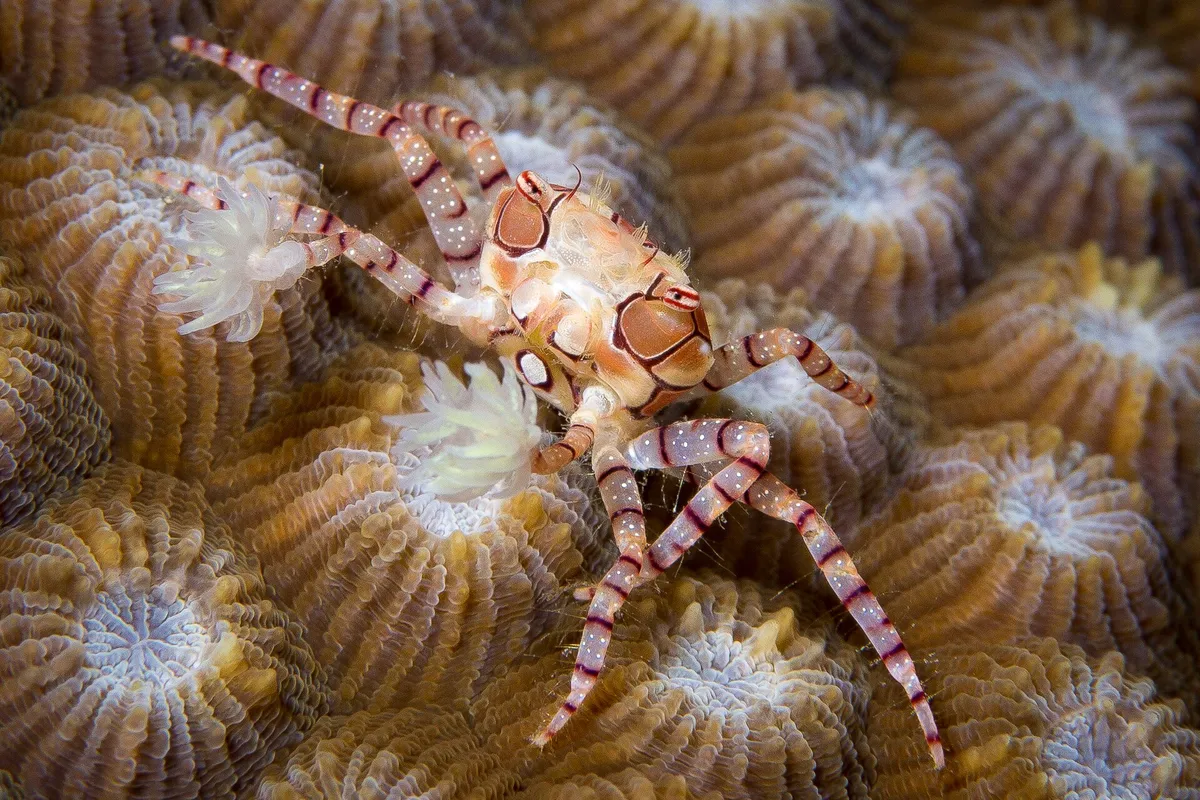
The pom pom crab, also called the boxer crab, is one of the strangest animals in the reef hobby. It holds a tiny sea anemone in each claw and waves them like a cheerleader's pom poms. When threatened it thrusts the anemones forward like boxing gloves, using their stings for defence.
Lybia tessellata is small, peaceful and easy to look after, but it is shy and only about 2 cm across, so it is best appreciated in a nano reef.
Where pom pom crabs come from
Pom pom crabs live in the Indo-Pacific, from the Red Sea and East Africa to Hawaii. They hide under rocks and in rubble on shallow reefs and lagoons. The anemones they carry are usually small species of Triactis or Bunodeopsis.
Appearance and behaviour
The shell is about 1–2.5 cm wide, with a pink, orange or cream mosaic pattern outlined in dark lines. The legs are banded purple and white. Its claws are tiny and weak, which is why it relies on the anemones.
The crab uses the anemones to catch food too, wiping them over its mouth parts to take what they catch. If it loses one, it often splits the remaining anemone in two, which then grow into two new pom poms. Pom pom crabs are peaceful and hide by day.
Tank setup
A single pom pom crab can live in a tank as small as 40 litres. Provide live rock with small caves and rubble, a sand bed and gentle to moderate flow. Small tanks make it easier to see and feed. Acclimate it slowly, like any invertebrate; our guide to drip acclimation applies to crabs too.
Water parameters
Keep the temperature at 24–27°C, salinity at 1.024–1.026 and pH 8.1–8.4. Avoid copper. Stable calcium and magnesium help moulting.
Feeding
Pom pom crabs pick up food with their anemones. In a community tank they find some leftovers, but target feed them two or three times a week with tiny frozen foods such as mysis, cyclops and baby brine shrimp, or small pieces of shrimp. Feed near the crab with a pipette so the anemones can grab it. This also feeds the anemones.
Moulting
Before moulting the crab puts its anemones down nearby, then picks them back up once its new shell has hardened. Do not remove a shed shell, which looks like a dead crab, and leave the anemones alone during this time.
Tank mates
Choose small, peaceful fish such as gobies, clownfish and firefish. Avoid hawkfish, wrasses, puffers, triggers, dottybacks and larger crabs, which may eat it. It is reef safe and ignores corals.
Breeding
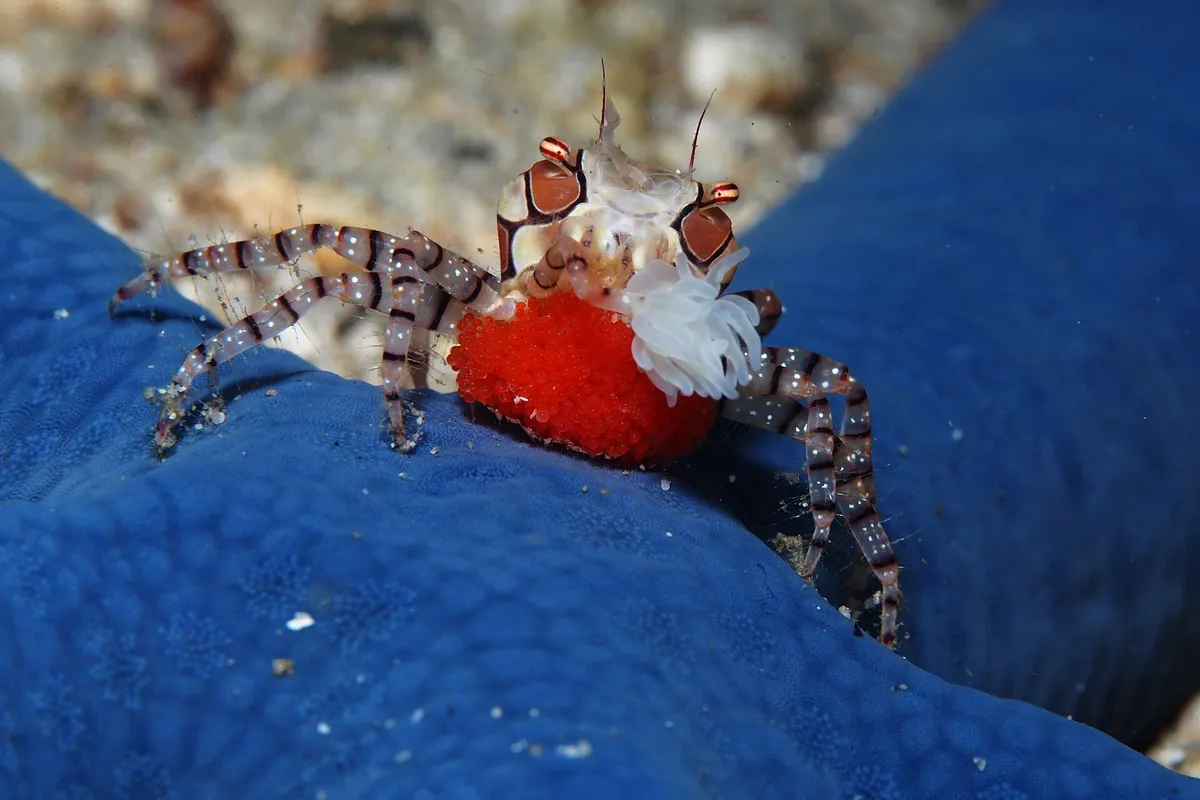
Females carry eggs under the abdomen, as in the photo above, but the larvae are not usually raised in aquariums.
Common problems and lifespan
Predatory tank mates, copper and losing track of it in a large tank are the main risks. With good care pom pom crabs live 2–3 years or more.
Explore other topics
Dive into more aquarium guides across the site.