

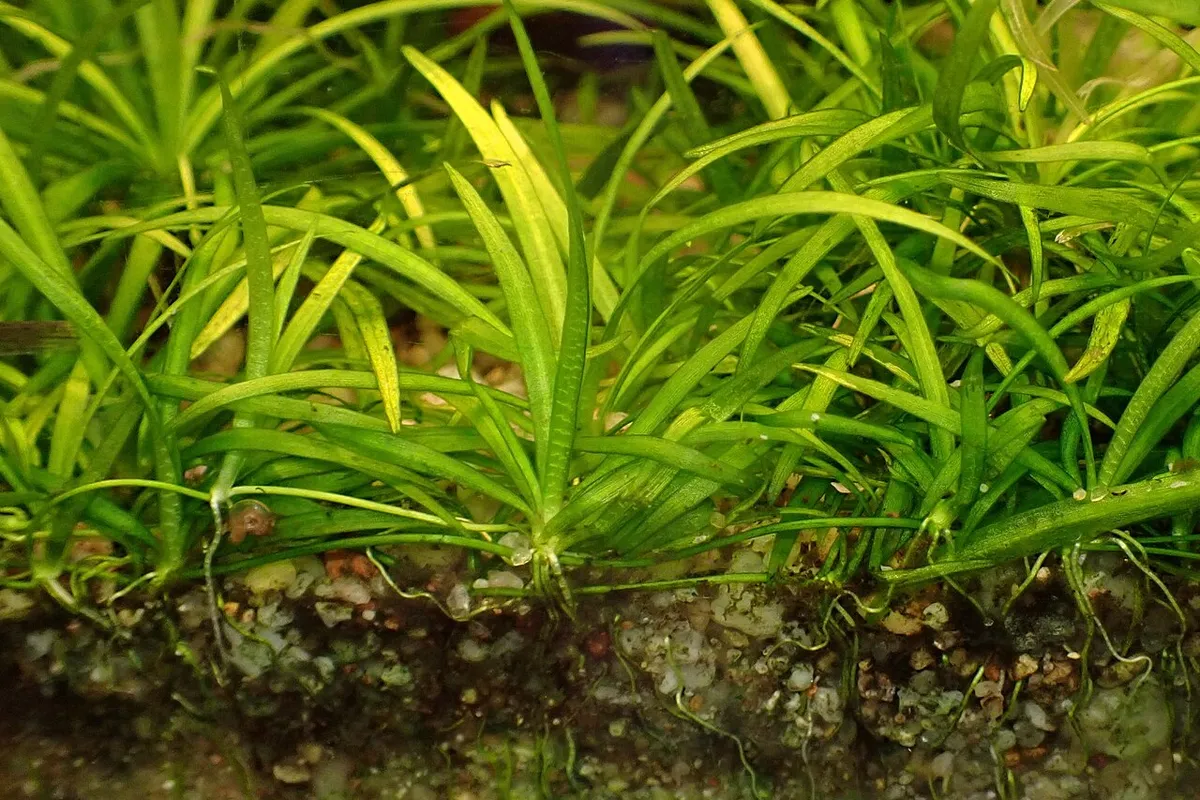
The pygmy chain sword is a small, grass-like plant that spreads by runners to form a dense foreground carpet. Its narrow leaves stay 5–10 cm tall and turn slightly reddish under strong light.
Helanthium tenellum, still often sold as Echinodorus tenellus, is one of the easier carpeting plants. It does not need CO2, but it grows faster and lower when it gets it.
Origin
The species grows in shallow water and on muddy banks across the Americas, from the eastern United States to Argentina.
Appearance and growth
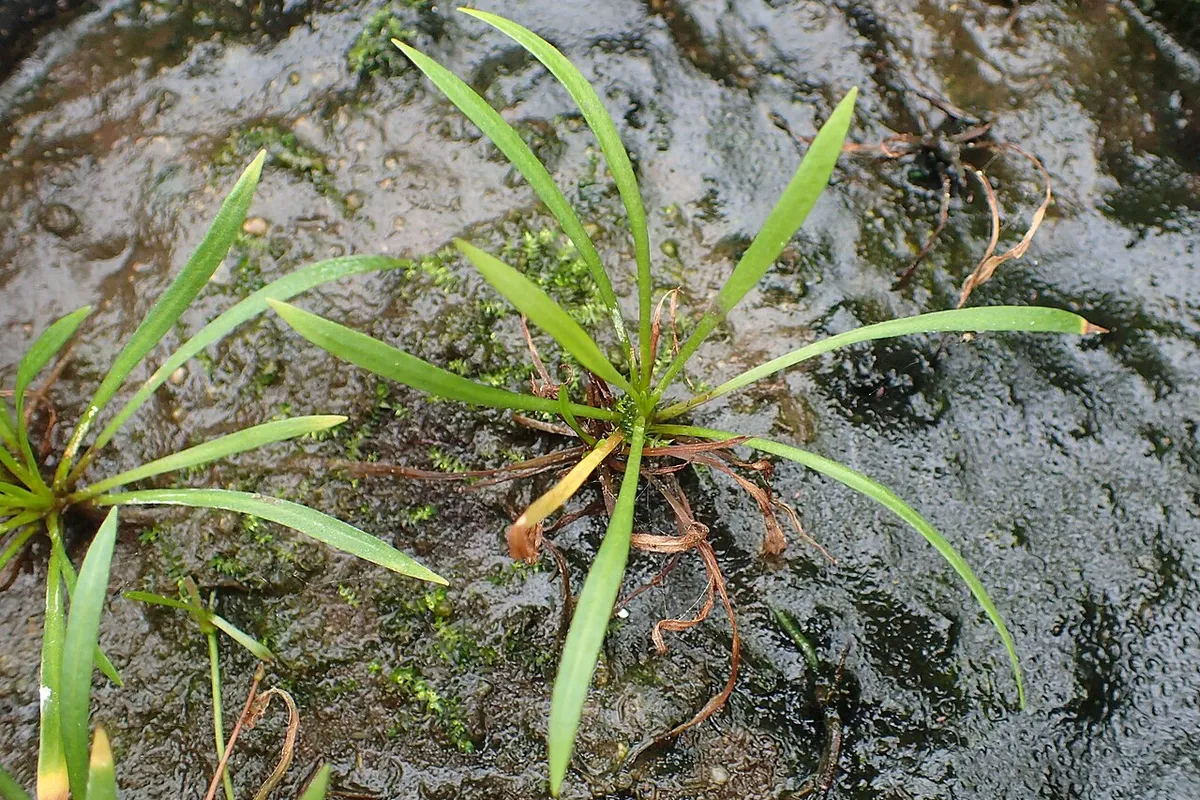
Each plant is a small rosette of narrow leaves. Runners grow out along the substrate and produce new plantlets every few centimetres, like a chain. In good conditions it spreads to cover the foreground within a few months.
Placement
Plant small clumps 3–5 cm apart across the foreground. It looks natural around rocks and wood, and suits carpets that actually work in low-tech tanks.
Light, CO2 and nutrients

Medium light is the minimum for a carpet. CO2 makes it denser and shorter. As a root feeder, it benefits from a nutrient-rich substrate or root tabs.
Water conditions
- Temperature: 20–28°C
- pH: 6.0–7.5
- Hardness: 2–12 dGH
Propagation and maintenance
Cut runners once the new plantlets have roots and replant them where you want more coverage. Trim long leaves at the base to keep the carpet short.
Compatibility
It works with most small community fish and shrimp. Fish that dig, such as many cichlids and goldfish, uproot it.
Common problems
Slow spread usually means too little light or nutrients. Algae can smother a slow-growing carpet, so keep the light period sensible; see how long lights should stay on.
Explore other topics
Dive into more aquarium guides across the site.