

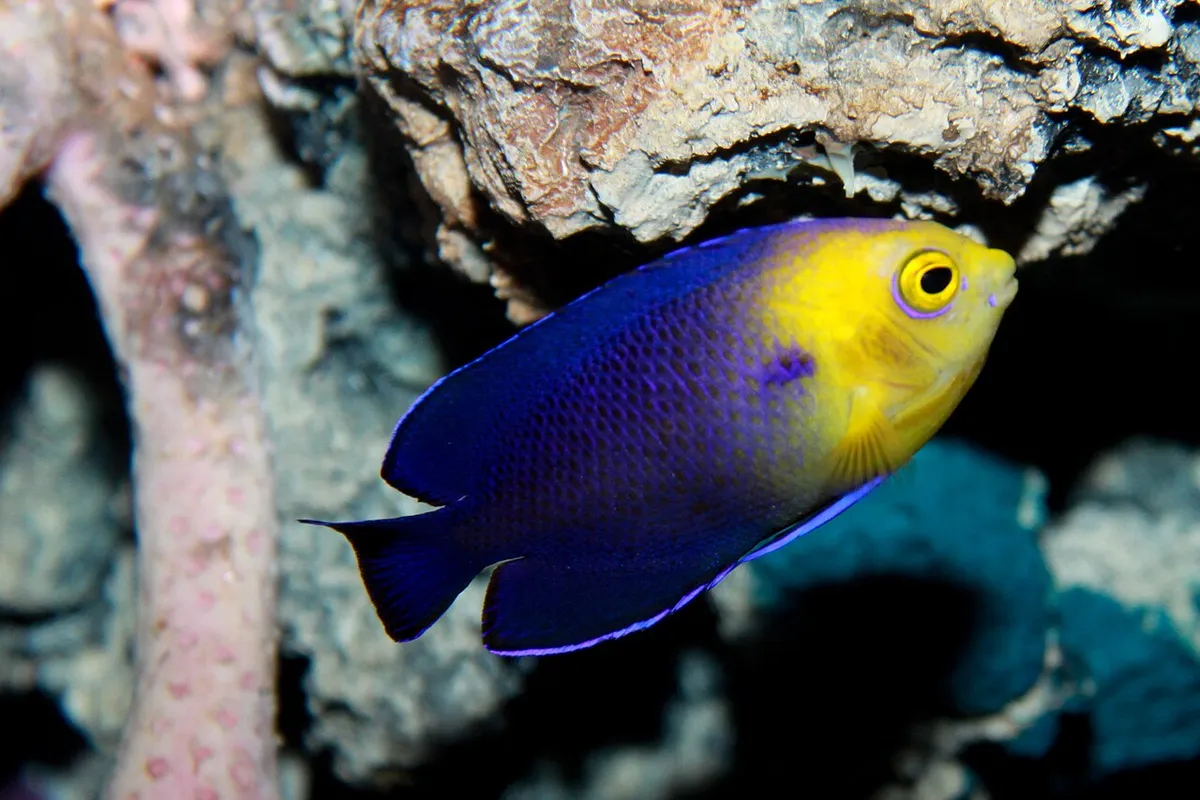
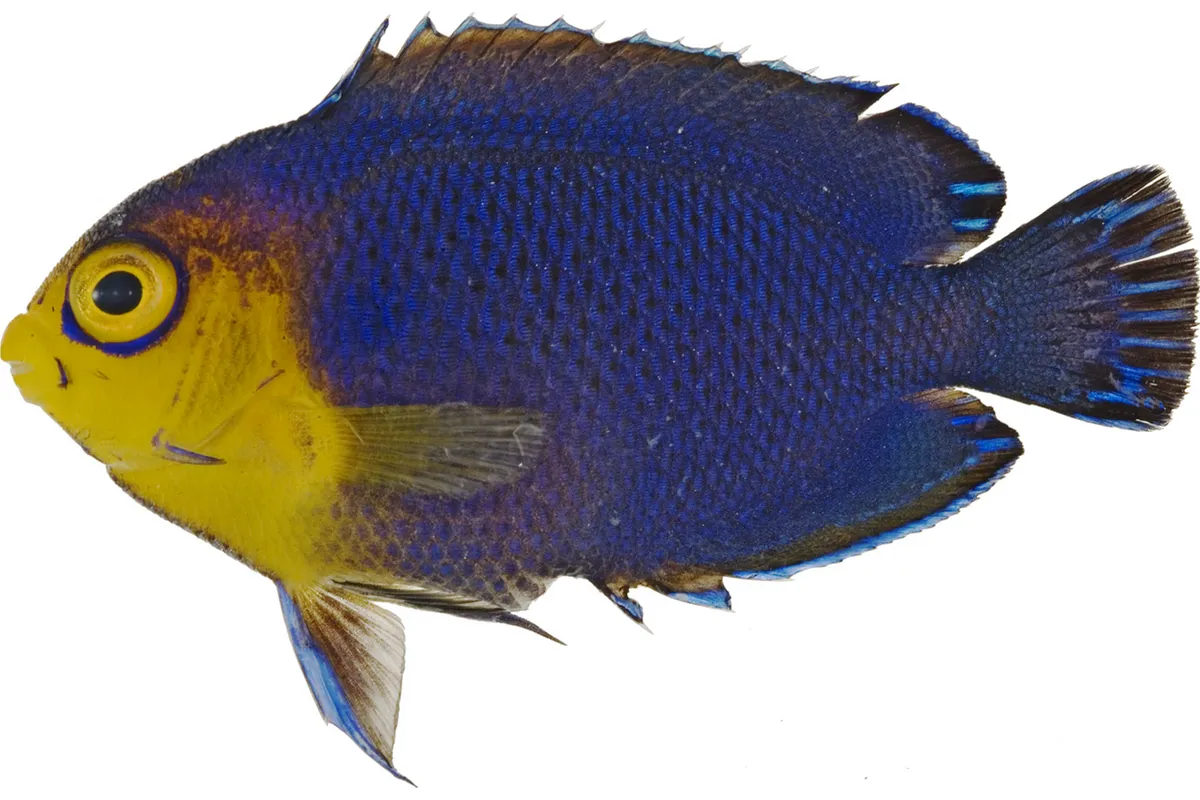
The cherub angelfish, also called the pygmy angelfish, is the smallest member of the dwarf angelfish genus Centropyge. It reaches only about 7 cm. Its body is deep royal blue, with a yellow-orange face and chest and a blue ring around each eye.
Because it stays so small, Centropyge argi is one of very few angelfish suitable for a small reef. It is hardy, active and full of character.
Where cherub angelfish come from
The species lives in the western Atlantic, from Bermuda and Florida through the Gulf of Mexico and the Caribbean. It is usually found on deeper reefs and rubble slopes, sheltering among coral rubble and rocks.
Appearance and behaviour
Males and females look alike, though males grow slightly larger. Cherubs constantly pick at the rock for algae and small invertebrates, darting between caves.
Keep one per tank unless the tank is large enough for a male and several females. They can be territorial towards other dwarf angels and similar-looking fish.
Tank setup
A single cherub needs at least 100 litres with plenty of mature live rock for grazing and hiding. Caves and overhangs help it settle. A tank that has been running for several months is best.

Water parameters
- Temperature: 24–27°C
- pH: 8.1–8.4
- Specific gravity: 1.023–1.025
Feeding
Offer a varied diet: marine pellets and flakes with spirulina, frozen mysis and brine shrimp, angelfish formulas containing sponge, and some nori. Feed two or three small meals a day.
Tank mates
Good companions include clownfish, gobies, small wrasses, cardinalfish and the royal gramma. Avoid other dwarf angels in small tanks and large aggressive fish.
Breeding
Cherubs are protogynous hermaphrodites: all start as females, and the dominant fish in a group becomes male. They spawn at dusk, but the larvae are very hard to raise.
Common problems and lifespan
Like most dwarf angels, they may nip some corals, especially large-polyp stony corals and clam mantles. Watch closely in a reef. They live five to ten years.
Explore other topics
Dive into more aquarium guides across the site.