

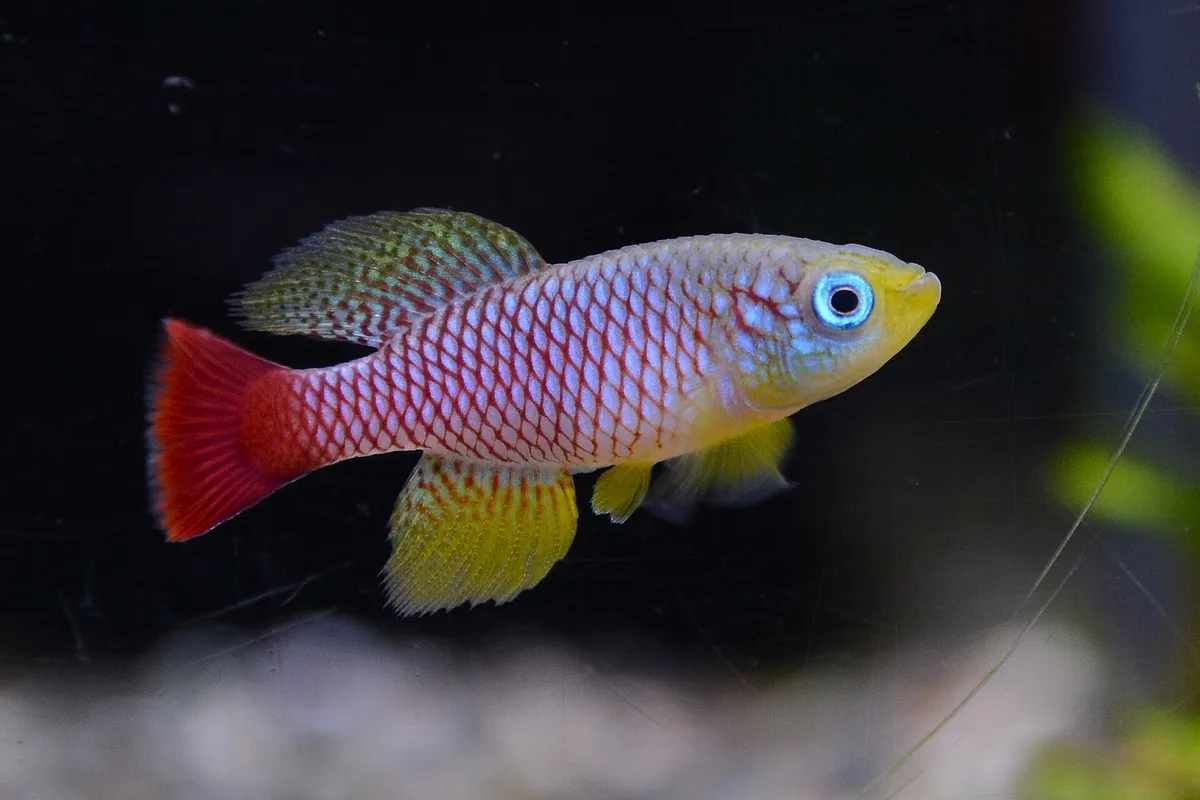
Nothobranchius foerschi is one of the most striking of the annual killifish. Males have netted blue scales, a bright red tail and yellow fins, and they show that colour off constantly to rival males and females. It is a small, active fish that fits a nano tank, but it comes with a life story unlike most aquarium fish.
In the wild, this species lives in pools that dry out every year. The adults die with the pool, and the next generation survives as eggs buried in the mud until the rains return. Keeping foerschi well means copying that cycle, so this guide covers both the fish and its eggs.
Where Nothobranchius foerschi comes from
The species comes from the coastal lowlands of eastern Tanzania. It lives in temporary pools, ditches and flooded grassland that fill during the rainy season and dry out in the dry season. It was named after Walter Foersch, a German aquarist and author who worked on killifish.
Like most Nothobranchius, it is kept in the hobby as named populations, with a collection code and location on the label. Keep populations separate, because hybrids lose their value to other breeders.
Appearance and behaviour
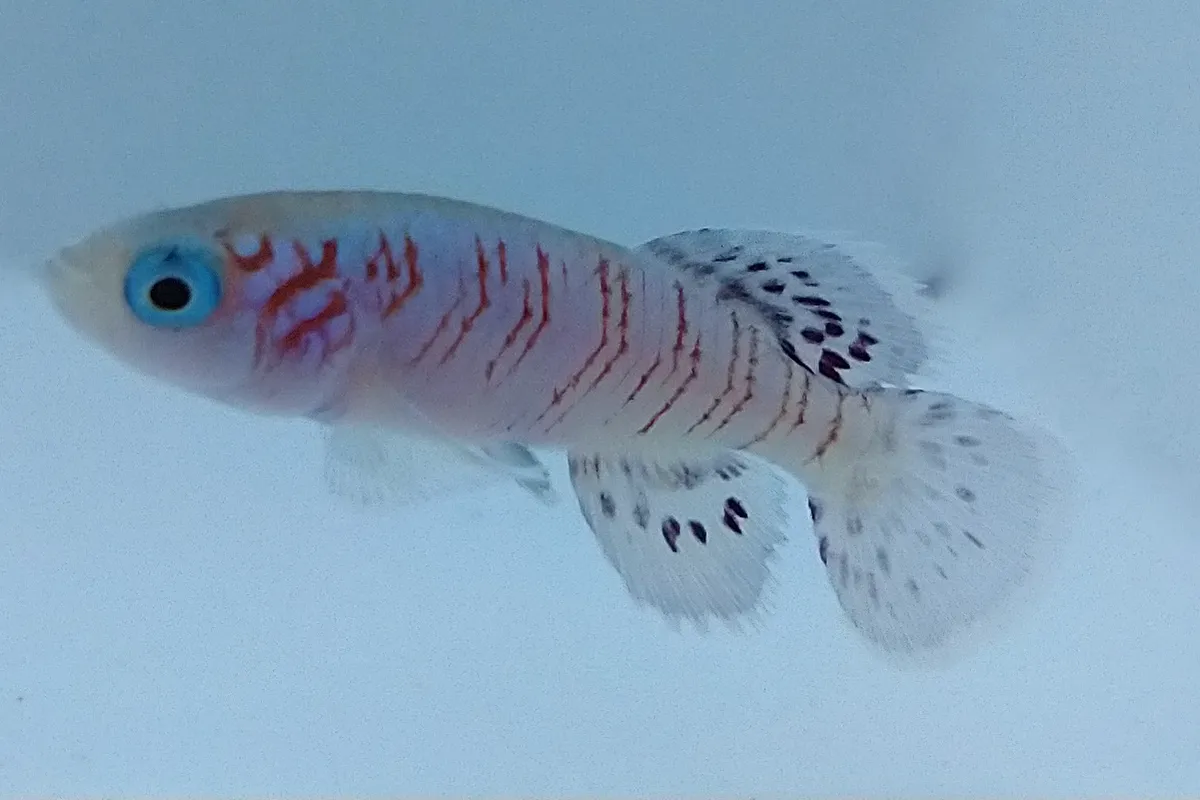
Males grow to around 5–6 cm. They have a pale blue body with a dark red or brown net pattern on each scale, a red tail, and yellow to orange dorsal and anal fins. Females are smaller, plain brown or grey, with clear fins. That difference makes sexing easy from a few weeks old.
Males are territorial with each other and display all day. Keep one male with two or three females, or several males in a larger tank with plenty of cover so no single fish is bullied. They are excellent jumpers, so a tight lid is essential.
Tank setup
A trio can live in a 20–40 litre tank. Use a gentle sponge filter, a dark substrate or bare bottom, and plenty of floating plants or fine-leaved plants to break up sight lines. A dark background and subdued light bring out the colour of the males.
Add a spawning container: a small dish or tub of boiled, rinsed peat moss on the bottom. The fish dive into it to lay their eggs, and you can lift it out to collect them.

Water parameters
Keep the temperature at 22–26°C. Warmer water speeds up growth but shortens life. Foerschi is not fussy about water chemistry: pH 6.5–7.5 and soft to moderately hard water suit it well. What matters more is clean water, so change 30–50% every week. Small tanks with heavy feeding build up waste quickly; read our guide to how often to change aquarium water.
Feeding
Annual killifish grow fast and eat a lot. Feed live and frozen foods two or three times a day: bloodworms, daphnia, mosquito larvae, blackworms and brine shrimp. Many will refuse flakes and pellets completely. Our guide to live food for aquarium fish covers easy cultures.
Tank mates
A species tank is best. Other fish compete for food, stress the males and eat the eggs. If you do want companions, choose small, peaceful, fast fish that stay in the upper water, and never mix two Nothobranchius species, because the females are almost impossible to tell apart.
Breeding and egg incubation
Foerschi breeds readily once it is a few months old. The pair presses into the peat and lays eggs a few at a time, every day. Every one to two weeks, lift out the peat, squeeze it until it is just damp, and store it in a labelled bag at room temperature.
The eggs need a dry rest, called diapause, of roughly three to five months. Check them under a light: when you can see the eyes of the developing fry, the eggs are ready. Put the peat in a tub of shallow, cool water and the fry hatch within hours. Feed them newly hatched brine shrimp or microworms from day one. They grow quickly and can colour up within six to eight weeks. See our guide to raising fry successfully.
Common problems and lifespan
Velvet is the most common disease in Nothobranchius. Keeping the water clean, avoiding sudden temperature drops and adding a small amount of aquarium salt to fry tanks all help prevent it. Jumping and male aggression cause most other losses.
Expect a lifespan of about 12–18 months in the aquarium. That is normal for an annual fish, not a sign of poor care, so keep eggs in storage and you will always have the next generation ready. For other species to try, see our guides to the bluefin notho, the Zanzibar killifish and killifish for beginners.
Explore other topics
Dive into more aquarium guides across the site.
