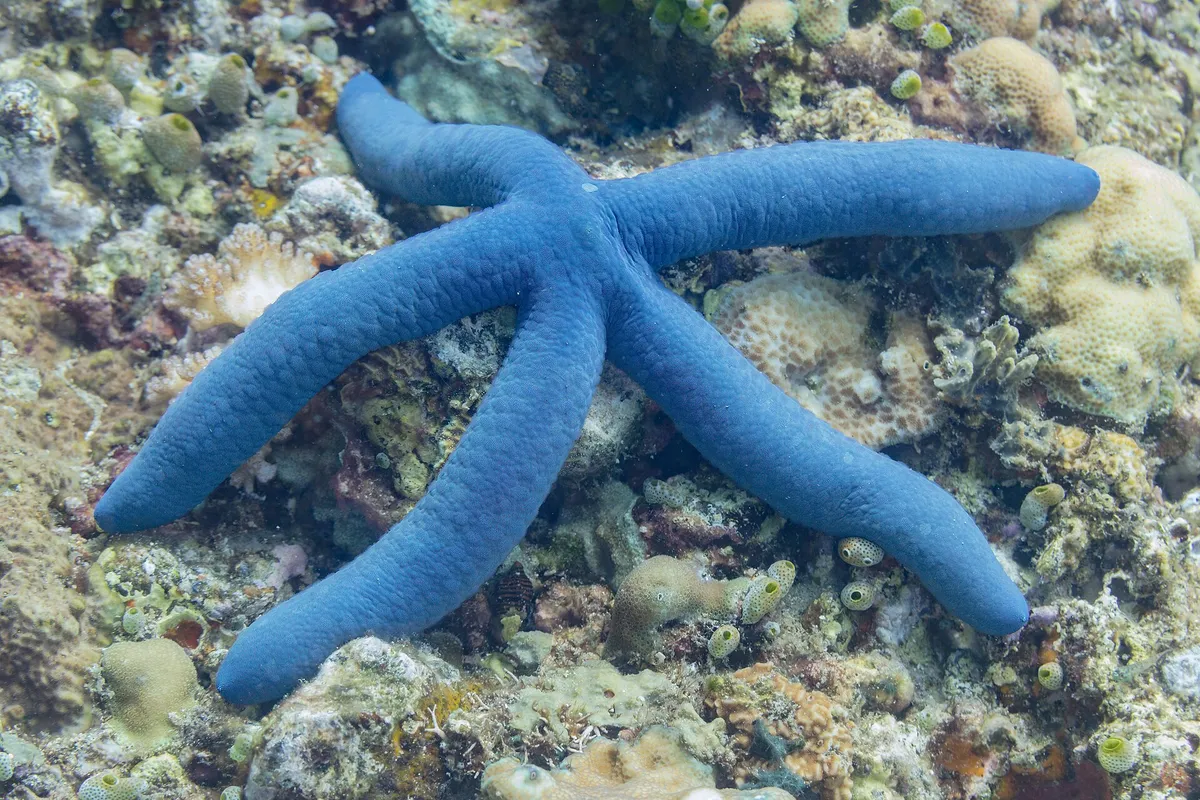
Few animals in a reef tank turn heads like a blue linckia starfish. Linckia laevigata is a brilliant, solid blue, with five long, rounded arms, and it glides slowly over the rockwork grazing on film. It is reef safe and harmless to fish.
Unfortunately, it is also one of the hardest starfish to keep. Most die within months of import, usually from shipping stress and starvation. This guide explains what gives one the best chance, and when to choose something else.
Where blue linckias come from
The species is found across the Indo-Pacific, from East Africa to Hawaii. It lives on reef flats and slopes in shallow, sunlit water, often out in the open on sand, rubble and rock. It is common in the wild and is often collected for the aquarium and curio trades.
Appearance and behaviour
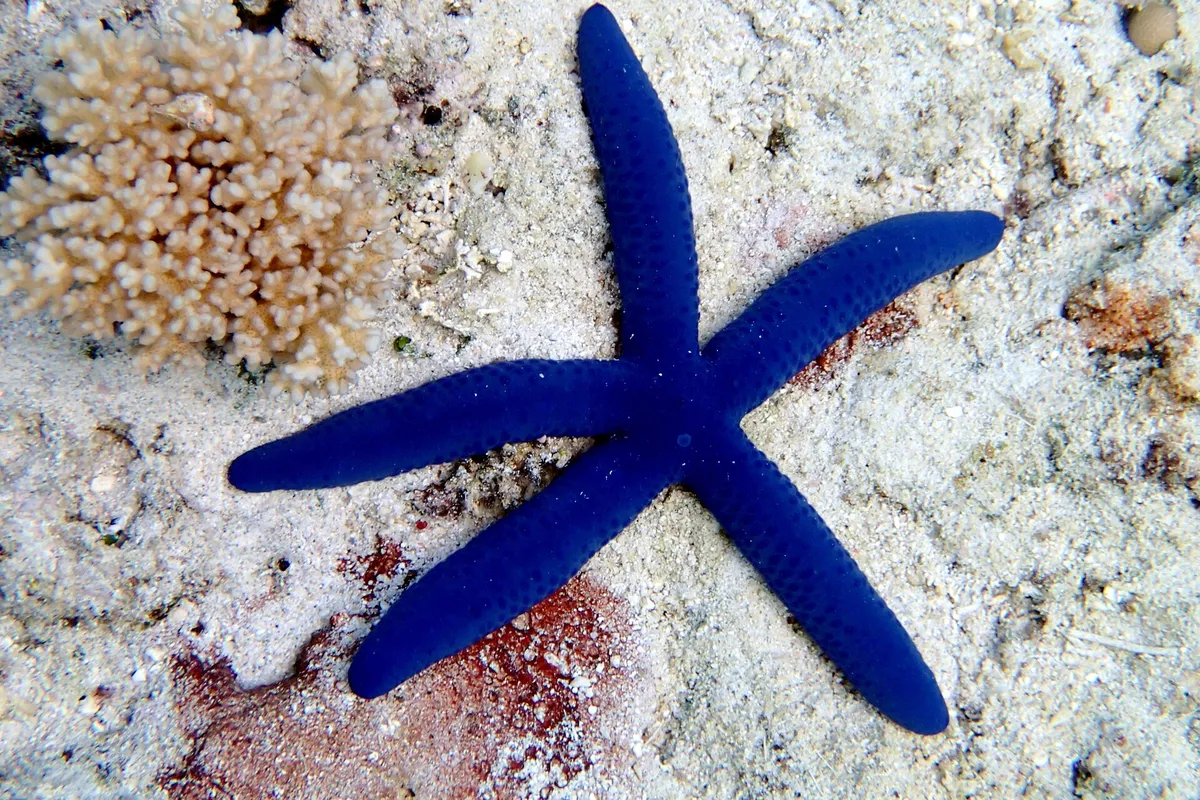
Adults reach 30 cm or more across. Most are bright blue, but colour forms range from light blue to purple and, in some areas, orange or pink. Linckias can shed an arm and regrow it, and a single arm can even grow into a new starfish. Animals with a "comet" shape, one long arm and small new arms, are regrowing in this way.
They move slowly and are active day and night, grazing on biofilm, detritus and microorganisms on rock surfaces.
Tank setup
A blue linckia needs at least 400 litres and a tank that has been running for a year or more, with plenty of live rock covered in natural film for it to graze. Young tanks simply do not have enough food. Keep powerhead intakes covered, as starfish can get stuck on them.
Acclimation

Starfish are very sensitive to changes in salinity, and most losses start here. Use drip acclimation over at least two hours, and never expose the starfish to air. Match the store's salinity, as even small differences can cause fatal damage.
Water parameters
Keep the temperature at 24–27°C, specific gravity at 1.024–1.026, pH at 8.1–8.4, and nitrate and phosphate low. Stability matters more than the exact numbers. Top up evaporation with fresh RO/DI water daily, so salinity never creeps up. Avoid copper completely.
Feeding
Blue linckias mostly graze biofilm and detritus. In the aquarium, you can try placing small pieces of meaty food or algae under the starfish, but many ignore them. The best food supply is a large, mature tank with lots of rock. A starfish that is shrinking or has a sunken top is starving.
Tank mates
Blue linckias are safe with corals, fish and other invertebrates. Avoid fish that pick at starfish, such as many puffers, triggerfish and some butterflyfish and angelfish, and the harlequin shrimp, which eats starfish.
Common problems and lifespan
Starfish wasting, where white patches appear and the arms begin to dissolve, is usually the end. It is caused by poor acclimation, water changes, starvation or infection. Linckias also carry parasitic snails (Thyca species), which look like small white bumps; check new arrivals and remove them gently. For a much hardier starfish, see our chocolate chip starfish guide, and remember that small brittle stars are excellent reef cleaners.
In the wild, blue linckias are thought to live for many years. In aquariums, a well-kept animal in a mature tank can live several years.
Explore other topics
Dive into more aquarium guides across the site.