

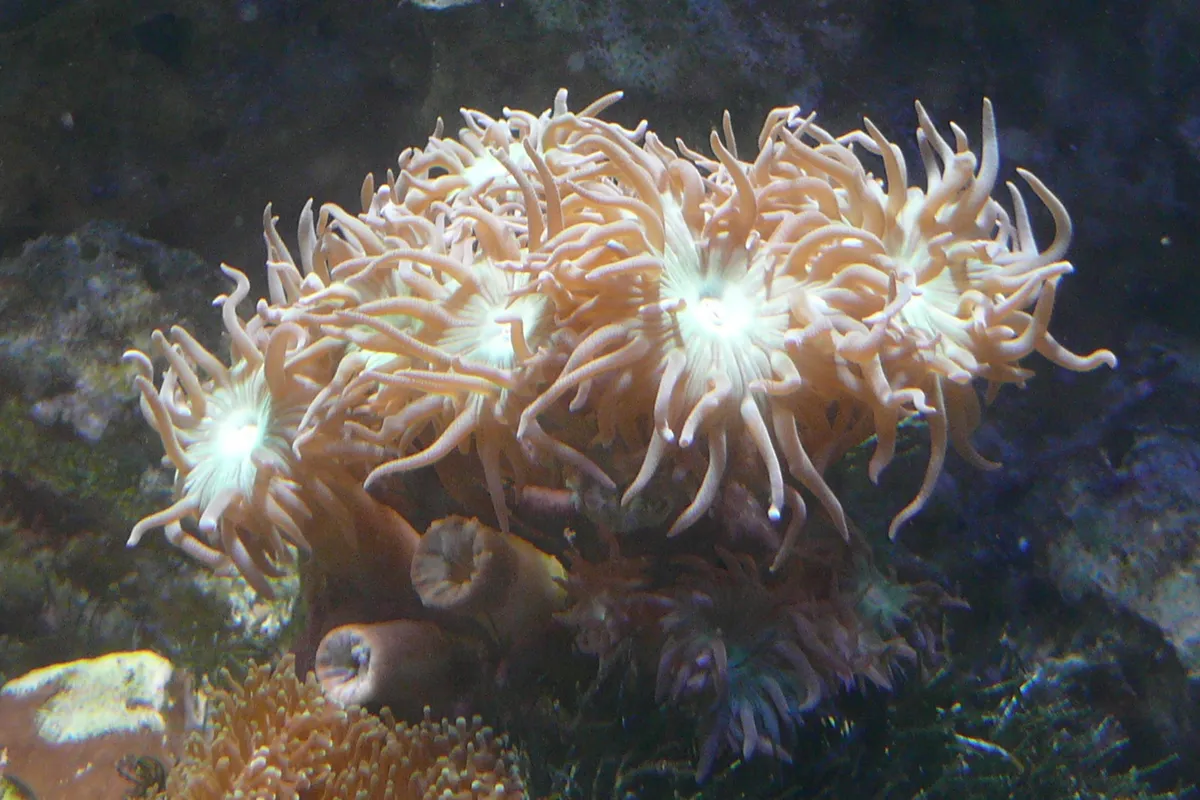
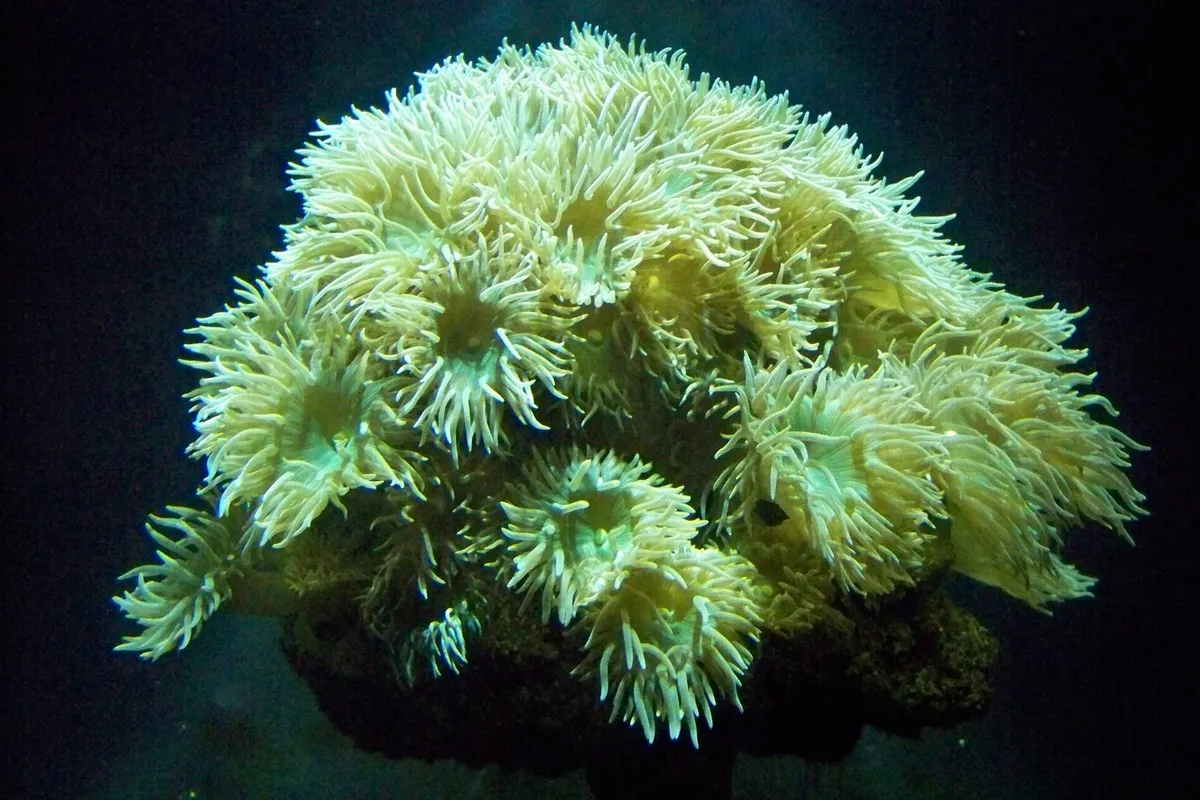
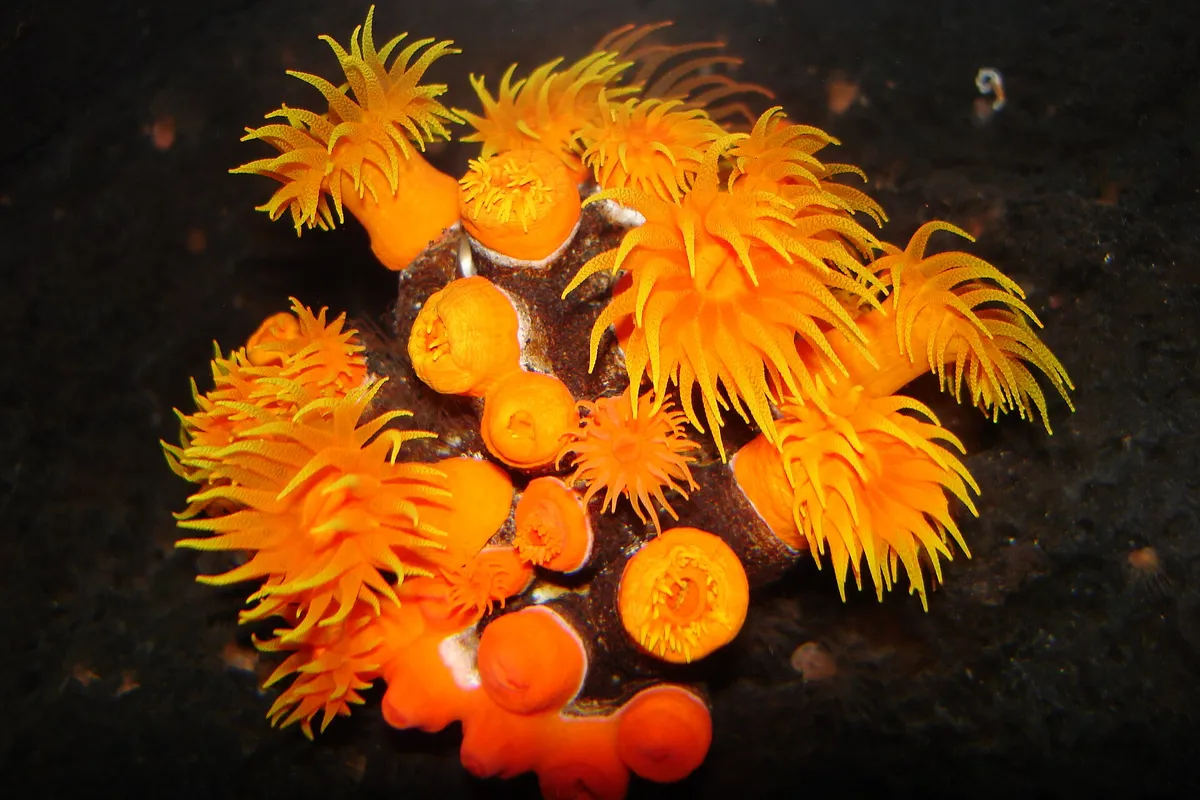
The Duncan coral is one of the best first large-polyp stony (LPS) corals. Each polyp sits on top of a short tube and opens into a disc with a green or pink centre and a ring of long, flowing tentacles. As the colony grows it branches and adds more heads. Duncanopsammia axifuga is hardy, grows quickly and reacts eagerly to feeding.
Most Duncans in the hobby are aquacultured frags, which makes them even easier to keep and a good choice for beginners.
Where Duncan corals come from
Duncan corals come from northern and western Australia and parts of the South China Sea. They live in sandy, turbid areas between reefs, at depths of 15–40 m, where light is low and food is plentiful. Wild collection is limited, so nearly all corals sold are captive grown.
Appearance and behaviour
Each polyp is about 2–3 cm across when open. The tentacles are usually tan to pink with a green, teal or orange centre. The skeleton grows as branching tubes, and new polyps bud from the side of old ones.
Duncans have short sweeper tentacles and are fairly peaceful, but give them a few centimetres from other corals.
Placement, lighting and flow
Place Duncans low to mid-height in the tank under low to moderate lighting, around 50–150 PAR. They do well on the sand bed or on lower rock. Gentle to moderate flow lets the polyps sway without being blown flat. Our guides to lighting and powerheads explain the basics.

Water parameters
Keep the temperature at 24–27°C, salinity at 1.025–1.026, alkalinity at 8–11 dKH, calcium at 400–450 mg/l and magnesium at 1250–1400 mg/l. Stable alkalinity matters most for steady growth. Duncans tolerate slightly higher nutrients than many stony corals.
Feeding
Duncans are photosynthetic, but they grow much faster when fed. Target feed them two or three times a week with frozen mysis, brine shrimp or coral pellets, with the pumps off for a few minutes. The tentacles grab the food and close around it. Our guide to photosynthetic feeding in corals explains how both sources work together.
Fragging
Duncans are easy to frag. Cut or snap between branches with bone cutters, leaving at least one or two heads per piece, and glue the frag to a plug. See our beginner's guide to fragging.
Tank mates
Duncans suit most reef fish. Avoid coral-nipping fish such as some angelfish and butterflyfish. Shrimp and crabs sometimes steal food from the polyps, but rarely cause damage.
Common problems
Polyps that stay shrunken usually mean too much light or flow, or unstable alkalinity. Receding tissue at the base can point to low nutrients or pests. Dip and quarantine new corals before adding them. Well kept, Duncan colonies live and grow for many years.
Explore other topics
Dive into more aquarium guides across the site.
