

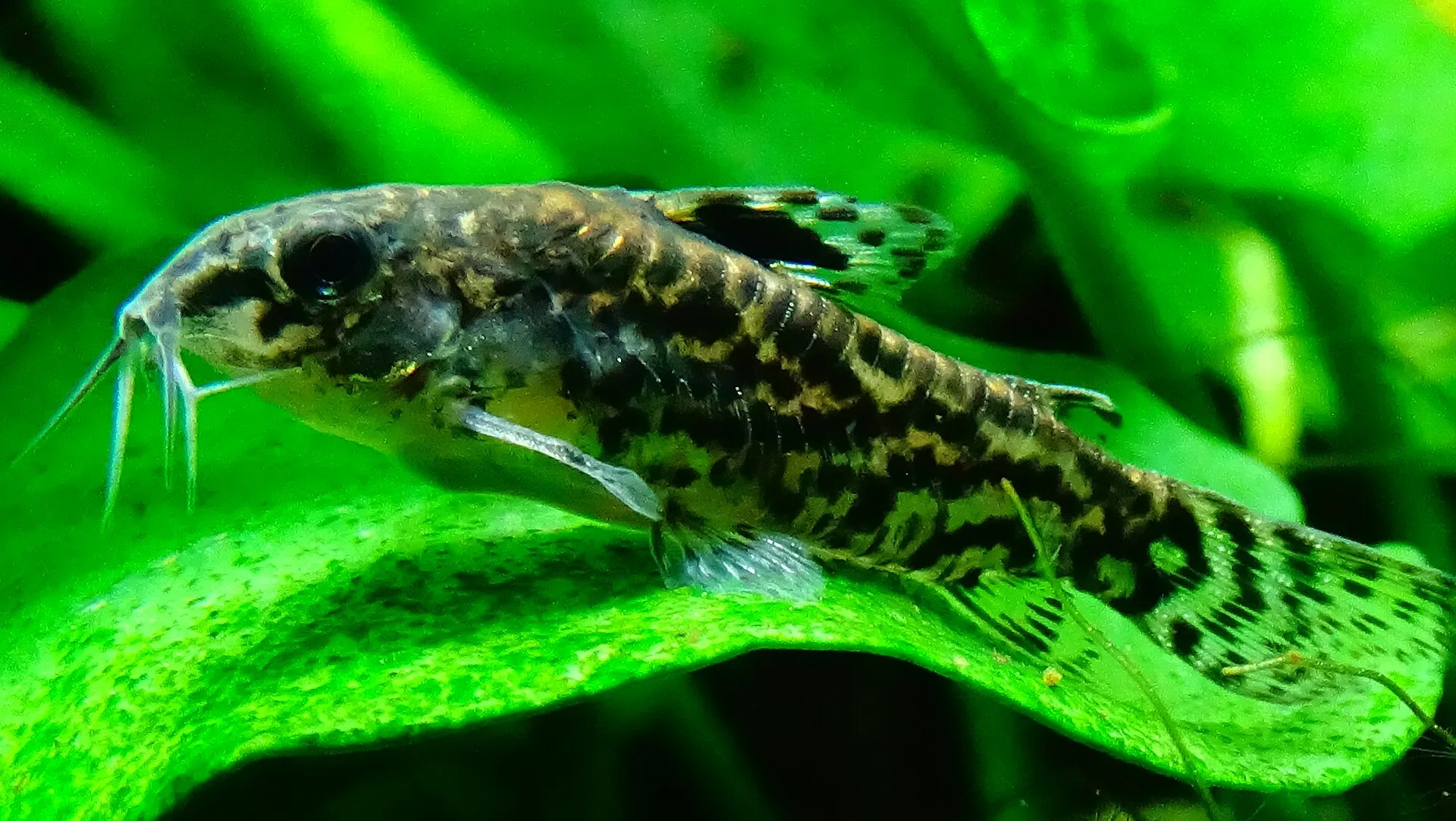
The name pauciradiatus means few-rayed: this Aspidoras carries a reduced dorsal-fin ray count that taxonomists noticed before aquarists did. Aspidoras pauciradiatus is a minute, delicate catfish from the Araguaia–Tocantins system in Brazil, often sold as a “dwarf cory” even though it is not a Corydoras. It occupies a different river, a different genus, and a much smaller mouth than the pandas it sits beside on the shop rack.
A handful of rays and a handful of centimetres
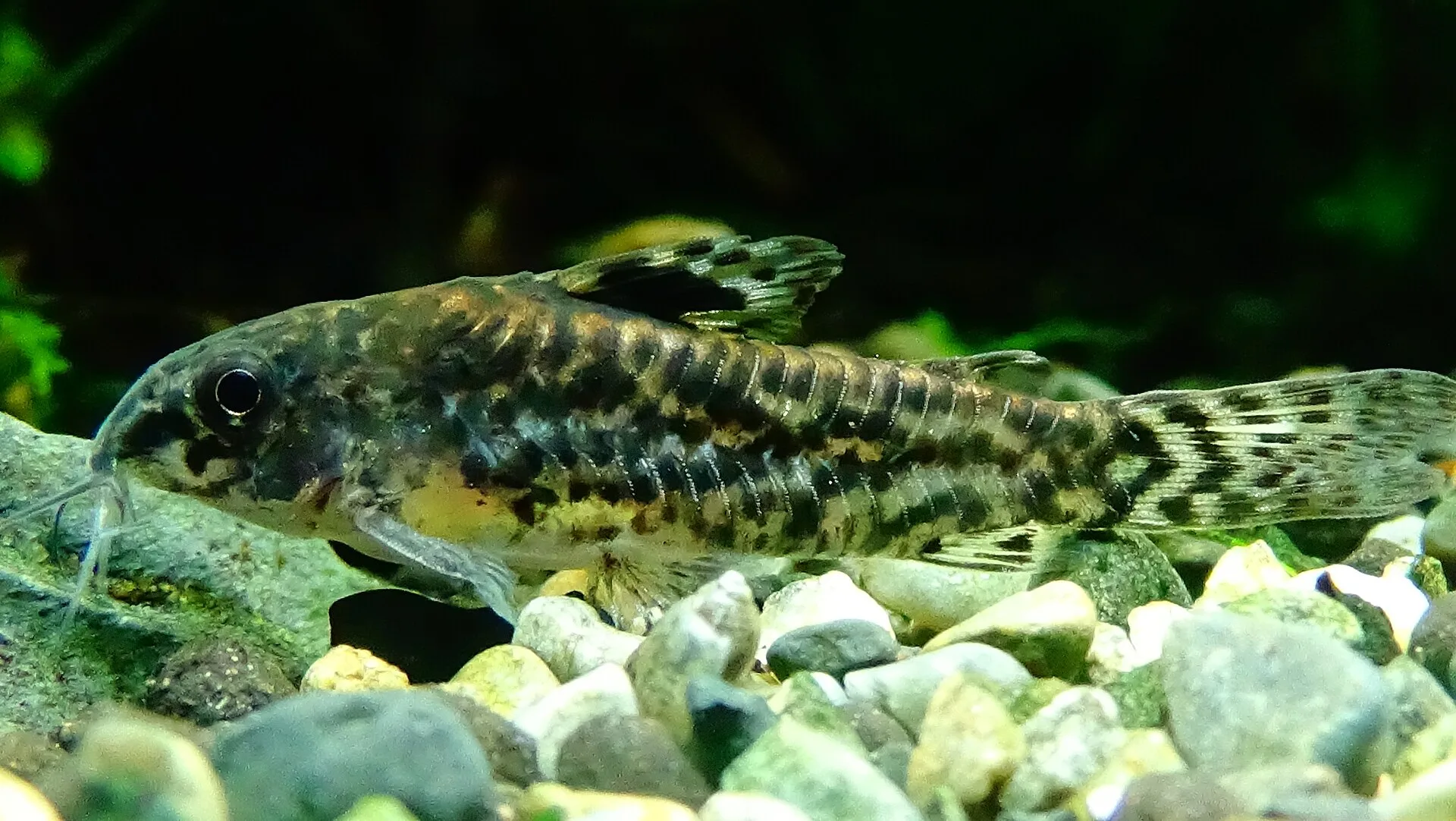
Adults are about 2.5–3.5 cm. The body is slender, pale to golden-tan, with dark spotting that can include a more concentrated blotch near the dorsal region depending on the individual. The dorsal fin looks spare compared with a typical cory’s sail — that is the few-ray character, not a damaged fin. Barbels are thread-fine. Eyes are large on a small head. Females are slightly more robust. There is no orange blaze, no leopard net, no synodontis spots, no twig camouflage.
Confusion with A. fuscoguttatus is common because both are “small brown aspidoras.” Fuscoguttatus is the larger, dumpier-spotted Paraná fish. Pauciradiatus is the tiny Araguaia one. Confusion with Corydoras hastatus happens because of size; hastatus is a silver midwater spear-spot from Paraguay, not a dotted aspidoras. Read the fish, not the “dwarf catfish” sign.
Araguaia and Tocantins shallows
These rivers drain the Brazilian shield toward the Amazon mouth but are not the same as a Negro sandbar or a Purus channel. Habitat notes for pauciradiatus point to sandy, often quieter water with leaf debris and warm-to-moderate temperatures, sometimes with a blackwater influence depending on tributary. It is a group animal of tiny size, which in nature means huge numbers or a short life as prey. You cannot stock a thousand, but you can refuse to keep three.
An aquarium that does not eat them
Sponge filtration is the grown-up choice. Powerheads and uncovered overflow weirs harvest pauciradiatus. Fine sand, dense plant cover, floating plants, a lid with no gaps, and a footprint that is long rather than tall. A 45–60 litre planted tank dedicated to a large group beats a 200 litre show tank with angelfish. They will pick at sand, so the bed must be kind, but they are not Brochis ploughs; they are micro-foragers. Leaf litter in moderation gives infusoria and cover. Do not let leaves become a sour mat.
Water for a tiny shield-river catfish
Temperature 22–26°C; do not cook them with seussi-style heat as a default. pH 5.8–7.2. Soft water is appreciated. They are less forgiving of dirt than a bronze cory because gill area is tiny. Cycle the tank with patience. Nitrate modest. RO if tap is liquid limestone, remineralised, not pure. Test before you add a fish that cost little and dies expensively in time and guilt.
Counts measured in dozens if you can
Ten is better than six. Twenty in a planted species tank is when they look like a living pepper shake on the sand. They school loosely, startle as one, and disappear into plants. Two “dwarf corys” in a community are a slow death. Do not mix one pauciradiatus with one hastatus with one pygmaeus. That is three lonely dwarfs from three stories.
Food that exists at their scale

This is the whole game. Microworms, vinegar eels, baby brine, powdered fry food that actually sinks, crushed granules, cyclops. Adult bloodworms are a struggle. Cory wafers are monuments they walk around. Feed several times a day in a species tank. In a community, they lose. Evening, lights low, food in the plants and on the sand. They are omnivores of microscopic and near-microscopic items, including what a mature tank grows. A sterile new tank has no “biofilm buffet” worth mentioning.
Tank mates, or the lack of them
Best: none, plus maybe shrimp and snails. Acceptable: ember tetras, tiny rasboras, other micro fish that will not out-eat them. Unacceptable: anything with a mouth that fits a 3 cm catfish, large corys, most gouramis, angels, discus. If you want a community, build it after the aspidoras are fat, then add only the smallest neighbours.
Breeding few-rayed fish
They will spawn in a planted, well-fed group with water-change triggers. Eggs on plants and moss, easily vacuumed away by the tidy aquarist. Fry are dust. Infusoria, then microworms. This is specialist work. Do not sell them as Corydoras. Do not hybridise with fuscoguttatus.
How they die
Starvation, filtration, heat, gravel, loneliness, and hitchhiking in a bag of “assorted dwarfs.” Barbels still rot. Ich still kills. Jumping still happens. Quarantine in a sponge-filtered box with sand and watch them eat before you congratulate yourself.
Few rays, full species
Keep Aspidoras pauciradiatus because you want the tiny, few-rayed Araguaia aspidoras and you will feed it like a fry. Keep fuscoguttatus if you wanted a slightly larger dotted aspidoras from the Paraná. Keep hastatus if you wanted a silver midwater pygmy cory. The ray count is the etymology. The size is the husbandry. The genus is not Corydoras. Write that on the tank before you write a shopping list.
Why the few-rayed dorsal matters in the shop
Hold the bag up. The dorsal should look a little under-furnished compared with a panda’s sail. That is pauciradiatus, not a nipped fin. Combined with the 3 cm body and Araguaia–Tocantins origin, you have the species. A fatter, dumpier spotted aspidoras is probably fuscoguttatus. A silver fish with a tail spear is hastatus. The “dwarf cory” sticker is a marketing bin, not a diagnosis. If the seller cannot tell them apart, buy a named group from a specialist or walk away with your money and a better weekend.
Once home, the few rays will not change your heater setting. The size will. Everything about pauciradiatus is fry-scale: food, intakes, jumps, and the speed of starvation. A missed feeding that a Brochis shrugs off is a bad day for this fish. Two missed days is a spiral. Set a reminder. That is not overkill; that is the centimetres talking.
A planted box as a food factory
Moss, leaf litter in a mesh bag you can lift, and a light that grows a hint of green on the wood will feed infusoria that fry and adults both pick at. Do not sterilise the tank every Saturday. Clean the glass in the viewing strip, siphon detritus from open sand, and leave the moss alone. That is how a few-rayed aspidoras makes a living between the meals you remember to add. A hospital-bare layout has no such buffer, which is why quarantine should still include wood, a sponge, and food from hour one.
Explore other topics
Dive into more aquarium guides across the site.