

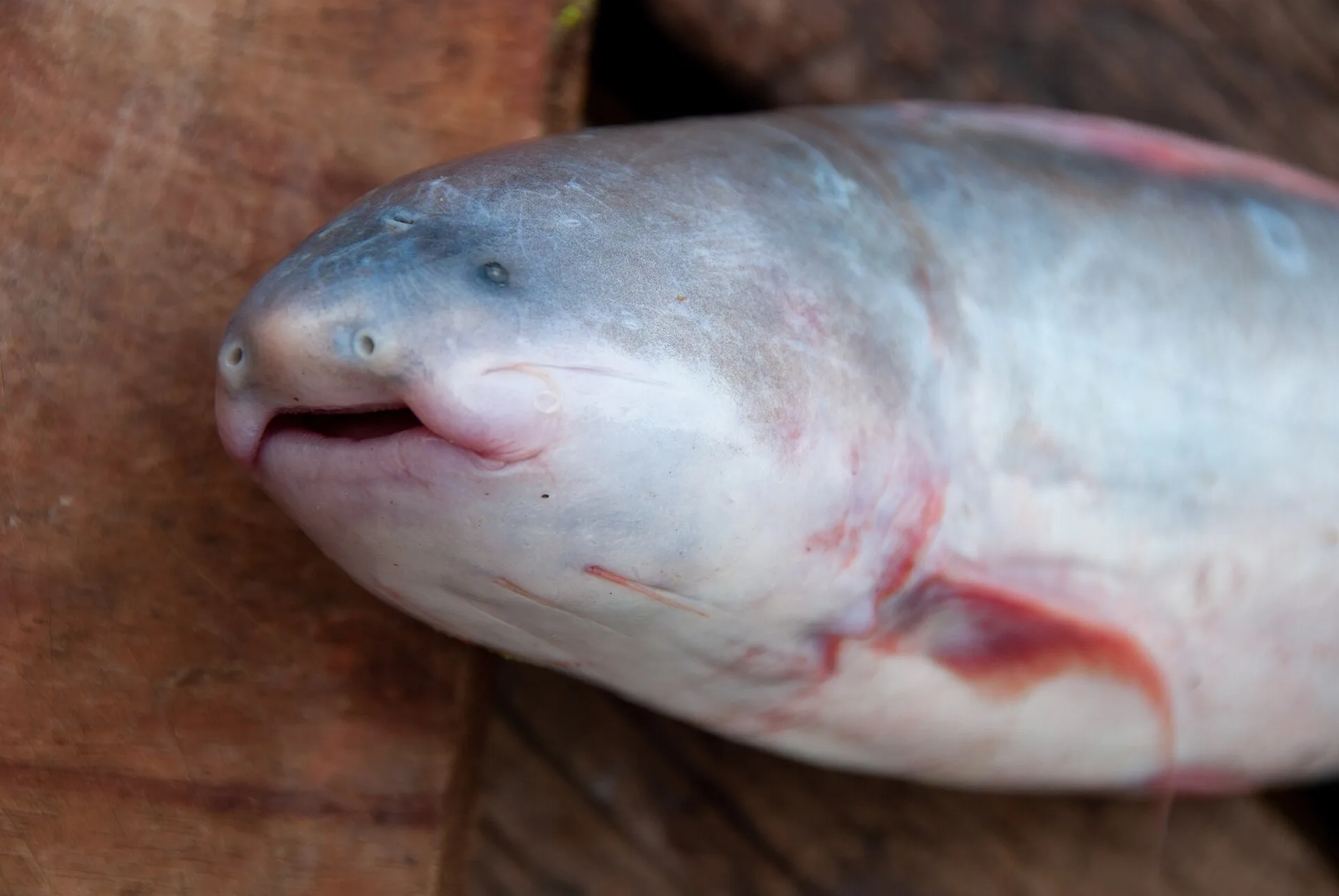
There is a small, mottled, harmless-looking cetopsid called the otter catfish. This is not that fish. Cetopsis coecutiens is the whale candiru, a pale, thick, almost whale-headed catfish of Amazonian rivers that grows to around 20–27 cm and is documented as a scavenger and a flesh-biter: it can take chunks from dying or living fishes, including in fisheries and in rare attacks on people in the water. It is a huge problem in a community tank even if it is not a two-metre pimelodid. It is not a cleaner. It is not a rasper. It is not Helogenes. Honest keeping means treating it as a specialised, potentially injurious river predator-scavenger that almost nobody should buy.
The Amazon channel’s undertaker
Whale candiru occur in the Amazon basin in main channels and large tributaries, often in turbid water, where they locate wounded fish, carrion, and concentrated prey. Research papers on fisheries bycatch and on the species’ feeding have made it famous in a grim way. This is a river animal of depth and volume, not a leaf-litter dwarf and not a cave bristlenose.
The candiru of bathroom legend is a different, tiny trichomycterid. Do not mash all “candiru” stories into one care sheet. C. coecutiens is a bulky cetopsid with a wide mouth and a habit of feeding on flesh. That is enough.
Wild habitat is big, warm, flowing freshwater. There is no brackish requirement. There is no community requirement. There is a requirement that you understand what you are housing.
A pale blunt head and a serious mouth
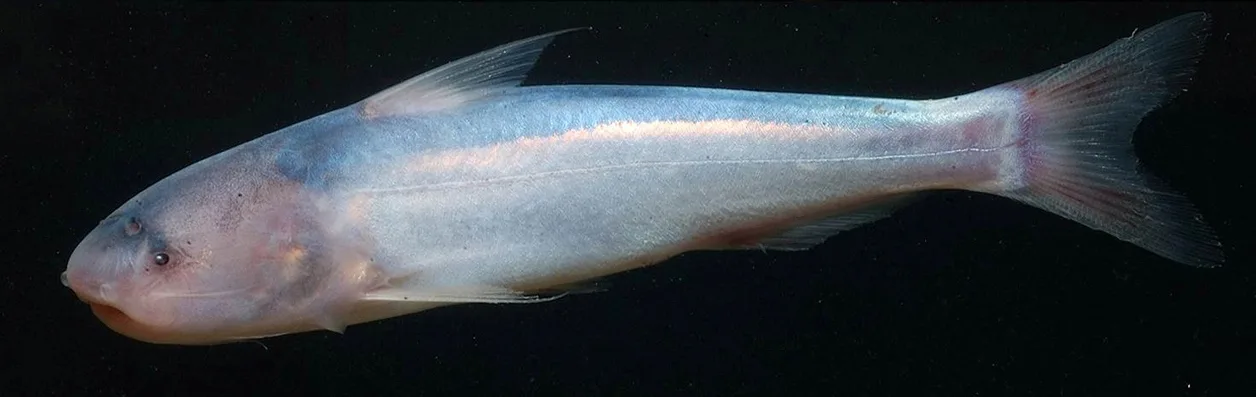
The fish is cylindrical, often pinkish, grey, or pale brown, with small eyes, a broad snout, and a mouth that does not look like a pleco disc. It looks like a swimming snout. That is the feeding apparatus of a chunk-biter and scavenger. Adults are thick. Juveniles in the trade still have the mouth.
A “healthy” specimen in a public river exhibit is one that is fed a designed diet of fish flesh and is not housed with anything it can damage. A specimen in a mixed tropical tank is a ticking injury. Barbels and skin should be intact; these fish are sensitive to poor shipping because they are soft-skinned compared with armoured loricariids.
Sexing is irrelevant to the ethical decision. Do not buy a pair.
A dedicated system, or nothing
If this species is kept at all, it is a single-species or carefully planned predator system with volume, a lid, dim light, and no tank mates that can be bitten. Think in terms of a large, secure aquarium for a 25 cm flesh-feeder, with filtration for a high-protein diet, not a 100 litre community. Most private keepers should not keep it. Public aquaria and research collections are the venues that can justify the fish.
Décor should not trap a thick body. Sand is kinder than gravel. Flow should be river-like without chaos. They are not hillstream clingers; they are channel scavengers.
A tight cover is mandatory. So is a plan for what you will feed that is not your other pets.
Warm river water, no community chemistry games
Temperature in the mid-20s to upper 20s °C, typical Amazon pH and softness, high oxygen, zero ammonia. Protein diets foul water. This is not a species you keep dirty because it is a “scavenger.” Scavengers in nature still live in a river that replaces water. Your glass box does not.

No salt. No cool-water. No mixing into a reef or a planted show tank.
Flesh, not wafers, and not your tetras
Diet is fish flesh, prepared predator foods, and similar items offered in a way that does not require the animal to attack living tank mates. Feeding live fish as a staple is an ethical mess and a disease vector. If you cannot feed a dead-food predator diet, you cannot keep a whale candiru.
They are not algae eaters. They are not wood eaters. They are not insect-picking otter cats. The mouth is for biting. Plan accordingly. Uneaten flesh is an ammonia bomb; feed with discipline.
Nothing that can be bitten belongs in the tank
This is a huge problem for community thinking even though the fish is not a metre long. It is a scavenger-predator that can damage other fishes. The honest stocking is: this species alone, or with only animals a curator would approve. Not tetras. Not plecos as “cleaners.” Not people-handling without respect. Not a child’s first catfish.
Do not mix with Helogenes to “have one of each cetopsid.” You would be housing a litter dwarf with a chunk-biter.
Quarantine is for your other collection’s safety as much as for the fish. Observe feeding on dead foods before you ever think about a display.
Breeding is not a home topic
River spawning of cetopsids is not a garage project. Do not buy whale candiru to breed. Do not buy them at all unless you have a professional reason.
Fisheries, folklore, and the wrong candiru
Bathroom folklore about tiny fish is a different genus. C. coecutiens is a bulky channel scavenger that shows up in nets and in stories of fish biting chunks from larger animals, including, in documented cases, people in the water. That is a river-safety fact, not a Halloween joke, and it is why this species has no place in a family community tank. If a shop has one, ask why. If the answer is “unusual catfish,” leave it there.
Should an institution house one, staff need a feeding protocol that never requires the animal to attack living exhibit-mates, and a barrier that keeps hands out of the water. Those are professional rules. They do not translate to a hobby stand in a den.
The sentence that should stop the sale
Cetopsis coecutiens is a thick Amazon scavenger-predator, a whale candiru, a fish that bites flesh. It is not a community catfish. Leave it in the river and in institutions. For the small, harmless relative, see otter catfish. For chemistry literacy that will not make this fish kind in a community: water chemistry, cycling.
Explore other topics
Dive into more aquarium guides across the site.