

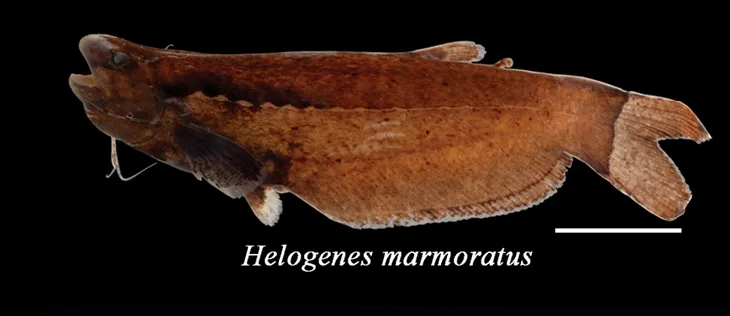
The otter catfish is named for a face and a wriggle that reminded someone of a small otter, not for size. Helogenes marmoratus is a cetopsid, kin at family level to the infamous whale candiru, but it is a 6–8 cm leaf-litter insectivore, mottled like a rotting seed, with a tadpole silhouette and a habit of hanging in debris. It is one of the oddest small catfishes in the Amazon trade. It is not Cetopsis coecutiens. It is not a bristlenose. It is not a hoplo. If you keep it like a generic “catfish,” you will miss the leaf litter, the tiny meaty foods, and the blackwater stillness that make this species make sense.
The pantry of the forest floor, flooded
H. marmoratus is widespread in Amazonian and Guianan blackwater and stained forest streams, always tied to accumulations of leaves, twigs, and fine organic matter. It lives in the three-dimensional mess of a forest creek after leaves fall, picking insect larvae and other small animals from the litter. The water is often soft, acidic, tea-coloured, and dim. Current is slight. This is the opposite of a Chaetostoma riffle and the opposite of an open Auchenipterus channel.
Photographers who find them in leaf banks show a fish that disappears the moment the litter is disturbed. Your tank should look like that bank, not like a Dutch scape with a single piece of spider wood.
They are true freshwater forest fishes. No salt. No cool Andean nights. No pond.
A mottled tadpole with catfish whiskers
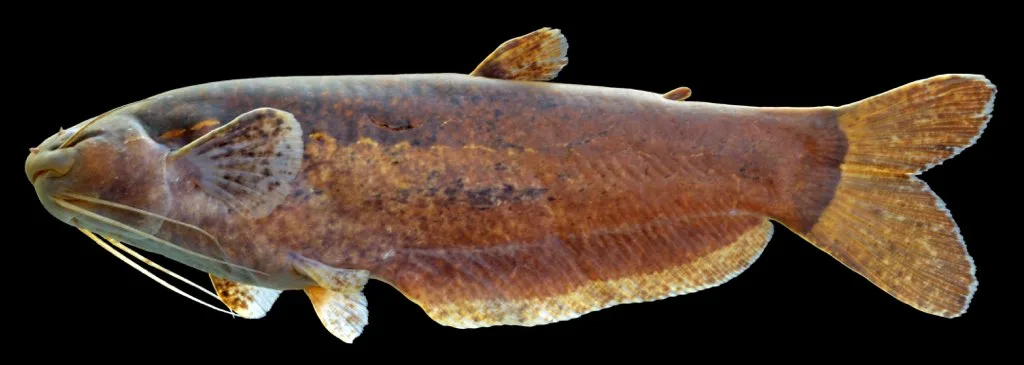
The body is elongate, almost cylindrical, mottled brown and cream, with a rounded snout, small eyes, and a tail that can look oddly eel-ish in motion. There is no armour. There is no sucker. The mouth is small, for picking, not for biting chunks out of large fish — that nightmare belongs to its cousin Cetopsis coecutiens. People confuse the family and then write predator panic onto a 7 cm litter specialist. Do not do that.
Healthy otter cats are slightly rounded, with clear mottling, and they hover-walk in leaves. Emaciated, pale fish in a bare tank are already dying of exposure and hunger. The species has little reserve. Buy them only into a tank that already has litter and microfauna.
Sexing is not a shop skill. Keep a small group in a large litter bed so they can behave like a foraging party of oddities, not like a single lost worm.
A tank that is mostly leaves
A modest footprint of 60 litres or more can work if the floor is a real leaf bed (sterilised botanicals, oak, catappa, and mixed litter replaced as it breaks down), with twigs, dim light, and almost no current beyond filter turnover. Sand underneath. Soft water. Floating plants to cut light. This is a blackwater diorama, not a river exhibit.
Filtration should be gentle: sponge, or a baffle, so the litter is not all in the impeller. You are culturing a microhabitat. Vacuuming to bare glass every week destroys the species’ world. Siphon detritus carefully; leave the structure.
Heater: mid-20s, stable. Lid: yes. They are small and strange and can ride a splash.
Tea-stained, soft, and oxygenated enough
Temperature 24–27 °C, pH often 5.5–7.0, very soft to soft water. They are more chemistry-sensitive than a port hoplo. Ammonia is unacceptable. Tannins are welcome. A sudden shift to hard, alkaline tap is a shock. Drip acclimate from the bag as if they were wild tetras, because in a sense the litter fauna is just as delicate.

Do not combine with CO2-injected high-tech plant tanks unless you are a very careful gas manager. They hang in the quiet layer where CO2 can pool.
Tiny meat in the litter, not a wafer
Feed grindal worms, baby brine, microworms, finely chopped frozen foods, and whatever infaunal life the leaf bed produces. They pick. They do not rasp algae. They do not eat wood. They do not take a jumbo prawn. A mature litter tank is half the diet; you supplement the rest at dusk.
If the fish ignore food on the glass, put food in the leaves. That is where they look. A hollow-bellied otter cat in a sterile quarantine is a predictable corpse. Quarantine must include botanicals and live or frozen microfoods.
Overfeeding turns the litter into a bacterial sour mash. Feed tiny amounts. Smell the tank. If it stinks, you have too much protein and not enough water change.
Neighbours that will not eat a tadpole
Keep them with tiny, peaceful, blackwater fishes that will not treat a 7 cm mottled worm as food — small pencilfish, certain dwarf characins, nothing with a large mouth. No cichlids that dig the litter away. No large catfish. No Cetopsis coecutiens in the same sentence of a stocking list; that species is a chunk-biter of a different scale and ethics.
They can live in a group in a big litter field. They are not a midwater school. They are a foraging party in debris.
Shrimp may compete for the same tiny foods or be picked at; decide whether the litter tank is for Helogenes or for shrimp.
Reproduction in the leaves, barely documented
Spawning of H. marmoratus in home tanks is not a standard guide topic. Eggs would be lost in litter. Do not buy them to breed. Buy them because you want a living leaf bank. If you ever see fry, you have a specialist miracle and you should not vacuum.
Building a leaf bank that does not go sour
Start with a thin sand bed, add a mix of leaves that have been boiled or at least rinsed, and let the tank run until a faint fungus bloom on the leaves has been eaten down by microfauna. Then add otter cats. If you dump a bag of dry leaves and three fish on day one, you get a bacterial crash and a dead oddity. The species lives in a working litter system, not in a tea bag you just opened.
Small, mottled, and not a monster
The otter catfish is a tiny cetopsid of Amazonian leaf litter, an insect picker with a tadpole outline. Give it leaves, dim tea-coloured water, and micro-prey. Do not give it a whale candiru’s reputation or a pleco’s diet. See Cetopsis coecutiens only to learn the difference, plus chemistry and cycling.
Explore other topics
Dive into more aquarium guides across the site.