

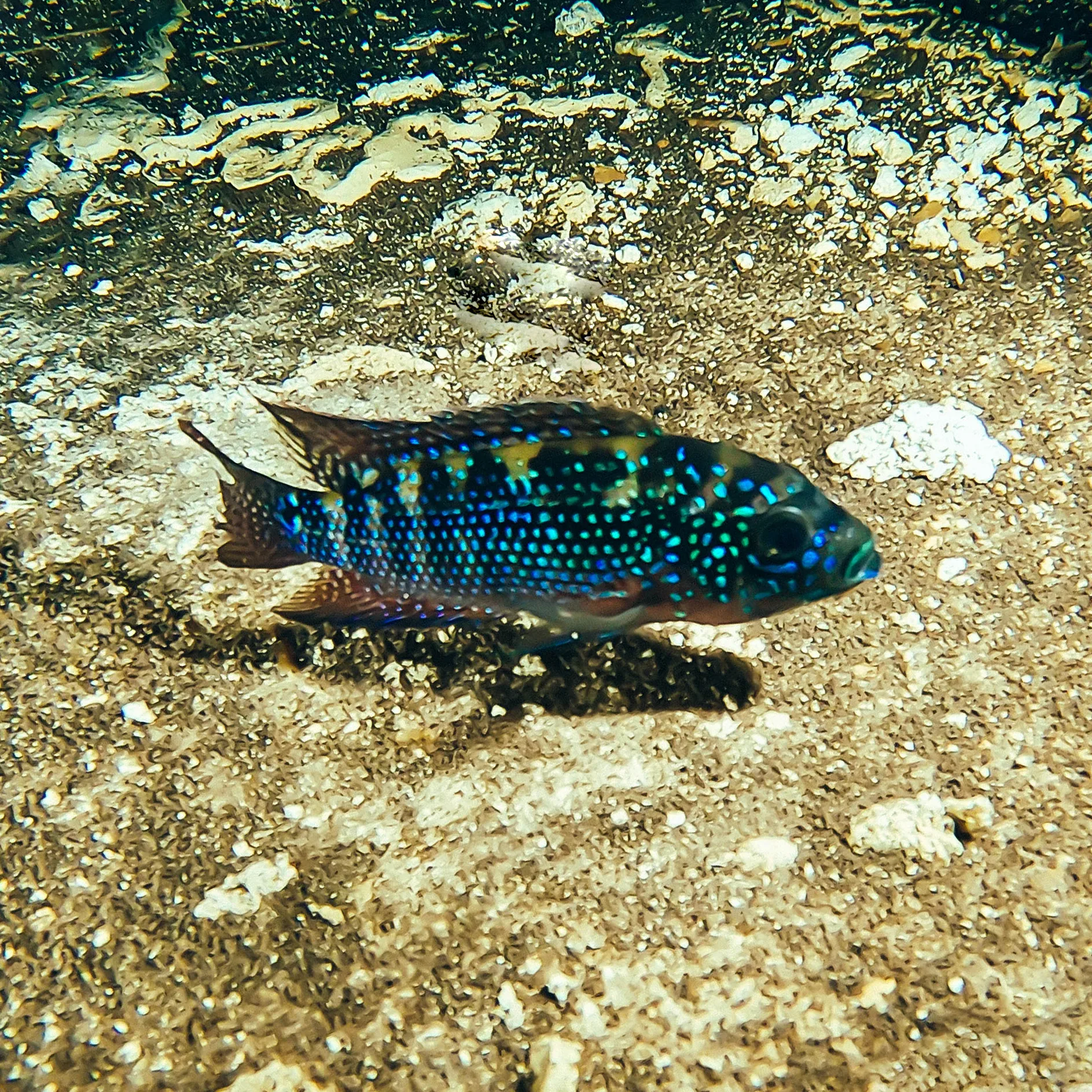
The name is a boxing poster. A New York dealer in the 1930s thought Rocio octofasciata had the compact power of Jack Dempsey, the heavyweight, and the name stuck harder than the old genus Cichlasoma ever did. Under the nickname is a Central American cichlid from southern Mexico, Belize, Guatemala and Honduras: rivers, sloughs, and vegetated backwaters that run warm, mineral, and full of snags. It is not a community dither fish. It is a territorial, intelligent, digging, colour-spangled bruiser that will fill a 200 litre tank with personality and fill a 80 litre tank with casualties.
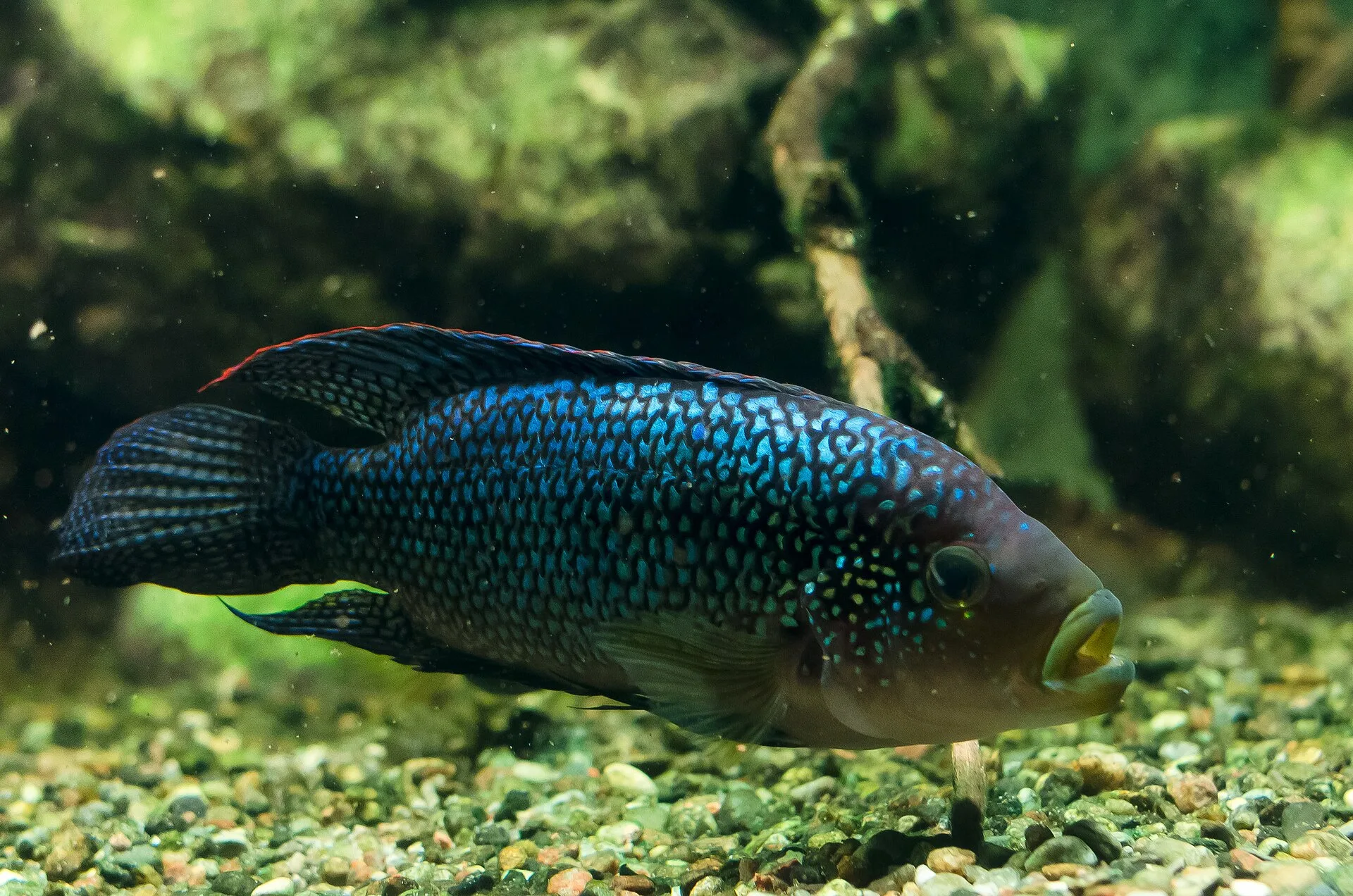
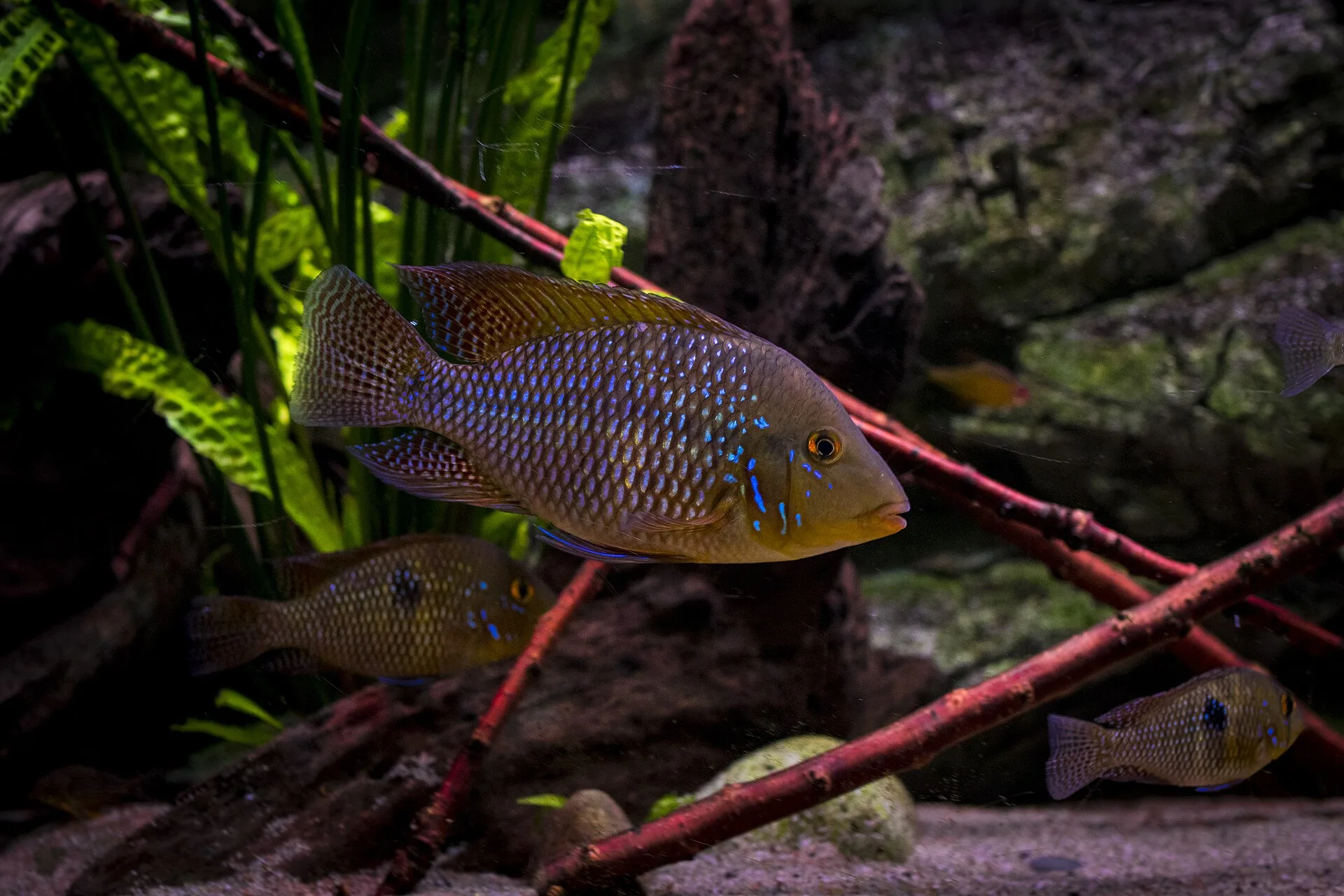
Electric-blue and gold morphs exist because the hobby cannot leave a dark fish alone. The wild-type is olive to charcoal with eight faint bars (the octofasciata in the name) and a scatter of turquoise and gold spangles that intensify as the fish matures and claims a territory. A dominant adult looks expensive. A suppressed adult in a crowded box looks like a brown grievance.
How hard does a namesake punch
Males commonly reach 20 to 25 cm, females a few centimetres less. The head is heavy, the mouth is wide, the forehead can steepen with age. They move gravel. They move rocks if you did not seat the rocks on the glass. They remember feeding time and they will spit sand at fish they dislike. That is not folklore from a forum; it is ordinary cichlid work.
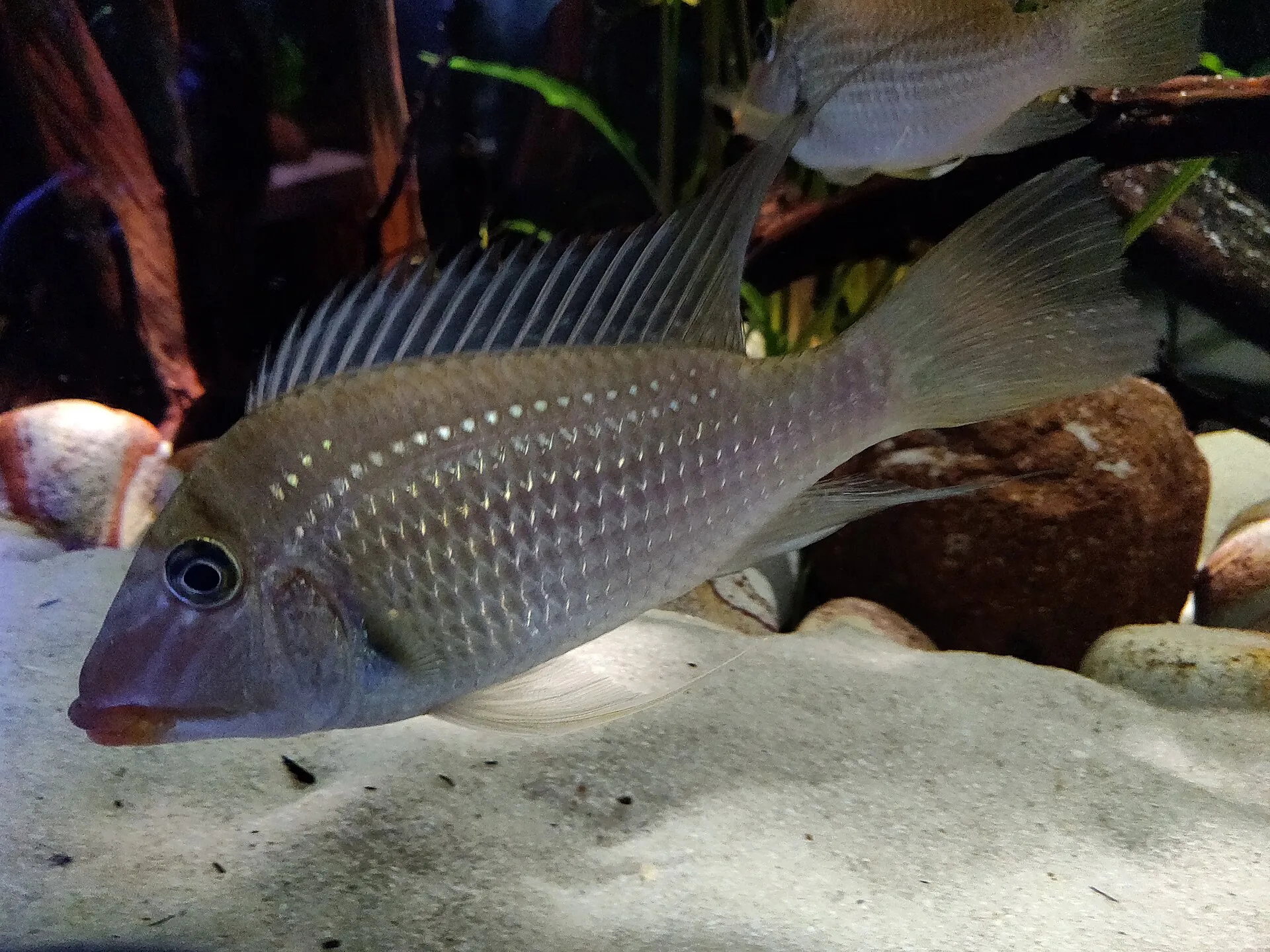
Sexing adults: males grow larger, with longer pointed dorsal and anal fins and more spangling. Females stay rounder and may darken heavily when breeding. Juveniles are guesswork. Buy a group of young fish in a large tank and let a pair form, or buy a known pair from a breeder who will take the extras back. Two random adults in a small tank is how you get a dead fish and a winner.
A river snag, not a zen garden
Two hundred litres for a pair is a practical floor; more is kinder, especially if you want tank-mates. Hardscape: a slate or clay pot cave, heavy wood, rock on the bottom glass so digging does not collapse a mountain onto the fish. Sand or fine gravel they can move. Plants only if they are anchored on wood or in pots you can live without — Anubias and Java fern sometimes survive the excavation. A lid helps; large cichlids jump when they fight.
Temperature 22 to 30°C, with the mid-twenties as a daily home. pH 6.5 to 8.0. They are not soft-water specialists. Many keepers succeed on moderately hard tap. Filtration should be oversized and easy to clean, because Dempseys eat well and stir waste out of the bed. They appreciate some flow without being blasted.
Meat, with enough variety to stay alive
They are predators and opportunistic omnivores. Quality cichlid pellets, frozen prawn, mussel, earthworm, and the occasional insect mix work. Feed a vegetable-containing pellet a few times a week so the gut is not a protein-only pipe. Live fish as feeders are how you import disease; skip them. They will learn to take food from a clip or a target. That intelligence is half the reason people keep them. Do not confuse it with a need for live goldfish.
Overfeeding plus digging equals dirty water. Dirty water plus a big cichlid equals hole-in-the-head and lateral line erosion. The cure is water changes and diet, not a bottle that promises magic.

Territory has a radius, and the radius is the tank
A pair holding eggs or wrigglers will murder most roommates in 200 litres. A single adult in a huge tank with other similarly tough Central American cichlids of comparable size can work if you are experienced and the layout has multiple caves. A Dempsey with angelfish, discus, or small peaceful schoolers is a food web. Do not do it. Suitable tank-mates, when they exist, are robust, similar-sized cichlids and large, armour-plated catfish in a much larger volume. Even then, watch the spawning cycle. Many “peaceful for years” Dempseys become unlivable when they decide a flowerpot is a cathedral.
They will fight their own reflection. Dim the room at night. Do not put the tank where people loom over it all day unless you like seeing a fish flare until it is exhausted.
Two parents, a stone, and a lot of mouthing
They are substrate spawners. The pair cleans a rock or the tank floor, lays hundreds of eggs, and both adults fan and guard. Eggs hatch in a few days; wrigglers are moved to pits; fry become a cloud that the parents herd. It is one of the great freshwater spectacles if you can stand the aggression that comes with it. If you want to raise fry, either remove the pair after the fry are free-swimming and you have a grow-out tank, or remove other fish before the spawn. If you do not want fry, you still get the spawn. Livebearers they are not, but they are prolific when happy.
A pair that is not a pair will false-spawn and then beat each other. Have a divider or a second tank. Cichlid marriage is real and also reversible without notice.
Electric blue is still a Dempsey
The electric-blue morph is the same fish with a pigment leak that people pay extra for. It still grows. It still digs. It still needs the same water. It may be slightly less hardy in some lines because of inbreeding. Buy with your tank, not your Instagram, in mind. Gold morphs the same. A pale morph in poor water looks sick even when it is only unhappy.
Should you
If you want a pet cichlid you can watch think, and you can offer 200 litres plus to a pair, hardscape that will not collapse, and no fragile neighbours, Rocio octofasciata is a classic for a reason. The spangles on a mature male are as good as any marine advertisement, and the parental care is theatre. If you wanted a peaceful community centrepiece, the boxer on the label was telling you the truth in 1930 and is still telling you the truth. Believe the punch. Build the ring to match, or buy a different ticket.
Quarantine large cichlids in a tank that will actually hold them. A Dempsey stuffed into a 40 litre hospital for a month is a stressed Dempsey that will not show disease clearly until it is too late. Watch for ich, for eroded head pits, for a fish that hides and will not flare. A Dempsey that will not display is a Dempsey that feels beaten. Fix the room, the water, and the company before you invent a new medicine.
Explore other topics
Dive into more aquarium guides across the site.