

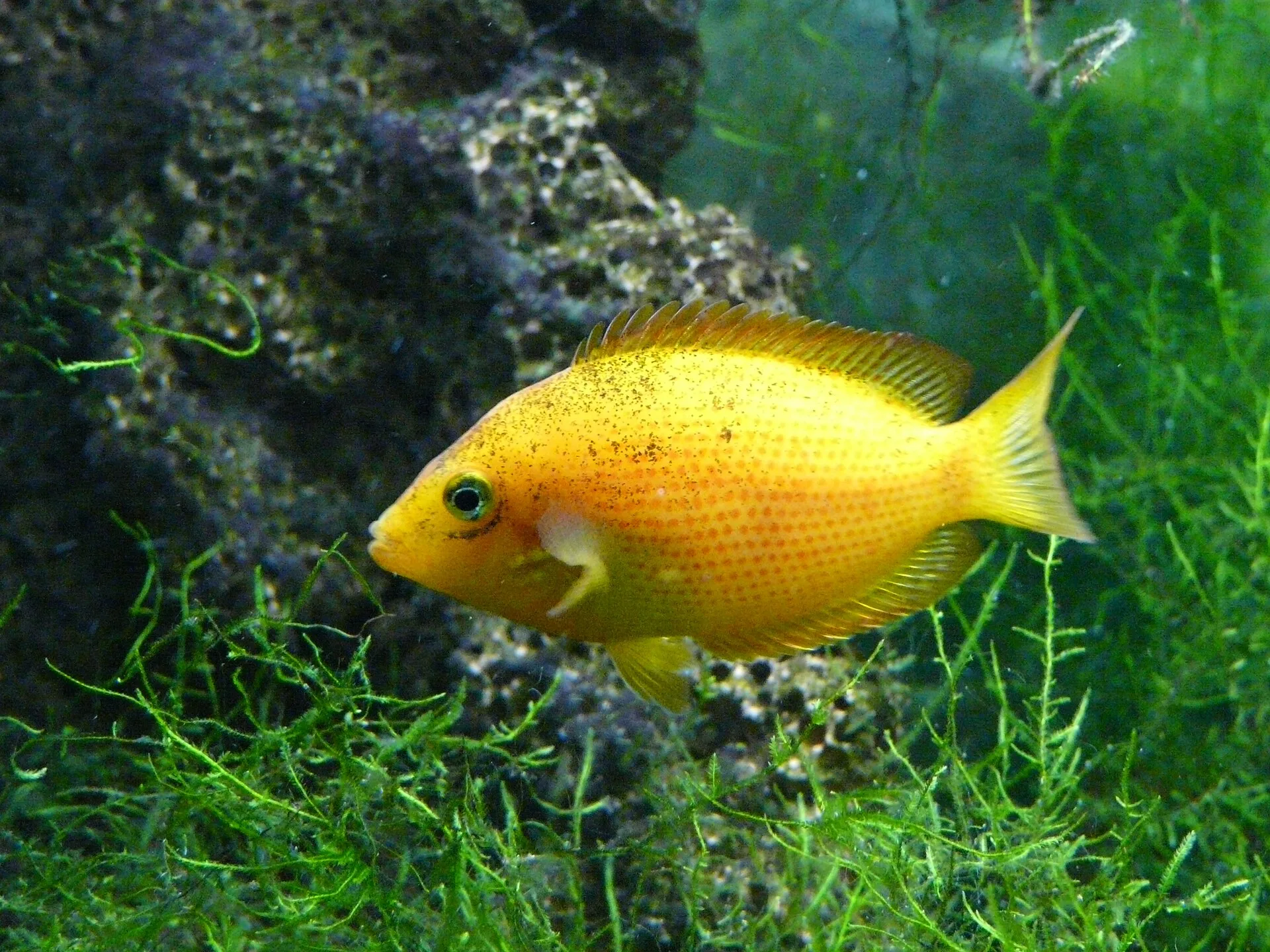
India and Sri Lanka produced a cichlid that looks like a sunset with measles, and the trade still sells it as if it were a Central American dwarf. The orange chromide, Etroplus maculatus (also placed in Pseudetroplus by some authors), is a small Asian cichlid from slow rivers, lagoons, and slightly brackish margins. It is not a krib. It is not a convict. It will take a hint of salt, it will spawn on a stone with both parents on duty, and it will colour from washed peach to vivid orange when the water and the pair are right.
Green chromides (Etroplus suratensis) are the large cousin; do not stock those in the same small tank. Orange chromides stay around 8 cm. That compact size is why they end up in community aquaria. The parental aggression is why they then get labelled “unpredictable.” It is predictable. You just have to know they are cichlids from the subcontinent, not tetras from a printed list.
Lagoons, rivers, and a little salt in the story
Wild fish occur in southern India and Sri Lanka in fresh and brackish habitats: vegetated shallows, slow streams, coastal lagoons. Conductivity can be higher than a typical Amazon tank. Some keepers run them in pure freshwater for years. Others add a small measure of marine salt, especially if tap water is very soft or if they are fighting fungus on eggs. Neither camp has a monopoly. What both camps agree on is warmth, hardness on the moderate-to-hard side, and a pair with a flat spawning site.
Plants in the wild are whatever survives grazing and brackish influence. In the tank, hardy plants may persist; delicate ones may be dug or eaten. Sand or fine gravel, wood, and a few rocks are the core. They are not a rift-lake rock fish. They are not a leaf-litter apisto.
Orange is a condition
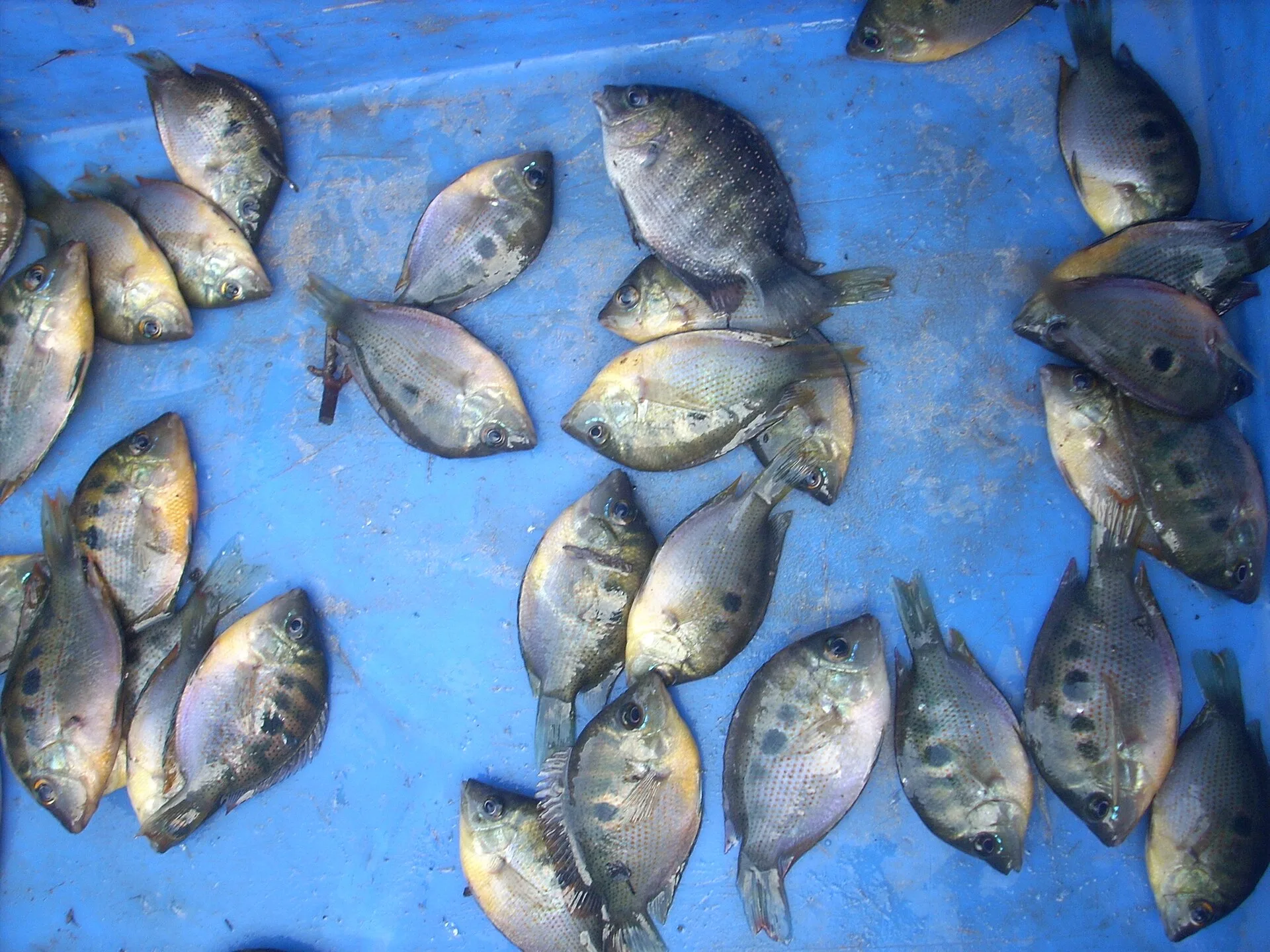
The base colour runs from yellowish to deep orange with dark spots scattered on the flank. Fins can show red. A stressed or poorly fed fish looks beige with a few smudges. Males and females are similar; the female may be rounder when gravid, and both colour up for spawning. Adult size is about 8 cm, sometimes a little more. They are laterally compressed, cichlid-mouthed, and quicker than they look.
Young fish in shops are often dull. Colour is not a dye. It is diet, water, and social comfort. A single chromide in a tank of danios will not look like the photo on the bag.
Harder water, warmer water, a stone to clean
Eighty to a hundred litres for a pair is reasonable. They appreciate plants around the edges and an open patch of substrate with a slate or a piece of wood to spawn on. Gentle to moderate filtration. They are not rapids fish. A heater locked at 24–28°C keeps them in their range; they are tropical in the ordinary sense, not cold-water barbs.
pH 7.0–8.0, moderate to hard water. If you keep them with livebearers or with other hard-water Asian fish, the chemistry can align. If you keep them with cardinal tetras, someone is in the wrong tank. A teaspoon of marine salt per litre is a traditional optional extra, not a requirement, and it will limit the plants you can grow. Use it if you have a brackish-leaning setup or stubborn egg fungus; skip it if you have a planted freshwater community that otherwise fits.

They will jump when spooked. Lid on. They will dig. Do not build a hardscape that collapses.
An omnivore that grazes and hunts
In nature they take algae, detritus, and small animals. In the aquarium, vegetable matter should be part of the menu: spirulina flake, blanched greens, quality omnivore pellets. Frozen brine shrimp and daphnia add protein. A diet of bloodworm only makes a fat beige fish. Colour often improves when the green component is real. Feed two small meals. They will browse rock and wood between meals if you let biofilm exist — which means do not scrape every surface sterile every week.
A pair, then a perimeter
Keep them as a pair in most home tanks. Groups can work in large, broken-up aquaria, but extra fish become targets when a pair forms. Tank mates that sometimes work are similarly robust, hard-water fish that do not share the spawning slate: larger rasboras, some barbs, loaches that can take a chase. Dwarf shrimp are at risk. Slow, long-finned fish will be nipped, especially during brood care. Other cichlids of similar size will compete for the rock.
Outside of breeding they can be reasonably peaceful. During breeding they are not. Plan the tank around that switch, not around the shop label that said “community.”
Parents that stay on duty
Orange chromides are biparental substrate spawners. They clean a site, lay eggs, and both guard. They may move wrigglers. Fry are watched closely. There is a well-known behaviour in chromides of parents producing a mucus the young graze — interesting if you see it, not something you need to manage with a supplement. Feed the fry baby brine and powdered food. The parents will still be aggressive. A species tank raises more young. A community tank raises a story about how the spawn disappeared on Tuesday.
Egg fungus is the usual failure in too-soft, too-dirty, or too-cold water. Nudge hardness, clean up, and keep them warm before you invent a disease.
Salt, fungus, and the long keep
Quarantine in water that matches what you intend to use — including any salt — so you are not flipping conductivity twice. They generally eat well. Watch for ich after shipping. Watch for skinny fish that need better food more than they need medication. Fin tears from bagging heal in clean water.
Kept as a pair in hard, warm water with greens in the diet, Etroplus maculatus is a durable small cichlid and a genuine piece of South Asian fish fauna in a hobby that forgets Asia has cichlids at all. Kept as six dull juveniles in a soft planted tank with rummynoses, it is a beige problem that someday spawns and then everyone is shocked. Choose which story you want before you buy the orange.
Explore other topics
Dive into more aquarium guides across the site.