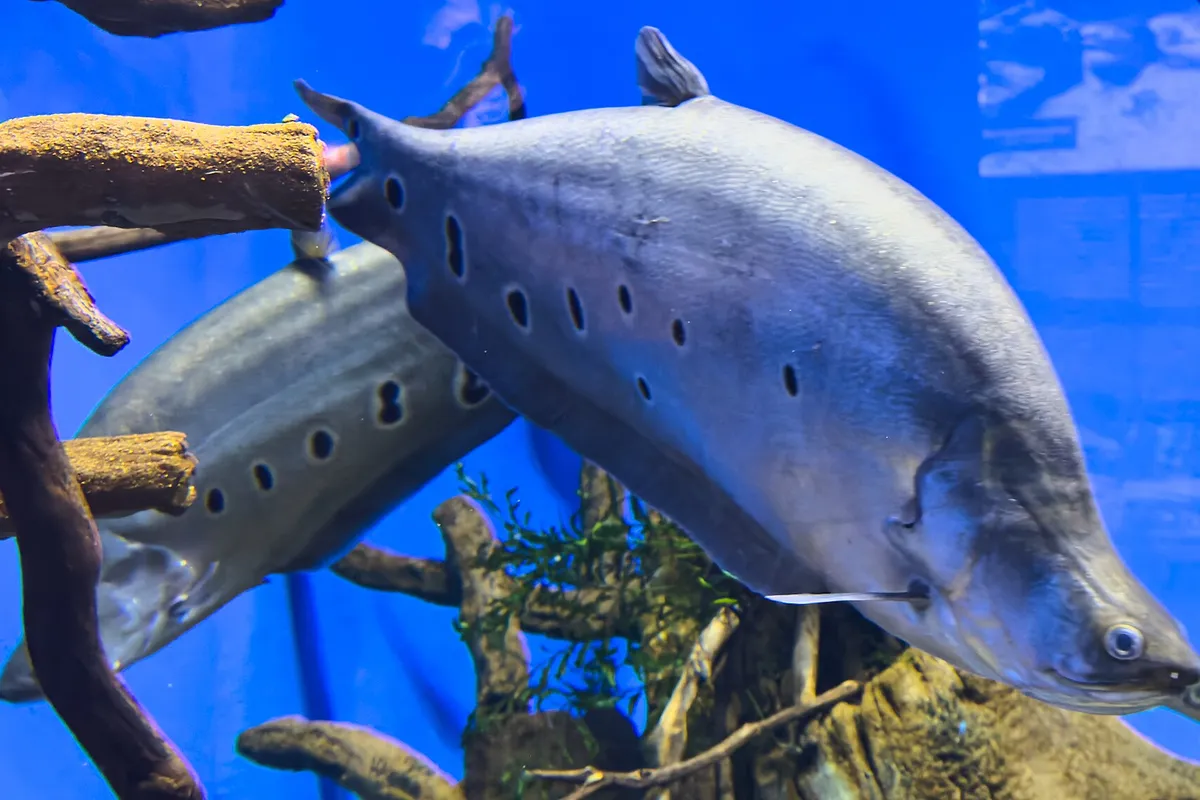
The clown knifefish is one of the most graceful fish in the hobby. Chitala ornata has a tall, blade-shaped body and moves by rippling a long anal fin that runs from its belly to its tail, gliding forwards and backwards with ease. A row of white-ringed black spots near the tail gives it its name.
It is also one of the most commonly outgrown fish in the trade. Juveniles are sold at 8–10 cm, but adults reach 60 cm in aquariums and up to 100 cm in the wild. Please read the tank size section before buying one.
Where clown knifefish come from
Clown knifefish are native to the Mekong and Chao Phraya rivers in Thailand, Laos, Cambodia and Vietnam. They live in lakes, swamps and slow rivers. They are also an important food fish, and introduced populations have become invasive in Florida.
Appearance and behaviour
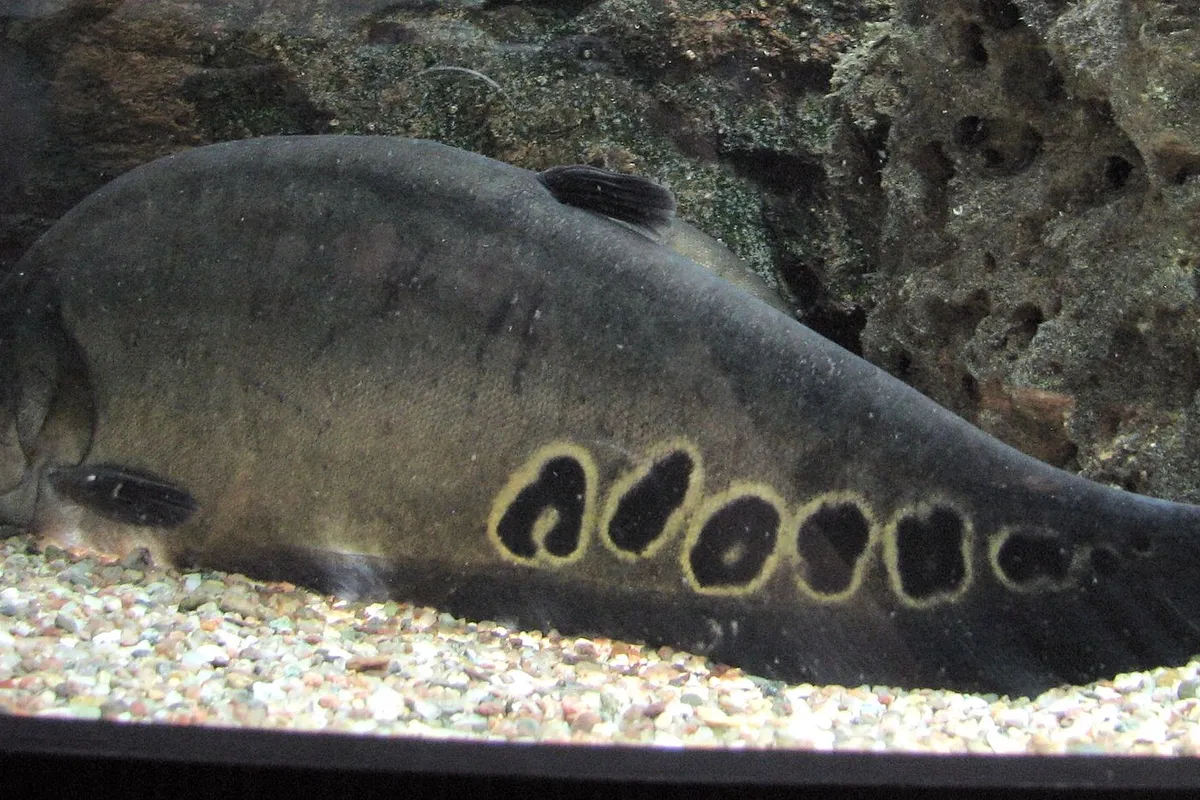
The body is silver-grey with a humped back and a small, feather-like dorsal fin, which is why the family is called featherbacks. Adults show 5–10 black spots ringed with white along the rear of the body. These spots vary between individuals, so each fish can be recognised.
They are nocturnal and spend the day hovering in cover. Juveniles are social, but adults become territorial with other knifefish. They can gulp air from the surface when oxygen is low.
Tank setup
A single adult needs at least 1,000 litres, with a tank at least 2.5 metres long. This is a fish for very large custom tanks or public aquariums. Provide large driftwood, wide caves or pipes to hide in, and dim lighting. Use strong filtration, but keep the flow moderate, as they prefer calm water. A tight lid is essential.
Water parameters

Keep the temperature at 24–28°C, pH at 6.0–7.5 and water soft to moderately hard. Clown knifefish are sensitive to poor water quality and to changes, so change water often and keep parameters steady. Our guide to using two heaters in a large aquarium helps keep big tanks stable.
Feeding
They are predators that eat fish, shrimp and insects. In the aquarium, feed frozen shrimp, krill, silversides, mussels, earthworms and carnivore pellets. Many are shy at first and feed best after the lights go out. Do not rely on live feeder fish, which spread disease.
Tank mates
Any fish small enough to swallow will be eaten, and their mouths are larger than they look. Good companions are large, peaceful fish: large catfish, arowanas, large cichlids, silver dollars and bichirs such as the ornate bichir. Keep only one adult clown knifefish unless the tank is huge.
Breeding
Home breeding is almost unknown. In the wild, they spawn on hard surfaces, and the male guards the eggs. Aquarium fish come from farms in Southeast Asia.
Common problems and lifespan
Outgrowing the tank is the main problem, followed by skin and scale damage from crashing into the glass when startled. Keep the lights dim and avoid sudden movements around the tank. They can be sensitive to some medications, especially copper. If you can no longer house one, contact a public aquarium or large-fish club. Never release it into the wild.
With good care, clown knifefish live 10–15 years or more.
Explore other topics
Dive into more aquarium guides across the site.