

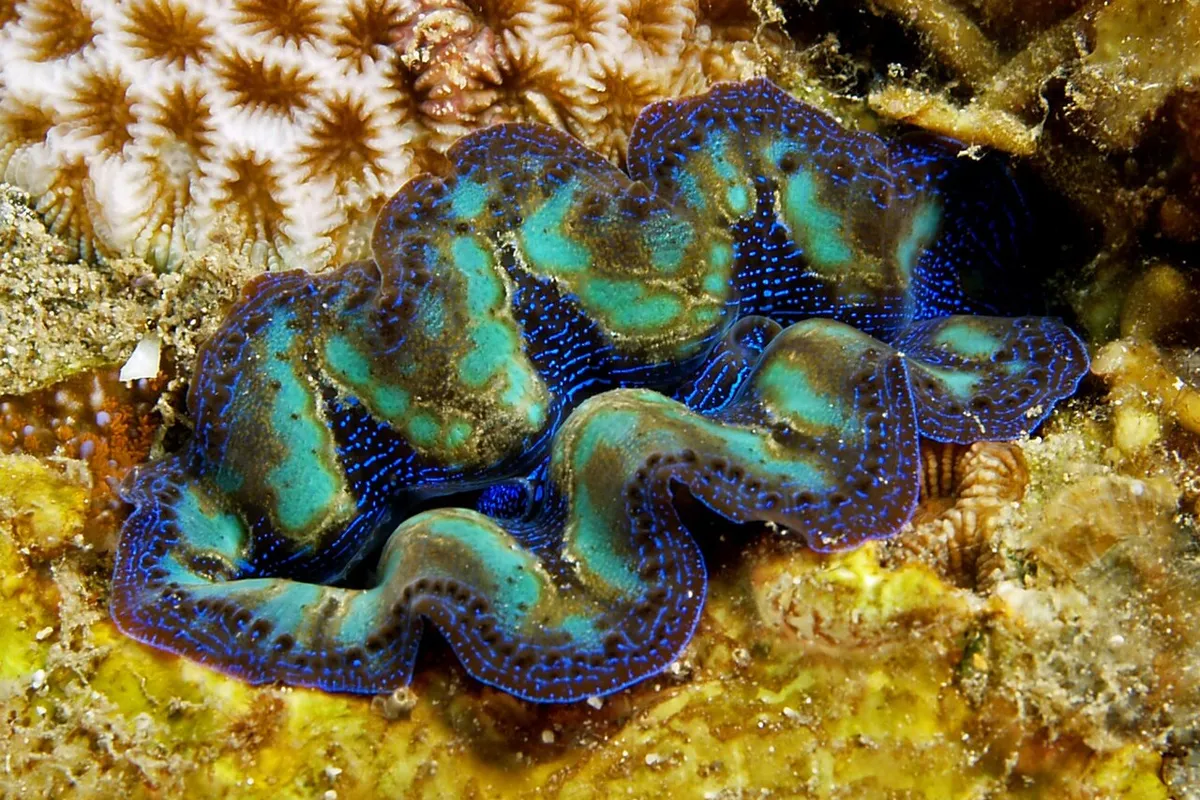
The crocea clam is the smallest of the giant clams, reaching about 15 cm. Its fleshy mantle comes in an extraordinary range of colours, from electric blue to gold, green and purple, often in intricate patterns. It is often called the boring clam because it bores into coral rock.
Tridacna crocea needs strong light and stable reef water. It is the most light-hungry of the commonly kept clams, so it suits an established reef with good lighting.
Where crocea clams come from
The species lives in the western Pacific, from Japan to Australia and east to Palau. In the wild it bores into coral heads in shallow, brightly lit water, with only the mantle exposed.
Appearance and behaviour
The mantle contains symbiotic algae, much like corals, which provide most of the clam's food. Clams close quickly when a shadow passes over them, then reopen.
Tank setup
Place croceas high in the tank, on rock or in a rubble-filled hollow, under strong light. They like to attach to hard surfaces with their byssal threads, so do not place them on a deep sand bed. Moderate, indirect flow is ideal.

Water parameters
- Temperature: 24–27°C
- pH: 8.1–8.4
- Alkalinity: 8–11 dKH
- Calcium: 400–450 ppm
- Nitrate: low but not zero
Clams use a lot of calcium and alkalinity to build their shells. Test regularly and dose as needed.
Feeding
Most of their food comes from light. Small clams under 5 cm also need fine particulate food such as phytoplankton. Larger clams benefit from it too.
Tank mates
Avoid angelfish, butterflyfish, puffers and triggerfish, which pick at the mantle. Watch for pyramidellid snails, tiny parasites that feed on clams at night; wrasses such as the canary wrasse help control them.
Breeding
Croceas are bred on clam farms, where most aquarium clams now come from. They do not reproduce in home tanks.
Common problems and lifespan
Too little light, unstable parameters and parasites are the main causes of loss. Related clams such as the maxima and squamosa are slightly less demanding. Healthy croceas can live for decades.
Explore other topics
Dive into more aquarium guides across the site.