

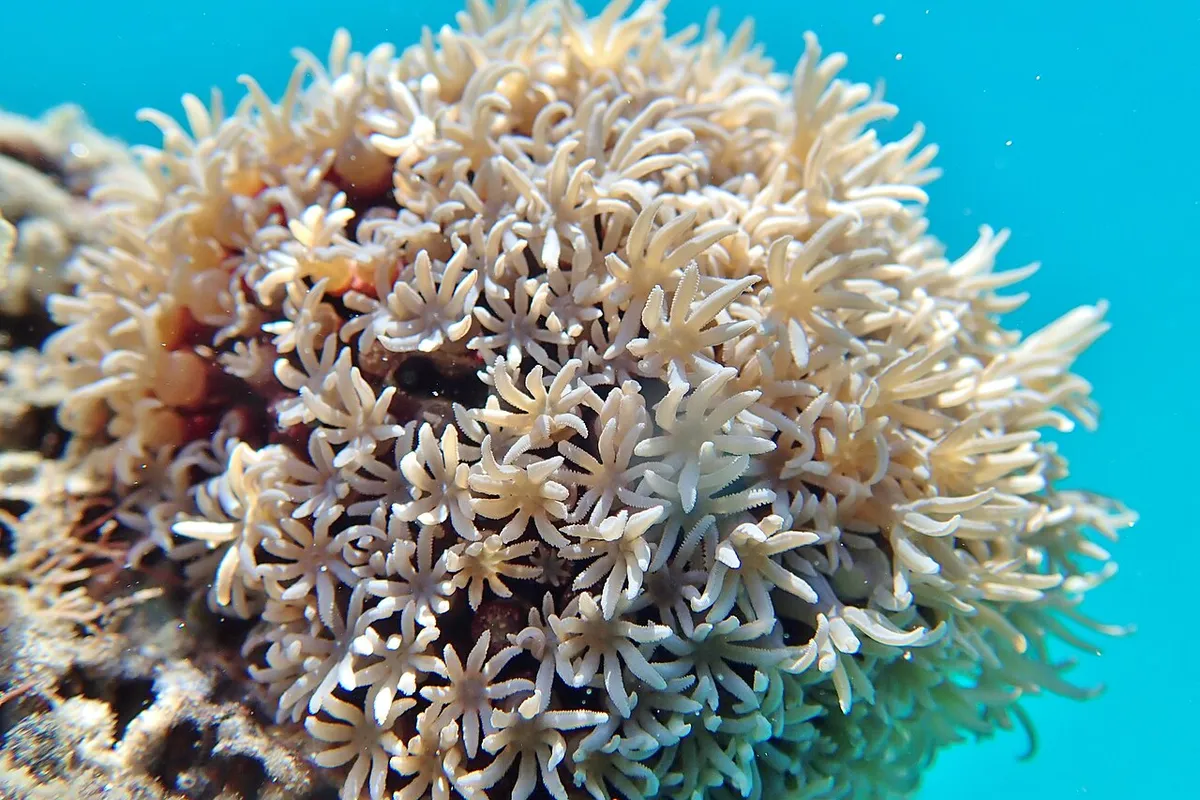
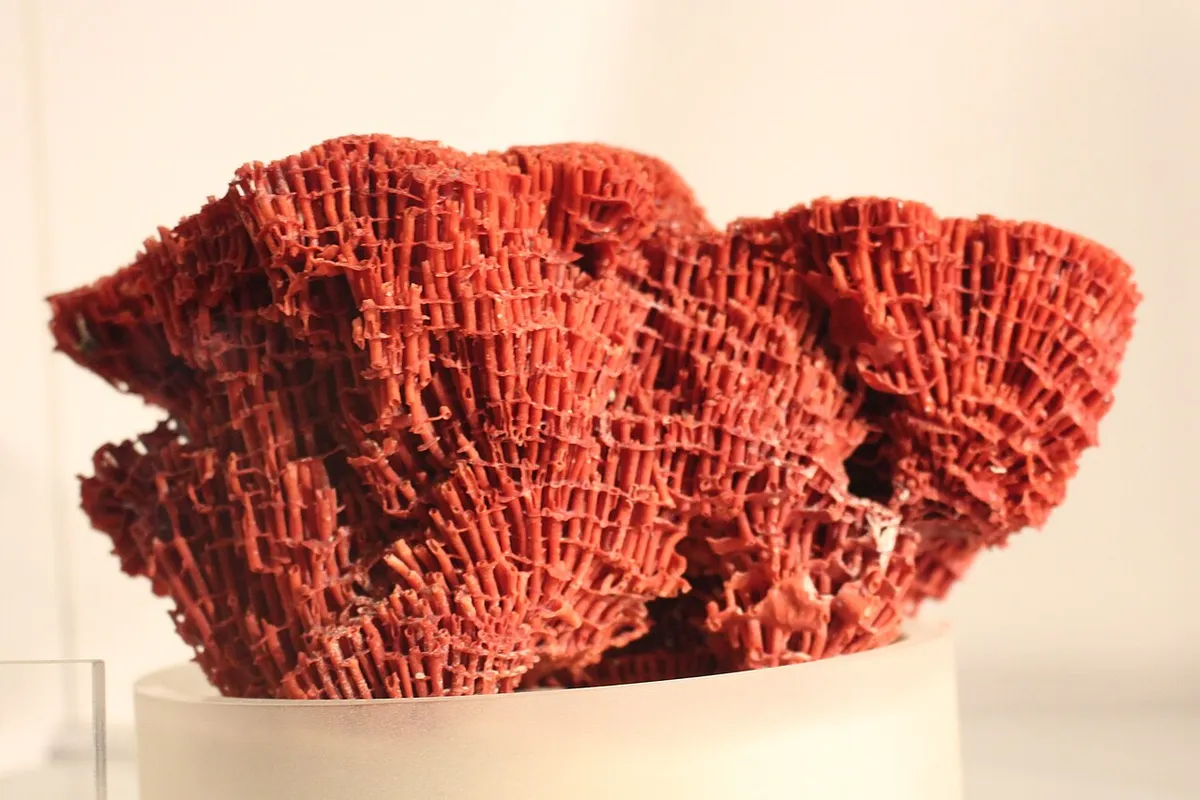
Organ pipe coral is an unusual octocoral. Each polyp sits on top of a tiny, rigid red tube, and the tubes are joined by horizontal plates, like the pipes of an organ. When the polyps are open, the colony looks like a soft, feathery mat of green, grey or brown. When they close, the red skeleton shows through.
Tubipora musica is the only octocoral that builds a hard skeleton of this kind. It is more demanding than most soft corals and suits an established reef.
Where organ pipe coral comes from
It is found across the Indo-Pacific, from the Red Sea to the central Pacific, on shallow reef flats and slopes with strong light and moderate water movement.
Appearance and behaviour
Each polyp has eight feathery tentacles, the mark of an octocoral. Polyps open during the day and close at night or when disturbed. Colonies grow slowly by adding new tubes to the edge.
Tank setup
Place organ pipe coral on the rockwork in medium to strong light, with moderate, indirect flow that moves the polyps without flattening them. It dislikes being moved, so choose its spot carefully. Avoid areas where algae can settle on the skeleton.
Water parameters

- Temperature: 24–27°C
- pH: 8.1–8.4
- Alkalinity: 8–11 dKH
- Calcium: 400–450 ppm
- Magnesium: 1,250–1,350 ppm
Because it builds a calcium carbonate skeleton, stable alkalinity and calcium matter more than for most soft corals.
Feeding
Organ pipe coral relies on its symbiotic algae for most of its energy. It also benefits from fine particulate foods: phytoplankton, rotifers and coral powders a few times a week.
Tank mates
Keep it away from aggressive corals with sweeper tentacles. Avoid angelfish and butterflyfish that nip polyps. Most reef-safe fish and invertebrates are fine.
Breeding
Colonies can be fragged by breaking off a section of tubes with living tissue, but the pieces heal slowly. See our coral fragging guide before trying.
Common problems and lifespan
The most common problems are polyps that stay closed due to unstable water or too much flow, and algae growth on exposed skeleton. Healthy colonies can live for many years.
Explore other topics
Dive into more aquarium guides across the site.
