

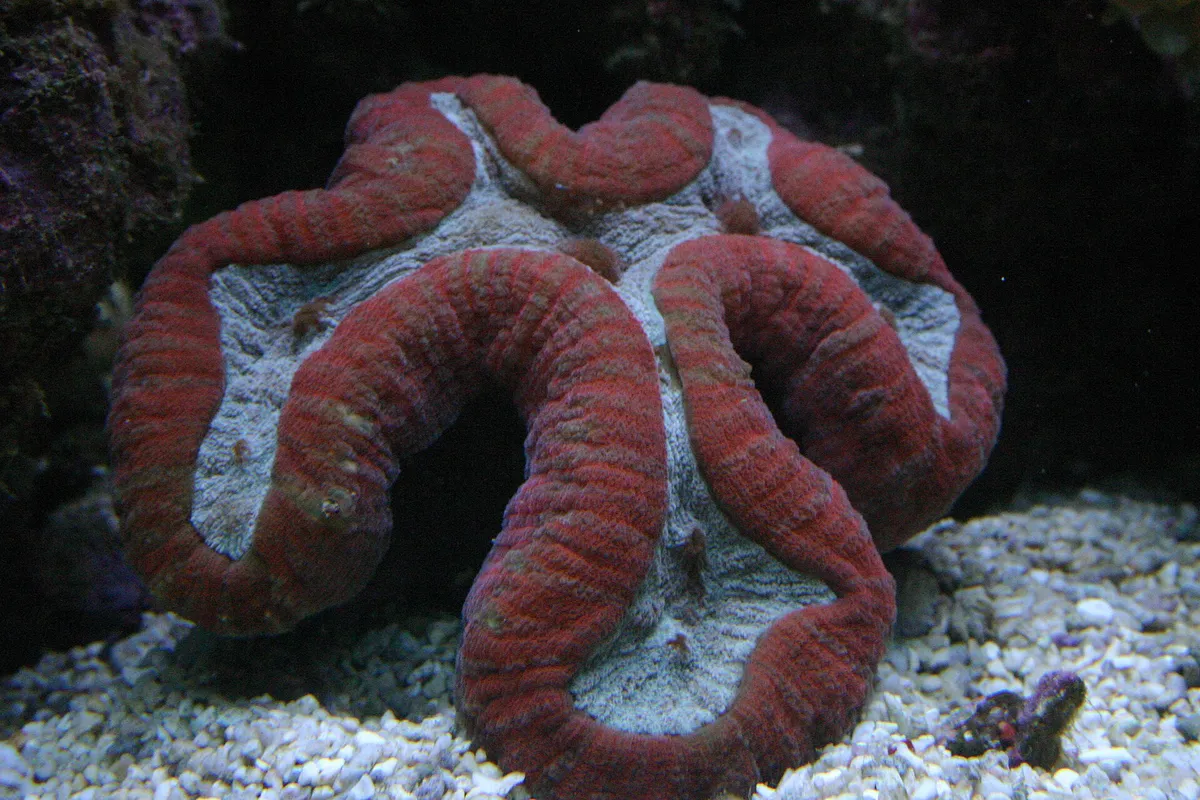
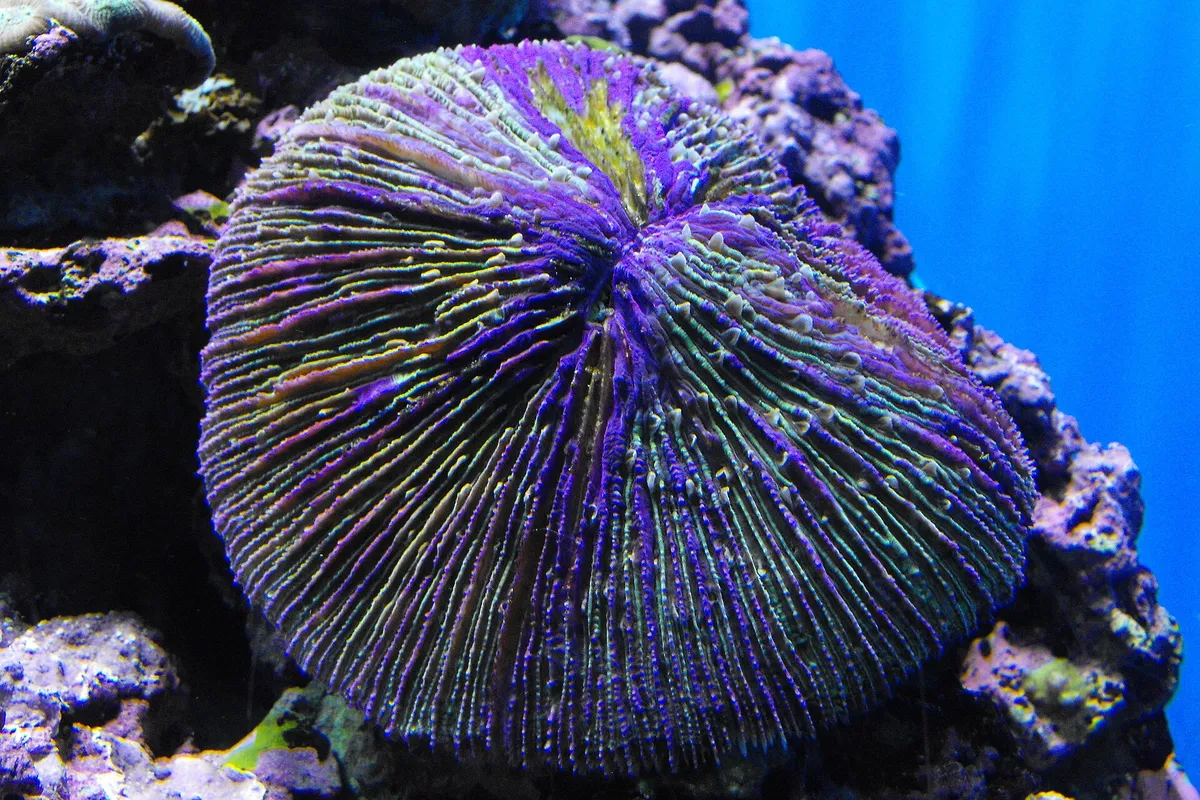
Lobophyllia, usually called lobo or lobo brain coral, is a large-polyp stony (LPS) coral with thick, fleshy lobes that look like a brain or a cluster of folded cushions. Colonies come in red, green, orange, blue and mixed patterns, and look especially striking under blue reef lighting. Lobos are hardy, slow growing and less aggressive than many LPS corals.
Where Lobophyllia comes from
Lobophyllia is found across the Indo-Pacific and Red Sea, on reef slopes, lagoons and rubble areas, often in sheltered water. Several species are sold, including Lobophyllia hemprichii and L. corymbosa, and the genus now also includes many corals once called Symphyllia. Care is similar for all of them.
Appearance and behaviour
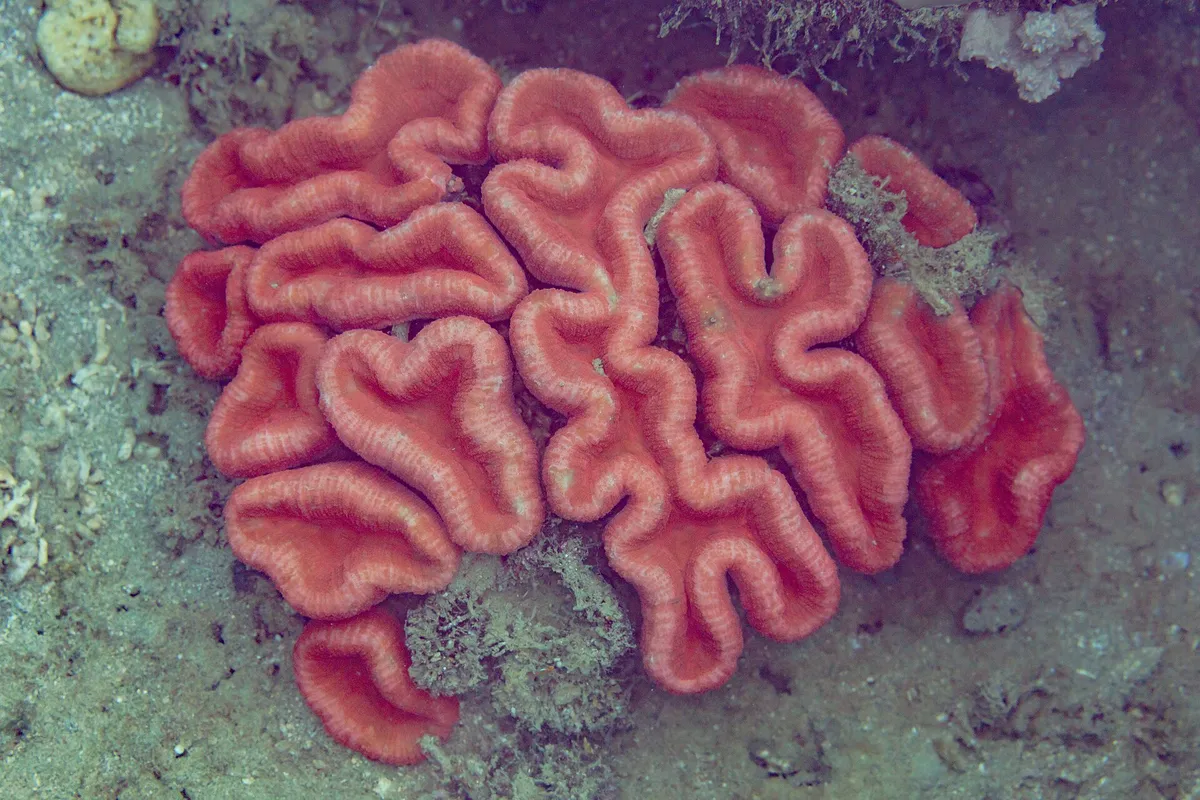
Each lobe, or valley, is a polyp with a mouth along its centre line. The tissue is thick and fleshy and swells during the day. Colonies may be round and dome-shaped or flat with long, winding valleys. At night, short feeding tentacles appear along the valleys.
Tank setup and placement
Lobos do best in low to moderate light and low to moderate flow. Place them on the sand bed or low on the rockwork, where they won't fall. Strong flow can stop the tissue from inflating and expose the skeleton. Keep them at least 10 cm from other corals; their sweeper tentacles are short, but neighbours with long sweepers can sting them.

Water parameters
Keep the temperature at 24–27°C, specific gravity at 1.024–1.026 and pH at 8.1–8.4. Keep calcium at 400–450 ppm, alkalinity at 8–11 dKH and magnesium at 1,250–1,400 ppm. Lobos tolerate a little more nitrate and phosphate than SPS corals. See our guide to phosphates in reef tanks.
Feeding
Lobos get much of their energy from light, but they are eager feeders and grow faster and fuller when fed. Target-feed mysis, small pieces of krill or coral pellets onto the mouths once or twice a week, after the lights go off and the tentacles appear.
Tank mates
Lobos are safe with most reef fish and invertebrates. Avoid fish that nip at LPS tissue, such as many large angelfish and some butterflyfish. Shrimp and hermit crabs may steal food from their mouths during feeding.
Common problems and lifespan
Tissue that pulls back from the skeleton usually means too much light or flow, poor water quality, or attack by a neighbouring coral. Brown jelly can appear on damaged tissue, and should be removed quickly. With stable care, Lobophyllia colonies live and grow for many years. For other LPS corals, see our plate coral and open brain coral guides.
Explore other topics
Dive into more aquarium guides across the site.