

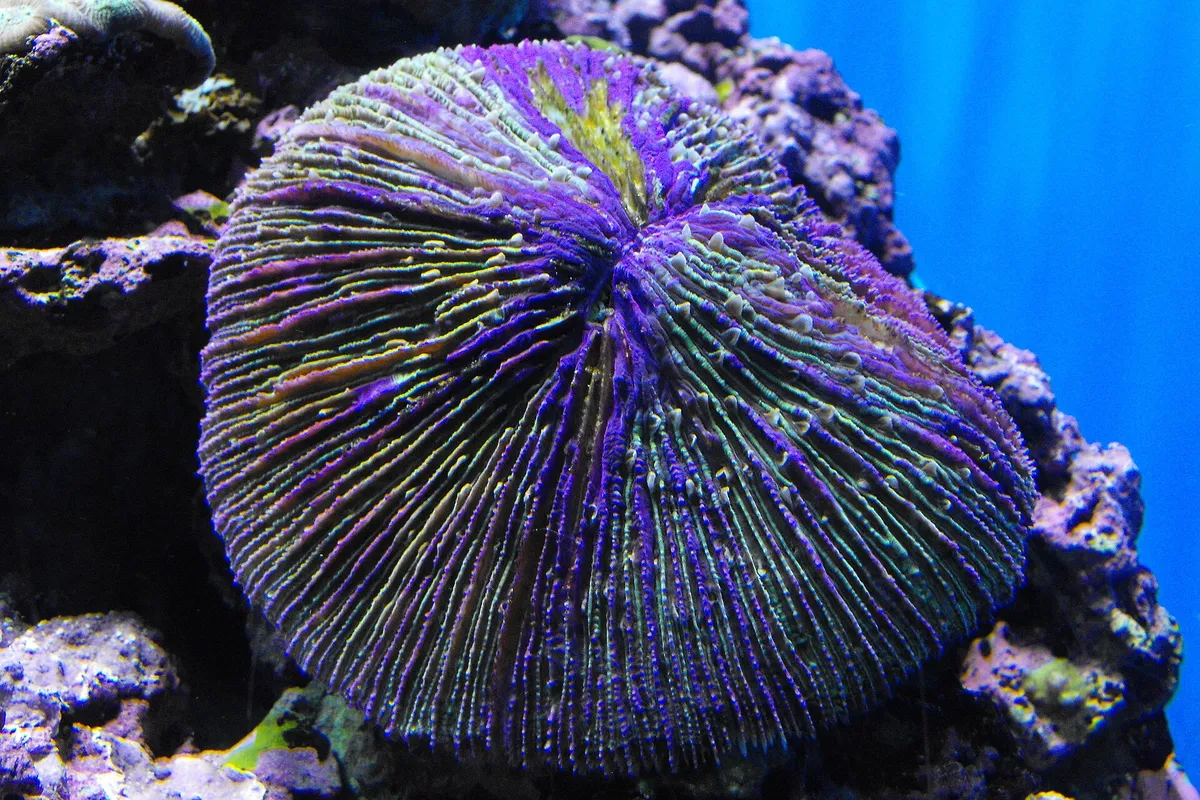
Plate corals are one of the most unusual corals you can keep. They are a single, large polyp in the shape of a disc or dinner plate, with ridges radiating from the centre like the gills of a mushroom. Instead of attaching to rock, they lie loose on the sand, and they can slowly move and even turn themselves over. Fungia and its relatives are hardy, easy to feed and come in many colours.
Where plate corals come from
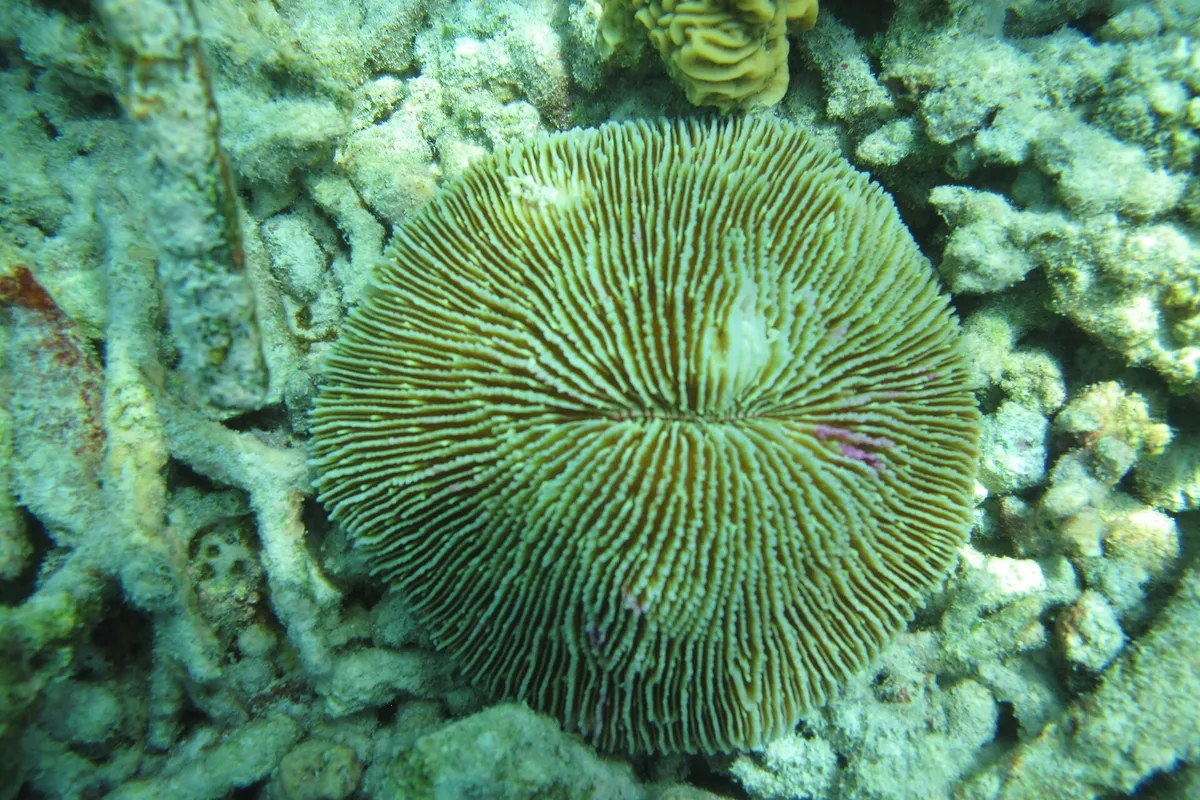
Plate corals are found across the Indo-Pacific and Red Sea. They live on sand and rubble at the base of reefs and in lagoons, in sheltered, calm water. Several genera are sold as plate corals, including Fungia, Danafungia, Ctenactis and Heliofungia, the long-tentacle plate coral. Care is similar for all of them.
Appearance and behaviour
Most aquarium plate corals are 10–25 cm across. The skeleton is round or oval, with a central mouth and many thin ridges called septa. The living tissue may be brown, green, pink, purple or orange, and many show fluorescent colours under blue light. Short tentacles extend from the surface, especially at night.
A plate coral can inflate its tissue to move short distances or to flip itself the right way up if knocked over.
Tank setup and placement
Place plate corals on the sand bed, never on rockwork, where they can fall and be damaged. Give them space from other corals, as they have sweeper tentacles and can sting. They need moderate light and low to moderate flow; strong flow can tear their tissue.
Water parameters
Keep the temperature at 24–27°C, specific gravity at 1.024–1.026 and pH at 8.1–8.4. As stony corals, they need stable calcium (400–450 ppm), alkalinity (8–11 dKH) and magnesium (1,250–1,400 ppm). Read our reef alkalinity guide.
Feeding
Plate corals get much of their food from light, but they are also strong feeders and grow faster with extra food. Target-feed small pieces of mysis, krill or chopped seafood onto the mouth once or twice a week, ideally in the evening when the tentacles are out.
Tank mates
Plate corals are peaceful with fish but can sting nearby corals, so leave at least 10–15 cm around them. Avoid fish that nip large-polyp corals, such as some angelfish and butterflyfish. Hermit crabs and some shrimp may steal food from the coral, and large crabs can damage its tissue.
Common problems and lifespan
Damage from falls, tissue tearing from strong flow and attacks by other corals are the main problems. Brown jelly infection can develop on damaged tissue. Remove the affected area and keep water quality high. With good care, plate corals live for many years.
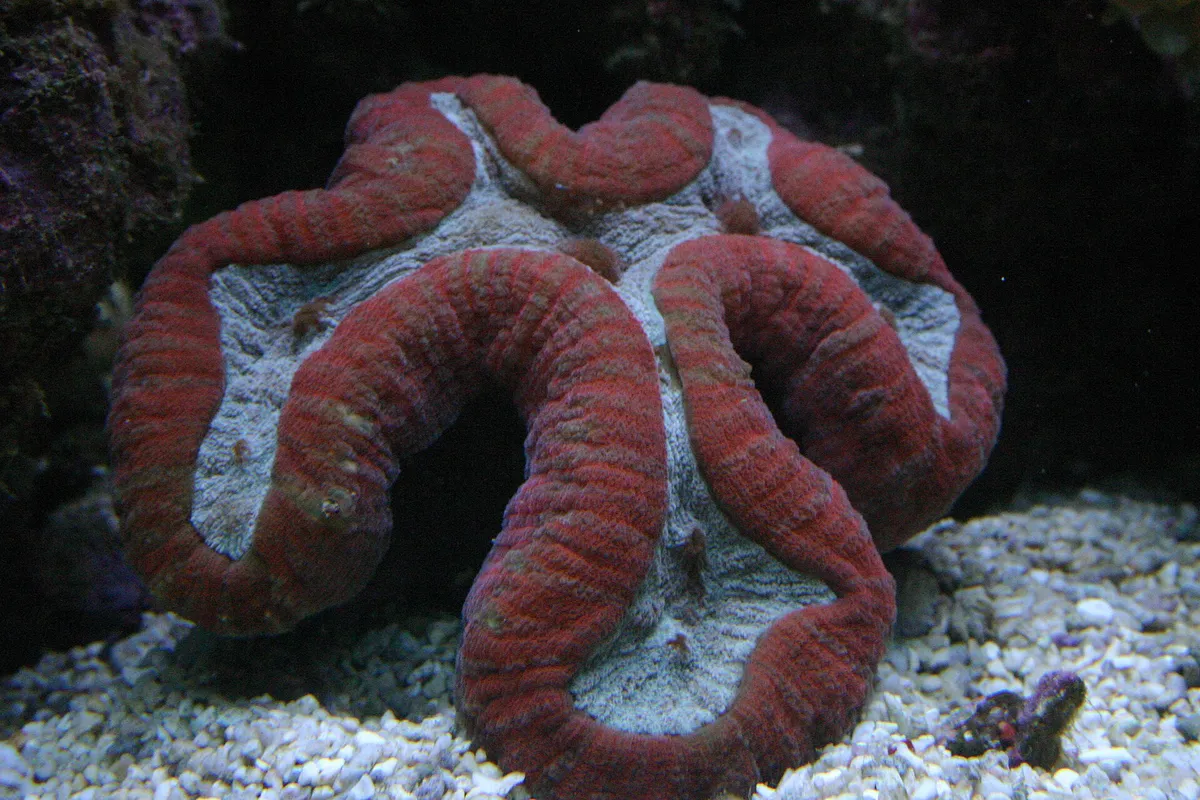
For other easy LPS corals, see our open brain coral and Duncan coral guides.
Explore other topics
Dive into more aquarium guides across the site.