

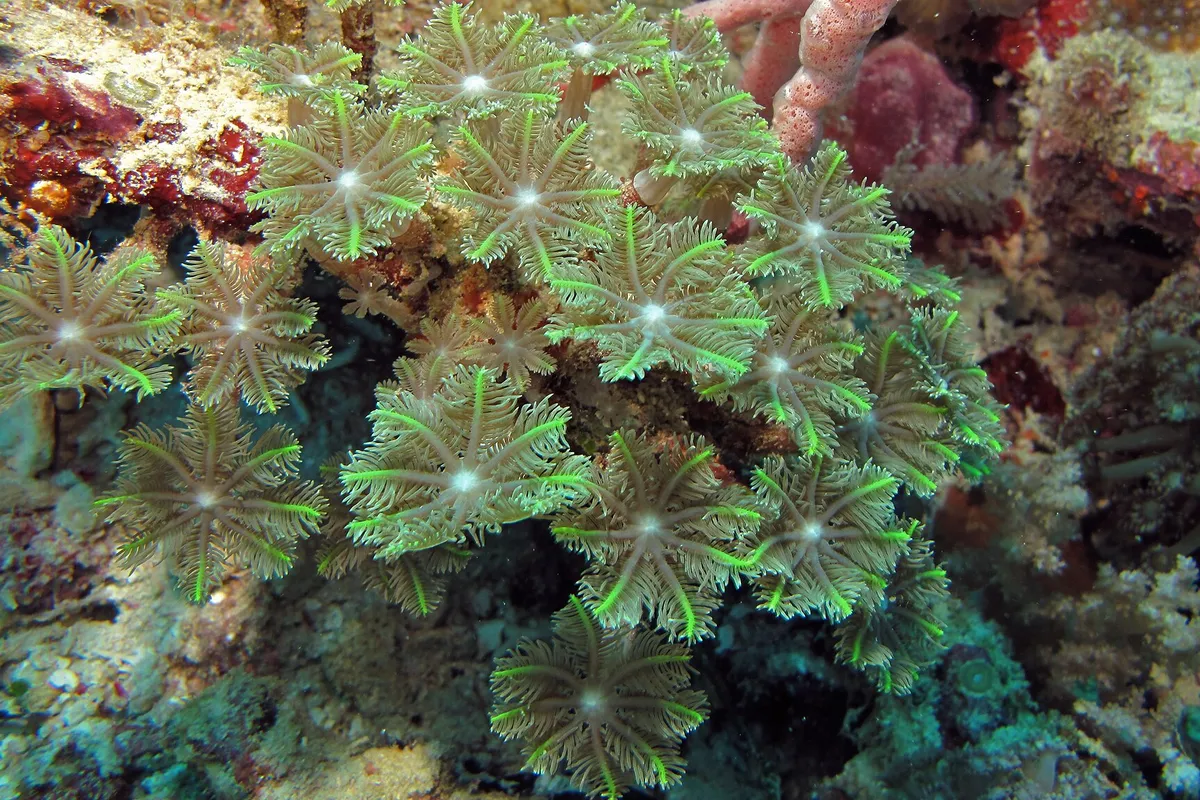
Clove polyps are one of the easiest and most graceful soft corals you can keep. Each polyp has eight feathery arms that sway in the current, and a colony forms a moving carpet of green, brown, cream or pink. Clavularia grows quickly, tolerates a range of conditions and is a favourite in beginner reef tanks.
Where clove polyps come from
Clavularia is found across the Indo-Pacific, growing on reef rock, rubble and dead coral in shallow water. Several species are sold under the name, along with the similar palm coral. They are often confused with green star polyps (Pachyclavularia), but clove polyps are larger, with longer, feathery arms and no purple mat.
Appearance and behaviour
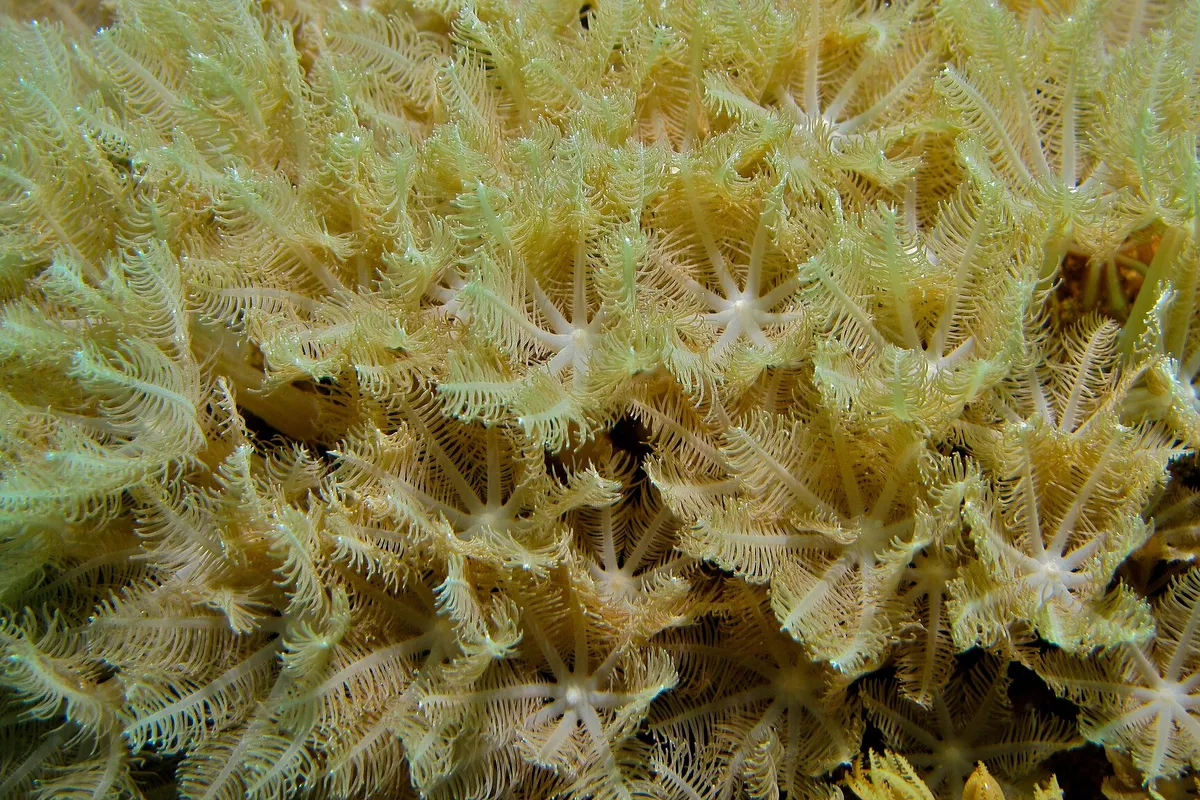
Each polyp is about 1–2.5 cm across when open, with eight pinnate arms (feathery branches on each arm). The polyps rise from small tubes joined at the base by thin runners called stolons, which spread across the rock. Many colonies have a bright green or white centre.
The polyps open during the day and close at night or when disturbed.
Tank setup and placement
Clove polyps adapt to low to moderate light and moderate flow. Place them on a rock where they can spread without reaching other corals, or better, on a separate island rock. Their runners grow across rock and can overgrow slower corals, so plan for spread from the start.
Water parameters
Keep the temperature at 24–27°C, specific gravity at 1.023–1.026 and pH at 8.1–8.4. Clove polyps tolerate higher nutrients than most corals and are a good choice for newer tanks. See our guide to key marine parameters.
Feeding
Clove polyps get most of their food from light, through their symbiotic algae. They also catch fine particles, so a few doses a week of phytoplankton or fine coral food can help. Turn off the pumps for a few minutes when feeding.
Controlling spread
A healthy colony can cover a rock quickly. To control it, scrape off the runners with a razor blade, or remove a whole rock and frag the colony. Frags are easy: cut a piece of rock or runner with polyps on it and glue it to a frag plug. See our fragging guide.
Tank mates
Clove polyps are peaceful with fish and invertebrates. Avoid fish that pick at soft corals, such as many angelfish and butterflyfish. Some keepers report that clove polyps can be eaten by certain nudibranchs and sea slugs. Give them space from LPS corals with long sweepers.
Common problems and lifespan
Polyps that stay closed usually point to a change in water chemistry, a new tank mate picking at them, or too much flow. Clove polyps are very hardy, and a colony can live and spread indefinitely. For other easy soft corals, see our green star polyps and xenia guides.
Explore other topics
Dive into more aquarium guides across the site.