

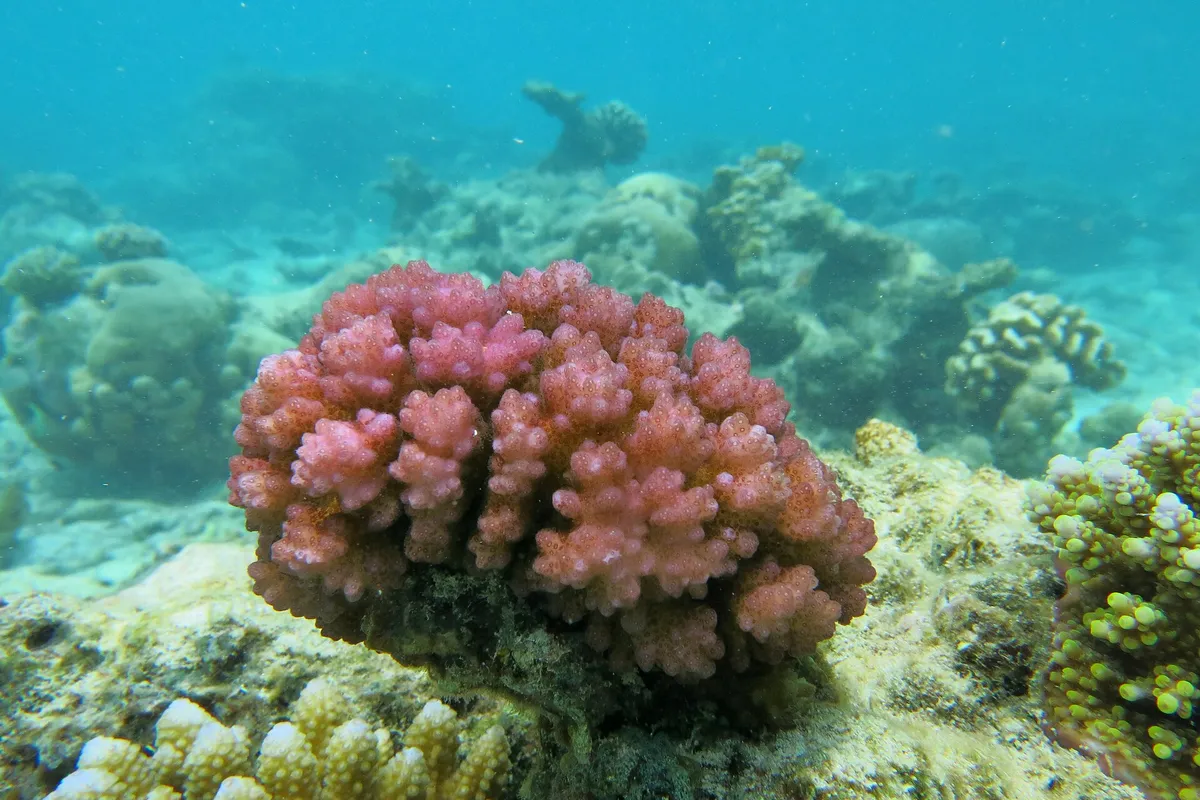
Cauliflower coral, also called lace coral or bird's nest coral in some areas, is a small-polyp stony (SPS) coral that grows into dense, rounded bushes of short branches. Pocillopora damicornis is one of the fastest-growing and most forgiving SPS corals, which makes it a popular first step for reefers moving on from soft corals and LPS.
Where cauliflower coral comes from
The species is one of the most widespread corals in the world, found across the Indo-Pacific from the Red Sea and East Africa to the Pacific coast of the Americas. It grows on reef flats, lagoons and shallow slopes, often in strong light and water movement. It is also one of the most studied corals in reef science.
Appearance and behaviour
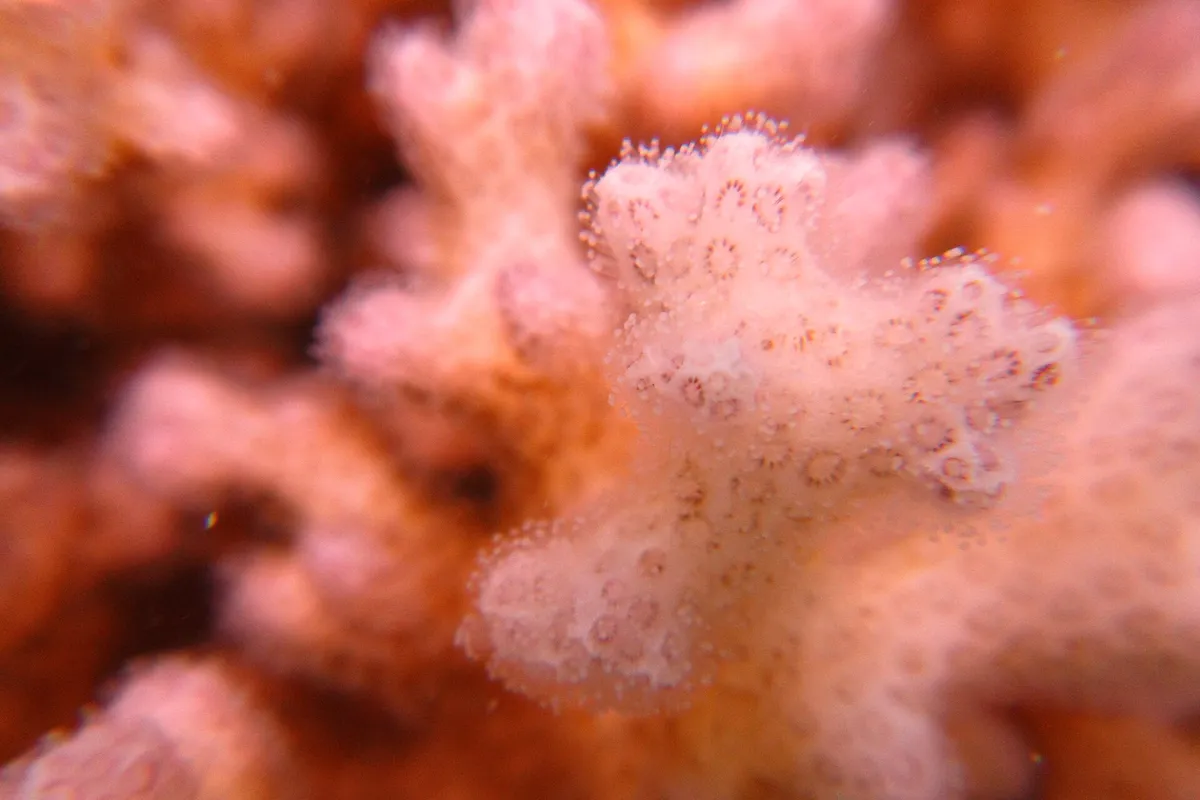
Colonies form compact, branching heads, usually 10–30 cm across. Colours range from brown and green to pink and cream, and pink colonies in particular are popular in aquariums. The branches are covered in tiny polyps that extend during the day, giving the coral a fuzzy look.
Cauliflower coral can reproduce by releasing tiny larvae, often called planulae, inside the aquarium. These can settle and grow on rocks and glass.
Tank setup and placement
Keep cauliflower coral in a stable reef tank at least six months old. Place it in the upper half of the tank under strong lighting, and give it moderate to strong, varied flow. Introduce it to strong light slowly over a couple of weeks. Allow room for growth, as it can quickly shade or touch neighbouring corals.
Water parameters

Keep the temperature at 24–27°C, specific gravity at 1.024–1.026 and pH at 8.1–8.4. Stability is the key with SPS: keep calcium at 400–450 ppm, alkalinity at 8–11 dKH and magnesium at 1,250–1,400 ppm, and avoid big swings. A dosing pump makes this much easier. Keep nitrate and phosphate low but not zero.
Feeding
Cauliflower coral gets most of its food from light through its symbiotic algae. It also captures plankton, so occasional feeding with fine coral foods, rotifers or copepods can help growth and colour.
Fragging
This is one of the easiest SPS corals to frag. Snap or cut off a branch with bone cutters, glue it to a frag plug, and place it in good light and flow. Frags usually encrust and grow within weeks. See our coral fragging guide.
Tank mates
Cauliflower coral is safe with most reef fish and invertebrates. Avoid fish that nip at SPS, such as some angelfish and butterflyfish. It is sensitive to chemical warfare from leather corals and can be stung by LPS corals with long sweepers, so give it space.
Common problems and lifespan
Rapid tissue loss (RTN) and slow tissue loss (STN) usually follow swings in alkalinity or temperature. Bleaching points to too much light too quickly or high temperature. Pests such as red bugs and flatworms are less common on Pocillopora than on Acropora but can still occur, so dip new corals. With stable care, colonies grow for many years. For another branching stony coral, see our birdsnest coral guide.
Explore other topics
Dive into more aquarium guides across the site.