

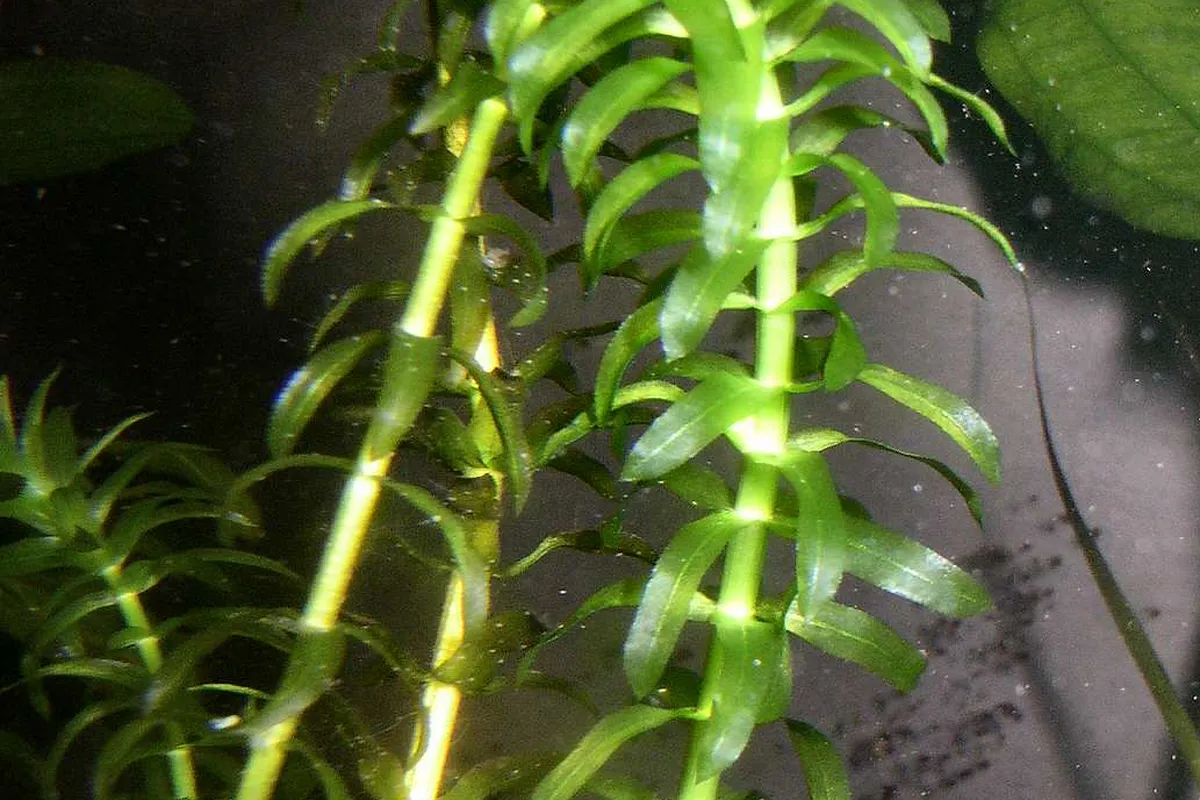
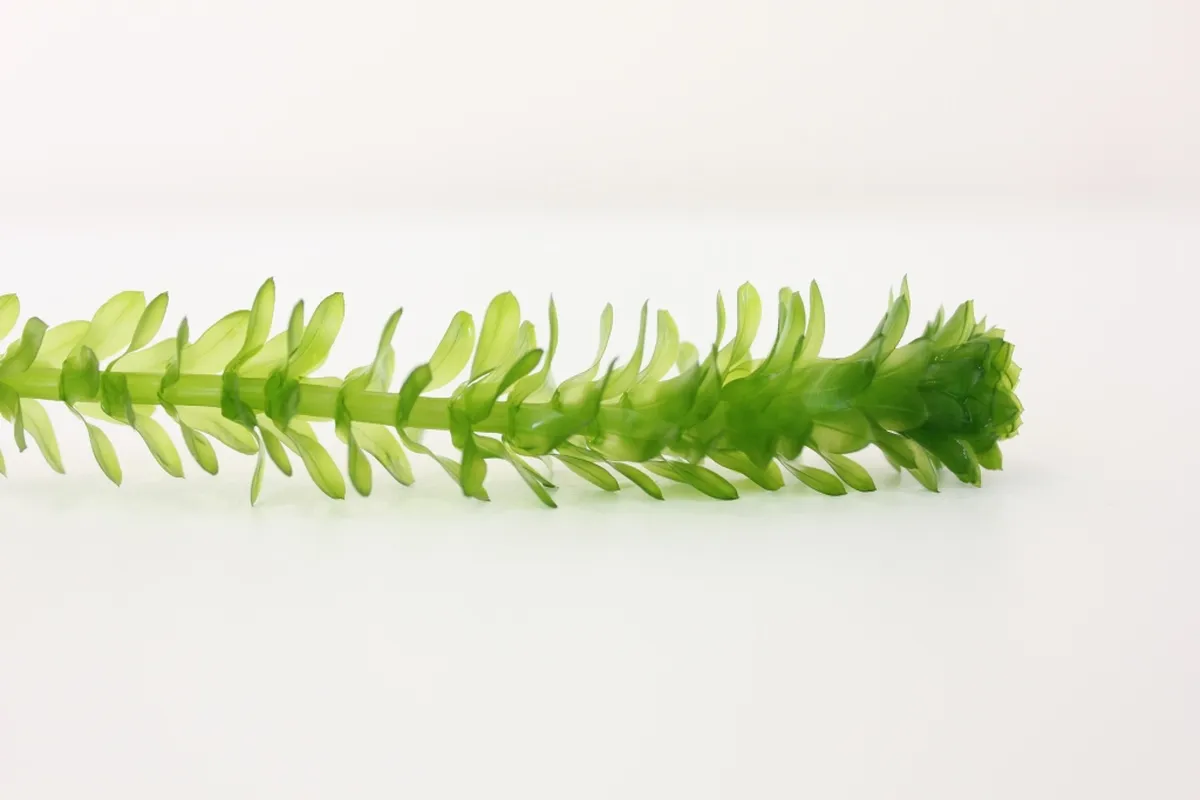
Brazilian waterweed, often sold as anacharis or elodea, is a classic beginner stem plant. Bright green leaves grow in whorls of four or five around a long stem, and in good light it can grow several centimetres a day.
Egeria densa is hardy, cheap and great at soaking up nutrients. It is also listed as an invasive species in many countries, including parts of Canada and the United States, so never release it or dispose of it in drains or waterways.
Origin
The species is native to South America, mainly Brazil, Argentina and Uruguay. It has spread through the aquarium trade to lakes and rivers worldwide, where it can choke native plants.
Appearance and growth
Stems branch freely and grow to the surface, then spread across it. Leaves are 1–3 cm long and fine-toothed at the edges. It can grow rooted or float freely.
Placement
Plant bunches in the background or let them float. It is especially useful in goldfish tanks and coldwater setups, where many tropical plants struggle.
Light, CO2 and nutrients

Medium light gives the best growth. CO2 is unnecessary, because the plant can take carbon from bicarbonate in hard water. It feeds mostly from the water column.
Water conditions
- Temperature: 10–26°C
- pH: 6.5–8.5
- Hardness: 5–20 dGH
It prefers cooler water and often declines in tanks kept above 26°C.
Propagation and maintenance
Cut stem tips and replant them. Thin it regularly. Dry out trimmings completely before putting them in household waste.
Compatibility
It is a favourite food of goldfish, which is one reason it is popular in goldfish tanks: it grows fast enough to keep up. Most community fish leave it alone.
Common problems
Stems turn brown and fall apart in warm water or low light. Check local rules before buying, as its sale is restricted in some areas. Hornwort is a native alternative across much of Canada.
Explore other topics
Dive into more aquarium guides across the site.
