

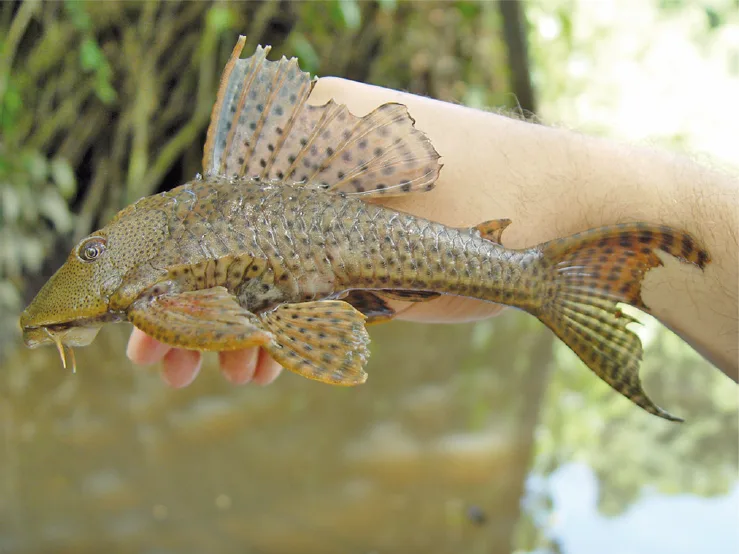
The words common pleco have done more damage in this hobby than almost any other label. They get stuck on any brown suckermouth in a plastic cup, including Pterygoplichthys sailfins that reach half a metre. Even when the Latin is honest, Hypostomus plecostomus is not a cute glass-cleaner. It is a Guianan Hypostomus that grows to a 30–50 cm class adult, rasps a mixed diet of aufwuchs and organic matter, and turns a starter aquarium into a cramped box. Algae is a juvenile side job. Adult size is the main job. Wood is a grazing surface and cover, not a panaque-style staple of lignin. If you cannot house a large, messy, armoured catfish for years, this is the wrong fish — no matter how much green is on your glass this week.
Suriname water, and a name that escaped the genus
The type locality world of H. plecostomus is the Guianas — Suriname and neighbouring drainages — not every river in South America. True common plecos in the scientific sense are Hypostomus from that region: spotted or mottled brown loricariids of rivers and streams with wood, rock, and current. The aquarium trade then used “plecostomus” as a dump name for sailfins, for unidentified Hypostomus, and for whatever was cheap.
In the wild these fish work structured freshwater: logs, banks, and hard surfaces in tropical lowland rivers. They are not cool Andean rubberlips. They are not 4 cm otos. They are medium-to-large grazers that keep growing. Seasonal floods change depth; they do not shrink the adult.
Invasive sailfin plecos in warm countries are usually Pterygoplichthys, not this species, but the welfare story is the same: people dump a giant they cannot keep. Do not be that story.
Spots, armour, and the length nobody believes
A young Hypostomus is a brown, spotted, flattened suckermouth with a sucker mouth and a tail. An adult is a heavy, broad-headed, nocturnal tank-shaker. Plan for at least 30 cm, often more, with a body that displaces a lot of water. The dorsal fin is large but it is not the enormous sail of Pterygoplichthys gibbiceps. The pattern is typically dark spots on a paler brown ground, variable with age and mood.
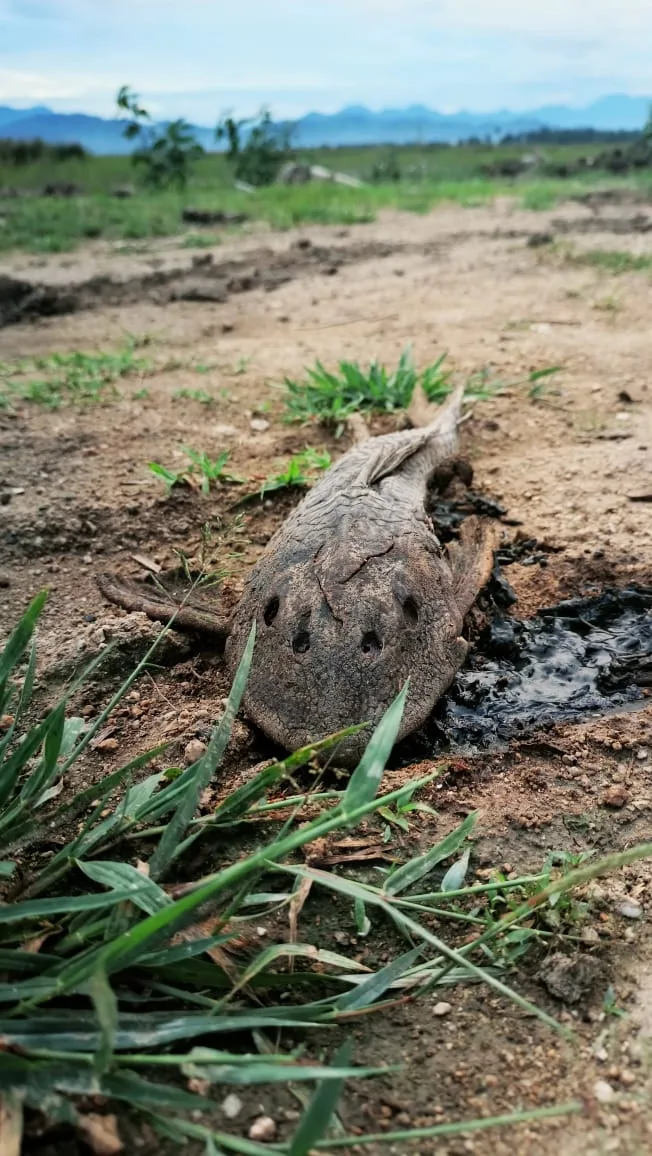
Sexing mature fish can involve genital papillae and odontodes; shop juveniles are unsexed. A “pair of common plecos” in a 120 litre tank is two future giants, not a breeding project.
Healthy fish have intact fins, a firm belly, and a mouth that is not torn from glass suction in a tiny cup. Eroded tails and sunken bellies are import and starvation signs. They will still grow if you feed them. That is not a comfort.
A tank that still fits at forty centimetres
Forget 40 litres. Forget 80 litres. A single adult needs a large, long aquarium — think 400 litres and up as a serious starting conversation, with swimming length, a strong canopy, and décor that cannot be shoved. Soft sand or rounded substrate protects the belly. Wood and rock provide cover and rasping surfaces. Plants will be uprooted or rasped; use only what you can sacrifice or protect.
Filtration should be oversized. A large loricariid on a mixed diet produces a large waste stream. Flow can be moderate; they are not hillstream specialists, but stagnant warm water is still a disease factory. A tight lid stops nocturnal tours of the living room.
If your honest future tank is a 100 litre community, buy a bristlenose, not this species.
Tropical river water, heavily filtered

Temperature 24–28 °C, pH 6.5–7.8, hardness secondary to cleanliness. Ammonia and nitrite at zero. Nitrate kept in check with large water changes. They are hardy compared with otos, which is how they survive long enough to outgrow the tank. Hardiness is not a reason to keep them dirty.
They tolerate a range of chemistry better than Shield dwarfs, but they do not belong in cool goldfish water and they do not belong in marine tanks.
Algae as a juvenile, omnivore as an adult
Young fish rasp algae and biofilm. Adults still graze, but they also take vegetables, wafers, and a surprising amount of protein if it is offered — leftover fish food, dying tank mates, even wood-associated organisms. They are not dedicated xylophages like Panaque. You should still offer wood as habitat and some vegetable matter every week. You should not expect the glass to stay clean while the fish becomes a log-shaped protein factory.
Feed sinking vegetarian foods, blanched greens, and occasional meaty items. Remove uneaten food. A fat common pleco in a small tank is a filter-killer.
Night feeding is when you confirm the fish ate. By day it will be under the wood.
A territorial adult, not a community servant
Juveniles seem peaceful. Adults claim wood and caves and will rasp the sides of slow, flattened fishes. They may eat small fish at night. They are not tiger shovelnoses, but they are large enough to rearrange a community. Keep them with robust, similarly large fish or keep them alone. Do not add them to a tetra tank as staff.
Two males in a cramped scape will fight. One adult in a huge tank can still be a bully around a favourite log.
Caves in a river, not a PVC hobby project
Hypostomus species typically spawn in burrows or cavities in banks, with a male guarding eggs. Home breeding of true H. plecostomus is uncommon because of size. Do not buy two babies to “breed common plecos” in a community tank.
What happens when the cup fish hits thirty centimetres
The heater gets knocked. The background comes off. The other fish lose skin to night rasping. The filter never catches up. Rehoming options shrink because every other keeper already learned this lesson. Sanctuaries and public tanks are full of “common plecos.” You do not want to be the person who adds one more. Measure your longest tank wall today. If an adult Hypostomus cannot turn without hitting silicone, the cup stays in the shop.
The adult is the species
If the shop cup says common pleco, ask whether it is Hypostomus or a sailfin. Then ask whether you have hundreds of litres for a decade. Algae is not a reason to say yes. See sailfin pleco for the even more enormous spotted sail, bristlenose for a fish that actually stays small, plus chemistry and cycling.
Explore other topics
Dive into more aquarium guides across the site.