

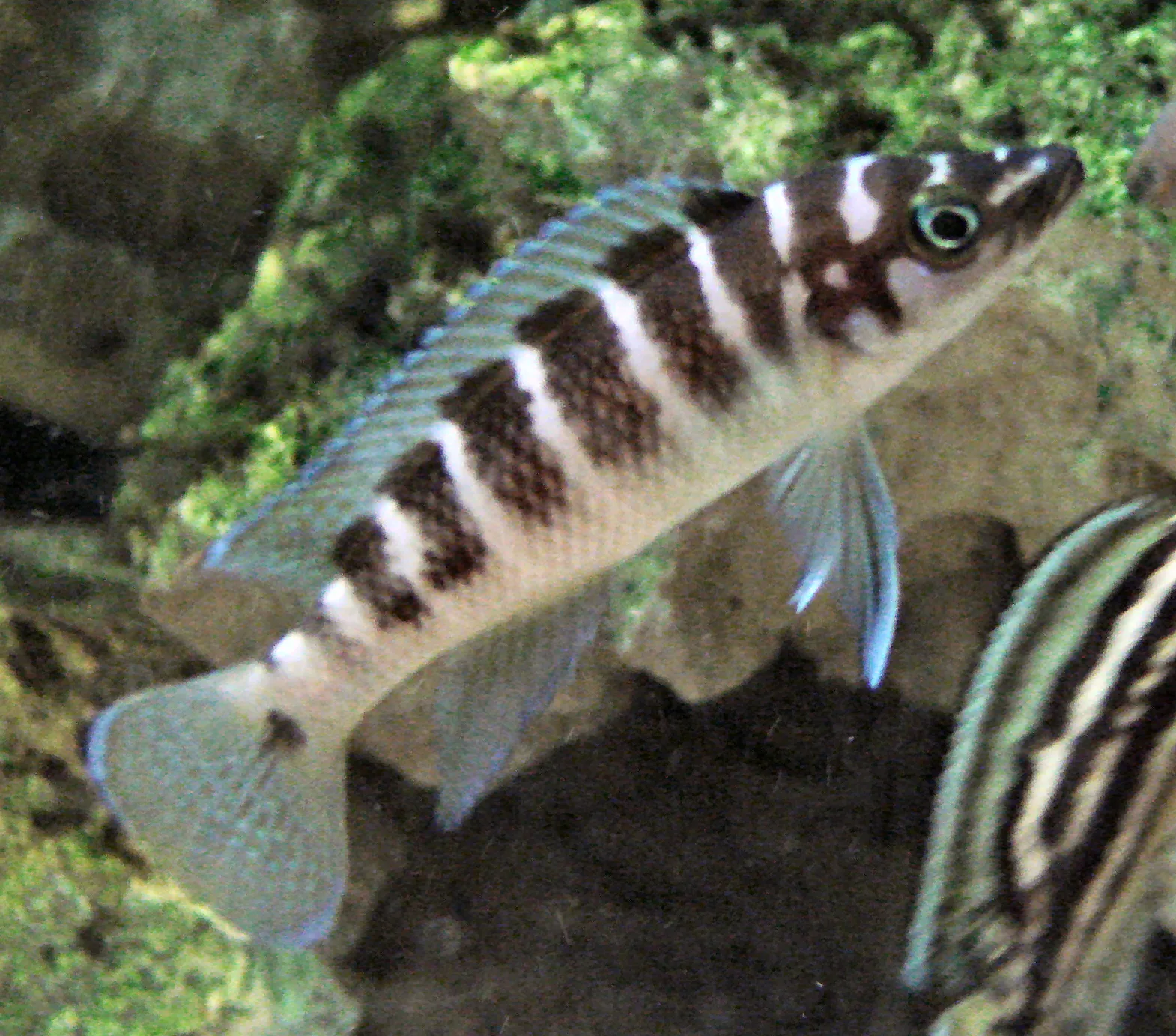
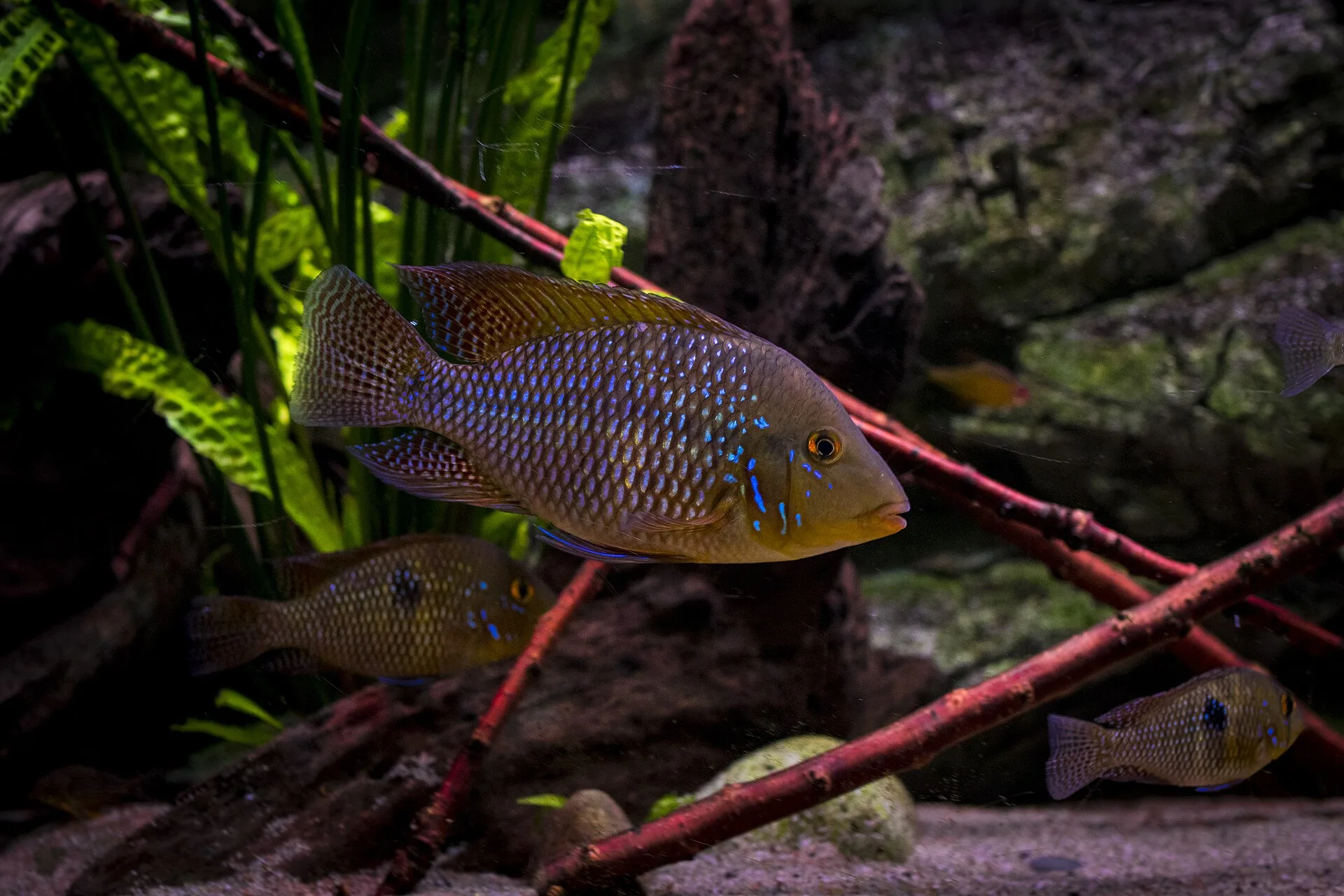
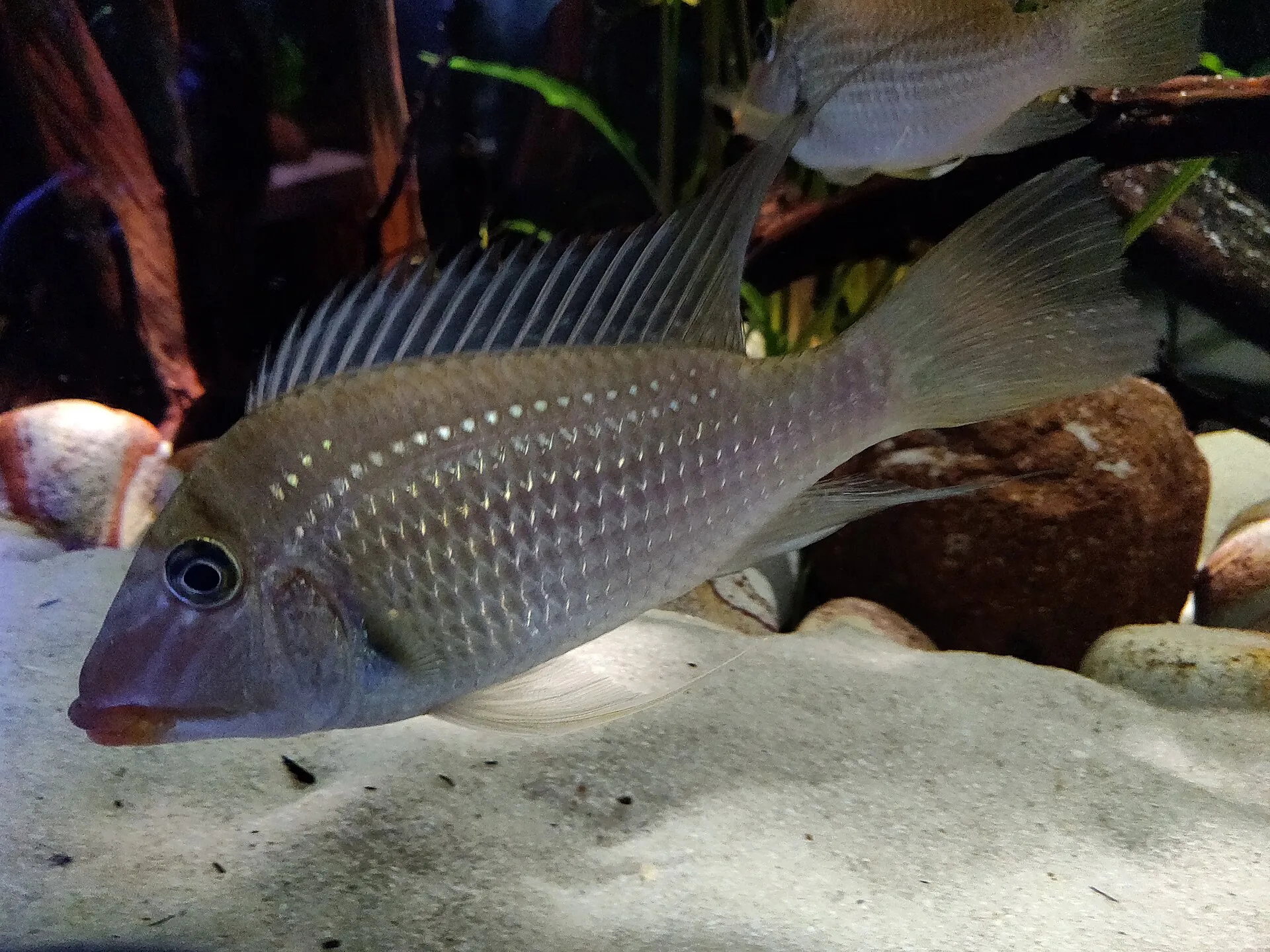
The cylindricus cichlid is named for the obvious: Neolamprologus cylindricus is a round-in-cross-section, elongate lamprologine that looks like a decorated tube with fins. Adults 8–10 cm. They hold caves in rocky littoral habitat in Lake Tanganyika, pair up, and defend a hole. They are not Altolamprologus blades. They are not Lamprologus ocellatus in a snail. They are not Paracyprichromis hanging in blue water off a cliff. If your rock pile has no actual caves — enclosed spaces with a mouth — you have not built their house.
Colour is typically a warm gold to tan with darker banding that can intensify when they are territorial. It is a handsome, old-fashioned looking Tanganyika fish, and it is more pugnacious in a small tank than the shop photo suggests.
Caves in the rocky littoral
Lake Tanganyika, rocky shore. Alkaline, hard, mineral water. They use cavities: spaces under slabs, gaps that form a room, not merely a Julie-style slit they pass through. Think “front door” rather than “hallway.” Sand may be at the cave mouth; they are not dedicated sand-sifters and they are not dedicated shell architects, though they may use a large empty shell as an improvised cave if that is all you gave them — which is a poor substitute for rock rooms.
Do not plant this as an Amazon. Do not stain it with peat.
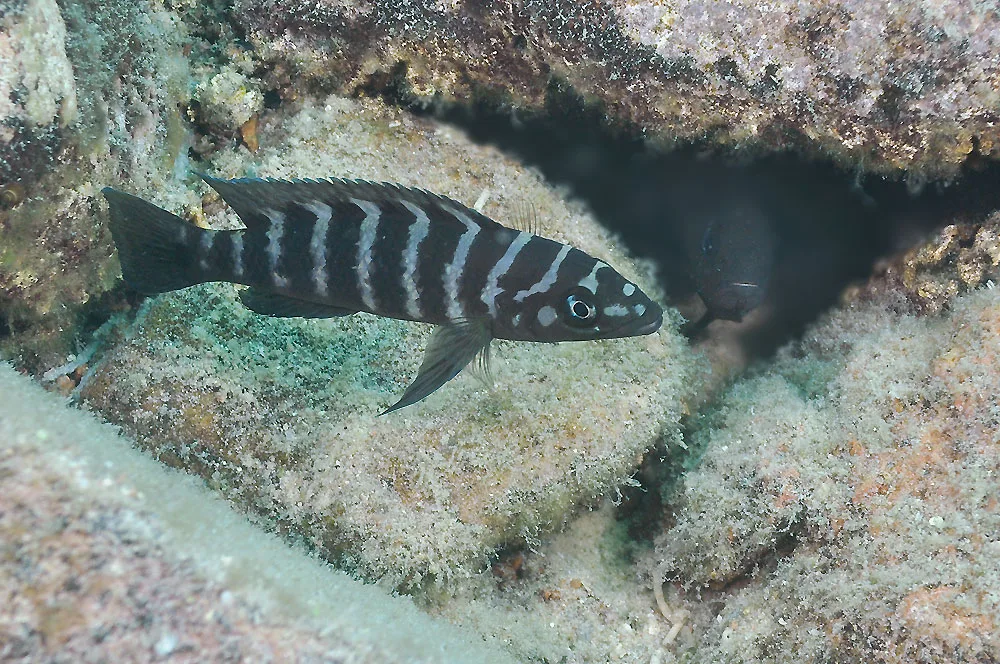
A tube with a temper
The cylindrical body is the identification against compressiceps (flattened) and against brichardi (deeper, lyre-tailed, more social). Banding and a relatively small mouth compared with a piscivorous hunter still add up to a predator of invertebrates and small fish. Sexing is easier once a pair forms and one fish (often the larger) owns the porch. Random groups collapse into a pair and victims.
They look peaceful in a dealer tank full of décor. They look less peaceful when a cave is scarce.
A hundred litres, if the caves are real
A pair needs 100 litres, more if you insist on extra fish. Build at least three enclosed caves so the pair can choose and so a subordinate has somewhere to not die during setup. Stack slate, cobble, and commercially made caves if you like, as long as chemistry is still Tanganyika. Leave open water in front. Fine sand is fine. A shell field is the wrong theme unless the tank is huge and zoned.
Filter well. Rock caves collect mulm; siphon what you can reach without dismantling the pair’s bedroom every week. Heater in a guard. No tetra-school aquascape.
Standard Tanganyika numbers, cave-specific maintenance
Temperature 24–27°C. pH 7.8–9.0. High hardness. The chemistry essay is the same as other Tanganyika rock fish; the maintenance wrinkle is anaerobic pockets in un-siphoned caves. Stir gently, change water, keep KH up. Chemistry, cycling.
Soft-water medications and peat extracts do not belong in this system.

Sinking food at the porch
Quality pellets, frozen cyclops, brine, chopped krill. Feed at the cave mouth so the owners eat and so you can count them. They will eat small tankmates. They are omnivore-leaning carnivores, not Uaru plant-eaters, not mbuna grazers. Overfeeding fills the cave with rot. Underfeeding makes them hunt more creatively.
A pair on a porch
Stock a pair. In larger tanks, other Tanganyika species that do not want that exact cave can work: open-water cyprichromines, distant shell-dwellers, perhaps other rock fish with different microhabitat. Poor: two pairs in 100 litres, Julies forced to share the same slab, compressiceps in the same seams, South American dwarfs, rasboras, Corydoras.
Fairy cichlids want rock too and breed in colonies; that is a different social model and a crowding fight waiting to happen in a modest tank. See N. brichardi only as a related-genus contrast, not as an automatic tankmate.
Eggs in the room
Cave spawners. The pair guards. Fry cloud the entrance. Leave them if you want a colony and have space; pull them if the cave is a deathtrap of waste. Not a mouthbrooder. Not a shell-spawner by preference. Not a leaf-spawner.
When the tube looks bent
Injuries from cave fights. Fungus on wounds. Hung fish at the surface from poor oxygen in a warm, dirty rock pile. Quarantine with a cave (a PVC elbow is an honest cave) in alkaline water. Watch them take food at the mouth of the pipe. A cylindricus with no cave is a fish on high alert; do not diagnose “shyness” until you give it a door.
Contrast with compressiceps (blade hunter), ocellatus (shell), and ornate Julie (slit). Four Tanganyika fish, four buildings.
What a cave has to be, in millimetres
A cave for N. cylindricus needs a mouth they can enter and a room they can turn in. A Julie slit that is only a hallway will be used as a corridor, not as a nest. Measure: if you cannot imagine the 10 cm tube inside the space, it is décor, not a house. Flowerpots on their sides, stacked slate with a back wall, and commercially made ceramic caves all work if the chemistry is still Tanganyika. Place one cave in a slightly more open area so you can actually see the pair; hide two others so a beaten fish can exist during the first weeks.
The first week is a siege
Newly introduced cylindricus do not “explore the aquascape.” They claim a hole and dare the room. Dim the lights. Feed at the porch. Do not add tankmates in week one. Do not rearrange rock because you cannot see them — you just moved the house. If two fish both want the same cave, you do not have a pair yet; you have a dispute. A PVC T-fitting is an ugly, honest extra cave that has saved more subordinates than a second piece of fancy dragon stone.
Long-term, the pair will pick a favourite door. Siphon around it. Do not celebrate cleanliness by bleaching the nursery. Fry in the mouth of a cave look like debris until you look twice. Look twice before you vacuum.
Explore other topics
Dive into more aquarium guides across the site.