

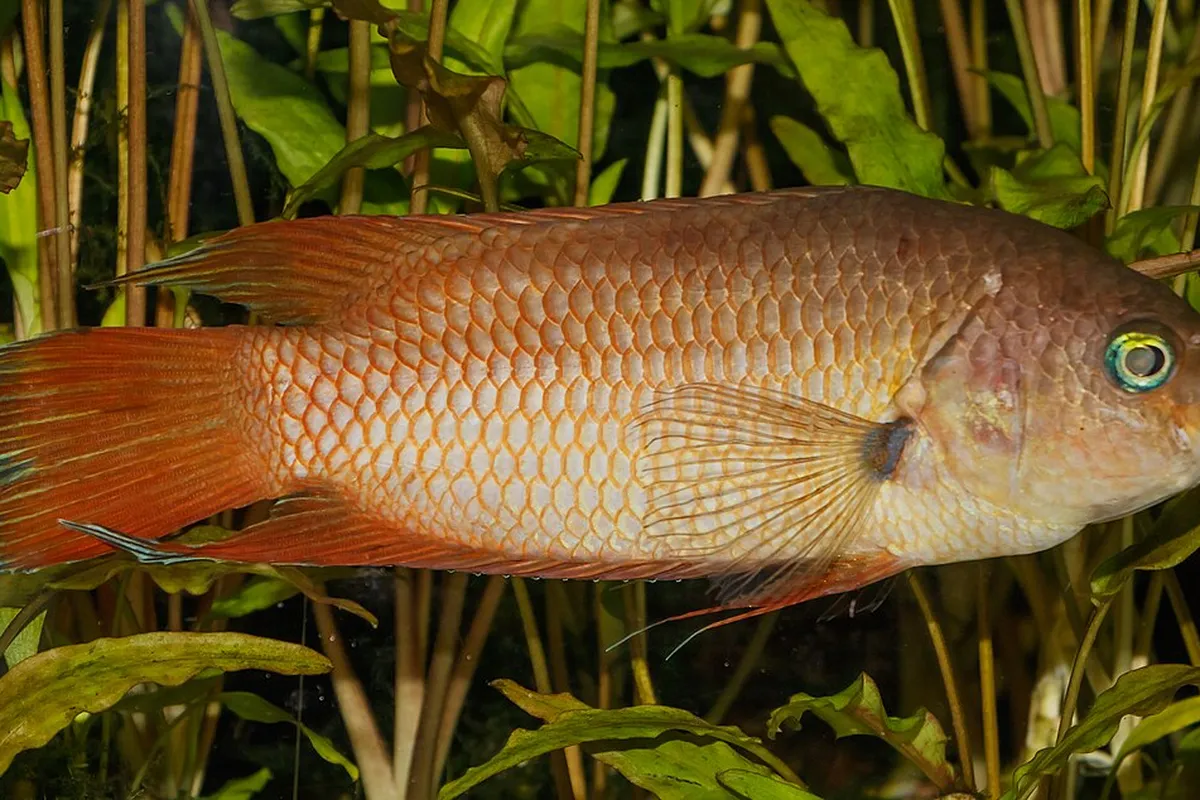
The Ceylonese combtail is a robust gourami with a red-brown body and long, extended rays on the tail fin that look like the teeth of a comb. Adults reach 12–13 cm and carry themselves more like a small cichlid than a typical gourami.
Belontia signata is hardy and easy to feed, but it is territorial and can be aggressive. It suits a large species tank or a community of robust fish.
Where combtails come from
The species is endemic to Sri Lanka, where it lives in clear, shaded rainforest streams and pools with plenty of plants and roots.
Appearance and behaviour
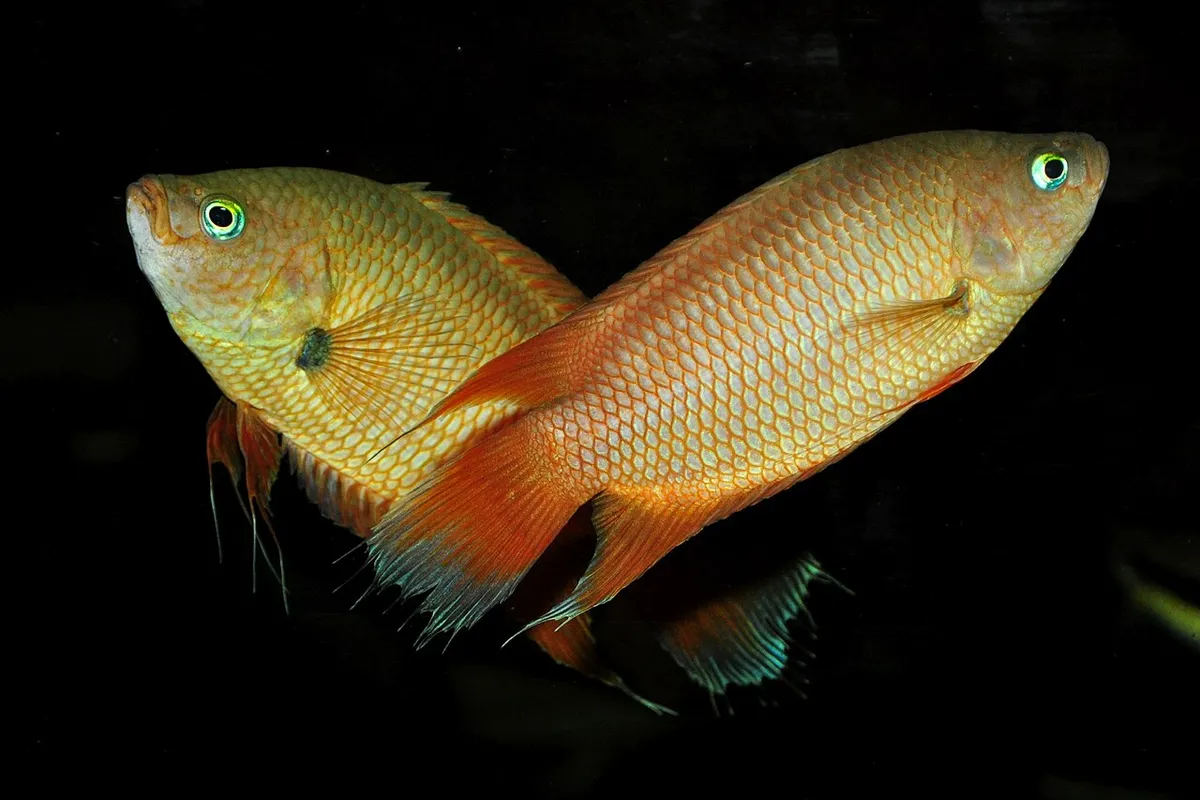
Colour varies by locality, from greenish to deep red. Most fish have a dark spot at the base of the dorsal fin. Like all labyrinth fish, combtails breathe air from the surface.
Adults claim territories and chase rivals. A bonded pair works well; two males in one tank rarely do.
Tank setup
A pair needs at least 150 litres. Use dense plants, roots and caves to break up sight lines, and add floating plants to dim the light. Keep the lid on so the air above the water stays warm.

Water parameters
- Temperature: 24–28°C
- pH: 6.0–7.5
- Hardness: 4–15 dGH
Feeding
Combtails are predatory omnivores. Feed quality pellets with frozen bloodworms, mysis, brine shrimp and chopped earthworms. They will eat small fish and shrimp.
Tank mates
Choose robust fish of similar size: larger barbs, robust rainbowfish, loaches such as the clown loach in large tanks, and medium plecos. Avoid small tetras, shrimp and other gouramis.
Breeding
Unusually for a gourami, combtails build little or no bubble nest. The eggs float up under a leaf or to the surface, and both parents guard them and the fry. The fry are large and accept baby brine shrimp quickly.
Common problems and lifespan
Aggression is the main issue, so plan tank mates carefully. Combtails are otherwise hardy and live eight years or more.
Explore other topics
Dive into more aquarium guides across the site.